Comics news and insights for your local market
Follow webtoon, manga, manhwa, AI comic, creator economy, and storytelling trends curated for each region.

The 2026 Global Color-Sync Standard: Solving Visual Drift in Distributed Comic Production
As comic production moves to a distributed global model in 2026, the Global Color-Sync Standard (GCSS) has emerged as the critical technology for preventing visual drift. This framework allows studios to maintain perfect character and atmosphere consistency across different hardware, software, and c

The 2026 Creator-Led Micro-Network: How Boutique Bundles are Disrupting the Platform Monop
In 2026, the 'Infinite Library' model is giving way to creator-led micro-networks that prioritize curation over volume. This shift is redefining how independent comic studios capture high-value readers and reclaim data sovereignty.
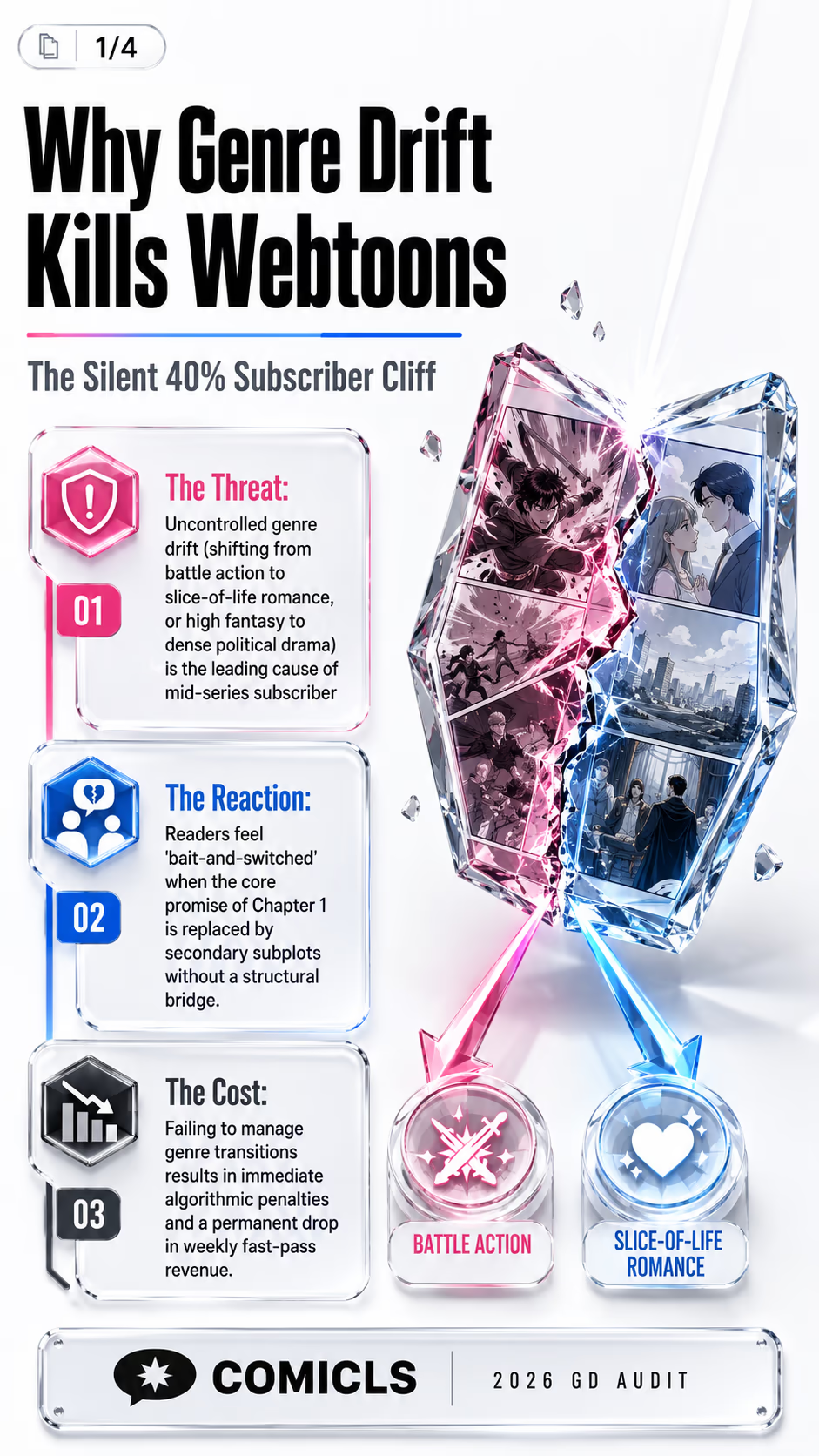
Why Genre Drift Kills Webtoons: The 2026 GD Audit
When long-form series shift from action to romance or fantasy to politics, reader churn spikes. Master the 2026 GD Audit to transition genres safely.
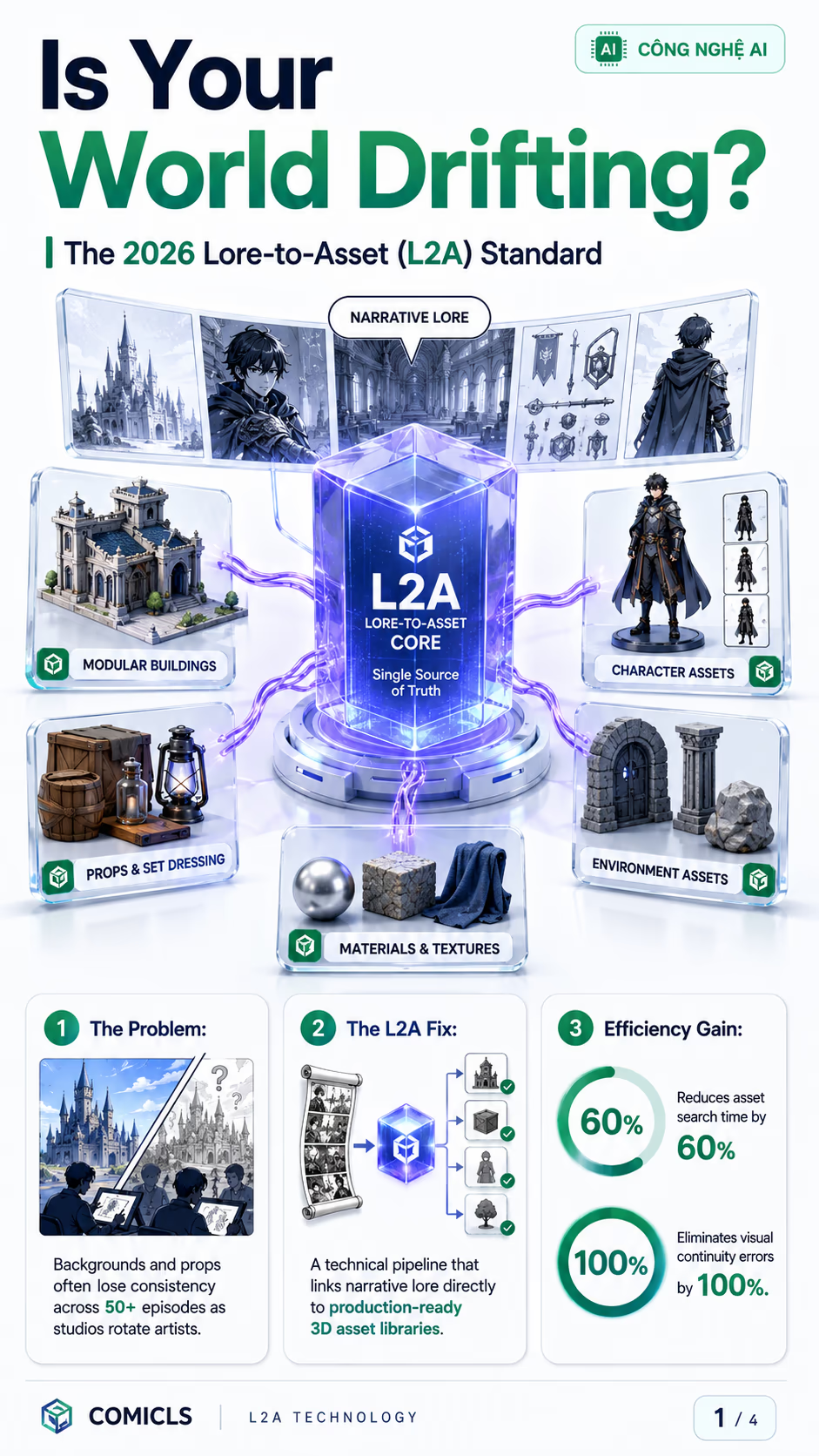
Does Your Lore Scale? The 2026 L2A Tech Standard
Discover the 2026 L2A standard for linking narrative lore to production-ready 3D assets. Solve background drift and boost studio efficiency by 40%.

The 2026 ‘Artistic-Signature’ (AS) Audit: Fixing the AI-Uncanny Valley
Discover the 2026 AS Audit—a strategic framework for creators to engineer 'human-signature' markers into their webtoons and manga to bypass reader AI-fatigue.
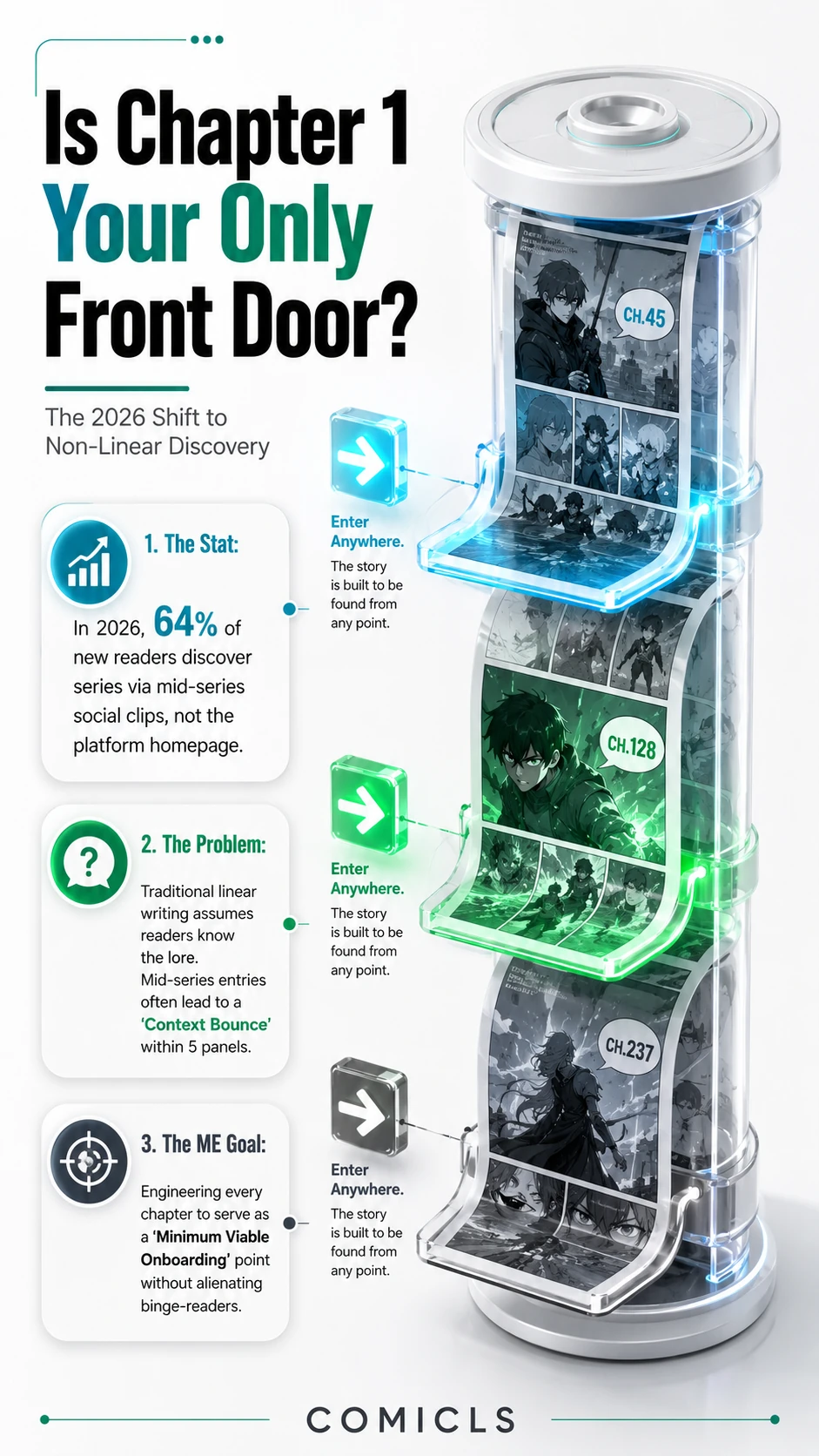
Does Your Webtoon Pass the 'Multi-Entry' (ME) Test?
In 2026, readers no longer start exclusively at Chapter 1. Discover the Multi-Entry (ME) Standard to turn every chapter into a high-conversion 'front door' for your series.
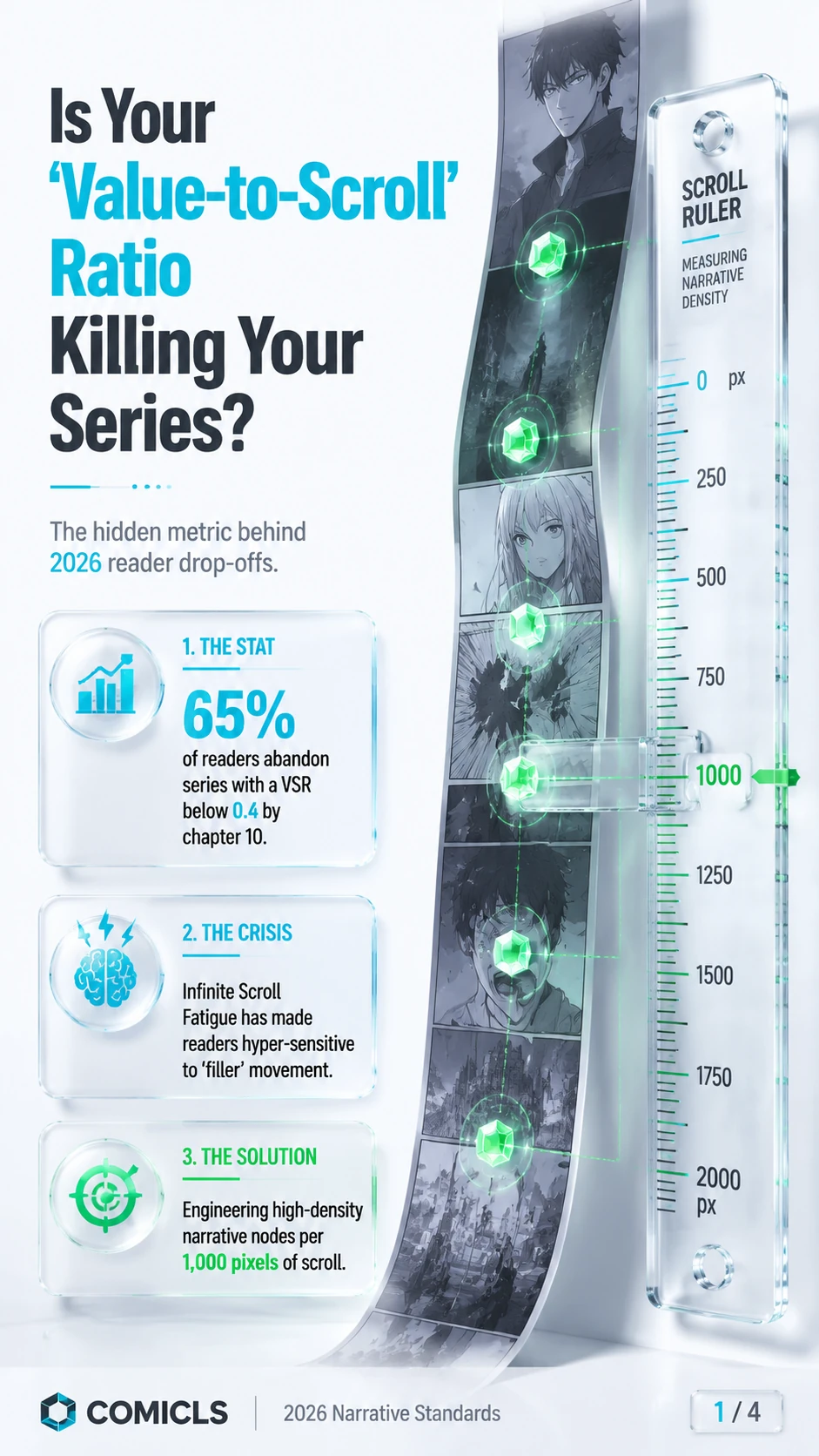
Fixing the 'Value-to-Scroll' Ratio in Your Webtoon
In 2026, 'Infinite Scroll Fatigue' is the leading cause of series abandonment. Learn how the Value-to-Scroll (VSR) metric helps creators engineer high-retention chapters.
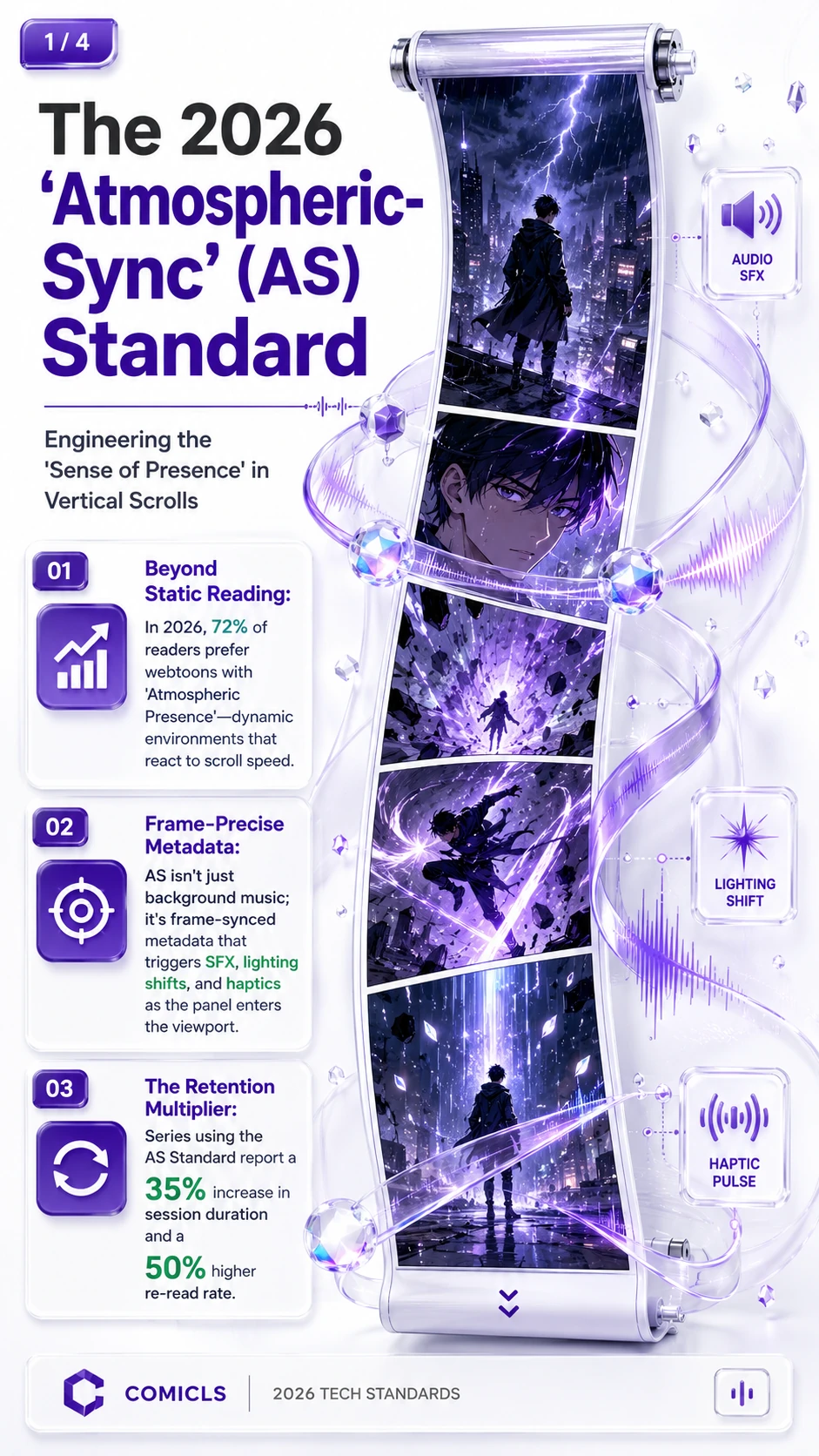
The 2026 ‘Atmospheric-Sync’ (AS) Standard: Engineering Immersive Audio
Master the 2026 AS Standard to bridge the gap between static panels and cinematic immersion. Learn to engineer frame-precise audio-visual metadata for vertical scroll comics.
All
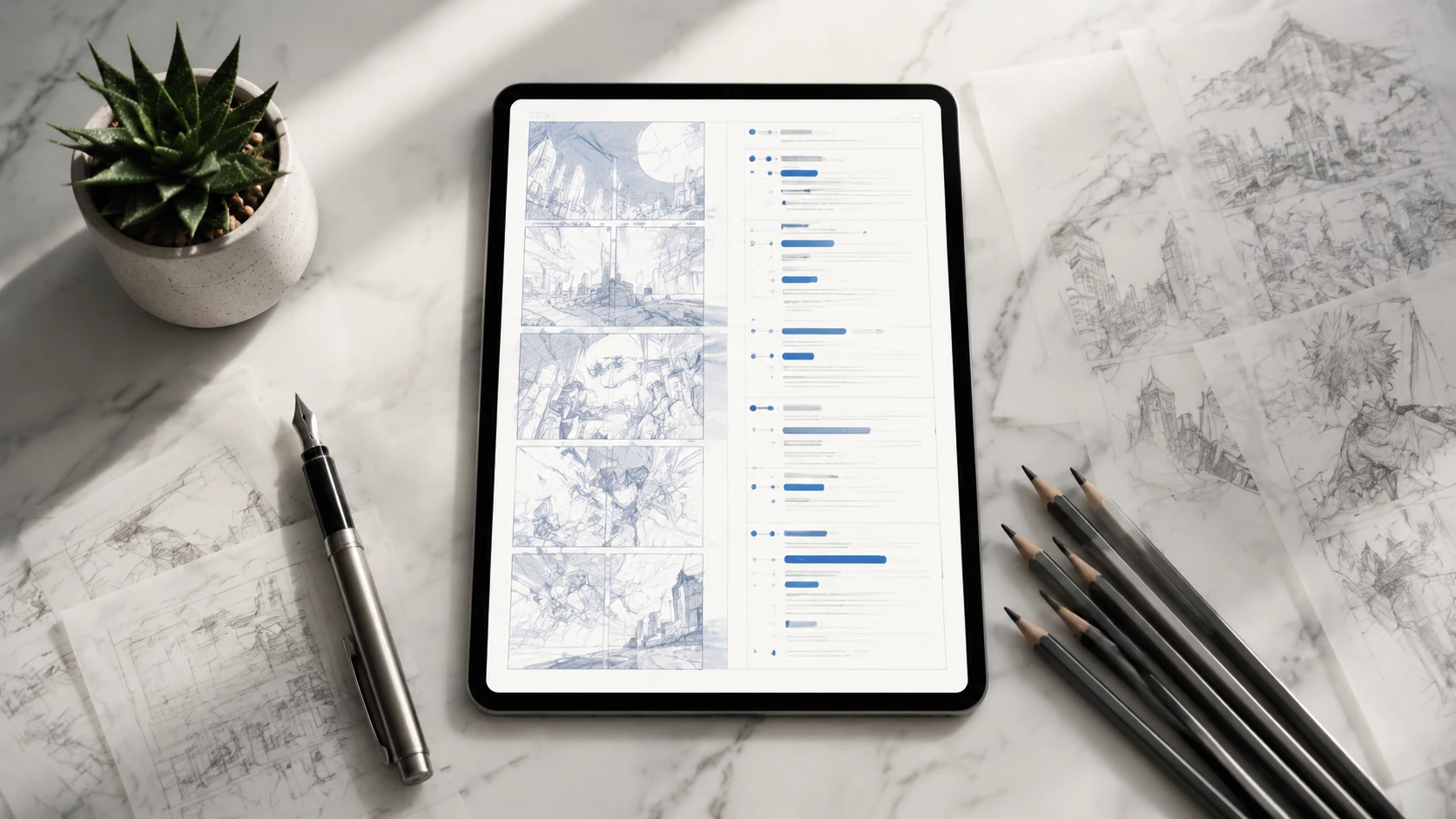
The 2026 Vertical Scripting Syntax: Optimizing Narrative Beats for Scroll-Native Compositi
Traditional comic scripts are evolving into the Vertical Scripting Syntax (VSS), a specialized format designed for the unique spatial logic of mobile reading. This framework prioritizes gap-logic and kinetic pacing to ensure narrative beats land with maximum impact on the infinite canvas.

The 2026 Narrative Translatability Framework: Architecting Global Webtoon Scripts for Cros
In 2026, global export is the default for webtoons. Learn the framework for building scripts that resonate across cultures without losing their narrative soul.

The 2026 Dopamine-Sequencing Framework: Mastering Chapter Flow for Binge-Reading Retention
In the 2026 attention economy, the rhythm of consumption is as vital as the plot itself. This framework explores how to sequence narrative beats to trigger the 'Next Chapter' reflex.

The Micro-Community Launchpad: A 2026 Case Study in Scaling Niche Webtoons via Fragmented
Discover how 'The Obsidian Protocol' transitioned from a struggling niche series to a top-tier revenue generator by leveraging fragmented micro-communities. This case study breaks down the 2026 playbook for decentralized comic discovery.
Latest

The 2026 'Silent Narrative' Blueprint: Engineering Global Hits Through Zero-Dialogue Visua
The 2026 comic market is witnessing the rise of 'Silent Narratives'—high-fidelity visual stories that eliminate dialogue to achieve instant global saturation. This shift redefines how creators approach pacing, emotional resonance, and SEO without the friction of translation.

The 2026 Global Webtoon Licensing Shift: Why 'Narrative Interoperability' is the New Metri
The global webtoon market has moved beyond platform exclusivity toward a modular licensing model. Learn why 'Narrative Interoperability' is now the primary metric for determining the market value of comic IP.

The 2026 Semantic Metadata Layer: Future-Proofing Comic Libraries for AI-Native Discovery
As traditional keyword-based search is replaced by intent-driven AI discovery, the 2026 Semantic Metadata Layer becomes the mandatory standard for comic publishers. This framework ensures that narrative assets remain discoverable in a post-keyword digital landscape.

The 2026 Narrative Liquidity Framework: Engineering Comics for Instant Cross-Media Adaptat
Narrative Liquidity is the new gold standard for comic creators in 2026, defining how easily a story can flow across different media formats. This framework provides the architectural blueprint for building 'adaptation-ready' IPs from day one.
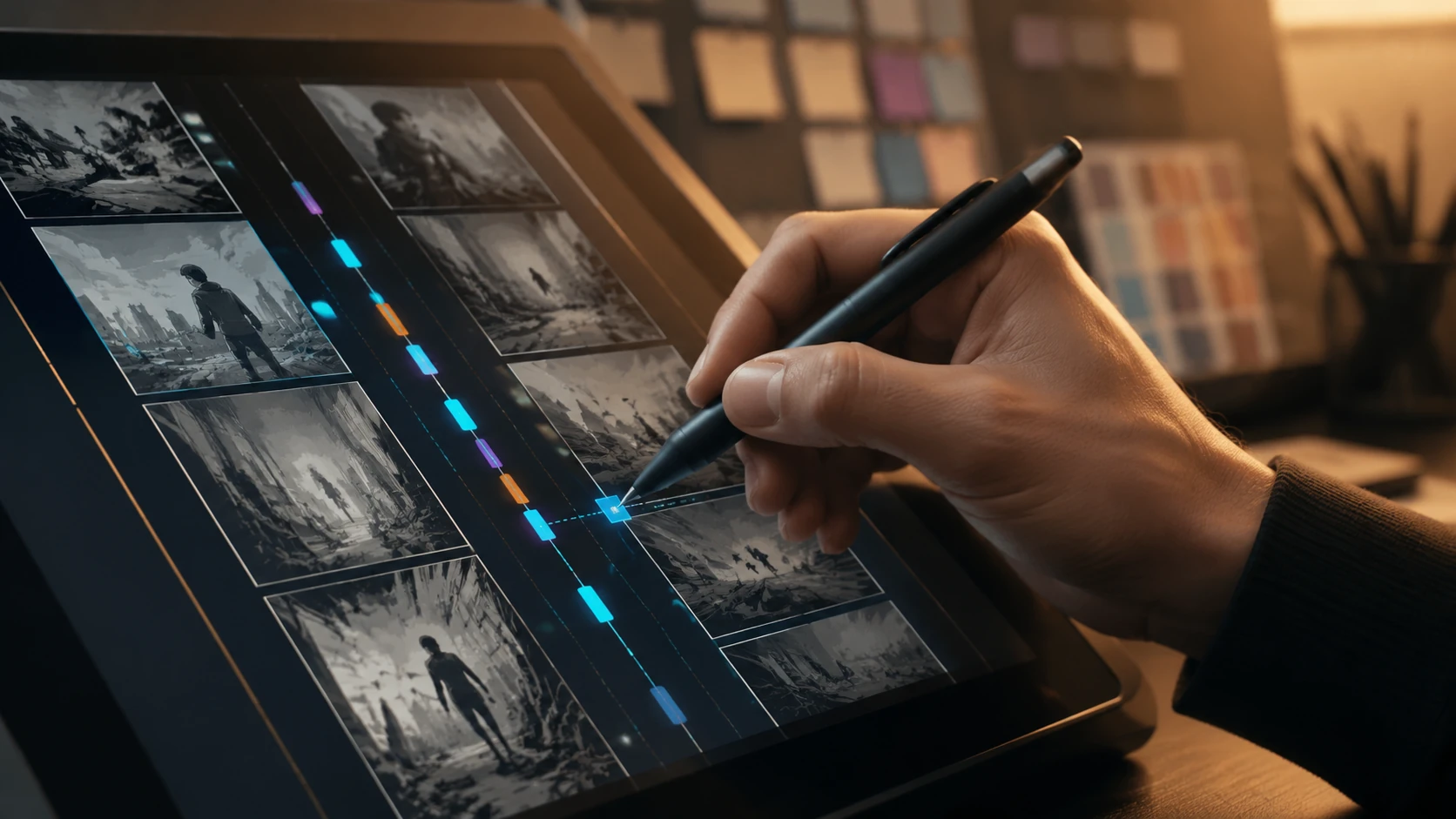
The 2026 'Visual Pacing' Masterclass: Using Variable Scroll Speeds to Control Reader Psych
Learn how to master the kinetic art of the vertical scroll by engineering reader velocity. This 2026 guide breaks down the technical ratios between panel height, white space, and psychological tension.

The 2026 Intent-Mapping Blueprint: Architecting Narrative 'Vibes' for AI-Driven Discovery
In 2026, discovery is driven by emotional resonance rather than just genre tags. Learn how to map reader intent and 'vibes' to ensure your story reaches the right audience through AI-first discovery engines.
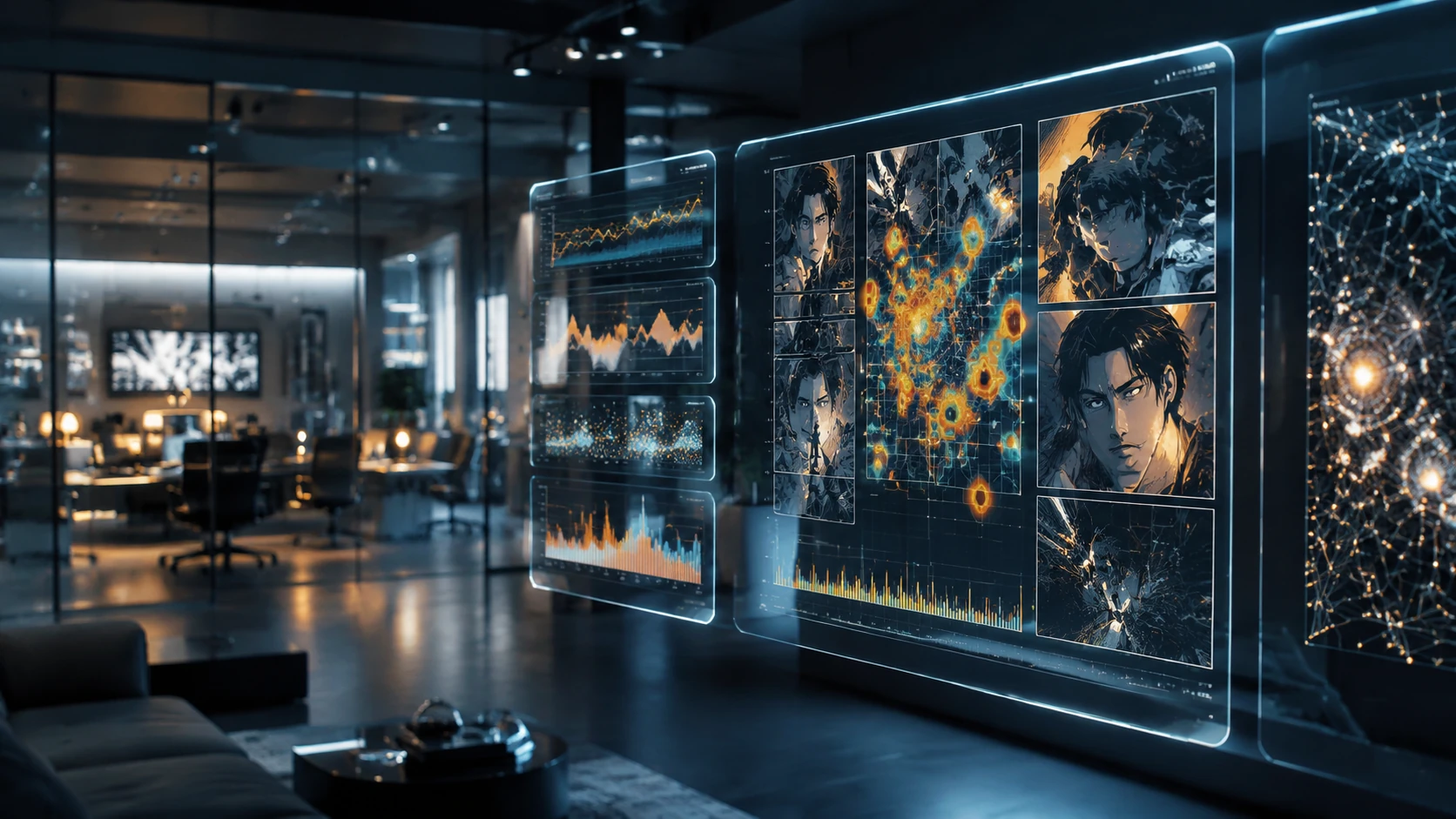
The Script-to-Scroll Teardown: Engineering 98% Reader Retention in 2026 Webtoons
Discover the 'Script-to-Scroll' methodology that saved a failing IP by re-engineering visual pacing for mobile behaviors. This case study reveals the data-led tactics used by leading 2026 studios.

The 2026 Collaborative Canon Framework: Scaling Webtoon IP Through Community-Led World-Bui
The 2026 shift from monolithic authorship to collaborative canon allows studios to scale webtoon universes exponentially. Learn the governance models that protect IP while empowering fan-led narrative expansion.

The 2026 Hybrid Layout Blueprint: Mastering Multi-Surface Narrative Architecture for Webto
In 2026, the era of drawing a comic twice for different formats is over. This guide introduces the Hybrid Layout Blueprint, a framework for building surface-agnostic narrative assets that maximize IP ROI.

The 2026 Webtoon Export Report: Why Hyper-Local Nuance is Now a Primary Search Signal
A landmark 2026 industry report confirms that generic localization is no longer enough to rank in international markets. Discover why 'cultural entity mapping' is the new gold standard for webtoon exports.
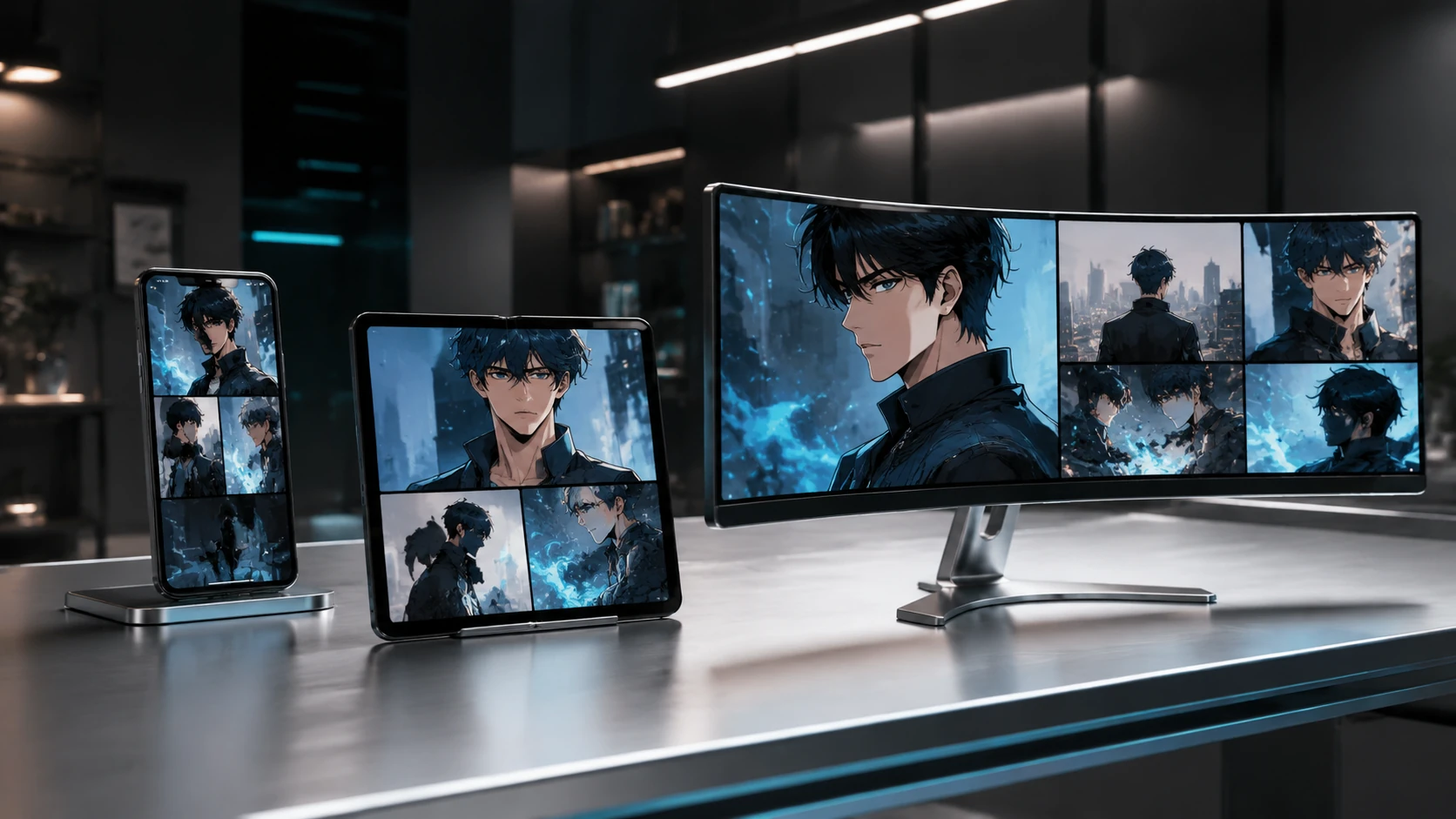
The 2026 Responsive Canvas Standard: Why Modular Layouts are Replacing the Static Vertical
The era of fixed-width vertical scrolls is ending. Discover how the 2026 Responsive Canvas Standard (RCS) uses modular panel architecture to ensure webtoons look perfect on everything from smartwatches to foldable tablets.

The 2026 Spin-Off Blueprint: Architecting Narrative Expansions for Webtoon Longevity
Scaling a single webtoon into a multi-series franchise requires more than just a popular character; it demands a strategic blueprint for narrative expansion. Master the 2026 standards for architecting spin-offs that enhance your main series without diluting the brand.
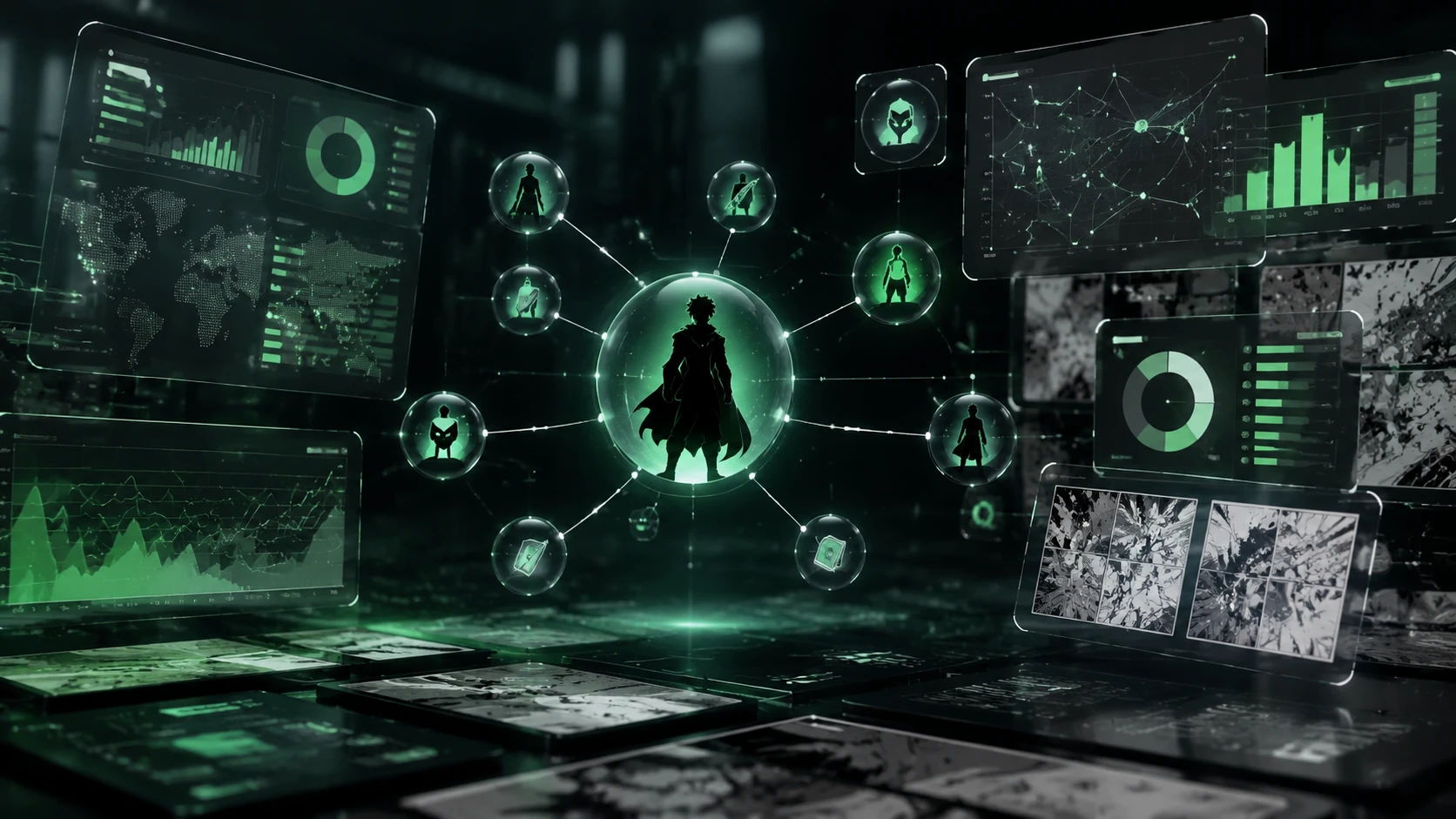
The 2026 Narrative Equity Audit: Evaluating the Long-Term ROI of Comic Character Assets
In 2026, a comic’s value is no longer measured solely by reader counts, but by 'Narrative Equity'—the measurable potential of its IP to scale across platforms. This guide explores the framework for auditing your character assets for long-term ROI and licensing longevity.

The Spatial Narrative Framework: Mastering Time and Emotion in the 2026 Infinite Canvas
In 2026, the infinite canvas is no longer just a format; it is a psychological tool. This framework explores how spatial distance between panels translates into perceived time and emotional weight for the modern mobile reader.

The Sovereign Revenue Stack: Architecting Multi-Stream Income for Independent Comic Studio
In 2026, relying on a single platform's ad-revenue share is a legacy mistake. Discover the Sovereign Revenue Stack, a modular financial framework designed to give independent webtoon and manga creators true fiscal independence.

The Vertical Cinematographer: Why 2026 Webtoons are Adopting Film Language
The line between comics and cinema is blurring as 2026 studios hire 'Vertical Cinematographers' to manage lighting, depth, and camera movement within the scroll. This shift marks the professionalization of visual pacing for a mobile-first audience.

The 2026 Narrative Taxonomy: The New Science of Comic Classification and Semantic Discover
Traditional genres like 'Action' or 'Romance' are no longer enough to drive discovery in the saturated 2026 market. Explore how the shift toward semantic narrative taxonomy is revolutionizing how readers find and connect with webtoons and manga.

The Rise of the Prompt Architect: Professionalizing Narrative Engineering for 2026 Comic S
As AI tools evolve into precision instruments, a new professional tier has emerged within comic studios: the Prompt Architect. This role bridges the gap between raw generative power and the surgical consistency required for high-end IP development.