Comics news and insights for your local market
Follow webtoon, manga, manhwa, AI comic, creator economy, and storytelling trends curated for each region.
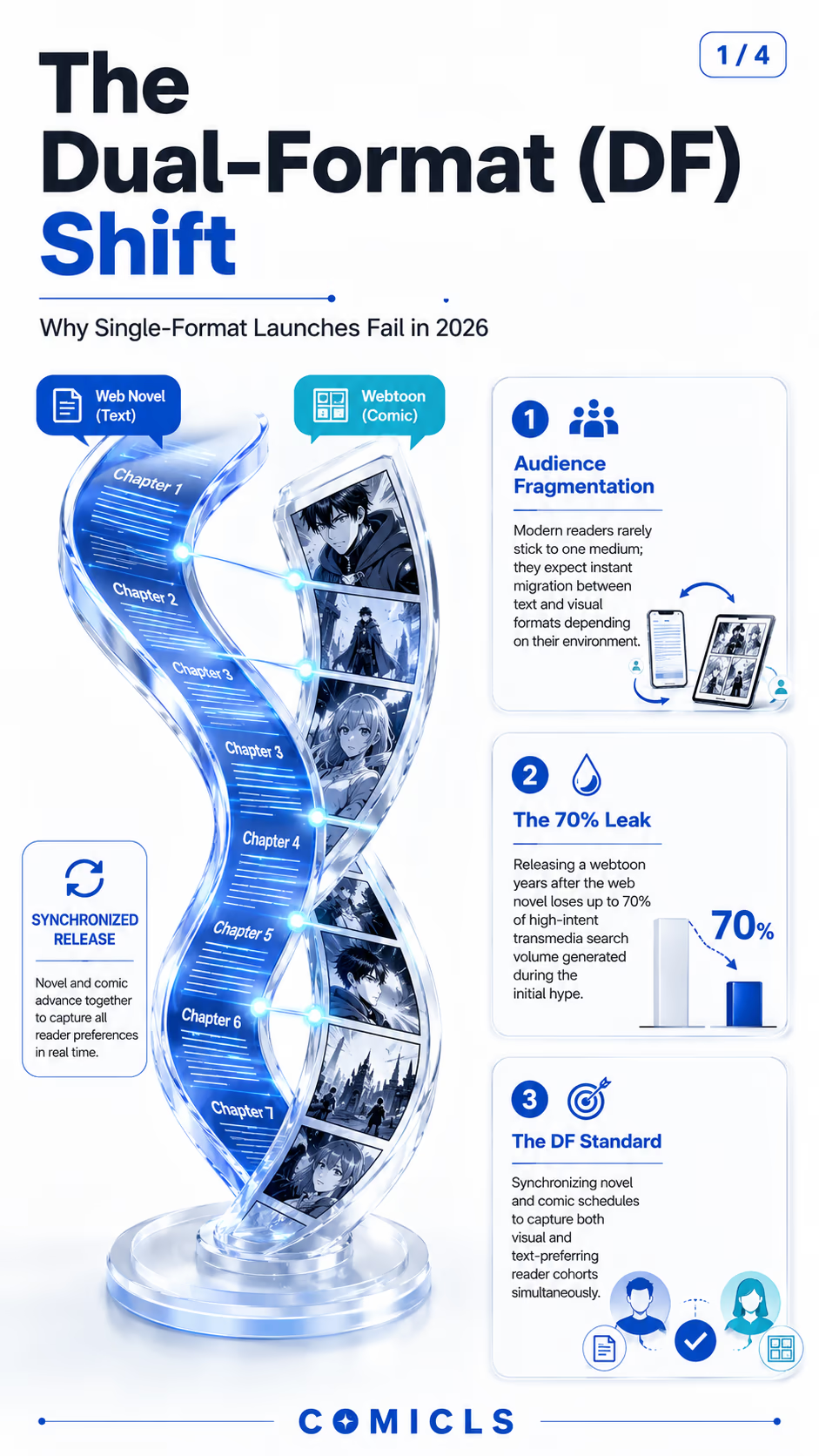
Why Dual-Format (DF) Launches are 2026’s Top Transmedia Trend
In 2026, launching a webnovel or webtoon in isolation is a missed opportunity. Discover how the Dual-Format (DF) Standard synchronizes releases to compound audience growth.
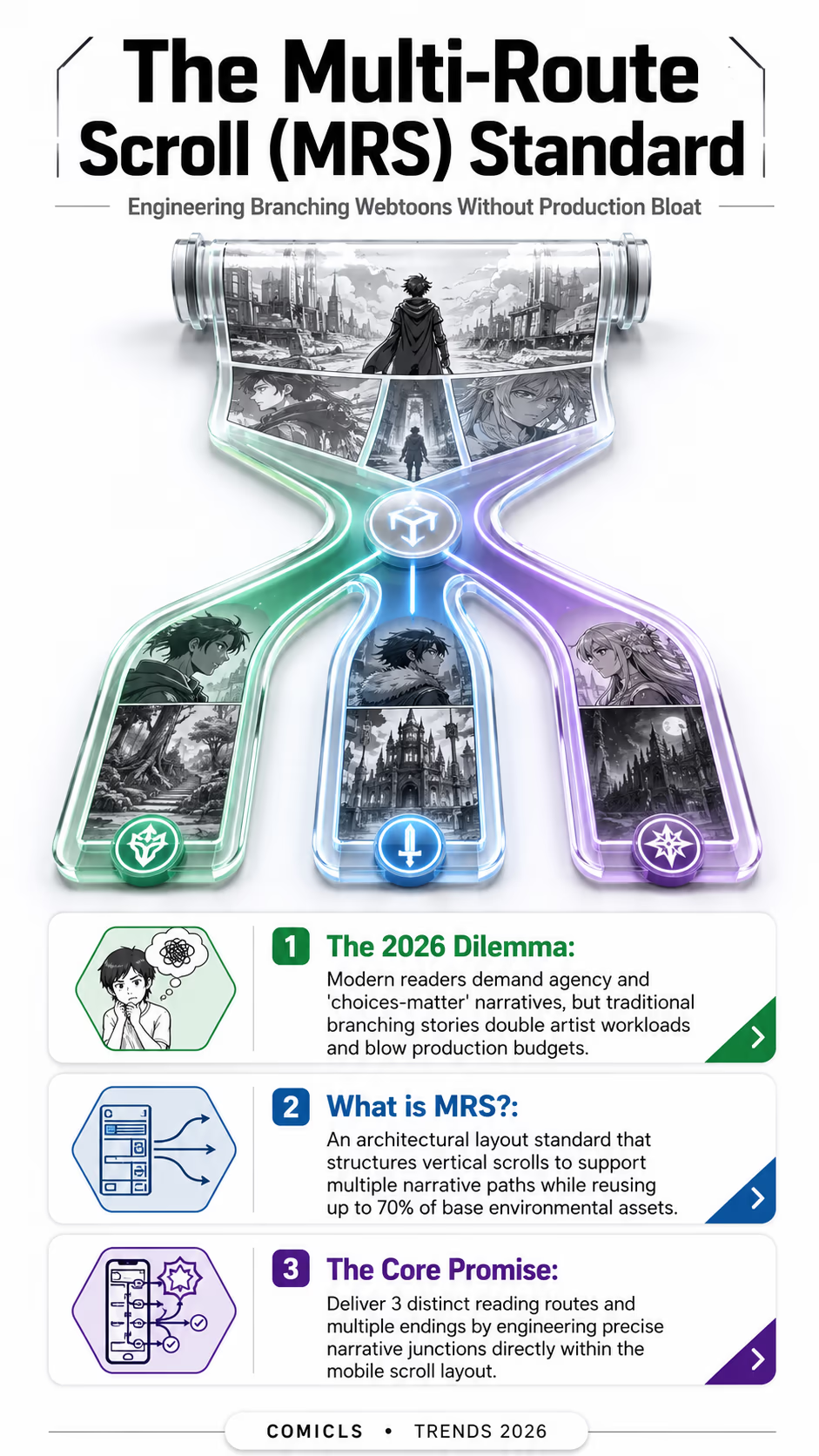
The 2026 ‘Multi-Route Scroll’ (MRS) Standard
Discover the 2026 MRS Standard for interactive vertical storytelling. Learn how to engineer branching webtoon routes while maintaining visual asset efficiency.
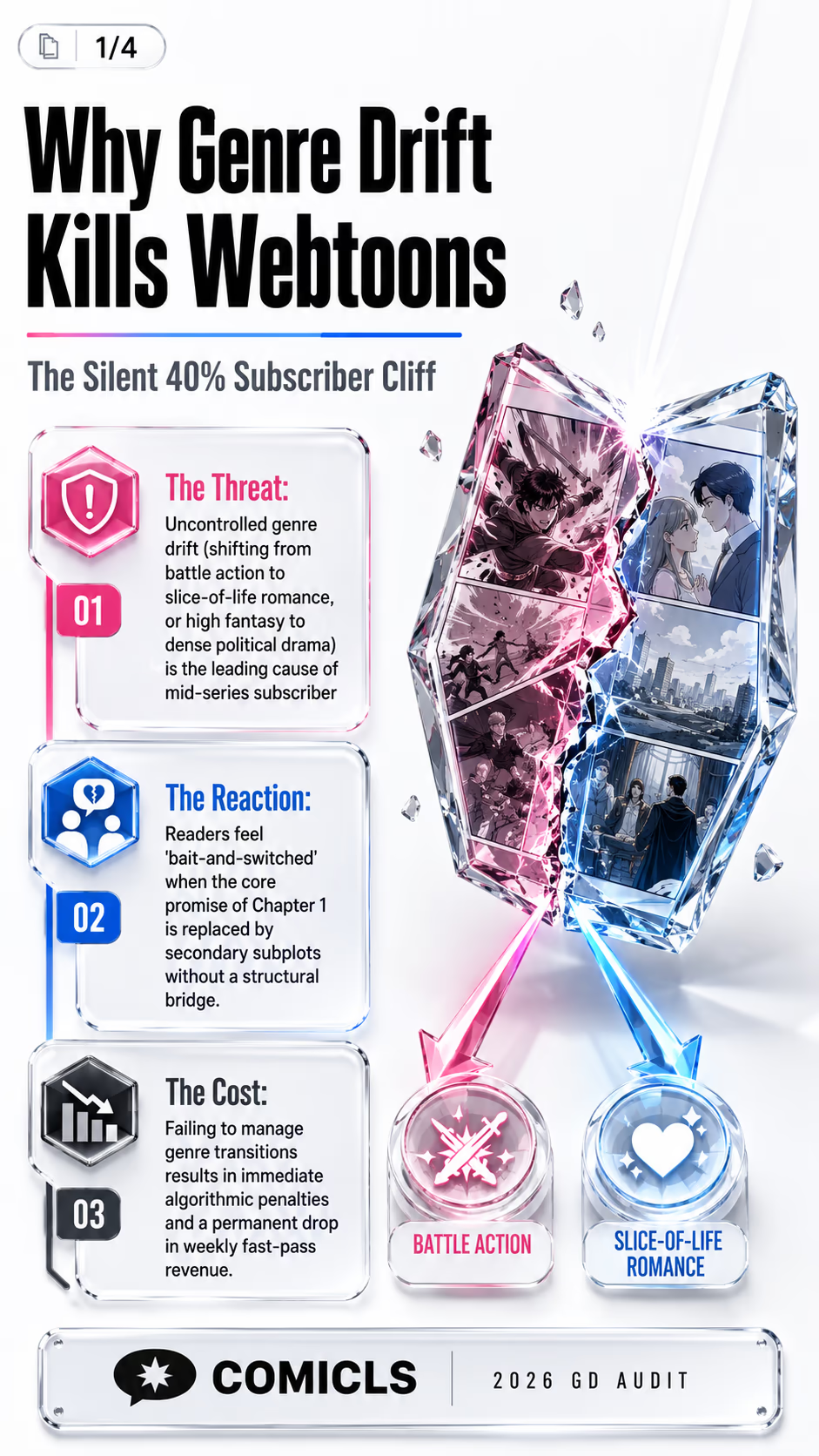
Why Genre Drift Kills Webtoons: The 2026 GD Audit
When long-form series shift from action to romance or fantasy to politics, reader churn spikes. Master the 2026 GD Audit to transition genres safely.
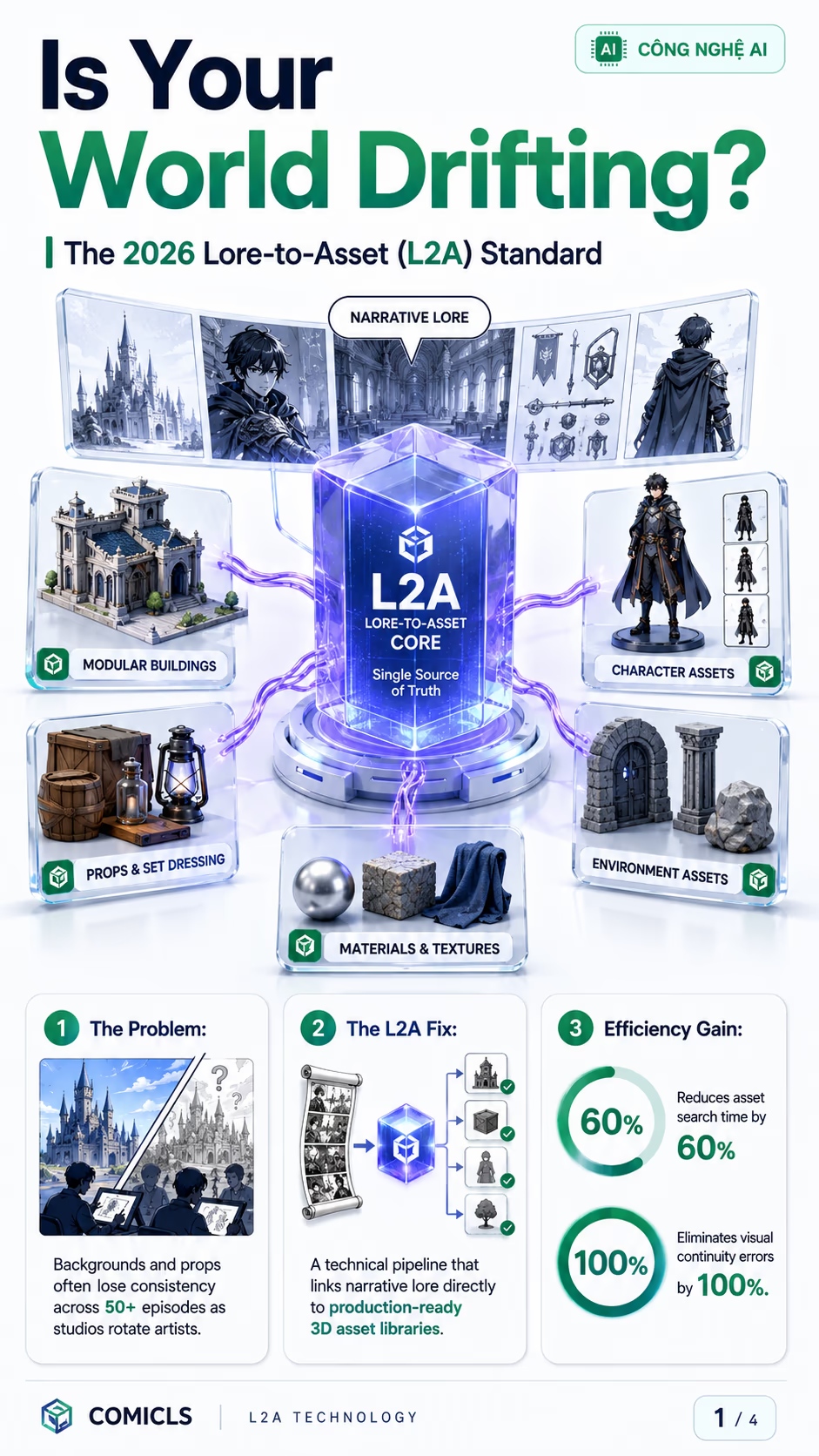
Does Your Lore Scale? The 2026 L2A Tech Standard
Discover the 2026 L2A standard for linking narrative lore to production-ready 3D assets. Solve background drift and boost studio efficiency by 40%.
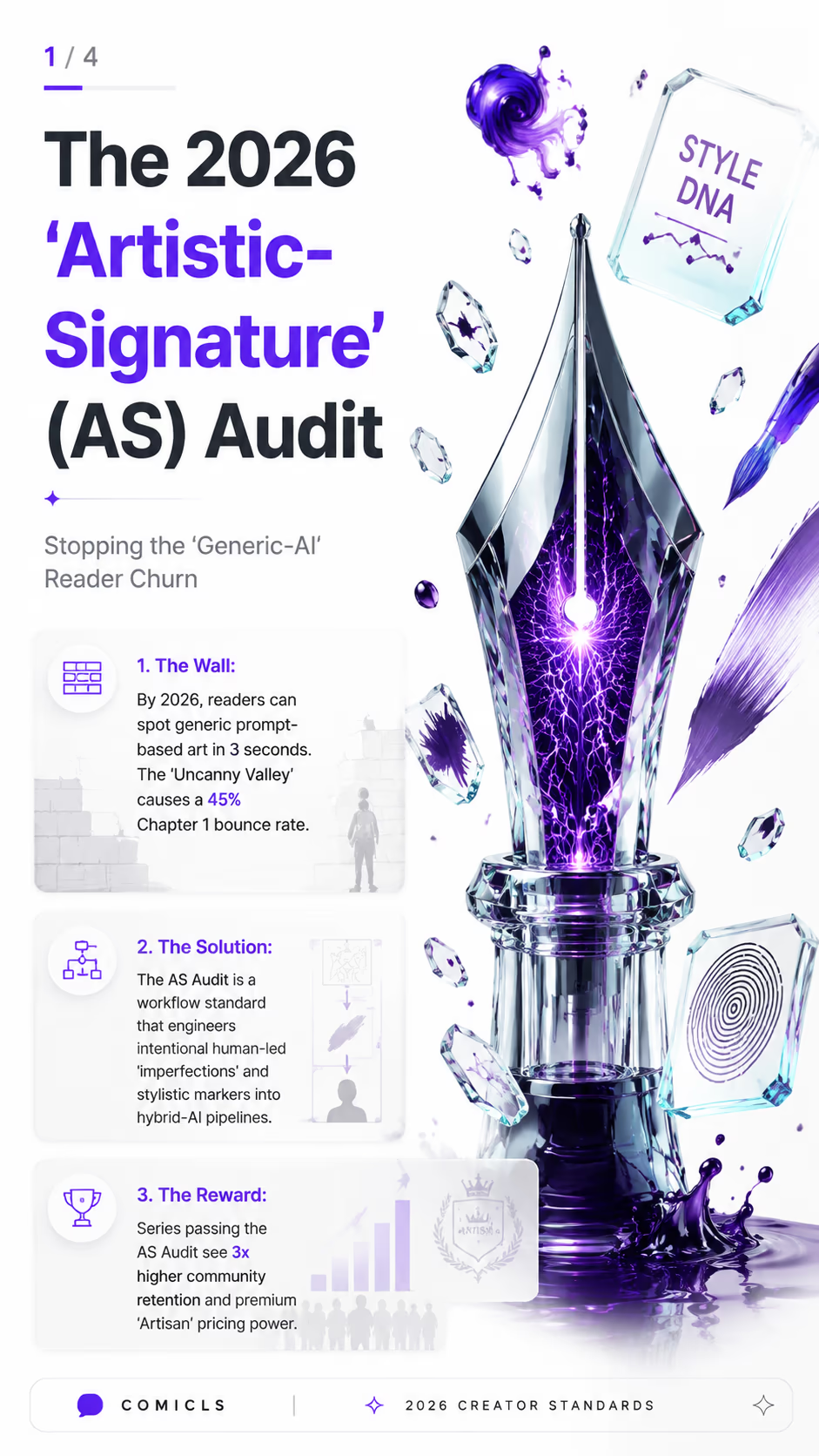
The 2026 ‘Artistic-Signature’ (AS) Audit: Fixing the AI-Uncanny Valley
Discover the 2026 AS Audit—a strategic framework for creators to engineer 'human-signature' markers into their webtoons and manga to bypass reader AI-fatigue.
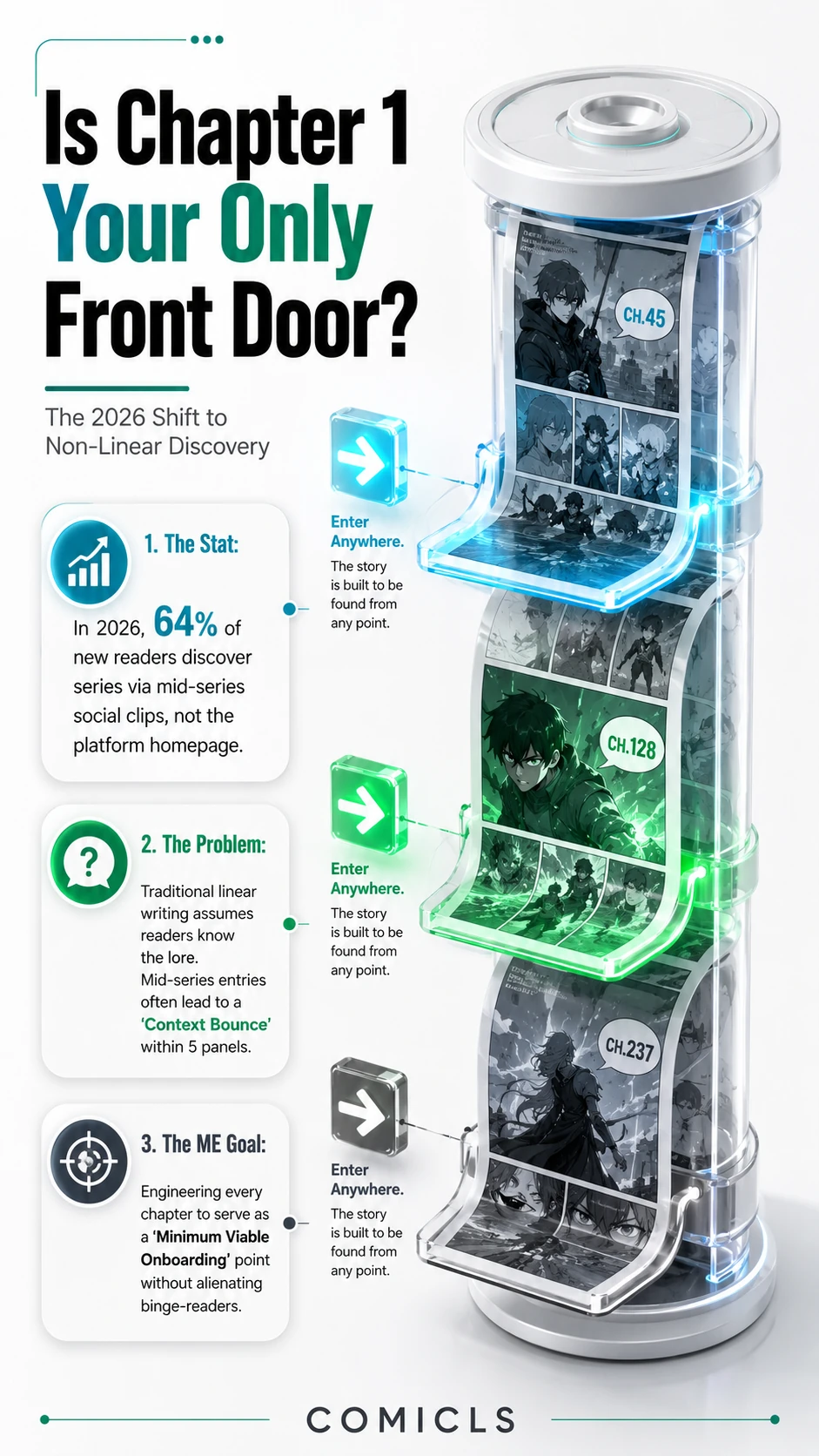
Does Your Webtoon Pass the 'Multi-Entry' (ME) Test?
In 2026, readers no longer start exclusively at Chapter 1. Discover the Multi-Entry (ME) Standard to turn every chapter into a high-conversion 'front door' for your series.
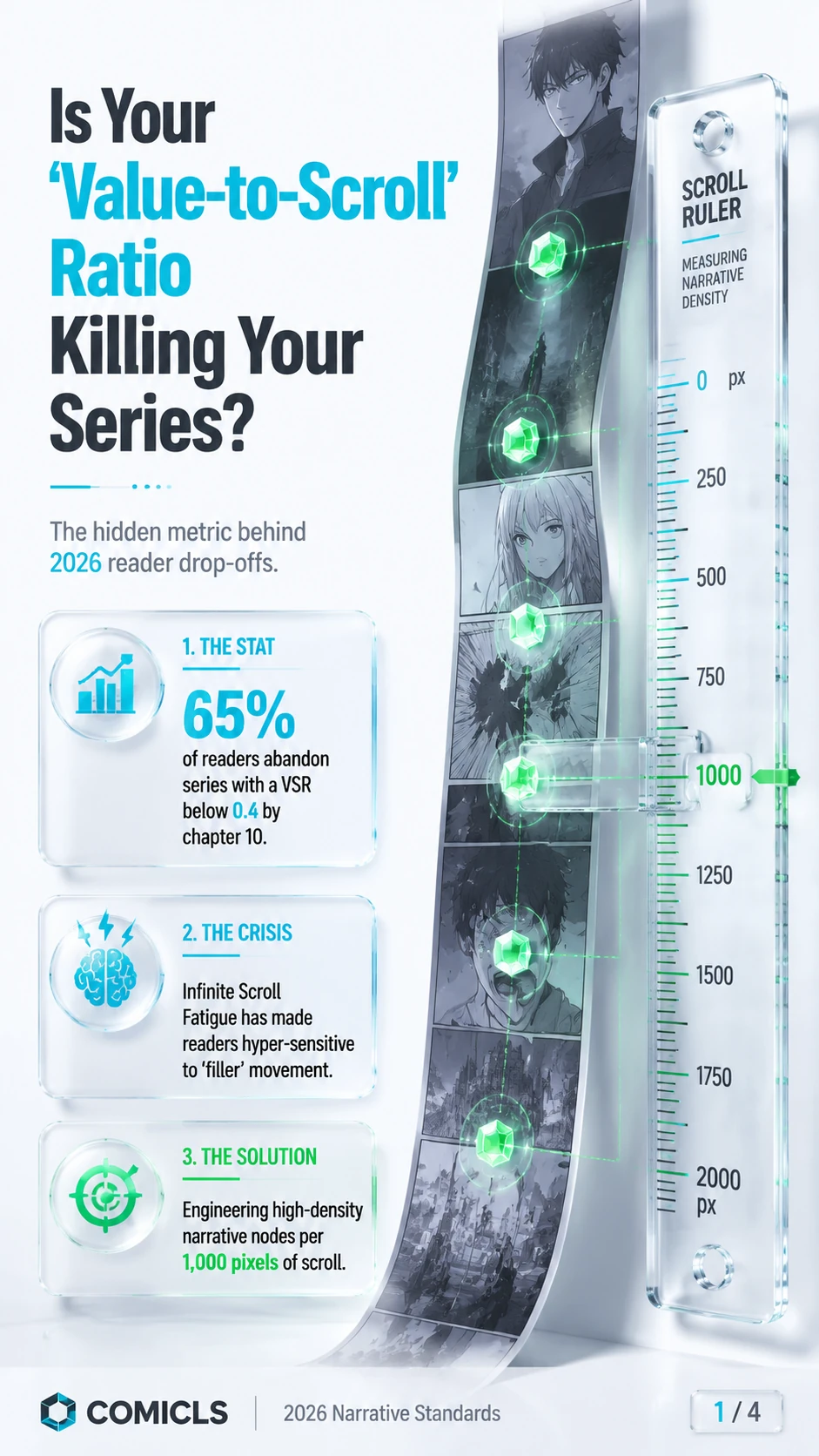
Fixing the 'Value-to-Scroll' Ratio in Your Webtoon
In 2026, 'Infinite Scroll Fatigue' is the leading cause of series abandonment. Learn how the Value-to-Scroll (VSR) metric helps creators engineer high-retention chapters.
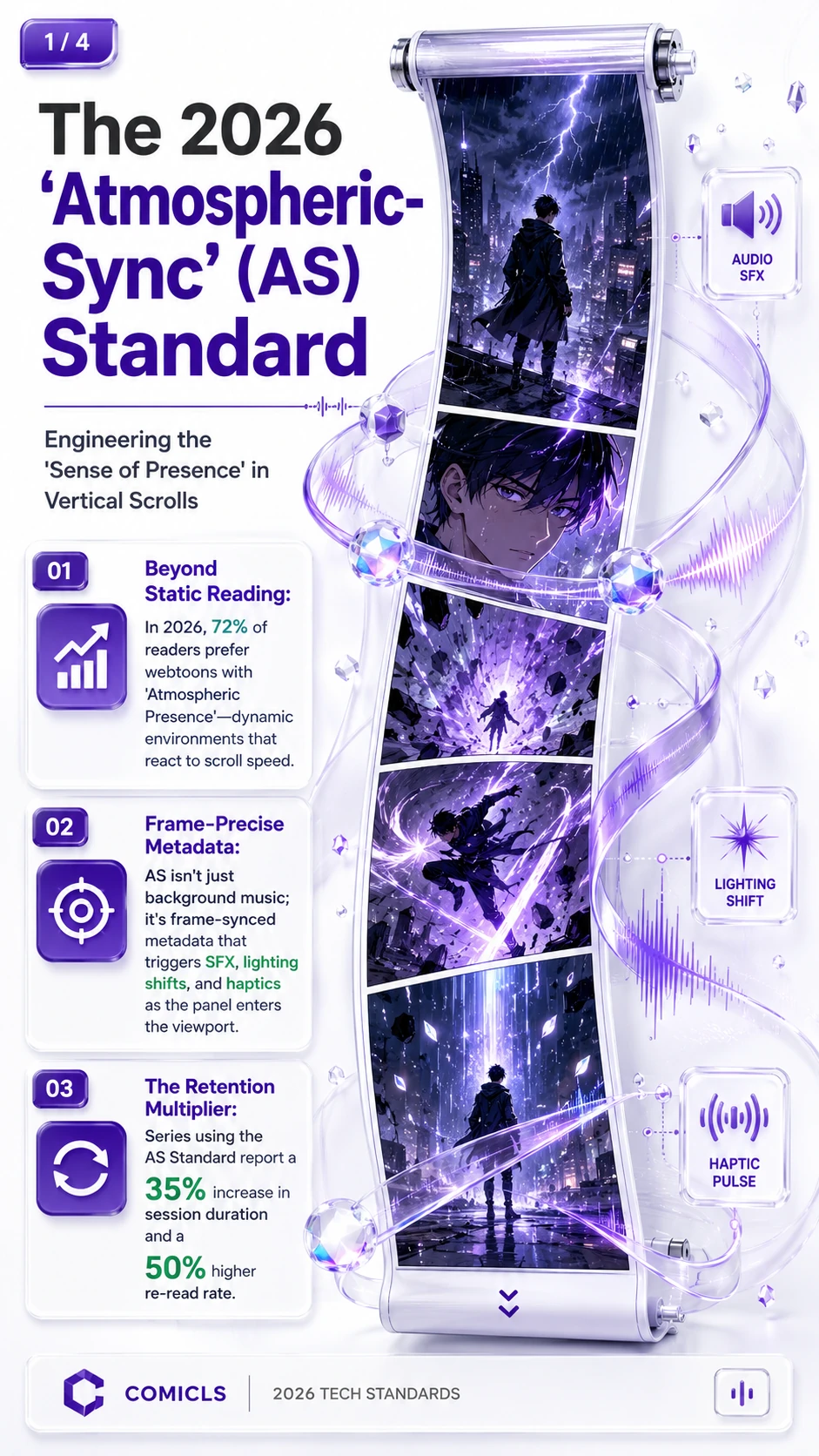
The 2026 ‘Atmospheric-Sync’ (AS) Standard: Engineering Immersive Audio
Master the 2026 AS Standard to bridge the gap between static panels and cinematic immersion. Learn to engineer frame-precise audio-visual metadata for vertical scroll comics.
Trends
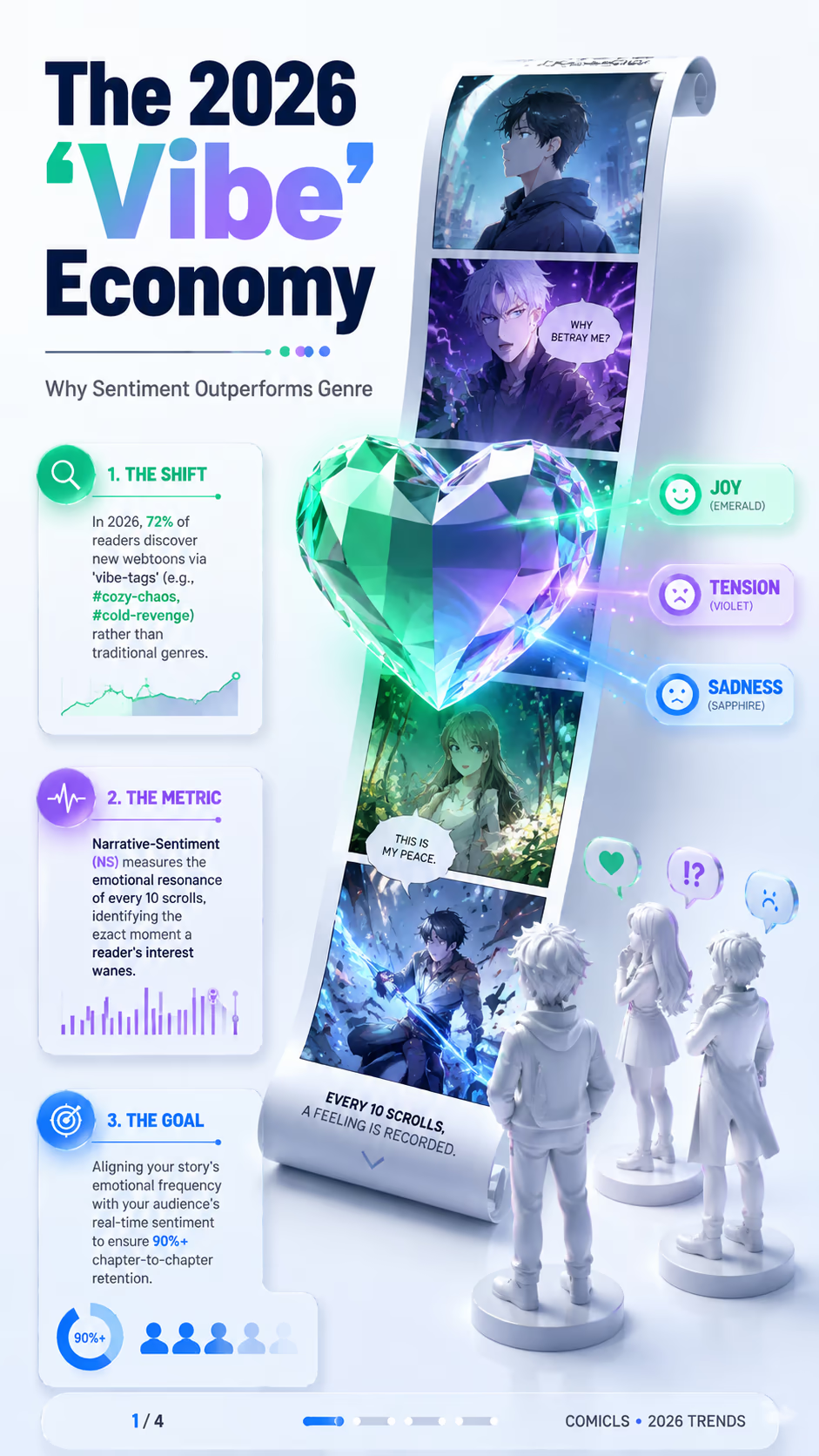
Does Your Story Vibe? The 2026 NS Audit
In 2026, 'vibes' outperform genres. Learn how the Narrative-Sentiment (NS) Audit uses real-time emotional data to optimize story arcs for maximum reader retention.
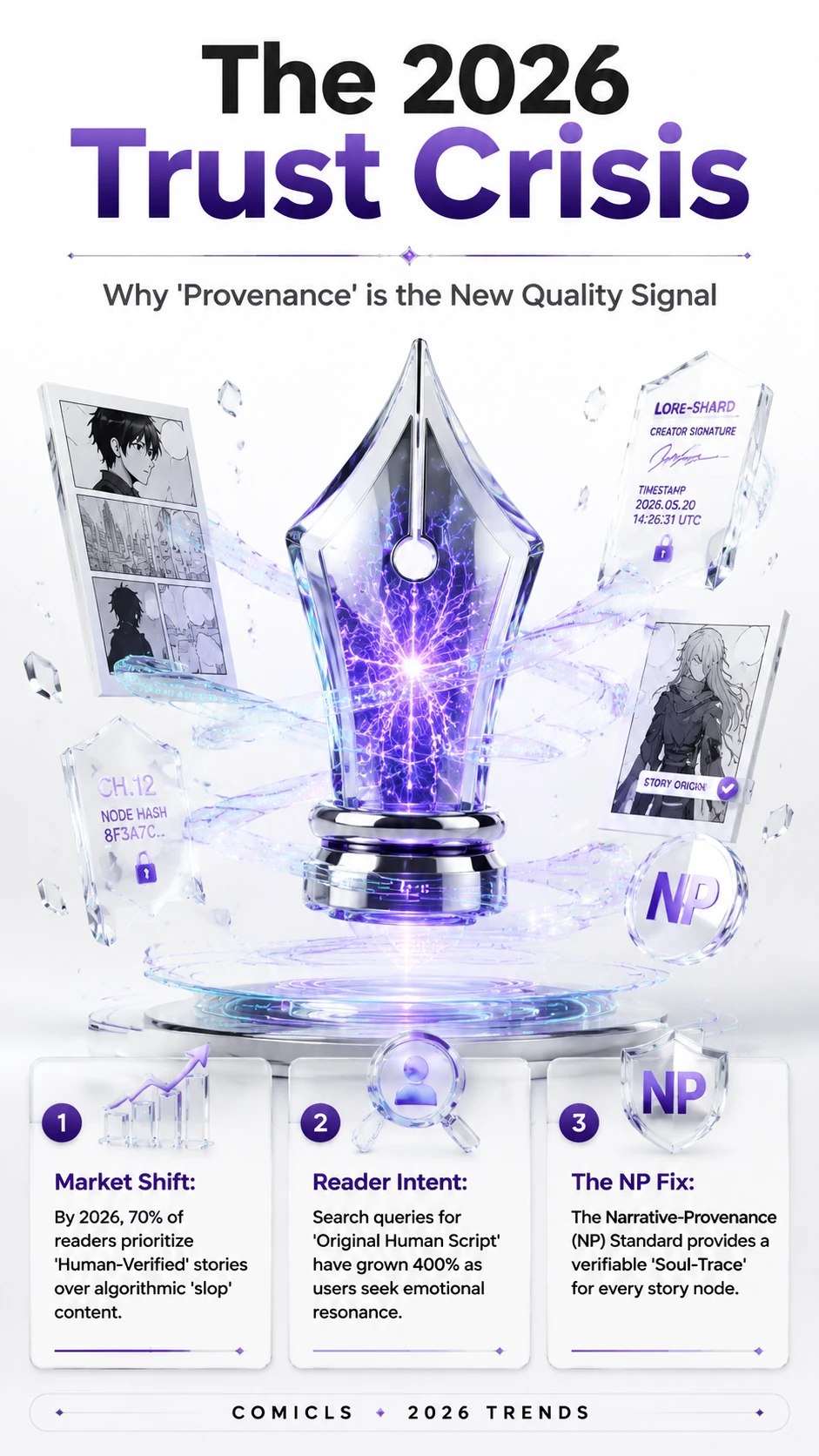
Why Readers Search for ‘Provenance’ in 2026 Webtoons
In 2026, the 'Narrative-Provenance' (NP) Standard has emerged as the primary trust signal for comic readers. Learn how this metadata framework verifies human intent and original storytelling in an AI-saturated landscape.
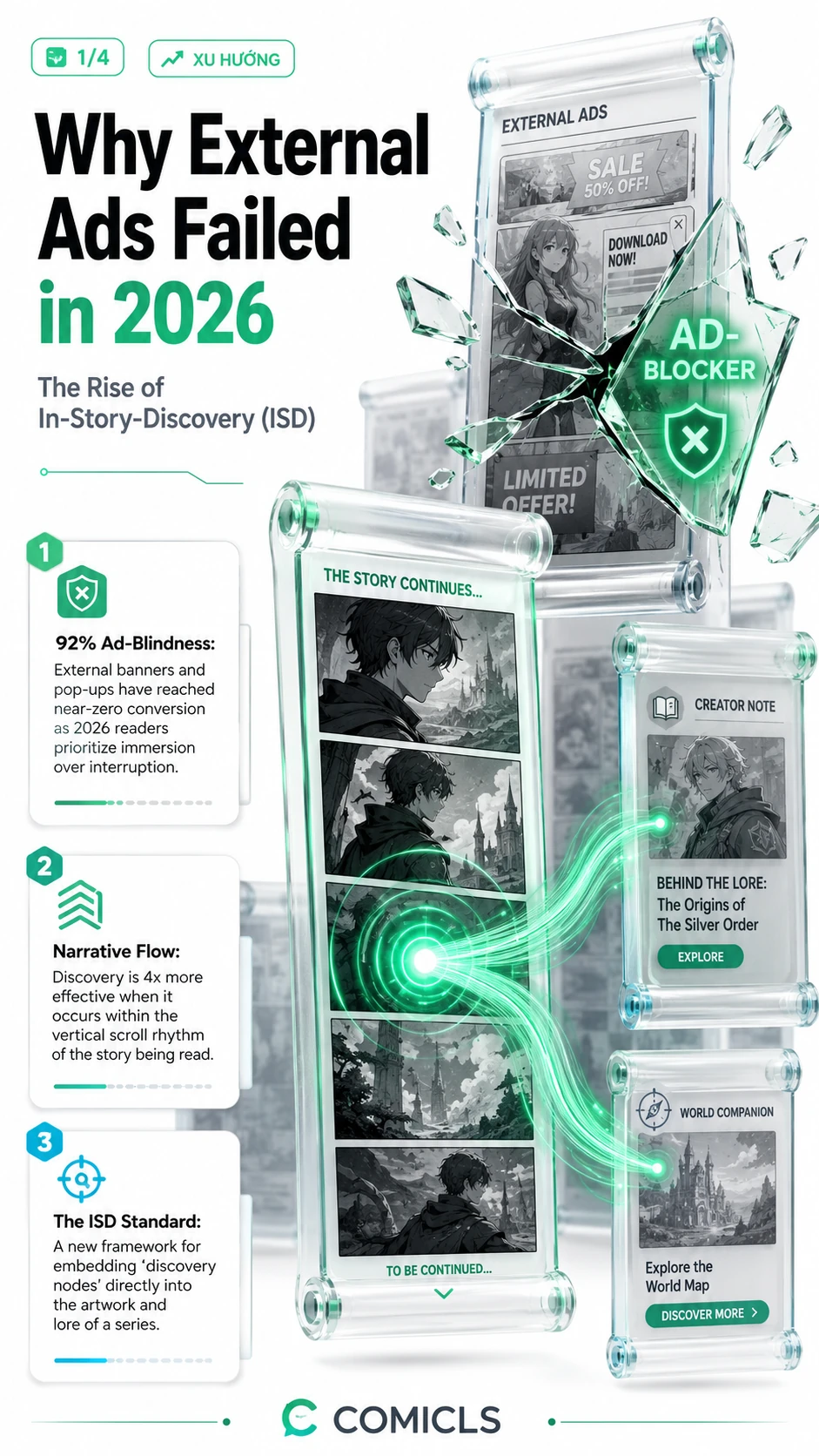
The 2026 ‘In-Story-Discovery’ (ISD) Shift: Ending External Ad Reliance
Discover why the 2026 In-Story-Discovery (ISD) shift is replacing external ads with organic narrative portals. Learn to engineer reader migration through immersive story nodes.
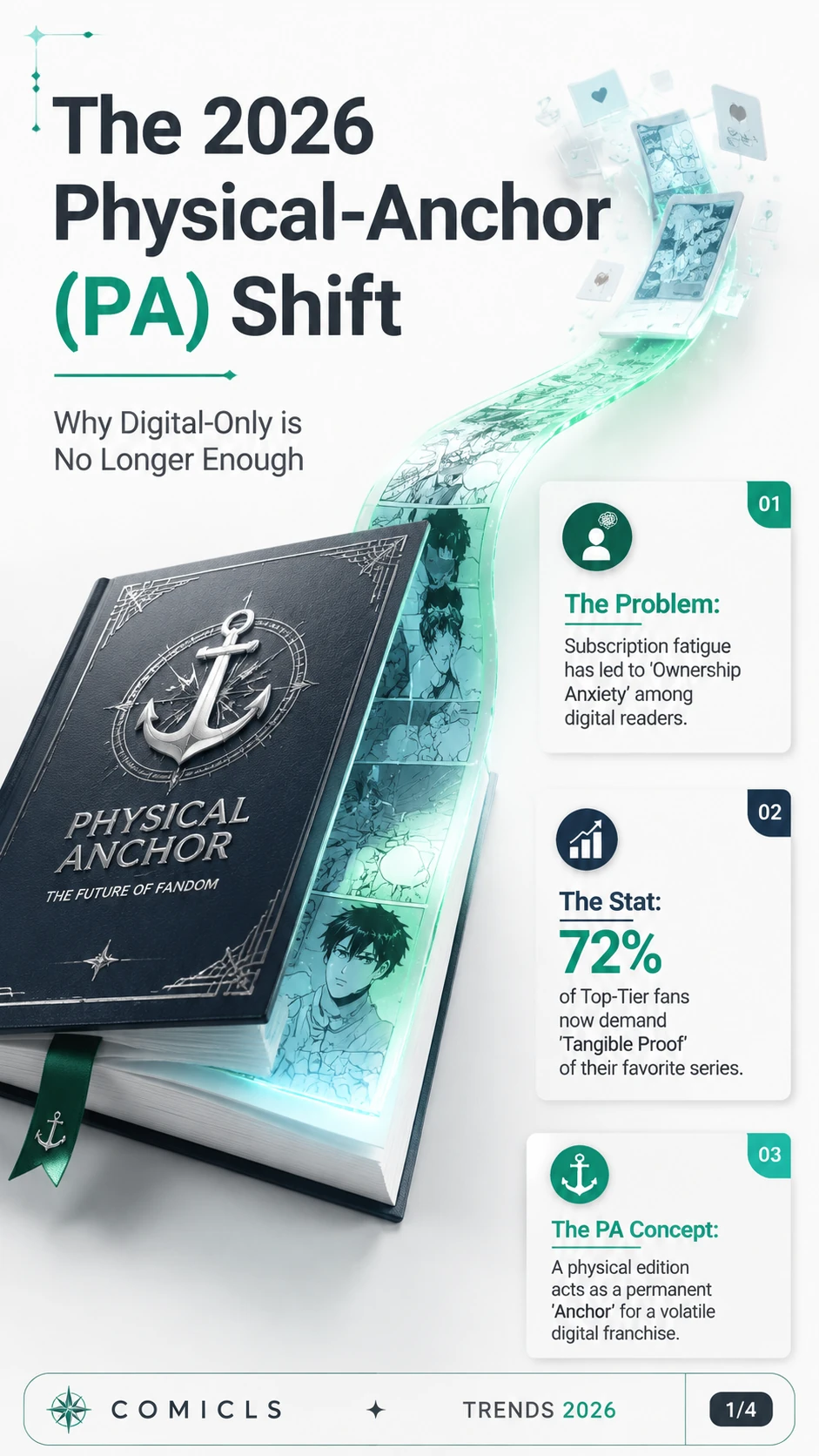
Why the ‘Physical-Anchor’ (PA) Shift is Saving Digital Comic ROI
In 2026, digital-only series face 'ownership fatigue.' The Physical-Anchor strategy bridges the gap, turning digital readers into high-value physical collectors.
Latest
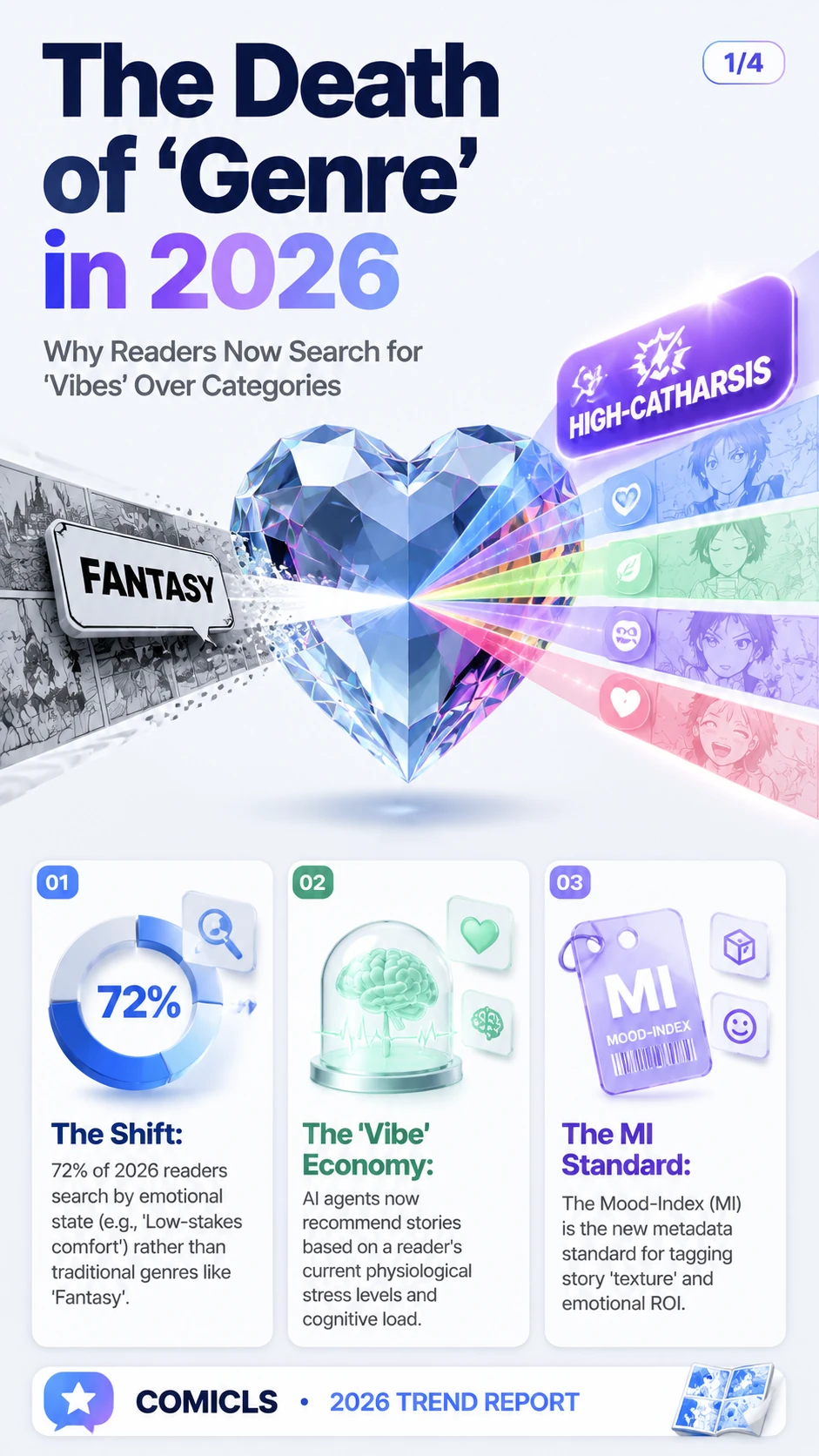
The 2026 Mood-Index (MI): Why Readers Search by 'Vibe' Over Genre
In 2026, readers are ditching genre tags for 'Mood-Index' searches like 'Low-Friction Healing' or 'High-Density Hype.' Learn how to optimize your story for the sentiment-driven economy.
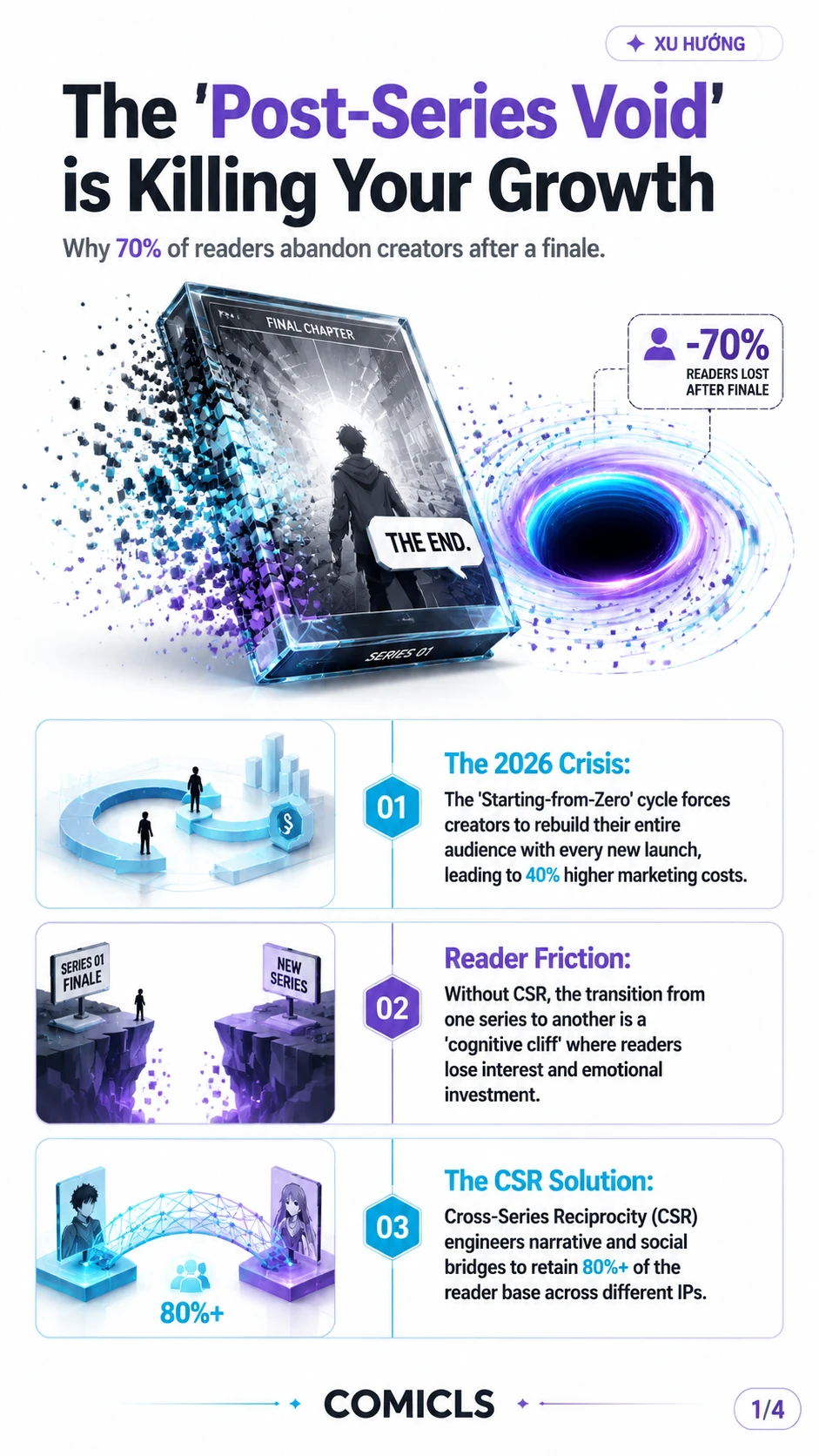
Ending the ‘Starting-from-Zero’ Launch: The 2026 CSR Standard
Discover how to break the cycle of losing readers after a series ends. The 2026 CSR Standard provides a framework for engineering seamless reader migration across your entire catalog.
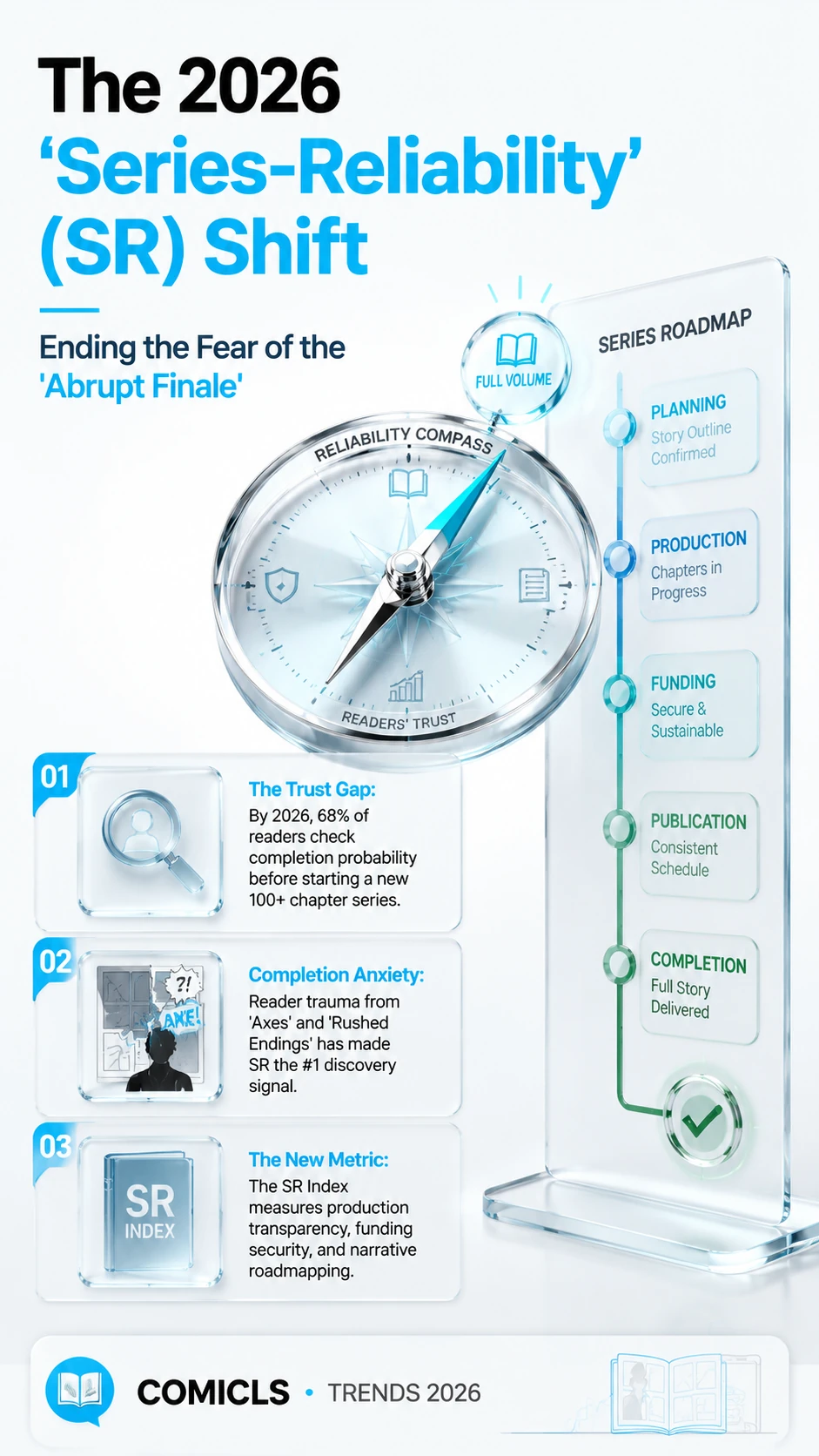
Why the ‘Series-Reliability’ (SR) Index is 2026’s Top Reader Trust Signal
In 2026, 'The Axe' is the biggest fear for webtoon readers. The Series-Reliability (SR) Index has emerged as the primary signal that a narrative will reach its conclusion.
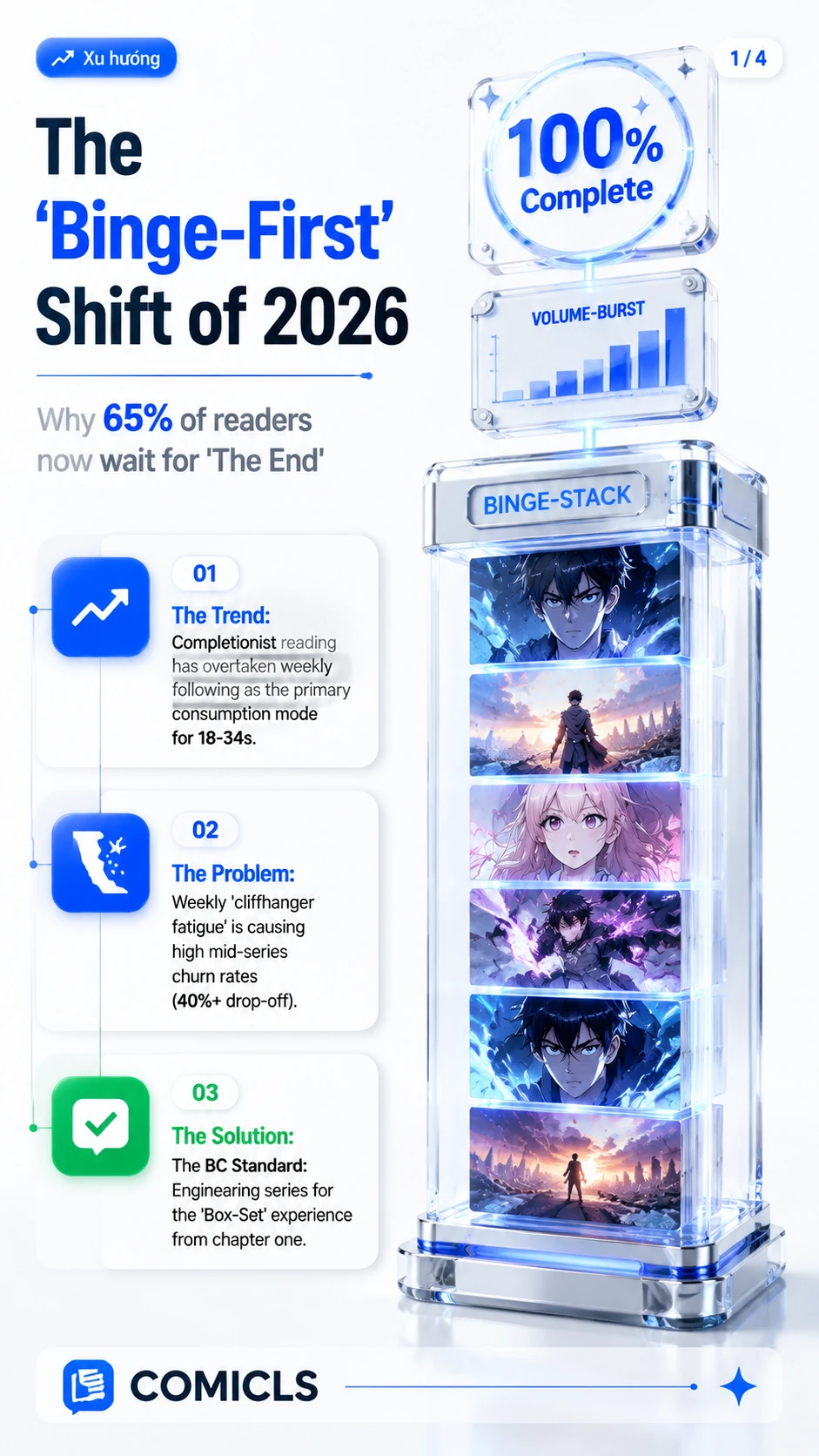
The 2026 'Binge-Cycle' (BC) Standard: Engineering for Completionists
Discover why 65% of readers now wait for series completion and how the Binge-Cycle (BC) Standard re-engineers release architectures for maximum ROI.
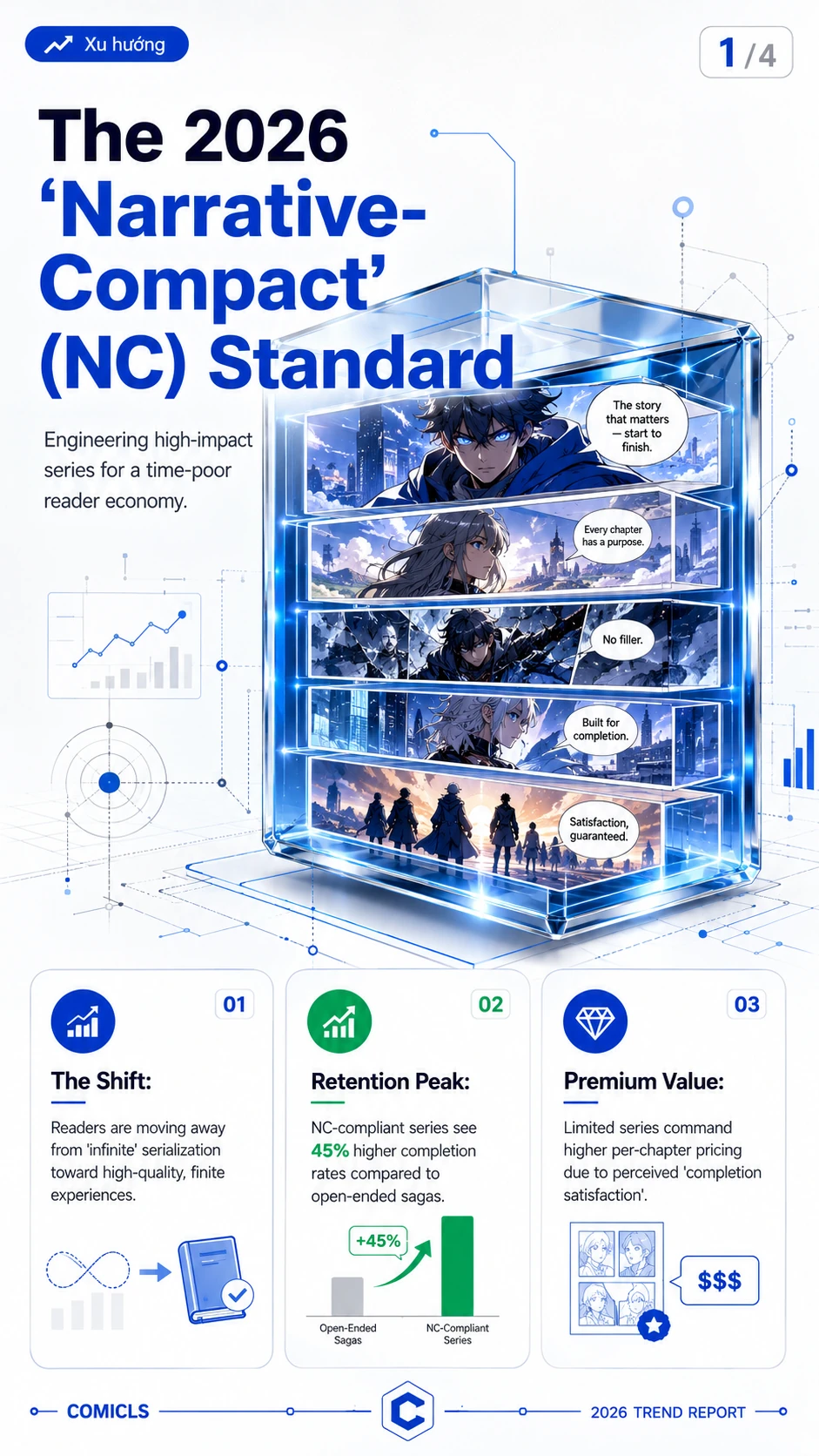
The 2026 ‘Narrative-Compact’ (NC) Standard: Engineering Finite Series
In an era of infinite scroll fatigue, the 2026 Narrative-Compact (NC) Standard is redefining value. Discover how to engineer high-density, finite series that respect reader time and drive premium monetization.

The 2026 ‘Zero-Party Data’ (ZPD) Strategy: Engineering Consent-Driven Personalization for Independent Webtoon Studios
Discover the 2026 ZPD framework for webtoon studios. Master the art of consent-driven personalization to own your reader data and boost LTV without intrusive tracking.
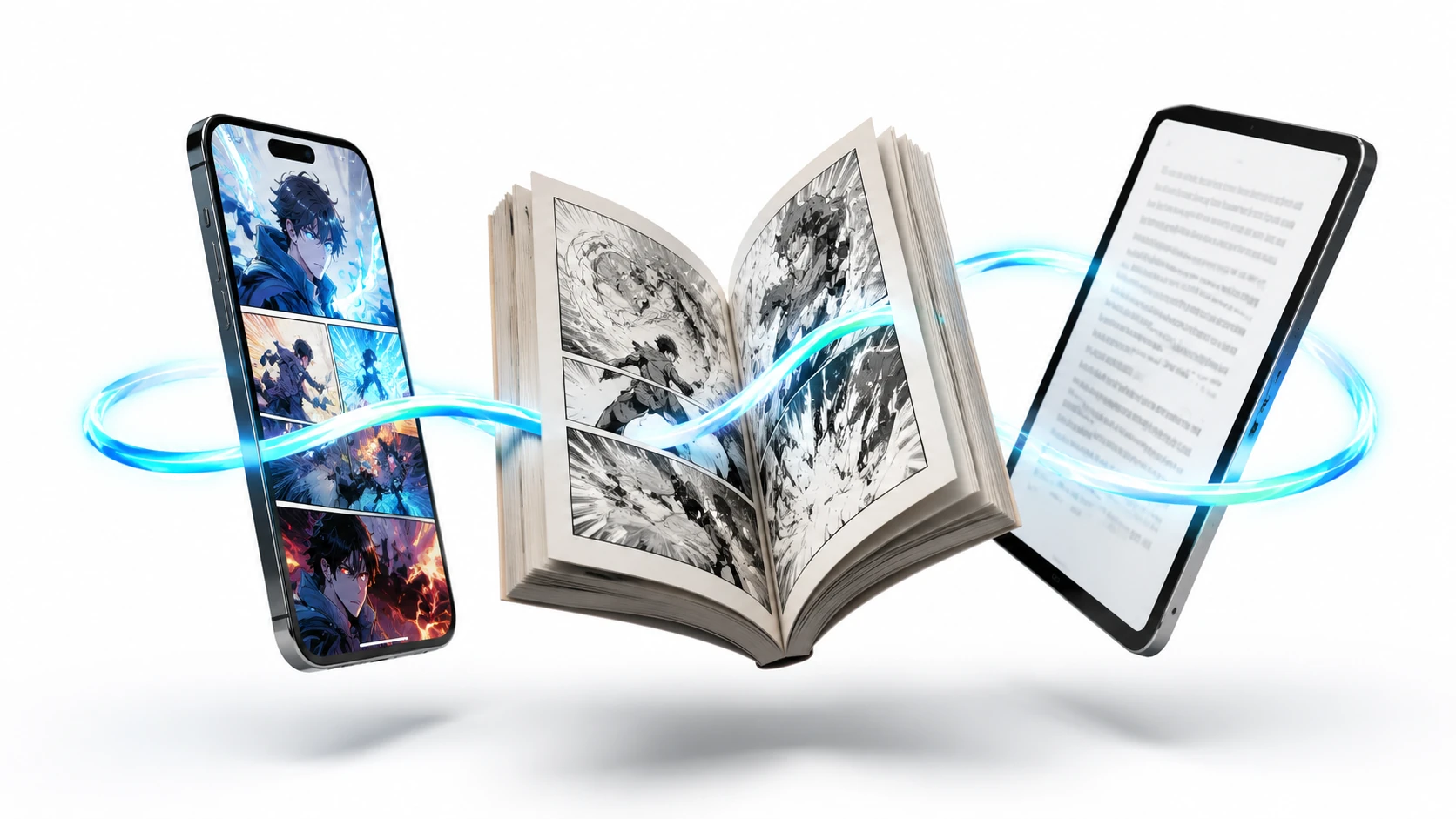
The 2026 ‘Genre-Fluidity’ (GF) Standard: Engineering Webtoon IP for the Cross-Format ‘Poly-Reader’ Demographic
In 2026, the 'Poly-Reader' has replaced the format-loyal fan. Discover the Genre-Fluidity (GF) standard used to engineer IP that thrives across webtoons, manga, and novels simultaneously.
The 2026 ‘Narrative-Persistence’ (NP) Standard: Engineering Long-Term Memory Retention for Serialized Webtoon Franchises
In 2026, the biggest threat to webtoon success is 'Narrative Decay.' Learn how the Narrative-Persistence (NP) Standard uses memory engineering to keep readers hooked across long hiatuses and high-volume reading habits.

The 2026 ‘Emotional-Resonance’ (ER) Index: How Sentiment-Driven Discovery is Disrupting Traditional Webtoon Genres
In 2026, the traditional genre-tagging system has collapsed. Discover how the Emotional-Resonance (ER) Index and sentiment-driven AI are redefining how readers find their next favorite story.

The 2026 ‘Hyper-Genre’ Synthesis Strategy: Engineering Webtoon IP for the Post-Category Discovery Era
Discover how the shift from static categories to hyper-genre synthesis is redefining webtoon discovery. Learn to engineer your IP for the 2026 AI recommendation landscape.

The 2026 ‘Omni-Format’ Consumption Shift: Engineering IP for the Multi-Modal Reader Habit
The era of platform-exclusive formats is over. Discover how the 2026 Omni-Format shift is forcing creators to engineer IP that flows seamlessly between vertical scroll, paginated manga, and text-heavy light novels.

The 2026 ‘Character-as-a-Service’ (CaaS) Standard: Engineering Webtoon Entities for the Av
The 2026 CaaS model shifts focus from story-centric IP to character-centric equity. Learn how to engineer characters that function as independent revenue engines across the global digital economy.

The 2026 ‘Character-Depth’ Audit: Engineering Long-Term Retention through Affective Narrat
As readers move away from 'cliffhanger fatigue' in 2026, the Character-Depth Audit emerges as the primary framework for securing long-term IP loyalty. Discover how to engineer affective bonds that drive retention through character-driven architecture.

The 2026 ‘Micro-Moment’ Publishing Strategy: Engineering Comics for the Gaps in Daily Life
The 2026 shift toward 'Micro-Moment' publishing is redefining how webtoons are structured, moving away from long-form chapters to content engineered for specific daily windows. This strategy focuses on capturing the 5-to-15 minute gaps in a reader's schedule through rhythm-synced narratives.

The 2026 ‘Dual-Pane’ Reading Habit: How Multi-Device Synchronization is Redefining Webtoon
In 2026, the vertical scroll is no longer a solitary experience. Discover how readers are using 'Dual-Pane' setups to sync webtoon lore, maps, and soundtracks across multiple devices simultaneously.

The 2026 Silver-Economy Surge: Why Webtoons are Pivoting to the 45+ Demographic
In 2026, the webtoon industry is looking beyond Gen Alpha to the 'Silver Economy.' Discover why creators are pivoting to mature narratives to capture the 45+ demographic.

The 2026 ‘Binge-Wait’ Optimization (BWO) Standard: Engineering Narrative Density for Hybri
Discover how the 'Binge-Wait' phenomenon is reshaping webtoon pacing in 2026. Learn to engineer narrative density that satisfies both weekly fans and long-term binge-readers.
The 2026 ‘Post-Hero’ Narrative Shift: Why Gen Alpha Readers are Abandoning Traditional Pro
In 2026, the traditional Hero's Journey is being replaced by 'Post-Hero' narratives. Discover why Gen Alpha readers prioritize moral ambiguity and system-navigation over singular protagonists.