The 2026 ‘Narrative-Persistence’ (NP) Standard: Engineering Long-Term Memory Retention for Serialized Webtoon Franchises
In 2026, the biggest threat to webtoon success is 'Narrative Decay.' Learn how the Narrative-Persistence (NP) Standard uses memory engineering to keep readers hooked across long hiatuses and high-volume reading habits.
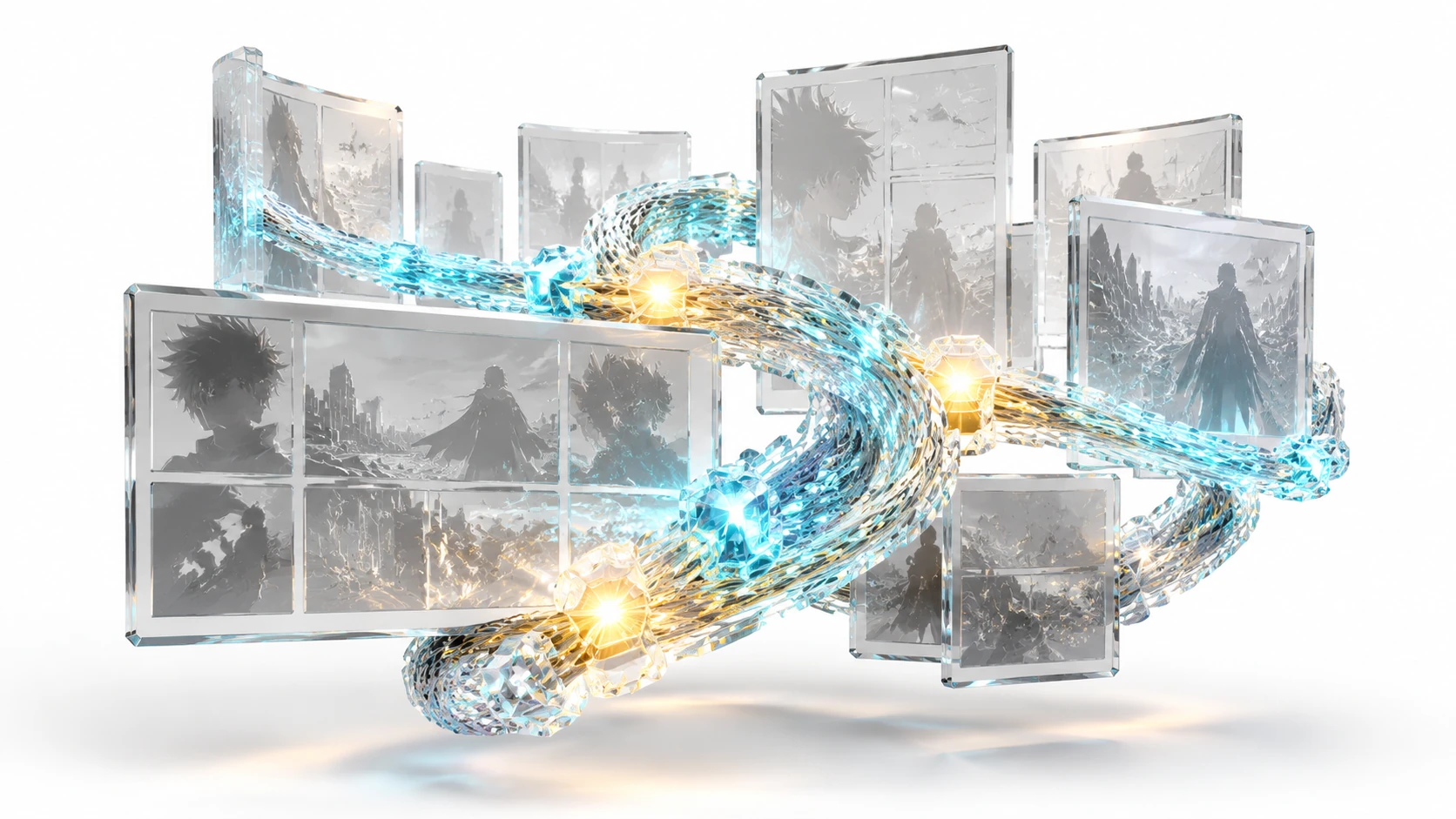
In the hyper-saturated comic market of 2026, the primary enemy of the independent creator is no longer 'bad art' or 'poor writing'—it is the human brain's natural limit for serialized information. As readers consume 10-15 chapters of different series daily, 'Narrative Decay' has become the leading cause of series abandonment. The Narrative-Persistence (NP) Standard is a technical framework designed to combat this cognitive friction, ensuring that your story remains 'cached' in the reader's long-term memory despite high-frequency distractions and the flood of AI-generated content.
The Crisis of Narrative Decay: Why Readers Are Dropping Hits
By 2026, the average webtoon reader is managing a subscription list that would have been unthinkable five years ago. With AI-assisted production pipelines enabling daily updates and a massive influx of global content, the reader's 'Working Memory' is constantly being overwritten. This leads to Narrative Decay—a state where a reader remembers that they *like* a story, but cannot remember *what is currently happening* or *why they should care.* When this occurs, the effort required to re-engage with the story (the 're-entry cost') often exceeds the perceived reward, leading to a silent exit from the series.
The Quantitative Impact of Memory Friction
Data from the 2026 COMICLS Reader Habit Study shows that series with low Narrative Persistence scores see a 45% higher churn rate during mid-season lulls compared to NP-optimized series. Furthermore, the 'Wait-to-Binge' segment of the audience—readers who let 10 chapters accumulate before reading—are 80% more likely to abandon a series if the narrative doesn't utilize persistence anchors. This isn't just an artistic problem; it's a financial one. Low retention directly correlates to lower ad revenue and fewer premium currency conversions.
Visual Anchor Engineering (VAE): The Science of Recognition
The first pillar of the NP Standard is Visual Anchor Engineering. In the fast-scrolling environment of mobile reading, recognition must happen at a pre-conscious level. VAE moves beyond traditional character design by focusing on 'Hyper-Distinctive Assets' (HDAs). An HDA is a visual element—a specific hairstyle, a unique piece of glowing jewelry, or a recurring environmental effect—that is unique to your series. If a reader can identify your character from a blurry thumbnail or a 0.1-second scroll, you have successfully engineered a visual anchor.
- Chromic Signature Mapping: Assigning a specific, non-standard color hex to each lead character.
- Silhouette Integrity: Ensuring characters are distinguishable by their outline alone.
- Prop-to-Person Linking: Associating characters with unique, recurring objects that serve as memory triggers.
Mnemonic Beat Mapping: Designing the 'Save Point'
Mnemonic Beat Mapping (MBM) is the practice of structuring a chapter around a single, high-impact emotional and visual climax. Unlike a standard cliffhanger, which is designed to provoke anxiety about the future, a Mnemonic Beat is designed to cement the present. It is the 'Mental Save Point' of the chapter. By 2026, successful creators are using 'Compositional Spiking'—dramatically changing the panel layout or color depth for just one or two panels—to signal to the reader's brain that *this* is the information that needs to be stored.
Modular Lore Architecture: Managing the Cognitive Load
Lore is the 'heavy lifting' of storytelling. In the 2026 NP Standard, we use Modular Lore Architecture (MLA) to reduce the weight. This involves 'Schema-Linking'—tying complex fantasy or sci-fi concepts to real-world metaphors that the reader already understands. Instead of a 10-page explanation of a magic system, an NP-optimized story might describe it as 'Digital Currency for the Soul.' This allows the reader to use existing mental frameworks to store new information, drastically reducing the cognitive energy required to follow the plot.
Implementing the NP Standard: A Step-by-Step Workflow
Transitioning to the NP Standard requires a shift in the production pipeline. It begins in the scripting phase, where 'Lore-Density Audits' are performed to ensure no single chapter introduces more than two new major concepts. In the storyboarding phase, 'Visual Anchor Checks' are conducted to ensure character clarity across different lighting and action sequences. Finally, in the post-production phase, 'Retention Metadata' is added to the series' digital file to help AI-agent discovery engines understand the story's key memory nodes.
The Future of Franchise Stability
As we look toward 2027 and beyond, the gap between 'Viral Hits' and 'Sustainable Franchises' will be defined by Narrative Persistence. A story that goes viral but is quickly forgotten cannot support a long-term creator career. A story that is engineered for memory, however, becomes a part of the reader's identity. The 2026 NP Standard is not about limiting creativity; it is about providing the technical infrastructure that allows creativity to survive in an era of infinite noise.
FAQ
What is the Narrative-Persistence (NP) Standard?
It is a 2026 engineering framework for webtoons and manga designed to maximize reader recall and minimize churn by using visual anchors, mnemonic pacing, and modular lore.
How does NP differ from traditional storytelling?
Traditional storytelling assumes the reader's full attention; NP engineering assumes the reader is distracted and following dozens of other stories simultaneously, using cognitive shortcuts to maintain engagement.
What is a Mnemonic Beat?
A Mnemonic Beat is a specific panel or sequence designed to be the 'representative memory' of a chapter, serving as a mental save point for the reader.
Why is 'Narrative Decay' a problem in 2026?
The sheer volume of content and high-frequency updates lead to readers forgetting plot details, which increases 're-entry friction' and causes them to drop series.