Comics news and insights for your local market
Follow webtoon, manga, manhwa, AI comic, creator economy, and storytelling trends curated for each region.
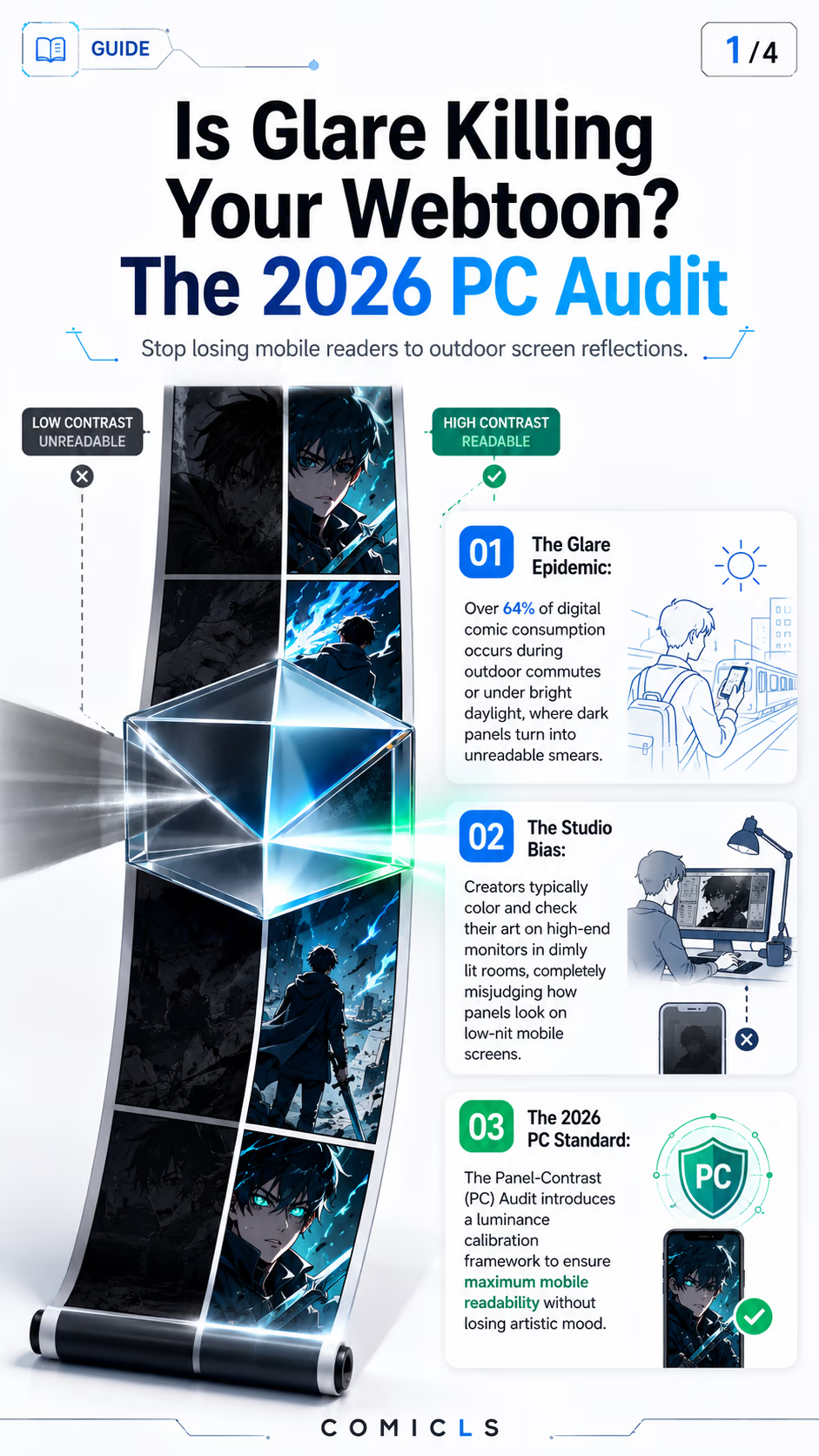
Is Your Webtoon Unreadable Outdoors? The 2026 PC Audit
Stop losing readers to screen glare. Master the 2026 Panel-Contrast (PC) Audit to optimize your webtoon's luminance values for outdoor mobile reading.
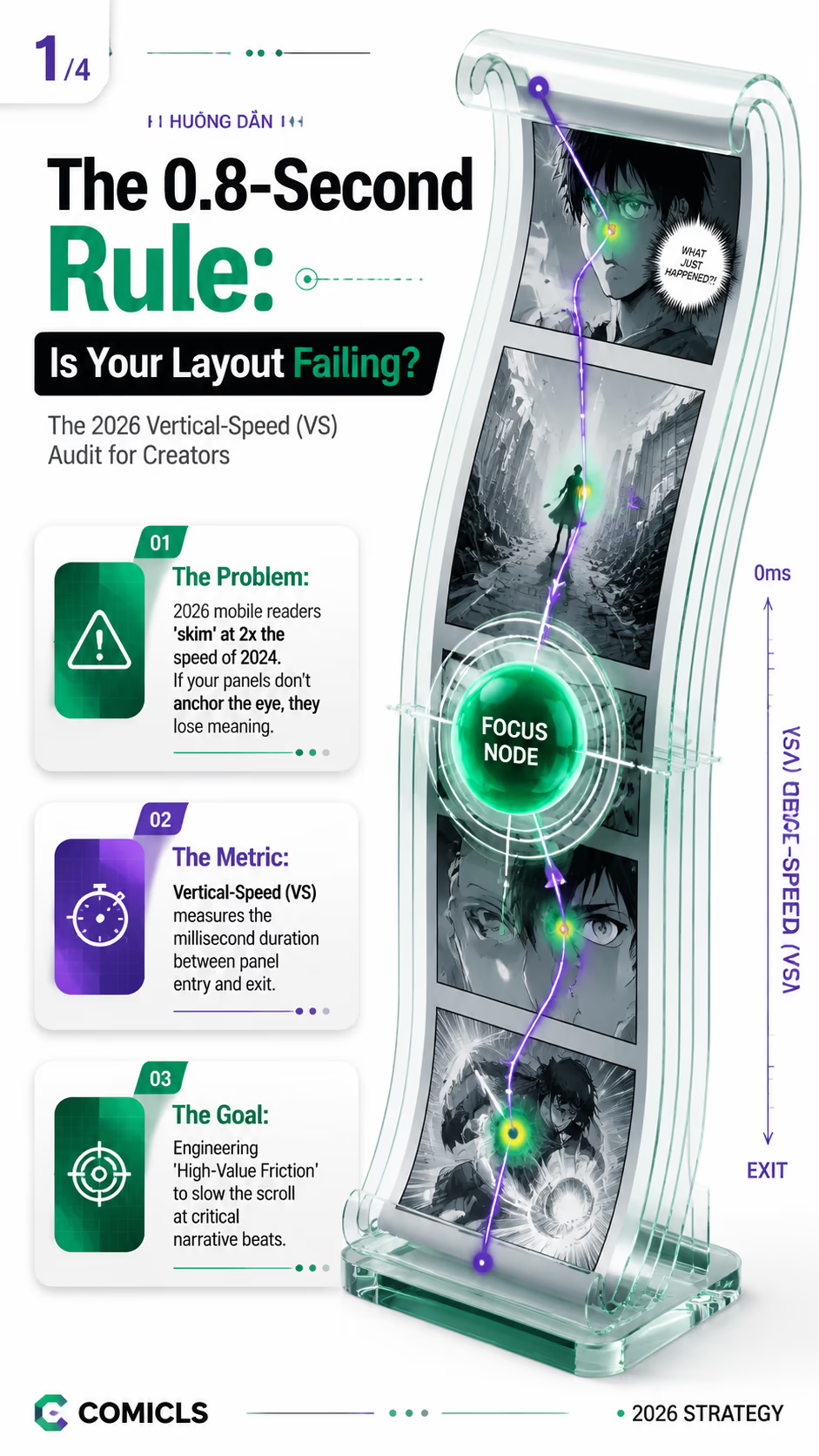
Does Your Layout Fail the 2026 Vertical-Speed Audit?
In 2026, mobile readers spend less than 0.8 seconds per panel. Learn how the Vertical-Speed (VS) Audit identifies 'friction-frames' that cause reader drop-off.
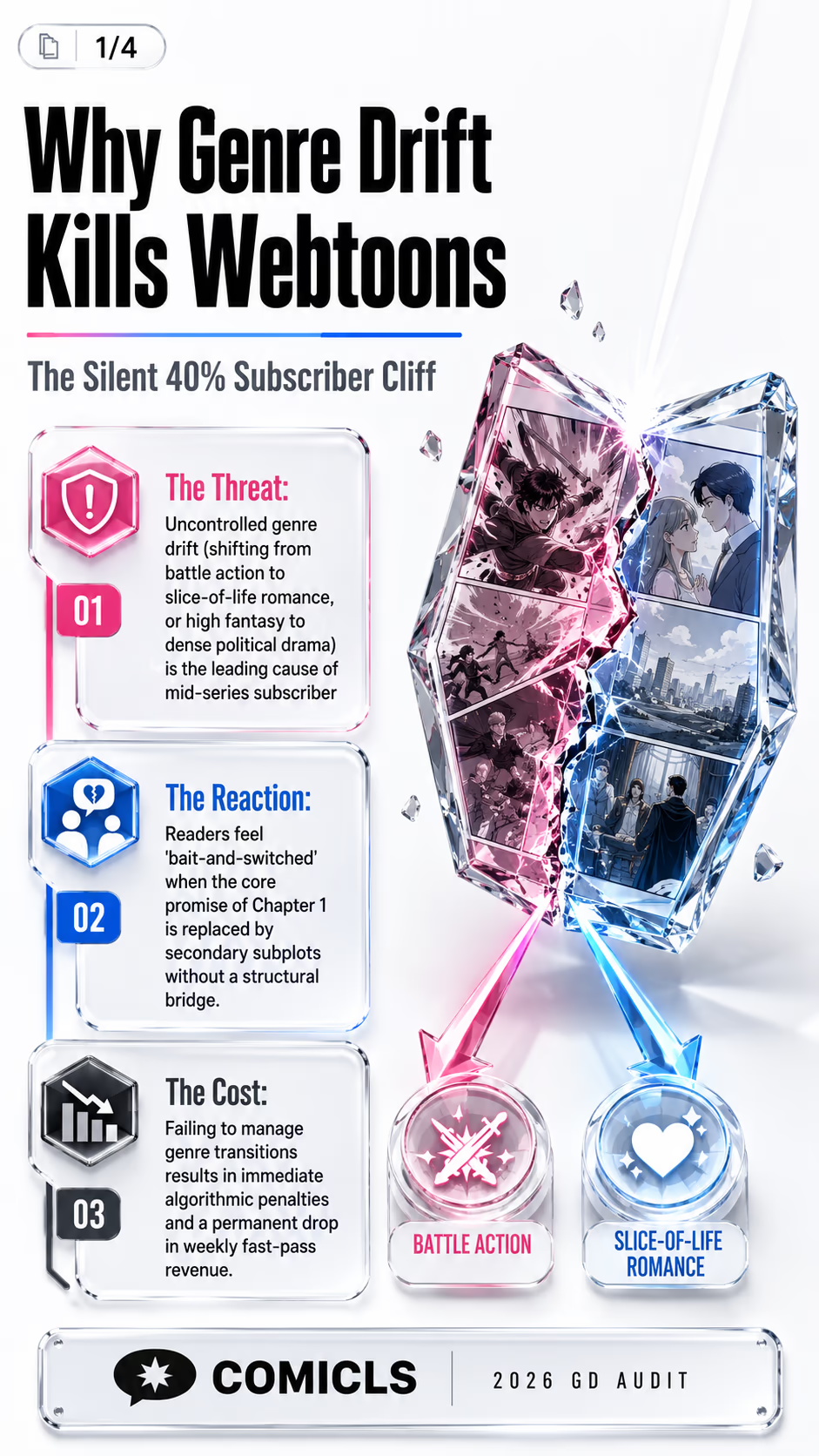
Why Genre Drift Kills Webtoons: The 2026 GD Audit
When long-form series shift from action to romance or fantasy to politics, reader churn spikes. Master the 2026 GD Audit to transition genres safely.
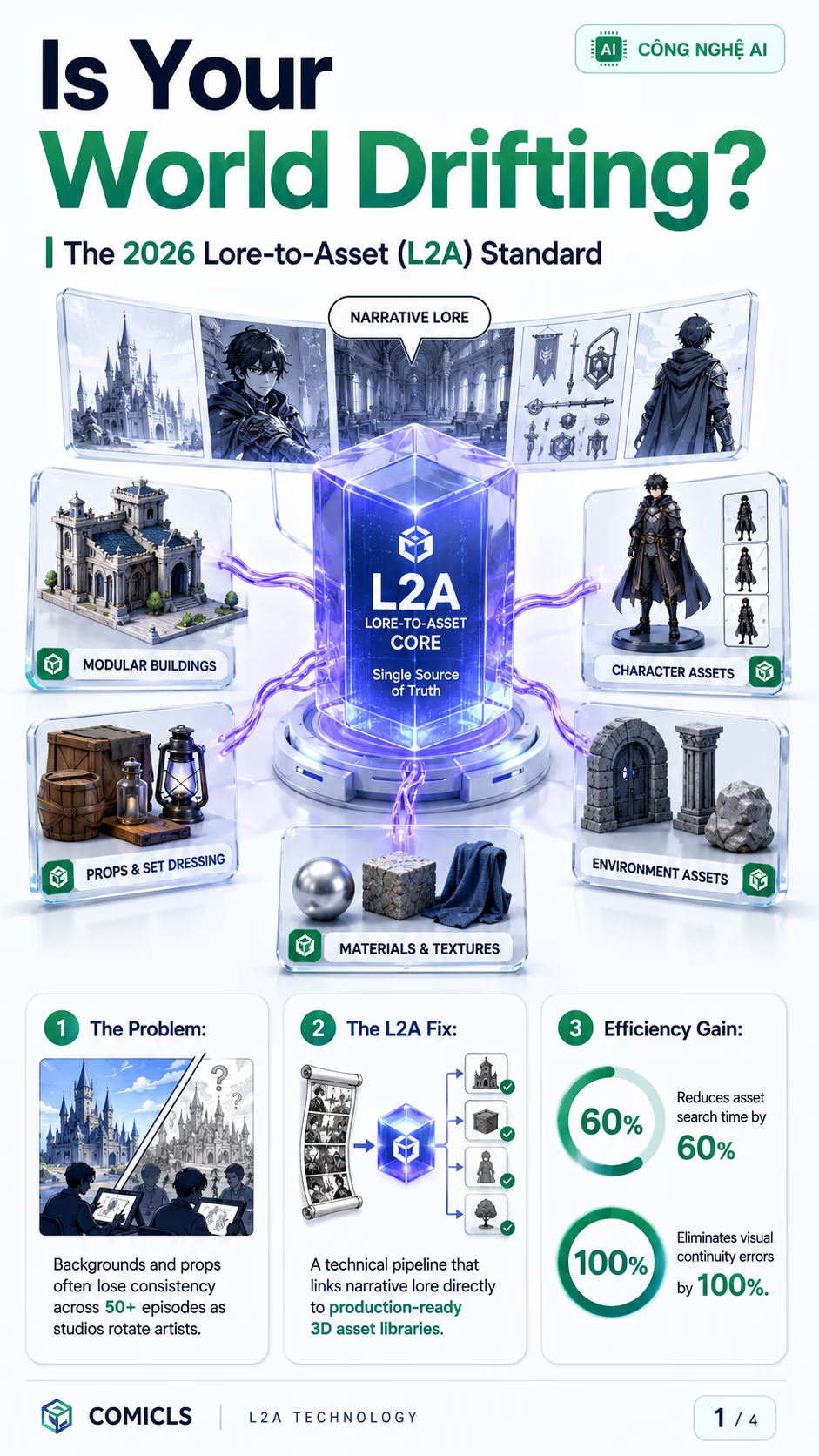
Does Your Lore Scale? The 2026 L2A Tech Standard
Discover the 2026 L2A standard for linking narrative lore to production-ready 3D assets. Solve background drift and boost studio efficiency by 40%.
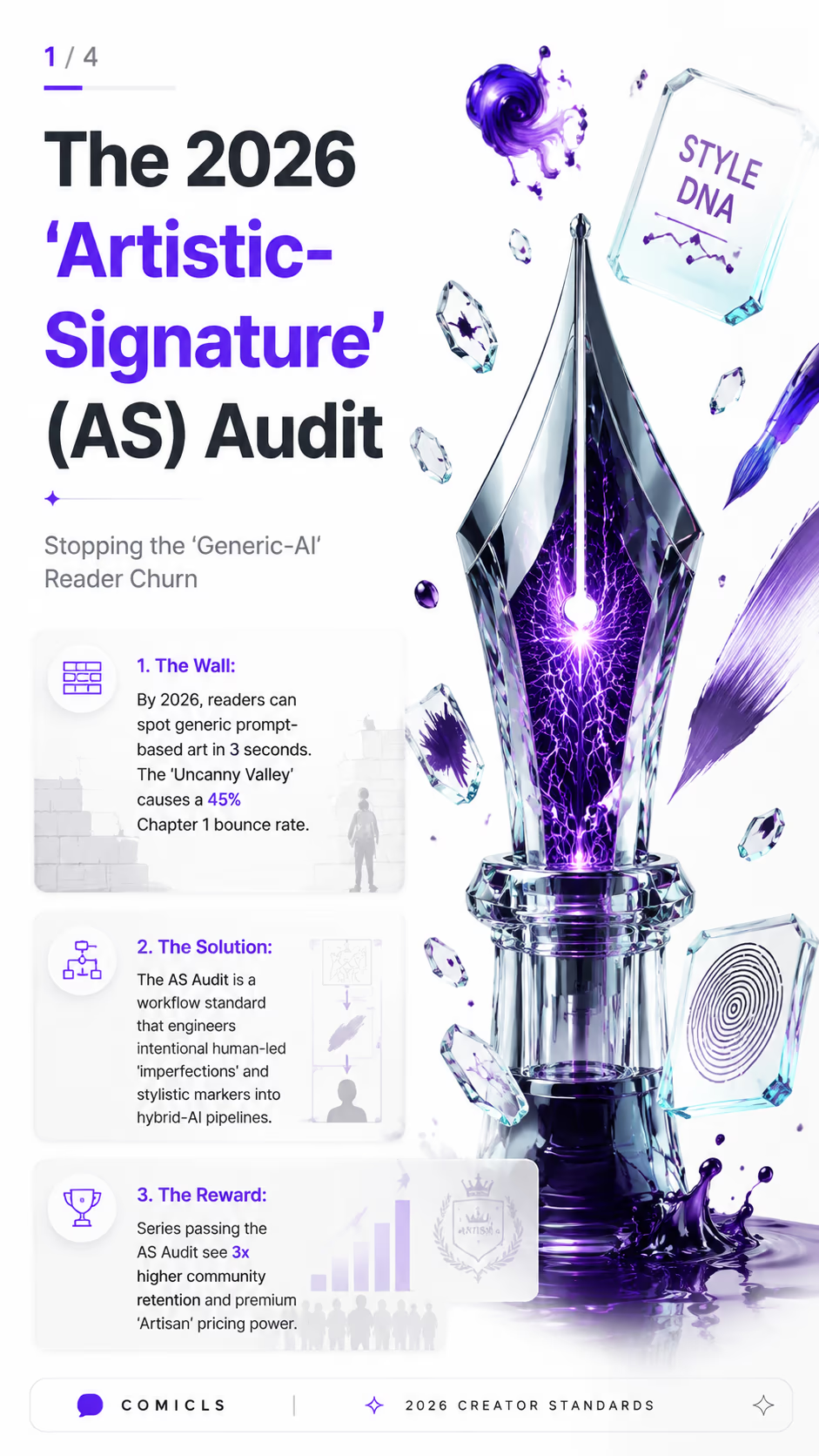
The 2026 ‘Artistic-Signature’ (AS) Audit: Fixing the AI-Uncanny Valley
Discover the 2026 AS Audit—a strategic framework for creators to engineer 'human-signature' markers into their webtoons and manga to bypass reader AI-fatigue.
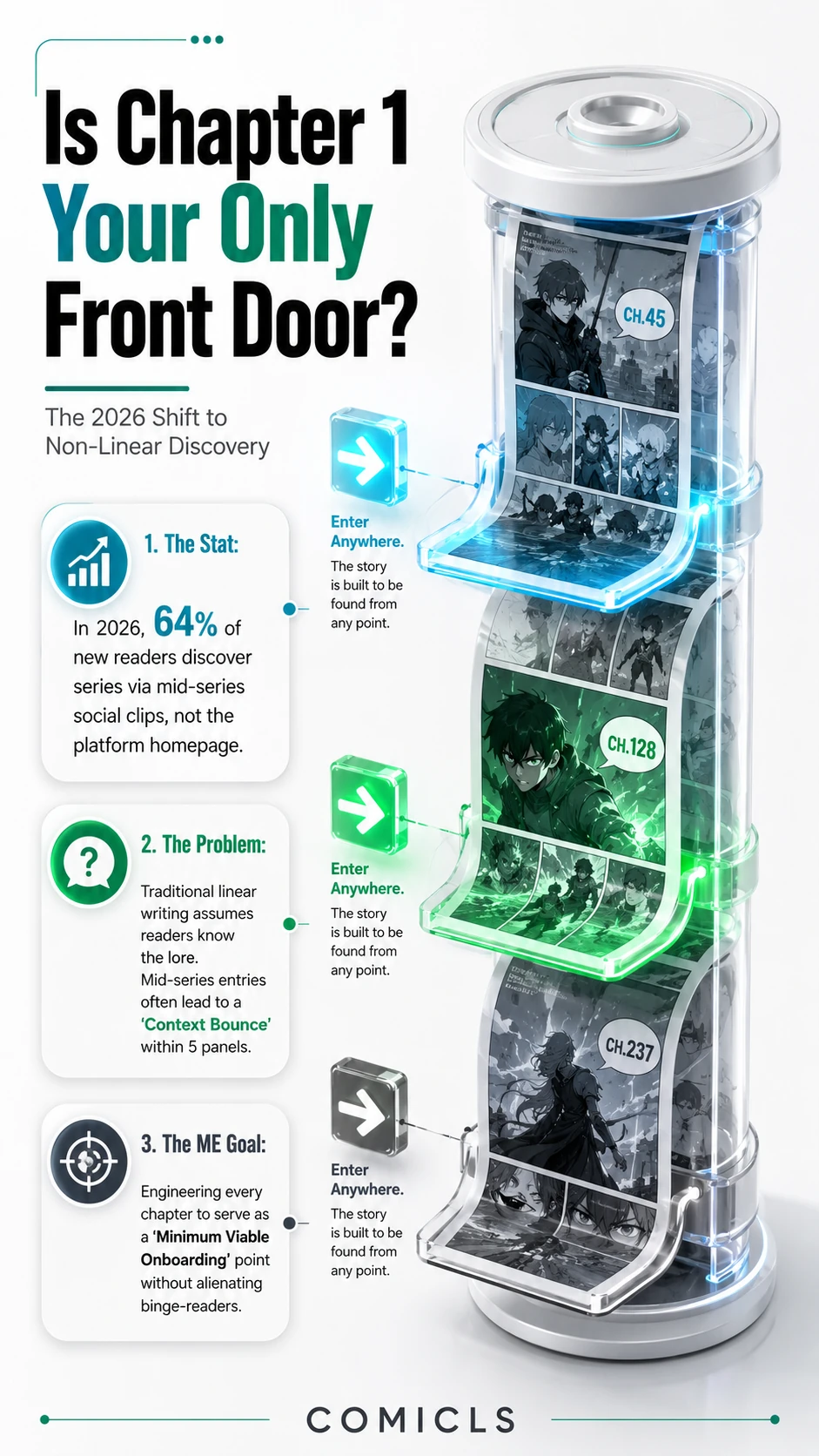
Does Your Webtoon Pass the 'Multi-Entry' (ME) Test?
In 2026, readers no longer start exclusively at Chapter 1. Discover the Multi-Entry (ME) Standard to turn every chapter into a high-conversion 'front door' for your series.
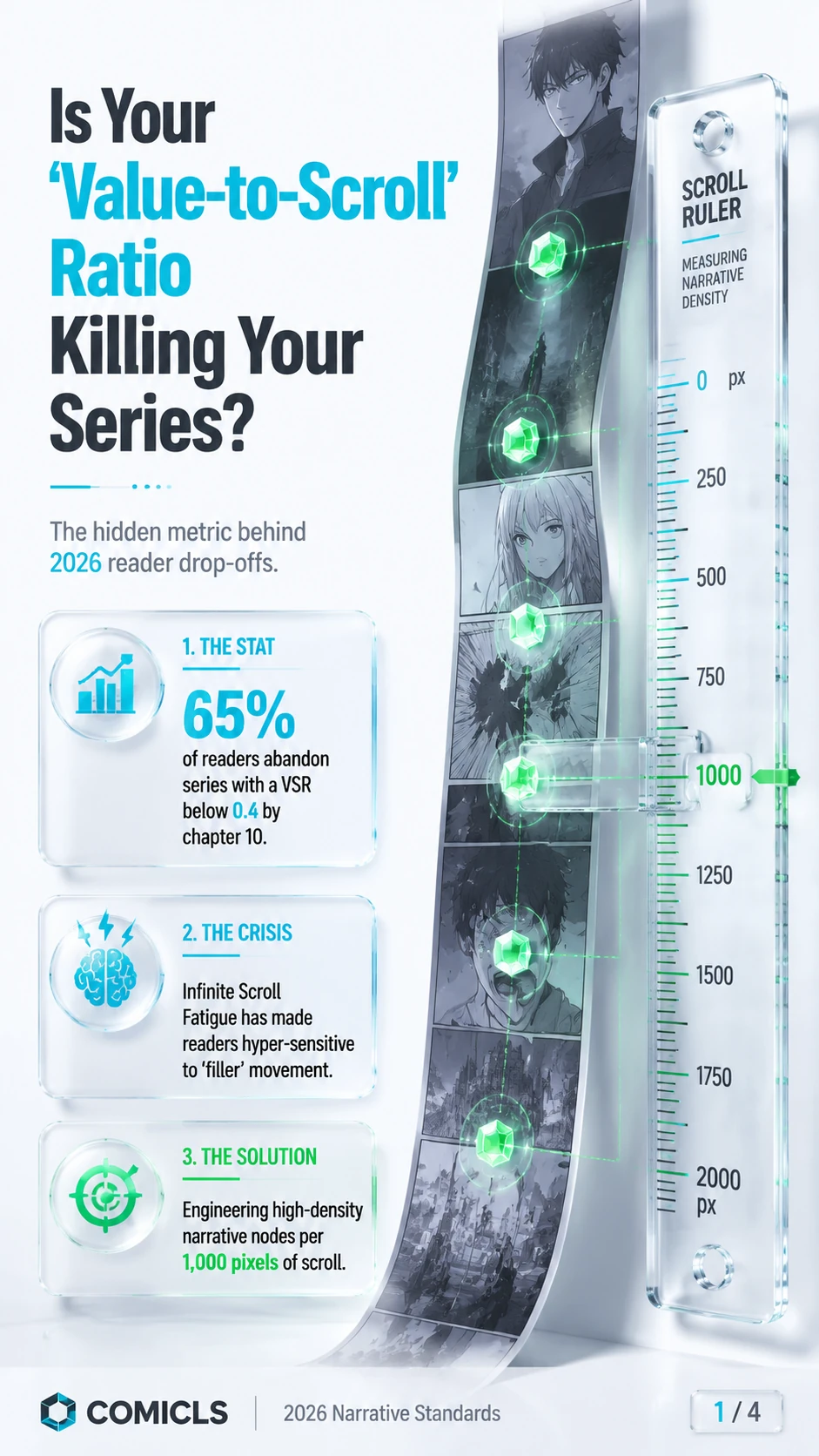
Fixing the 'Value-to-Scroll' Ratio in Your Webtoon
In 2026, 'Infinite Scroll Fatigue' is the leading cause of series abandonment. Learn how the Value-to-Scroll (VSR) metric helps creators engineer high-retention chapters.
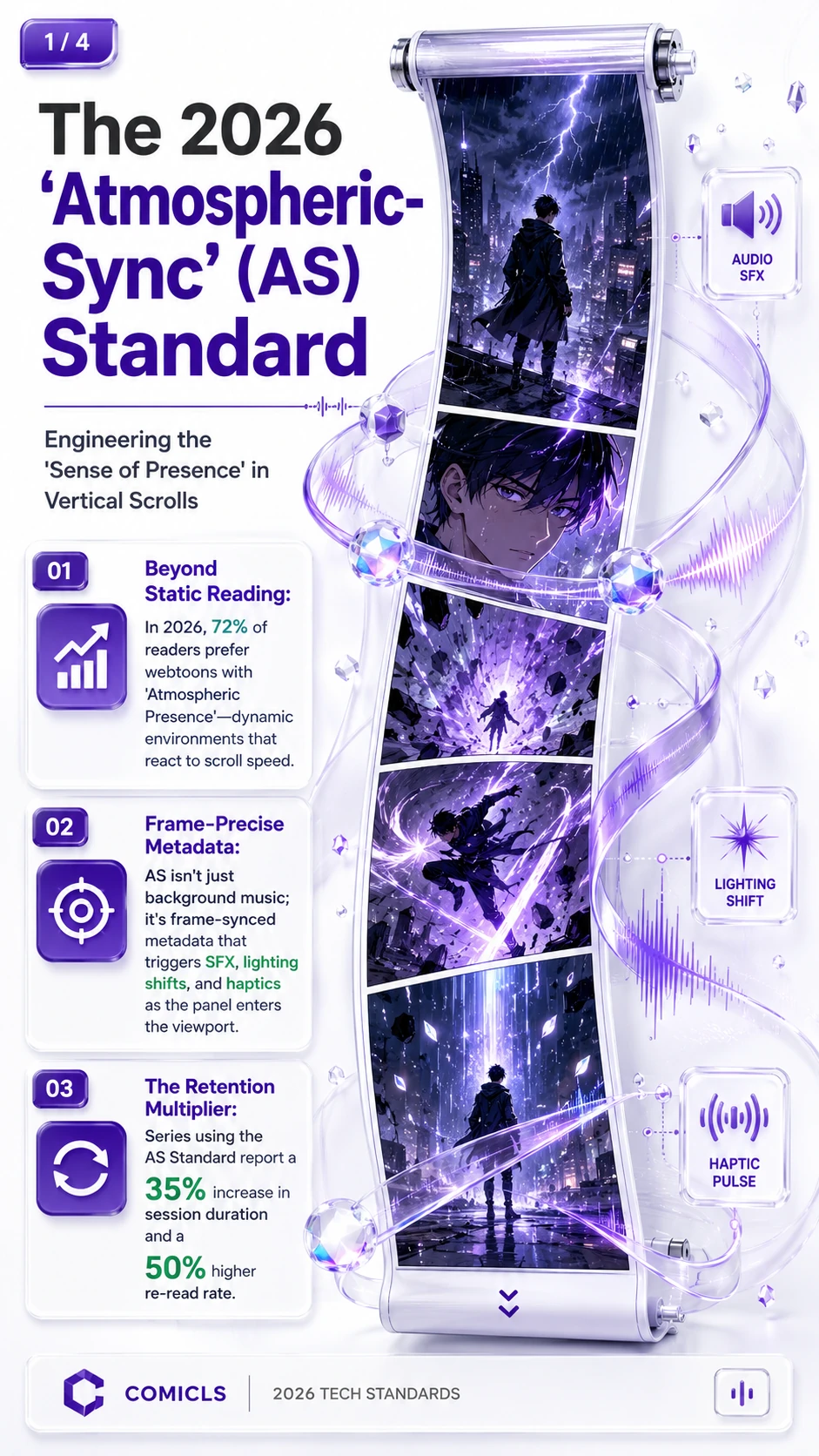
The 2026 ‘Atmospheric-Sync’ (AS) Standard: Engineering Immersive Audio
Master the 2026 AS Standard to bridge the gap between static panels and cinematic immersion. Learn to engineer frame-precise audio-visual metadata for vertical scroll comics.
Guides
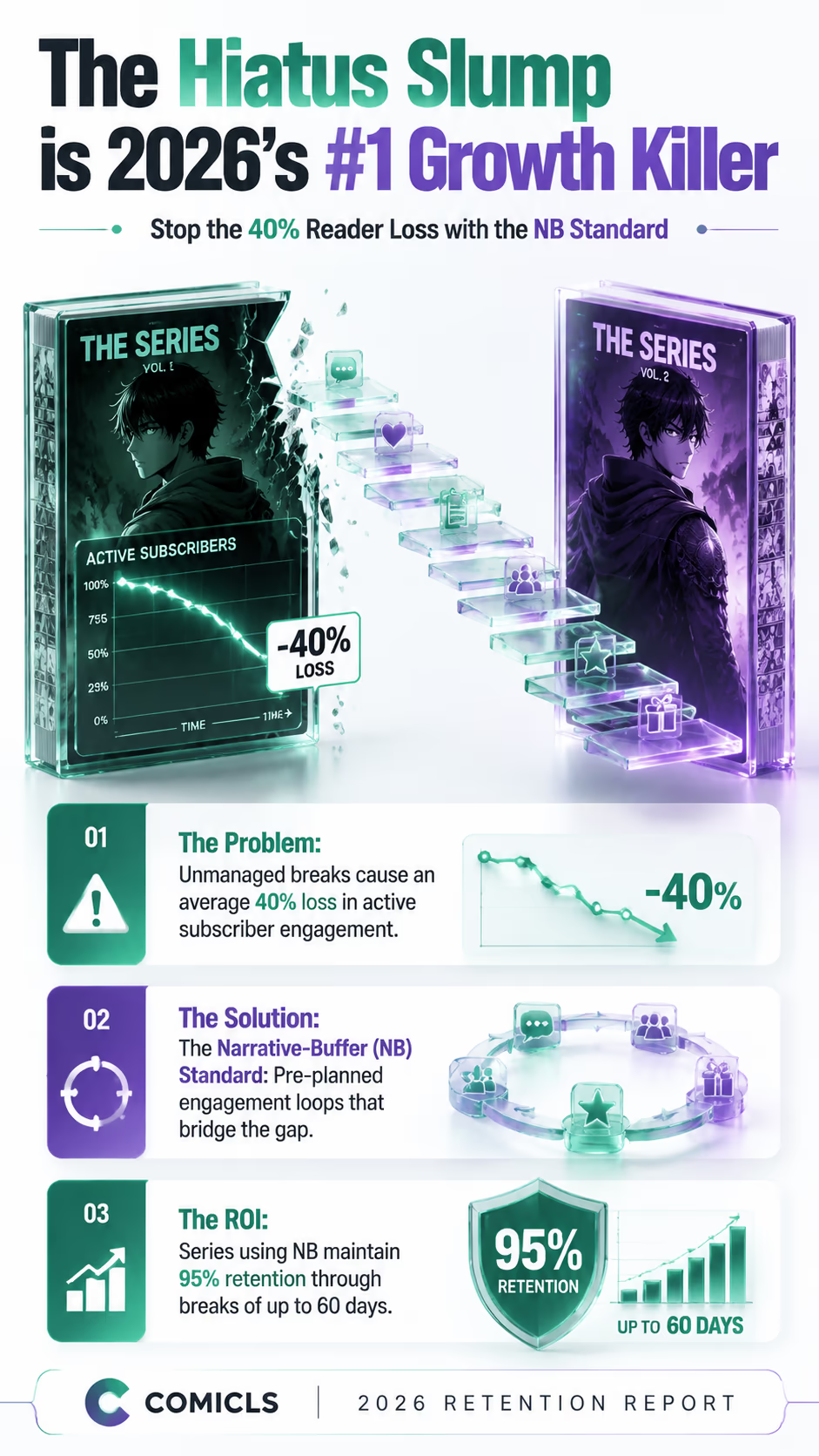
Maintaining Momentum on Hiatus: The 2026 NB Standard
Discover how the 2026 NB Standard helps creators survive the 'Hiatus Slump' by engineering pre-planned content loops. Maintain 95% reader retention even during long breaks.
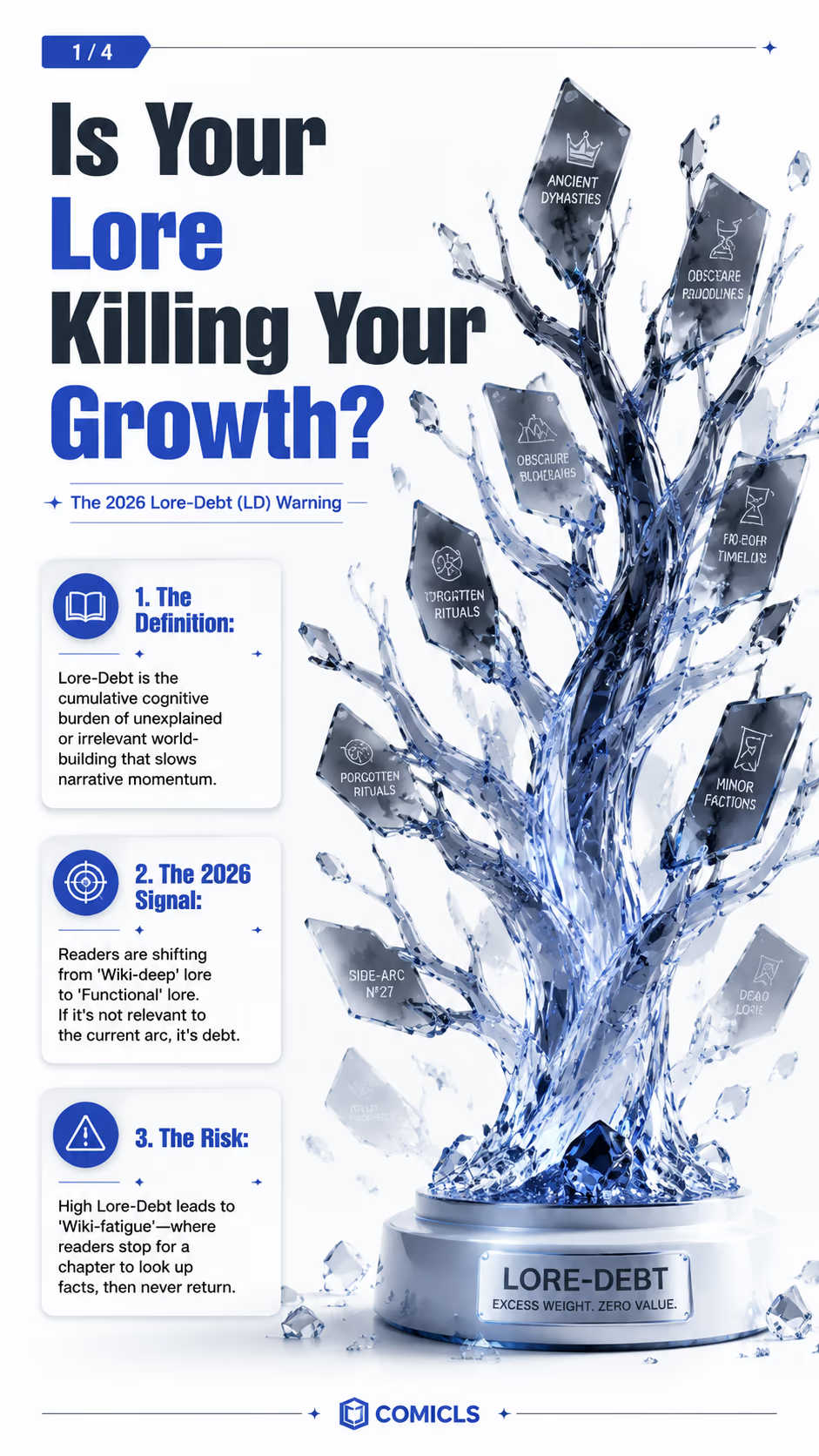
Fixing Lore-Debt: The 2026 LD Audit for Studios
Is your world-building suffocating your story? Master the 2026 Lore-Debt (LD) Audit to prune unnecessary complexity and maintain reader engagement in long-form series.
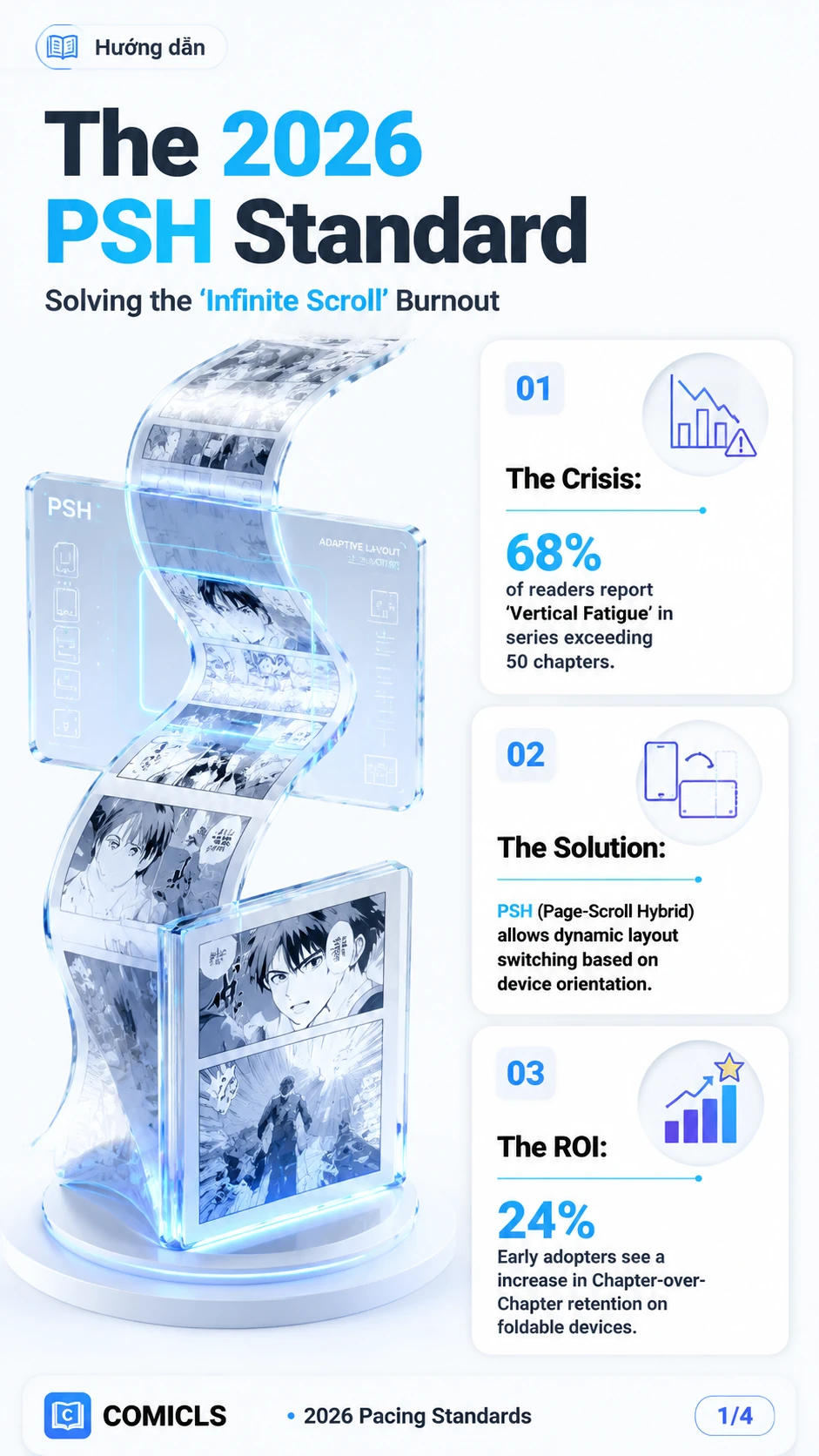
Fixing Scroll Fatigue: The 2026 PSH Standard
Discover the 2026 PSH Standard for comic layout. Learn how to engineer hybrid reading experiences that bridge the gap between vertical scrolls and traditional pages.
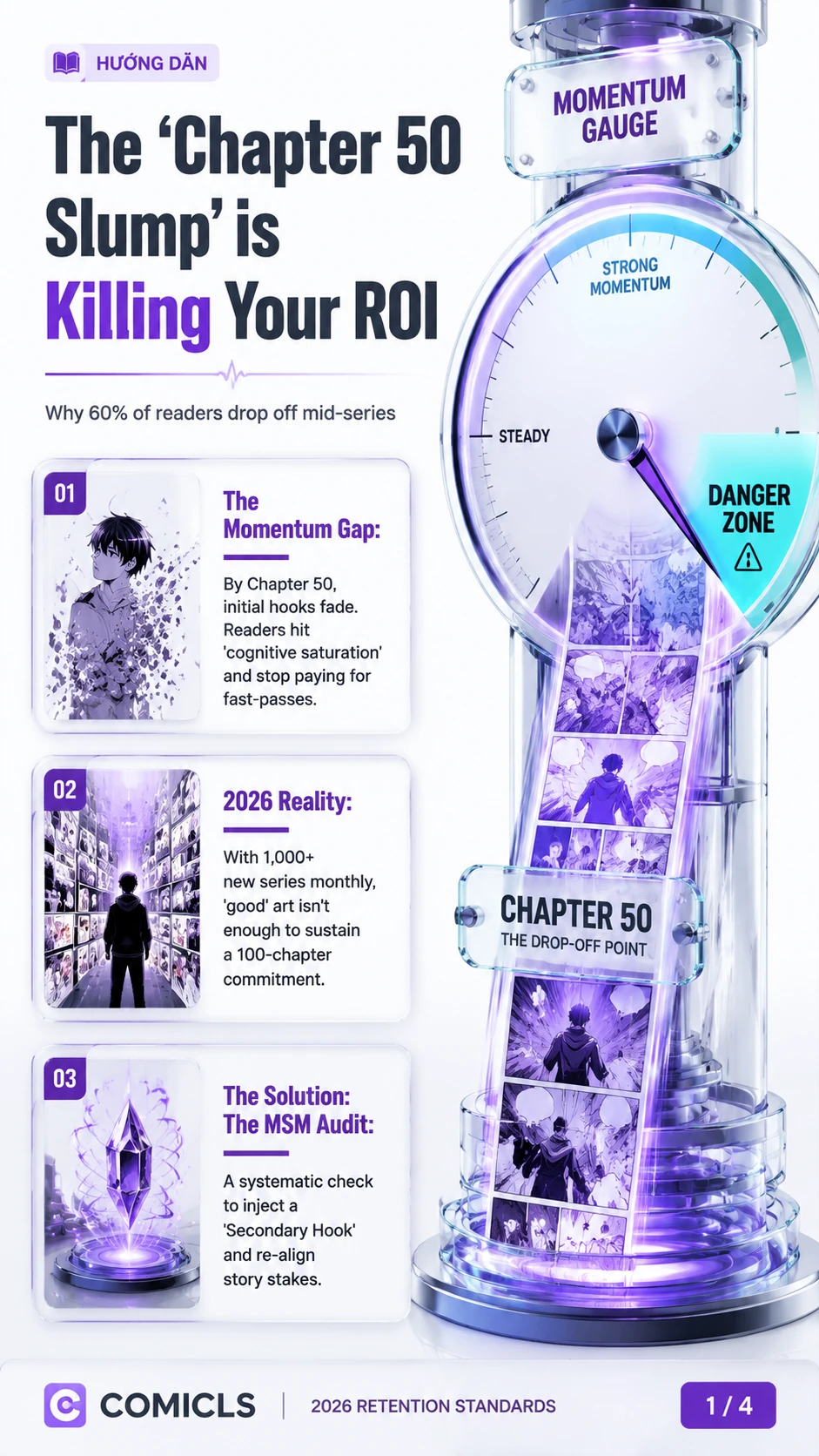
Fixing the Chapter 50 Slump: The 2026 MSM Audit
Discover why readers drop off at Chapter 50 and how the 2026 MSM Audit helps creators re-hook their audience. Master the art of mid-series momentum engineering.
Latest
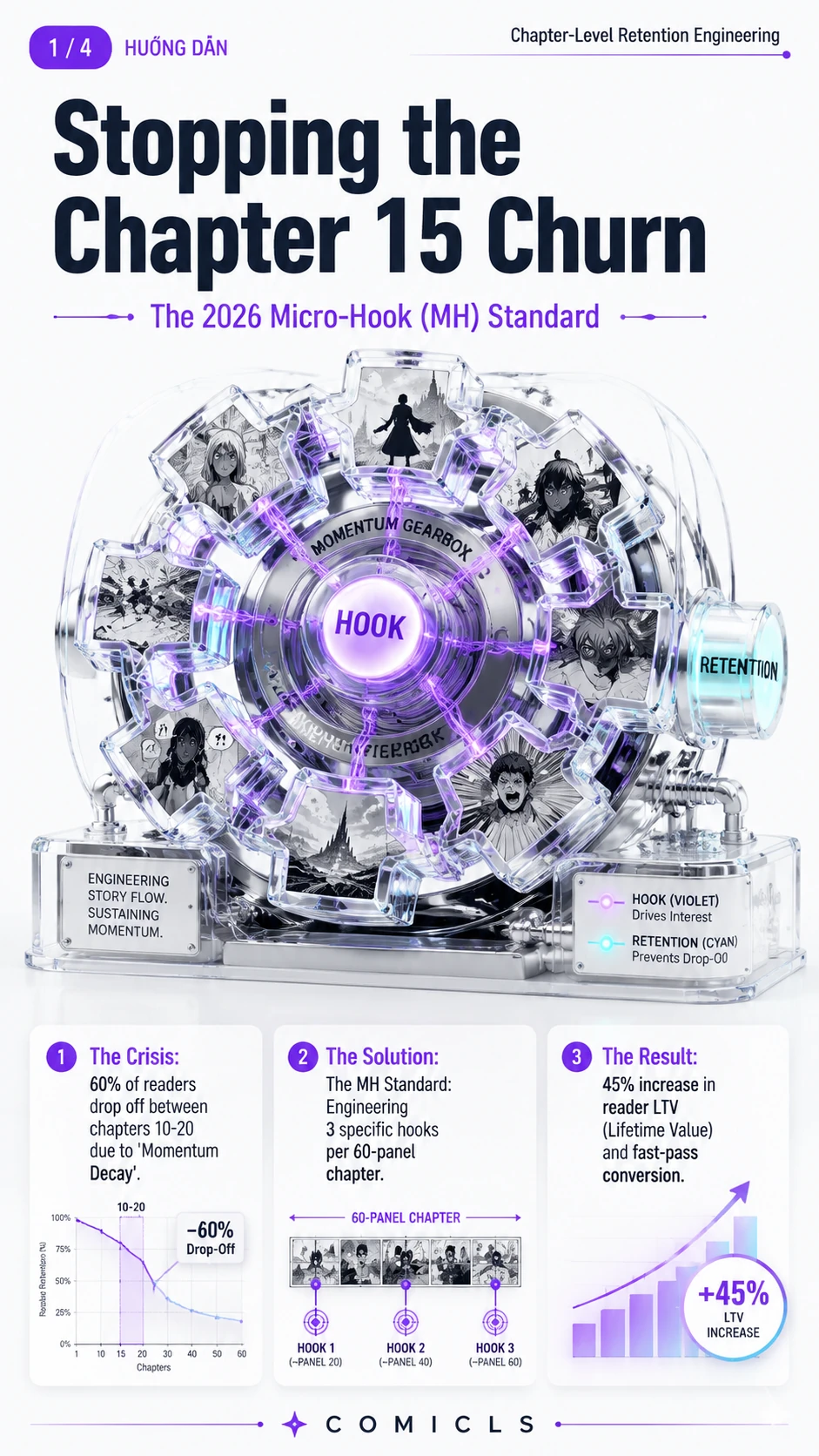
The 2026 ‘Micro-Hook’ (MH) Standard: Fixing Mid-Series Churn
Discover the MH Standard for vertical scroll comics. Learn how to engineer chapter-level hooks that solve the 'Chapter 15 Churn' and boost long-term reader LTV.
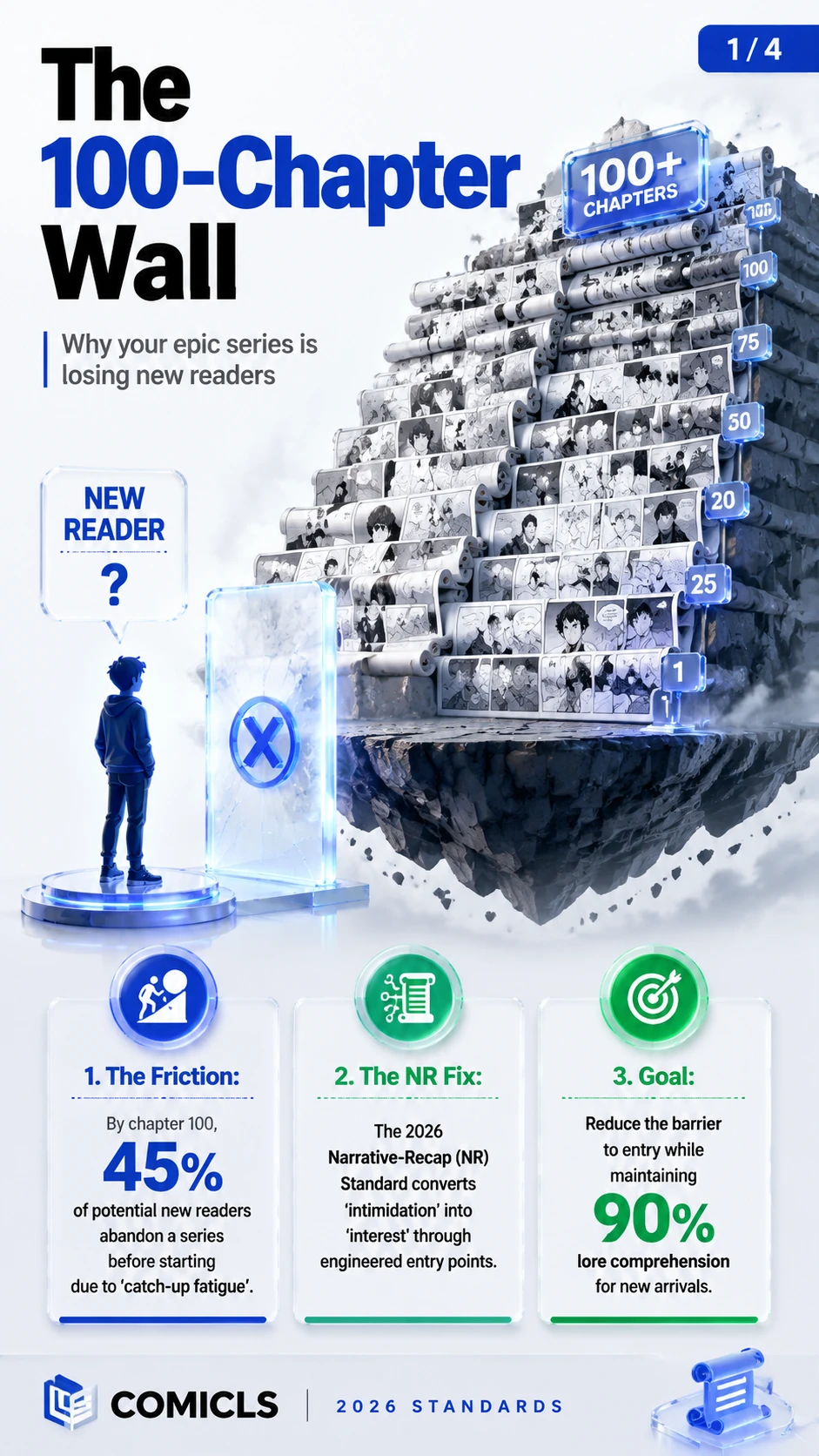
Stopping the 100-Chapter Wall: The 2026 Recap Standard
Discover how the 2026 Narrative-Recap (NR) Standard eliminates the '100-Chapter Wall' that prevents new readers from joining long-running series. Learn to engineer high-velocity entry points for your epic saga.
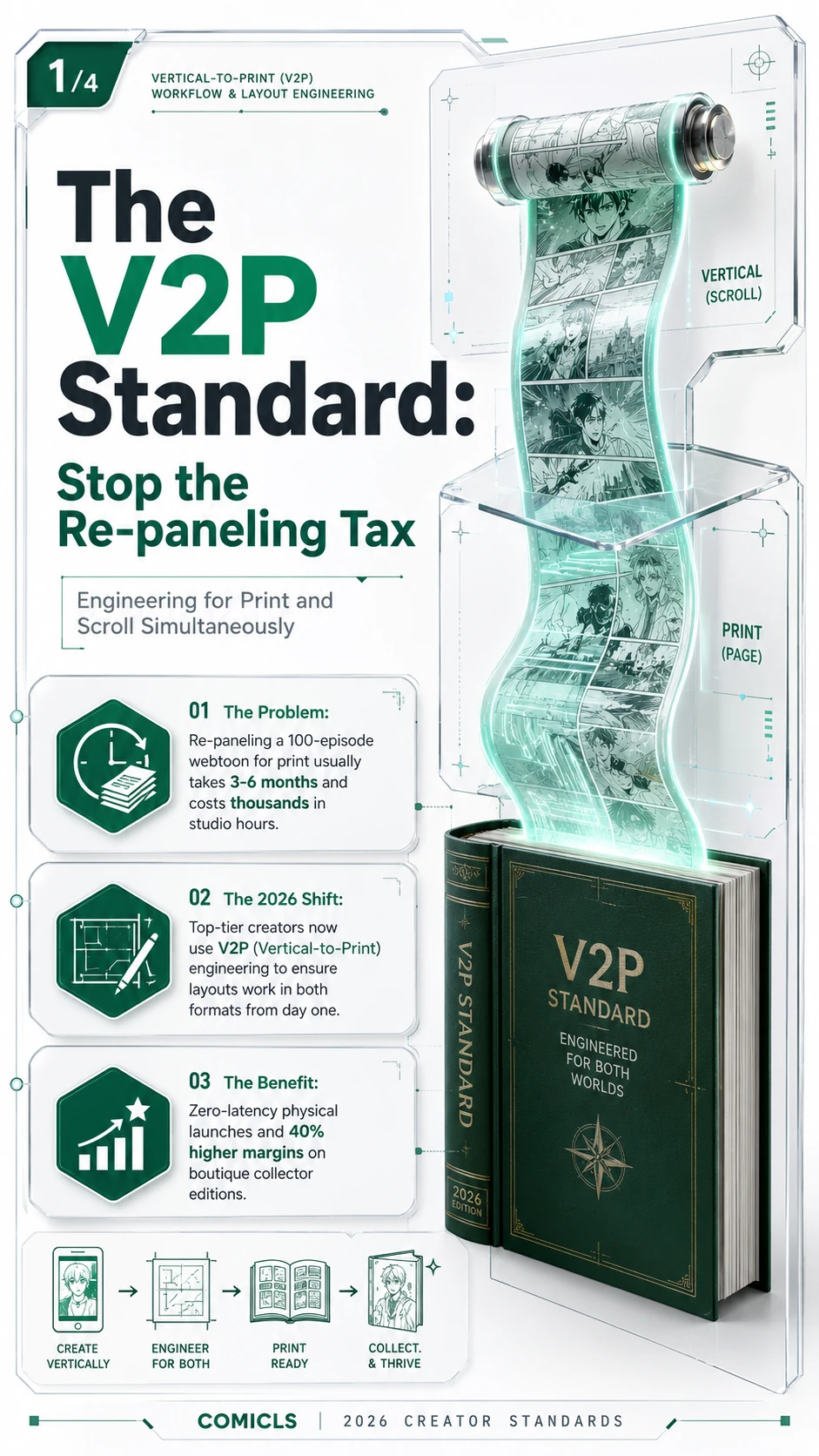
The 2026 V2P Standard: Engineering Print-Ready Webtoons
Master the 2026 V2P framework to bridge the gap between vertical scrolls and boutique print editions. Learn how to engineer your layout for dual-format success.
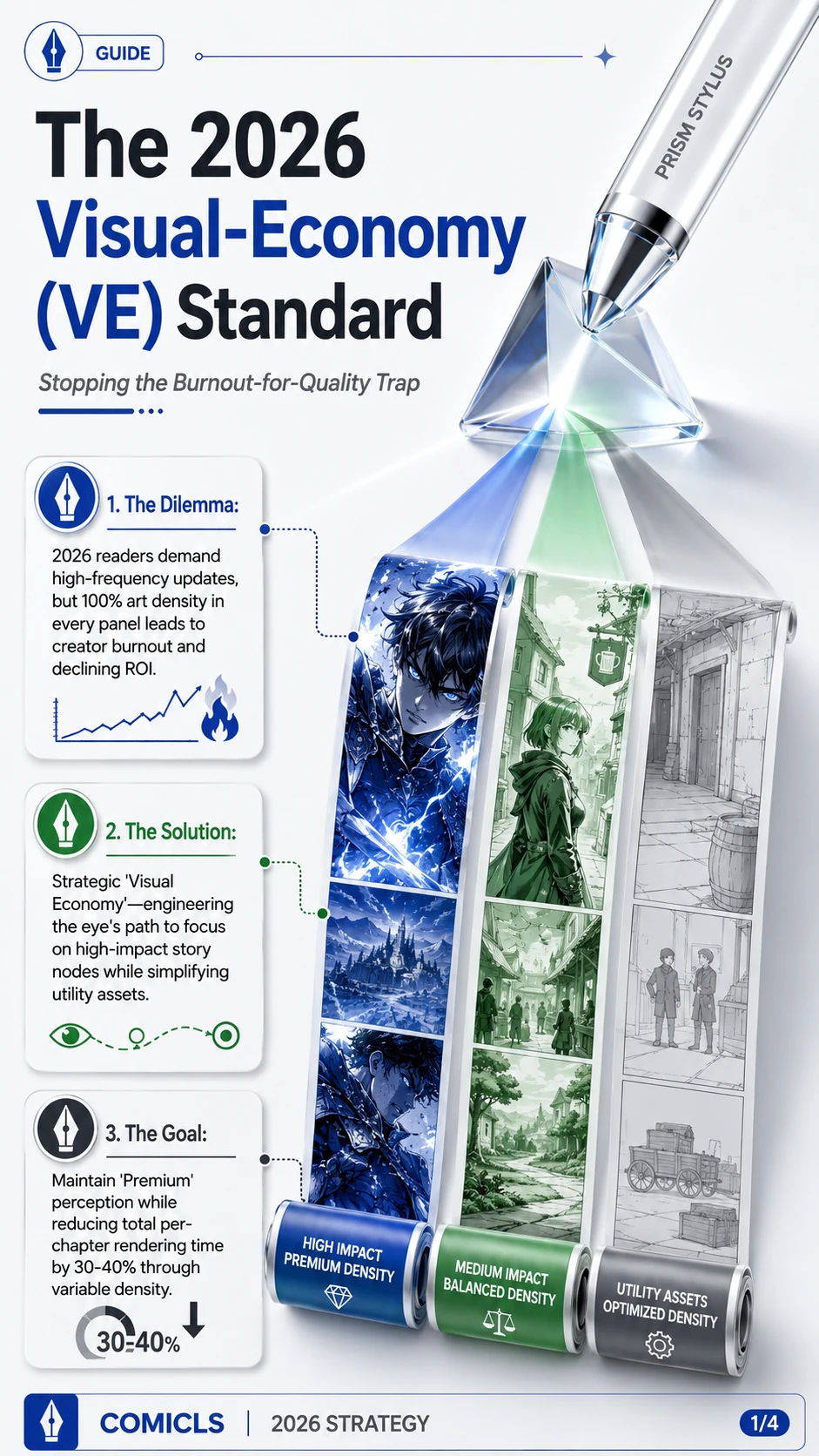
Mastering the 2026 ‘Visual-Economy’ (VE) Standard
Discover how the 2026 Visual-Economy (VE) Standard helps creators balance high-fidelity art with high-frequency release schedules. Learn to manage artistic energy through visual hierarchy.
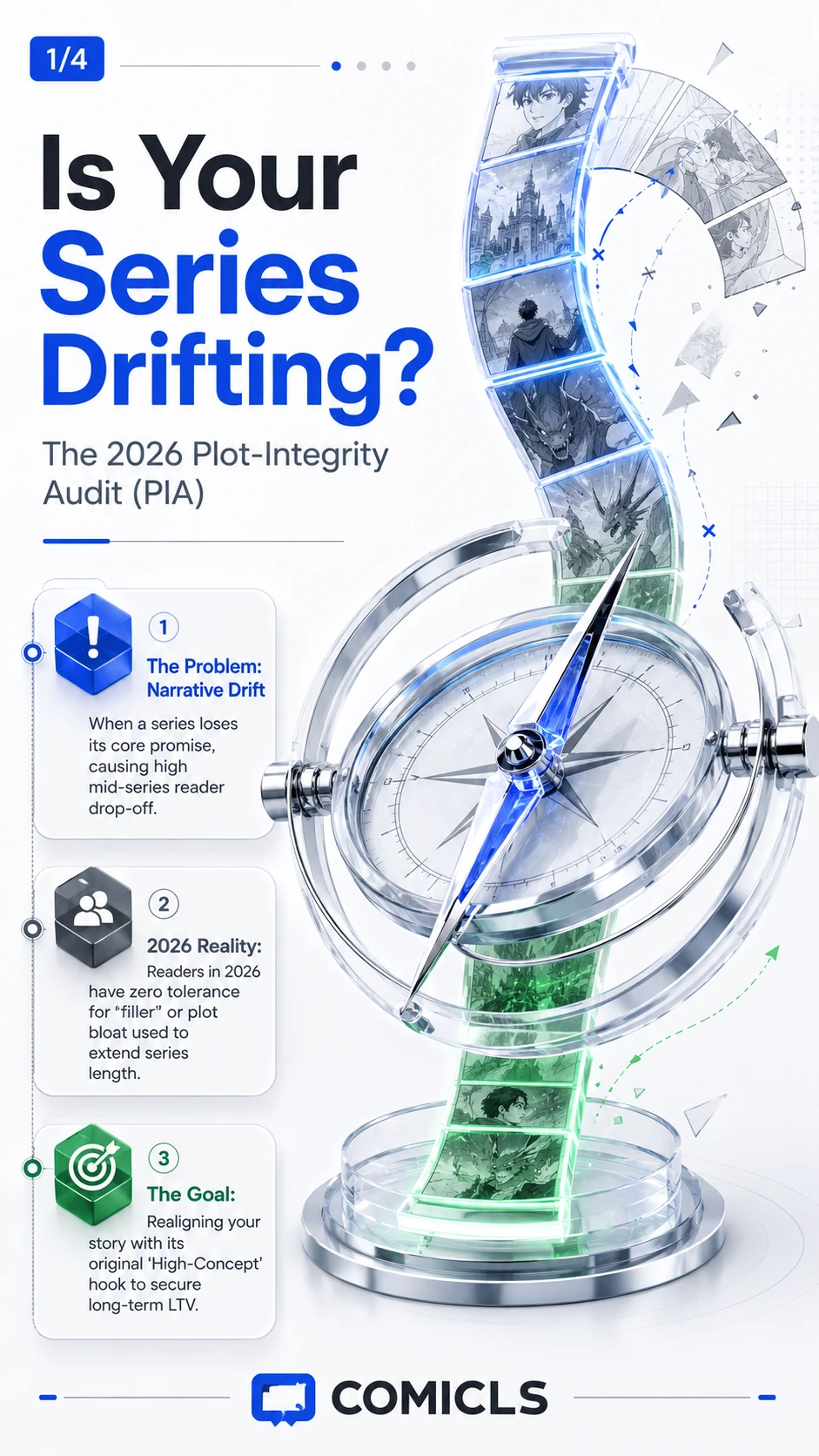
2026 Plot-Integrity Audit: Stopping Narrative Drift
Narrative drift is the #1 killer of long-form series retention in 2026. Master the Plot-Integrity Audit to realign your story and keep readers engaged.
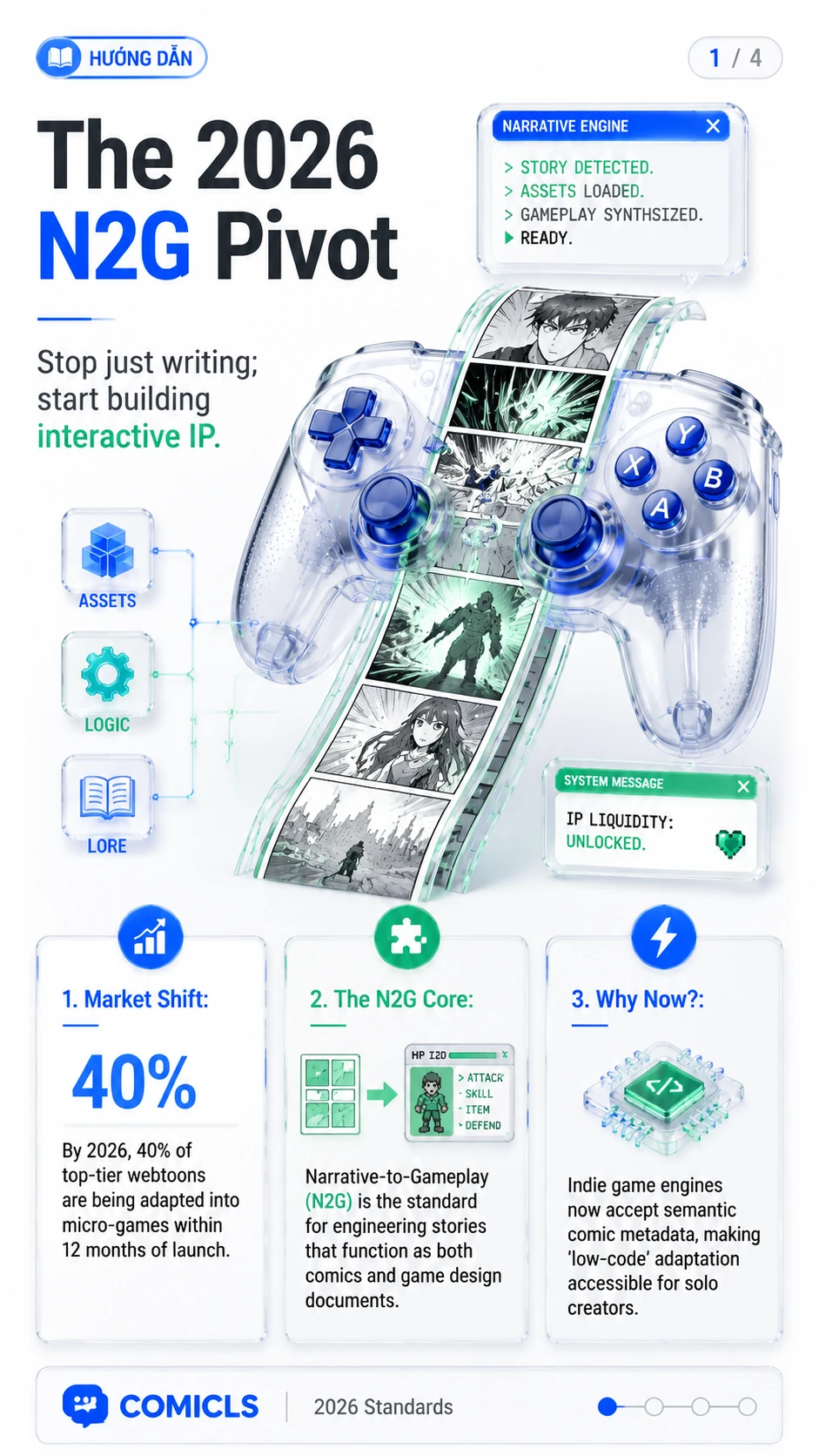
The 2026 N2G Framework: Engineering Webtoons for Game Adaptation
Discover how the 2026 N2G Framework allows creators to build game-ready webtoon narratives, streamlining the transition from vertical scroll to interactive gameplay.
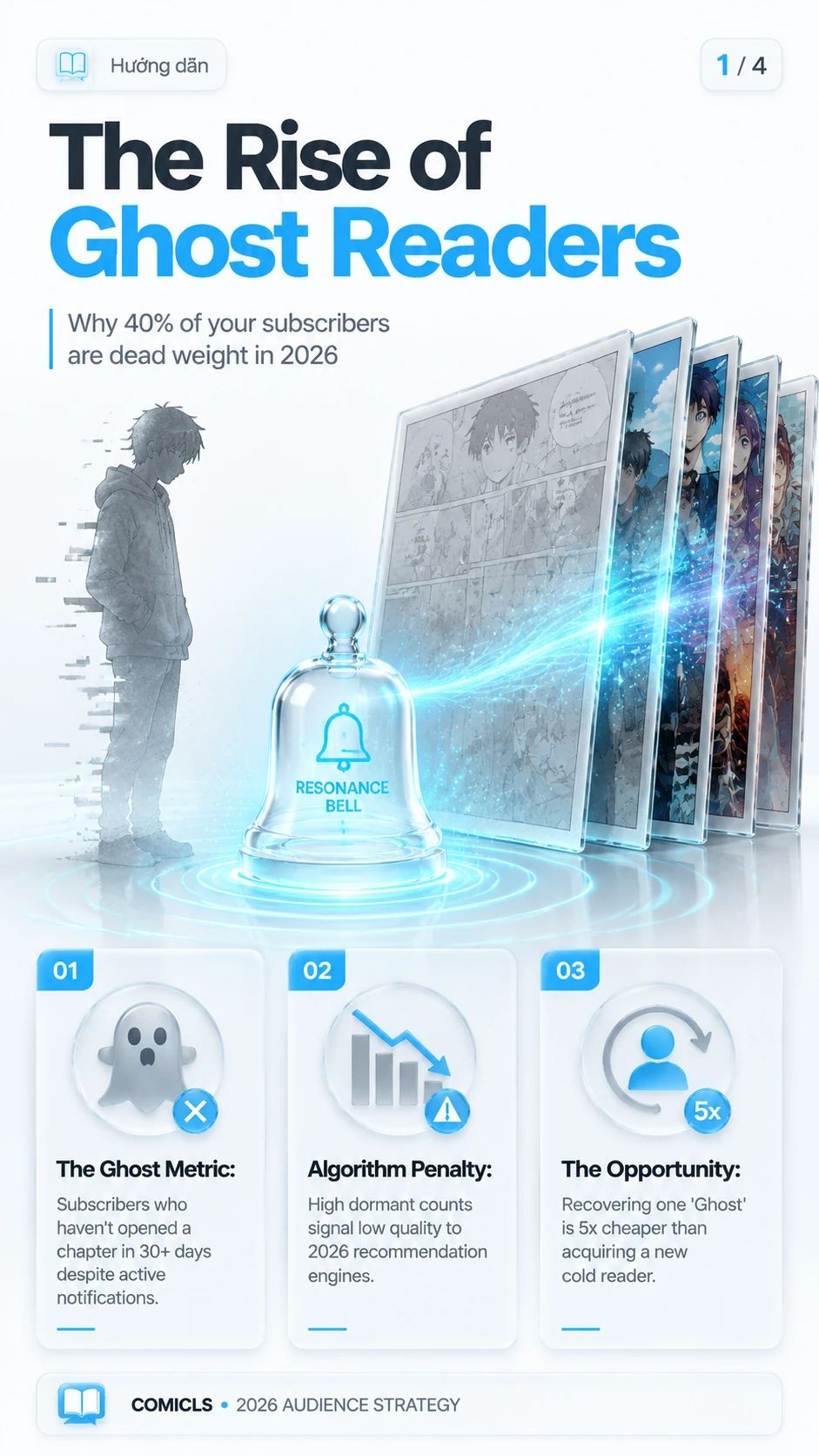
Reactivating Ghost Readers: 2026 Dormant-User Recovery
In 2026, ghost readers—dormant subscribers who no longer engage—are the biggest threat to series longevity. Learn the R.E.V.I.V.E. framework to wake up your silent audience.
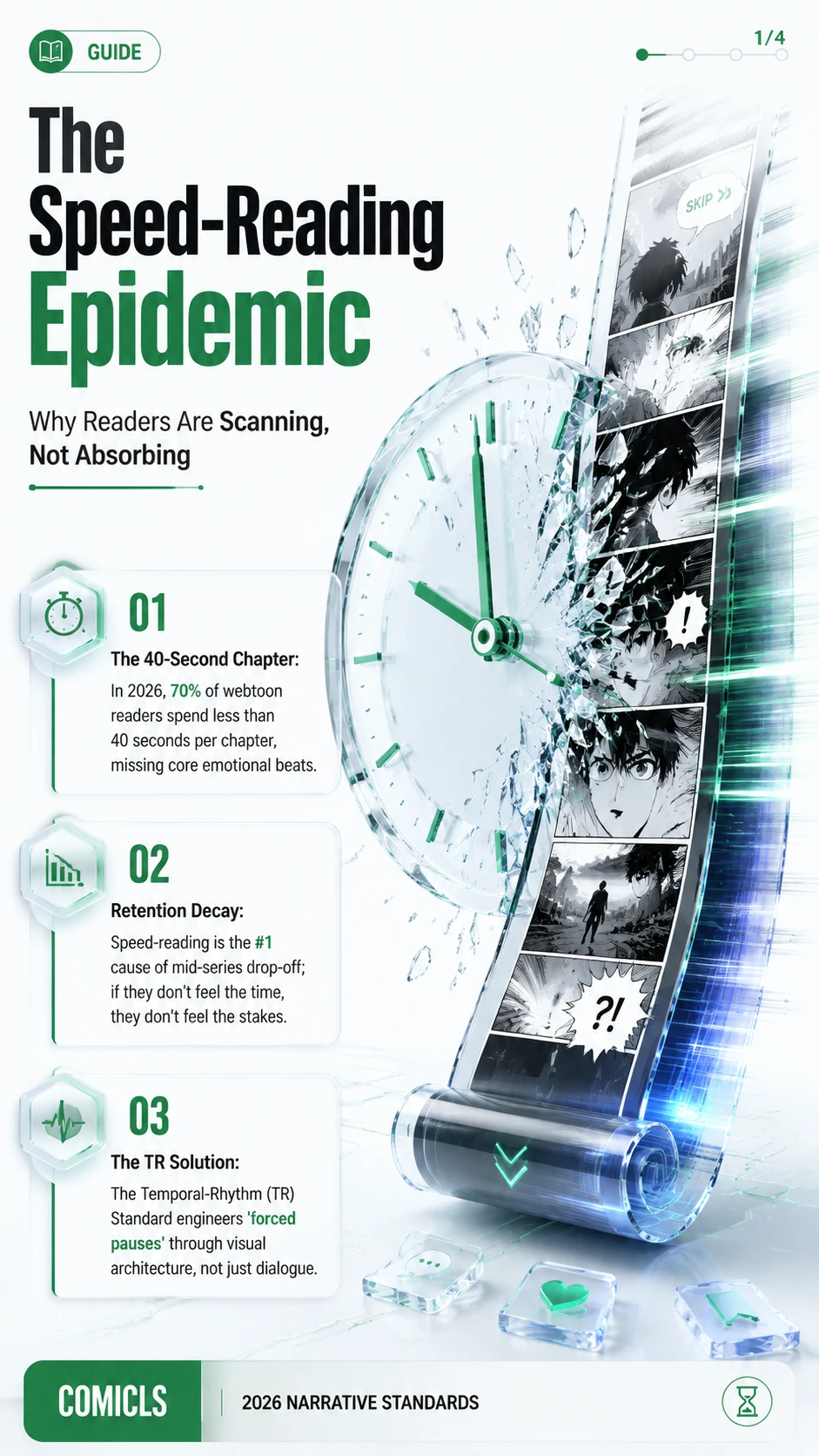
Temporal-Rhythm (TR) Pacing: Stopping the Webtoon Speed-Reading Habit
Learn how the 2026 Temporal-Rhythm (TR) Standard combats the speed-reading epidemic by engineering narrative 'time-anchors' into vertical scrolls.

The 2026 ‘Modular-Narrative’ (MN) Workflow: Engineering Multi-Path Story Architectures for Interactive Webtoon Experiences
Learn how to transition from linear storytelling to the 2026 Modular-Narrative (MN) standard. This guide provides a technical framework for engineering branching story paths, reusable narrative nodes, and interactive reader loops that maximize retention and per-user revenue.
The 2026 ‘Narrative-Elasticity’ (NE) Engineering Guide: Building Procedural Webtoon Architectures for Variable-Length Serialization
Master the 2026 Narrative-Elasticity (NE) framework. Learn to engineer webtoon architectures that expand or contract based on real-time reader retention data without breaking lore consistency.

The 2026 ‘Collaborative-Lore’ (CL) Engineering Guide: Building Participatory Webtoon Universes for High-LTV Reader Retention
Learn how to engineer a 'permeable' narrative architecture that allows readers to contribute to your webtoon's lore, boosting long-term retention and lifetime value.
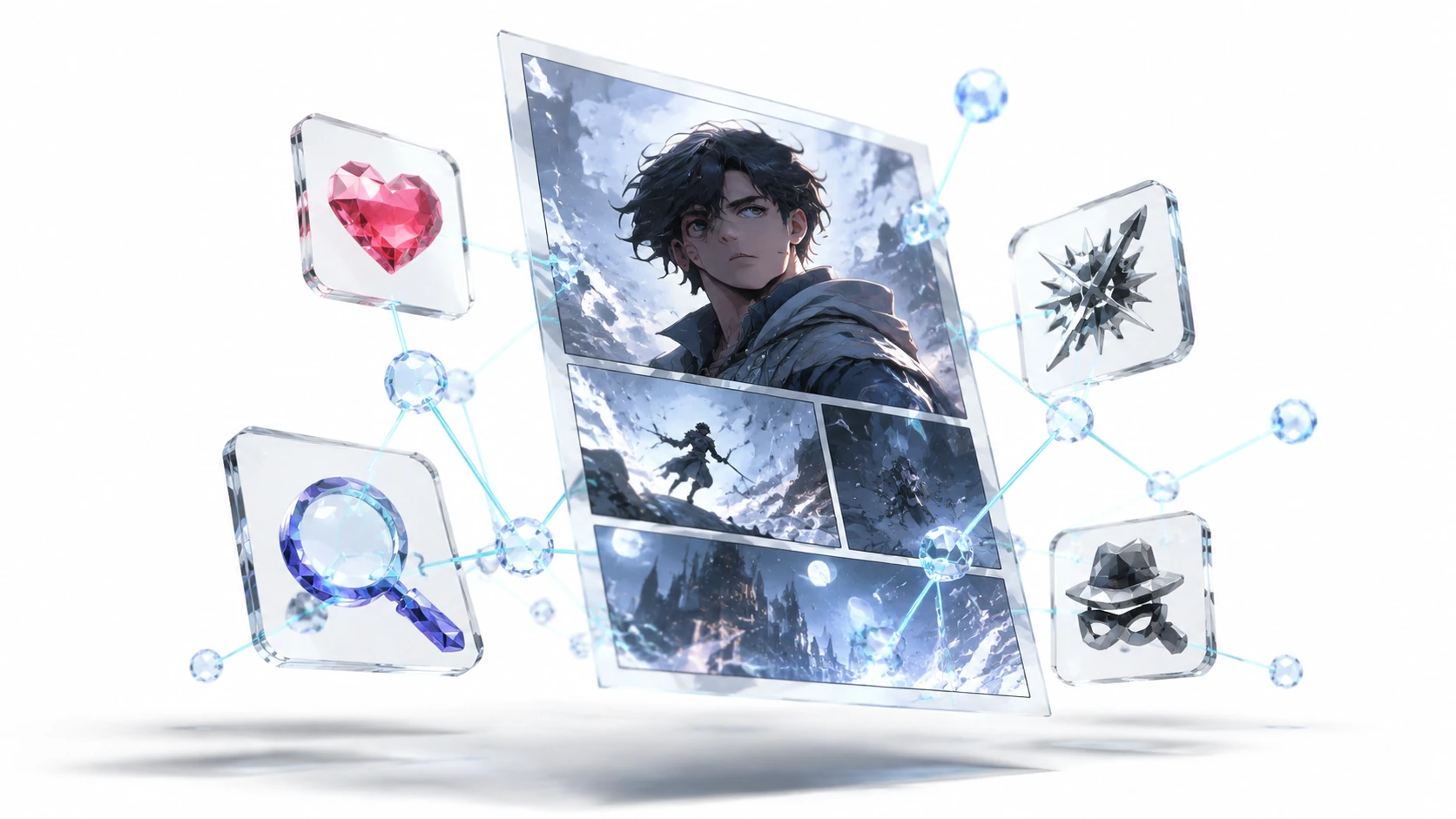
The 2026 ‘Semantic-Trope’ (ST) Engineering Standard: Designing Webtoon Hooks for AI-Agent Recommendation Engines
In 2026, readers no longer search for webtoons; AI agents find stories for them. Learn how to engineer your narrative tropes for maximum machine-legibility and organic discovery.

The 2026 ‘Transcreation-First’ (TF) Localization Standard: Engineering Cross-Border Webtoon Hits through Cultural Semantics and Slang-Mapping
Move beyond literal translation. Learn the 2026 TF Standard to engineer webtoons that resonate across borders through deep cultural semantics and slang-mapping.
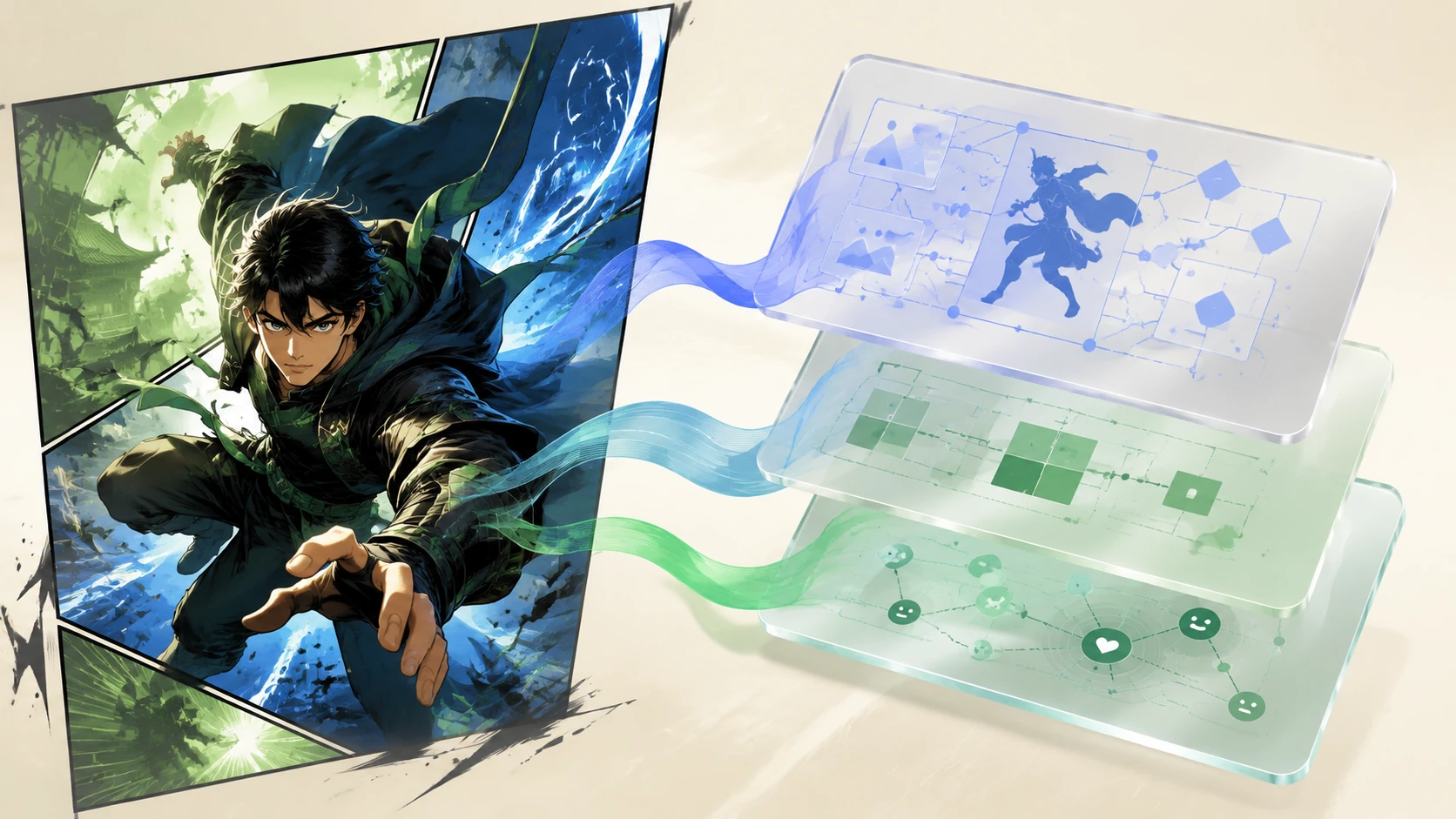
The 2026 ‘Dynamic-Visual-Description’ (DVD) Standard: Engineering Screen-Reader Optimized Webtoons for Universal Accessibility
Discover how the 2026 Dynamic-Visual-Description (DVD) Standard is revolutionizing webtoon accessibility, allowing creators to reach blind and low-vision audiences through semantic, narrative-driven metadata layers.
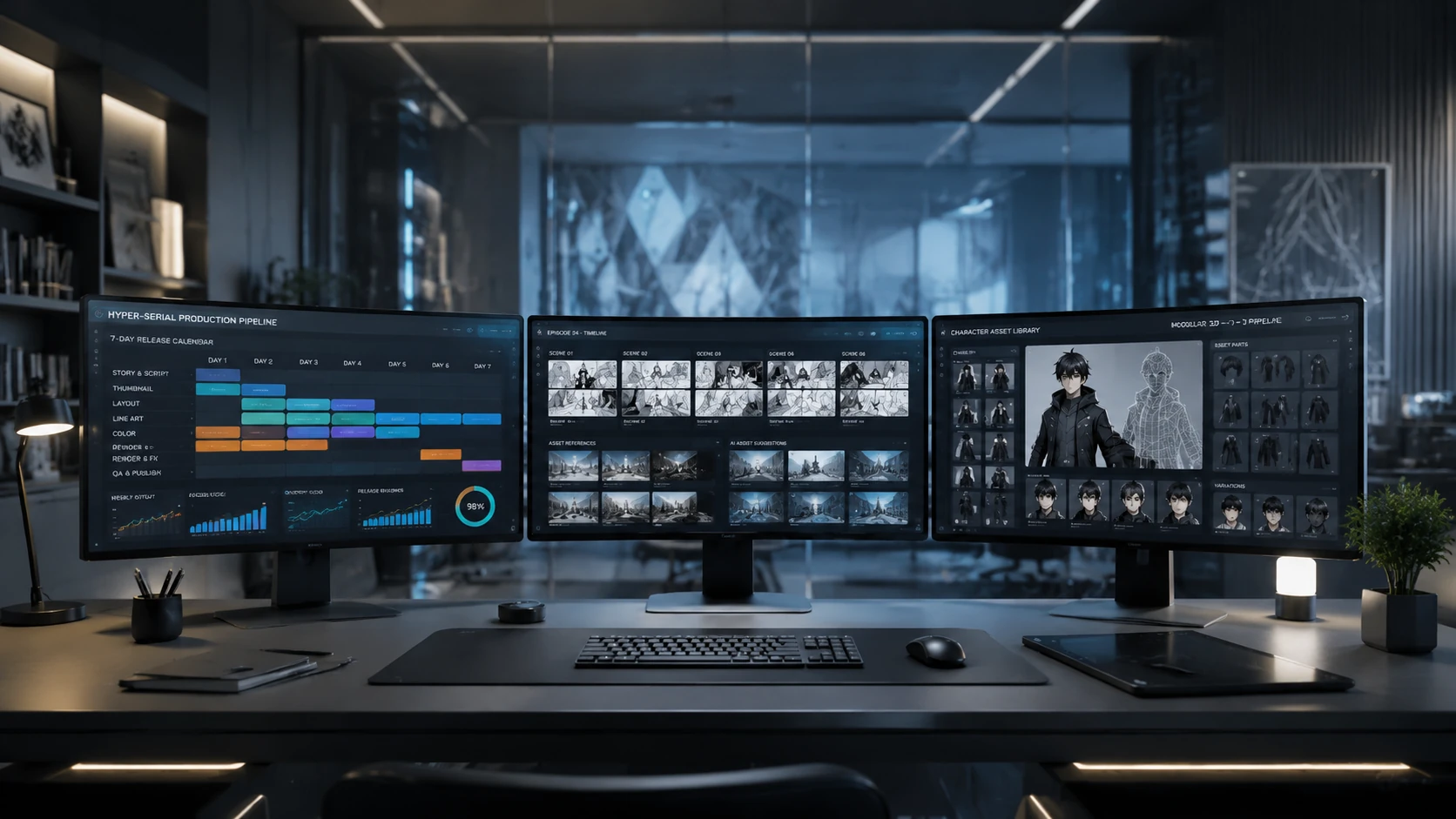
The 2026 ‘Hyper-Serial’ (HS) Production Framework: Engineering Daily-Release Webtoons for the High-Frequency Attention Economy
Transition from weekly to daily serialization with the 2026 Hyper-Serial (HS) framework. Learn to engineer high-frequency webtoon releases that capture the modern attention economy without creator burnout.
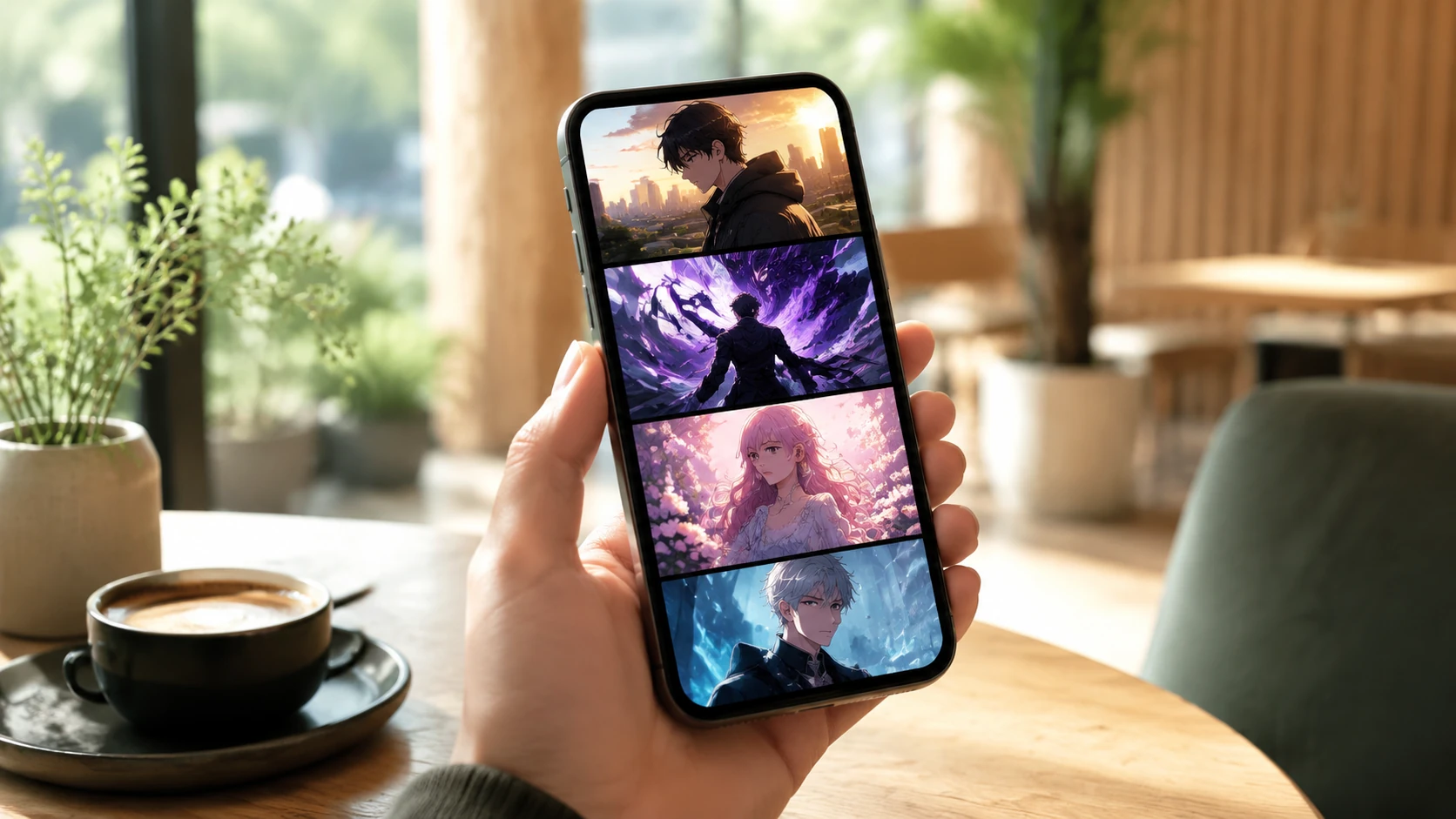
The 2026 ‘Contextual Retention’ (CR) Audit: Engineering Webtoon Narrative Flow for High-Speed Mobile Multitasking
In an era of hyper-distracted reading, the 2026 Contextual Retention (CR) Audit provides a framework for engineering webtoons that remain coherent and engaging during 2-minute mobile reading bursts.

The 2026 ‘First-Contact’ Onboarding Standard: Engineering Reader Conversion for New Webtoo
Master the 2026 First-Contact Standard to transform casual scrollers into loyal subscribers. Learn the exact narrative architecture required to survive the 90-second reader audit.