Fixing the 'Value-to-Scroll' Ratio in Your Webtoon
In 2026, 'Infinite Scroll Fatigue' is the leading cause of series abandonment. Learn how the Value-to-Scroll (VSR) metric helps creators engineer high-retention chapters.
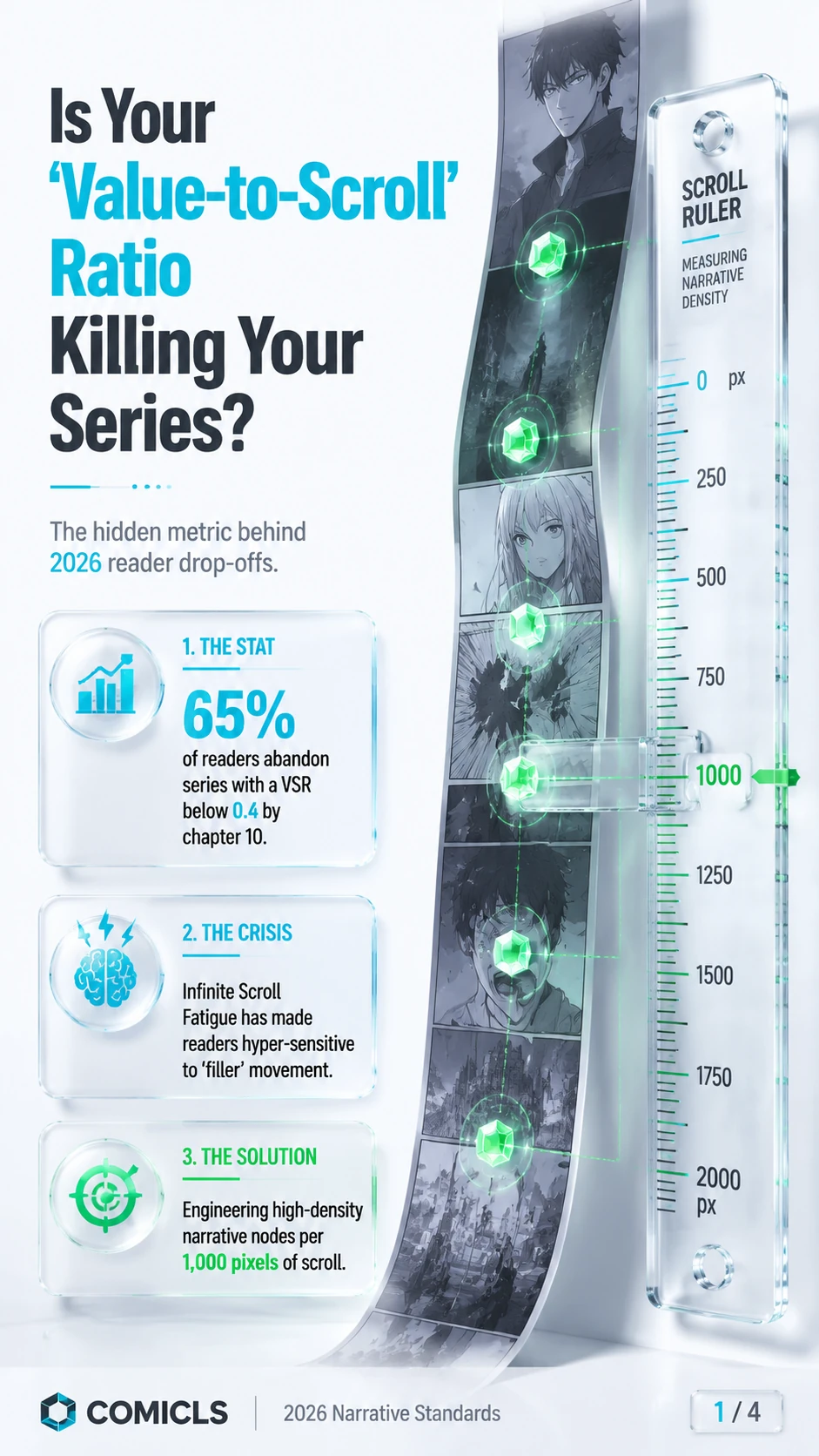
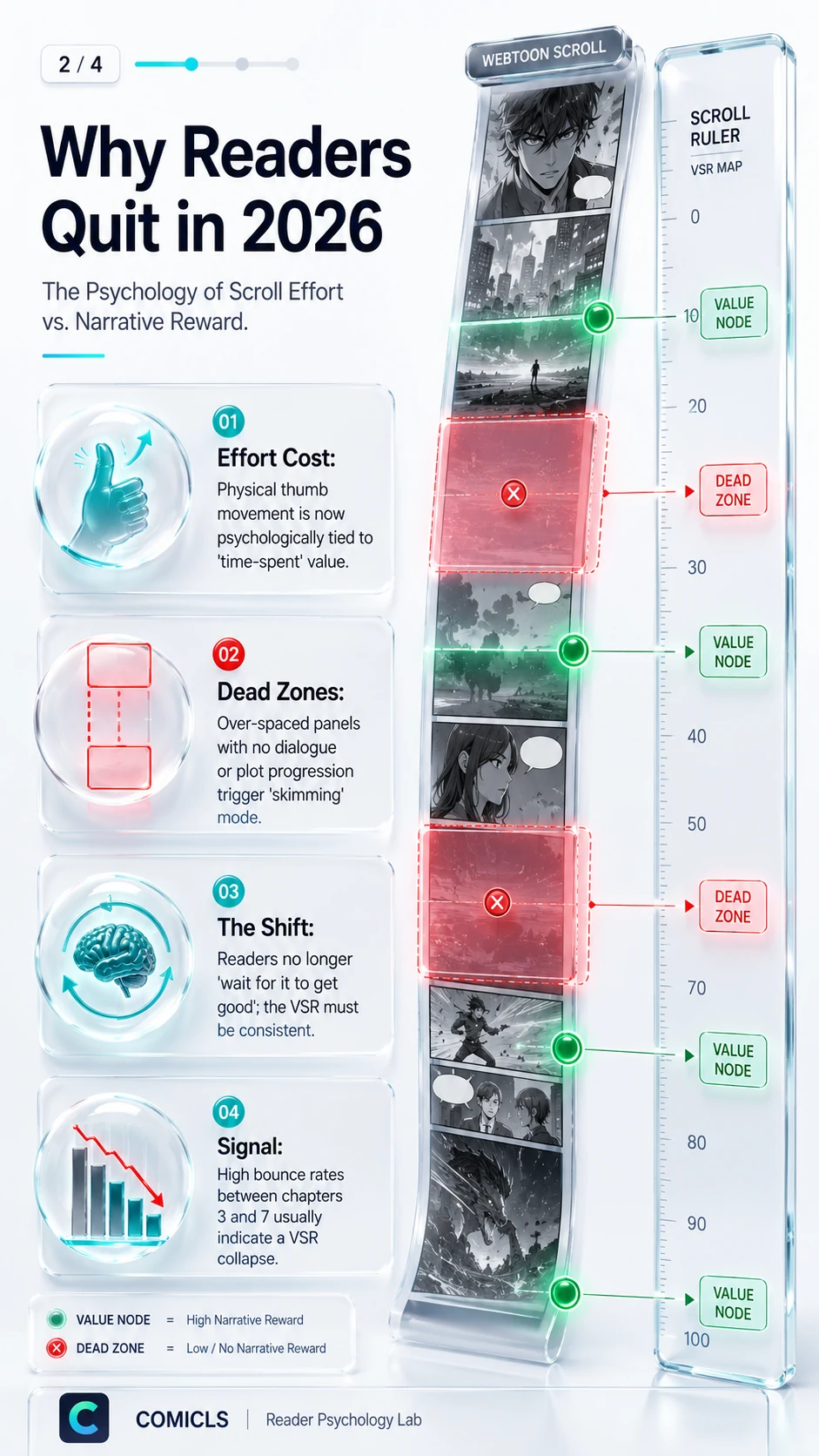
In the high-velocity attention economy of 2026, the 'Value-to-Scroll' (VSR) ratio has emerged as the most critical metric for webtoon longevity. As readers face increasing 'scroll fatigue' from an over-saturated market, the physical effort of swiping must be met with proportional narrative rewards. This article introduces the VSR framework to help creators identify 'dead zones' in their pacing and re-engineer their vertical layouts for maximum impact.
- Learn why the physical cost of scrolling is the #1 cause of reader drop-off.
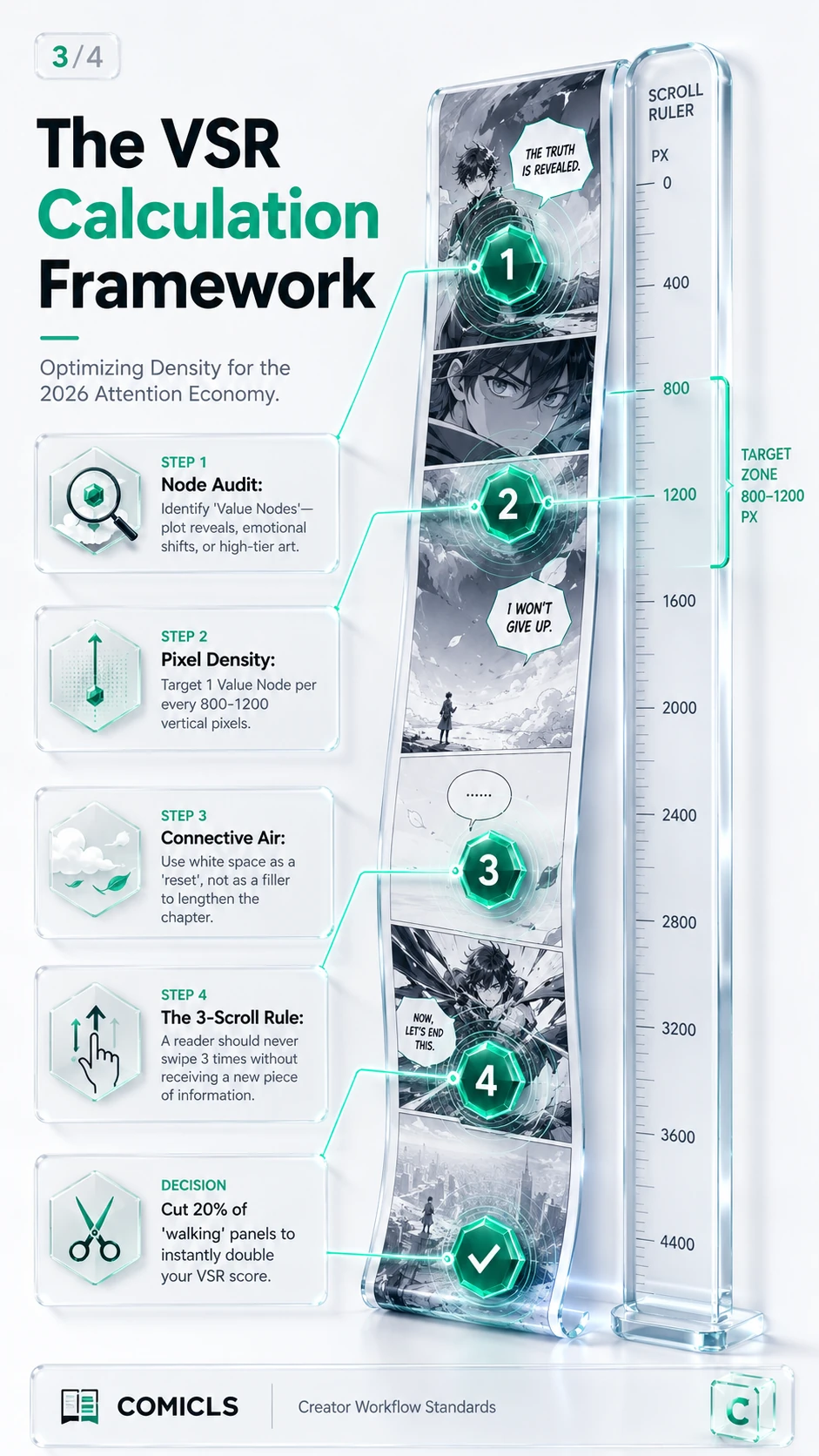
- Calculate your VSR using the 1000-pixel node audit.
- Master the '3-Scroll Rule' to keep readers engaged throughout long chapters.
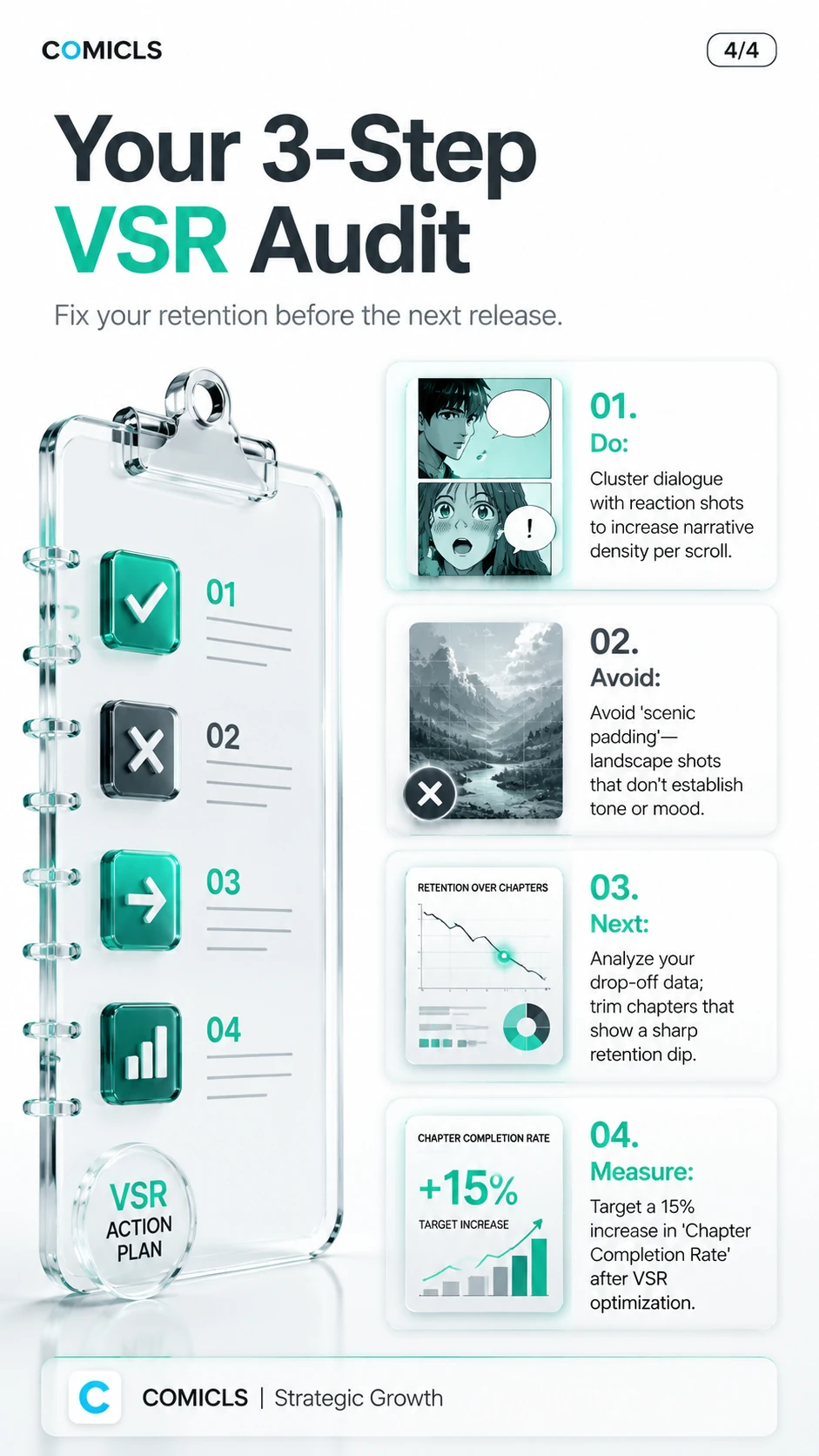
- Identify and remove 'scenic padding' that dilutes your narrative density.
FAQ
What is a good Value-to-Scroll ratio for a new webtoon?
In 2026, a healthy VSR is typically 1 Value Node (plot point, emotional beat, or major visual) per 1,000 pixels of vertical height.
Does more white space improve or hurt my VSR?
White space used for 'breathing room' after a major beat improves the experience, but white space used as 'filler' to make chapters look longer hurts your VSR and increases churn.