The 2026 ‘Contextual Retention’ (CR) Audit: Engineering Webtoon Narrative Flow for High-Speed Mobile Multitasking
In an era of hyper-distracted reading, the 2026 Contextual Retention (CR) Audit provides a framework for engineering webtoons that remain coherent and engaging during 2-minute mobile reading bursts.
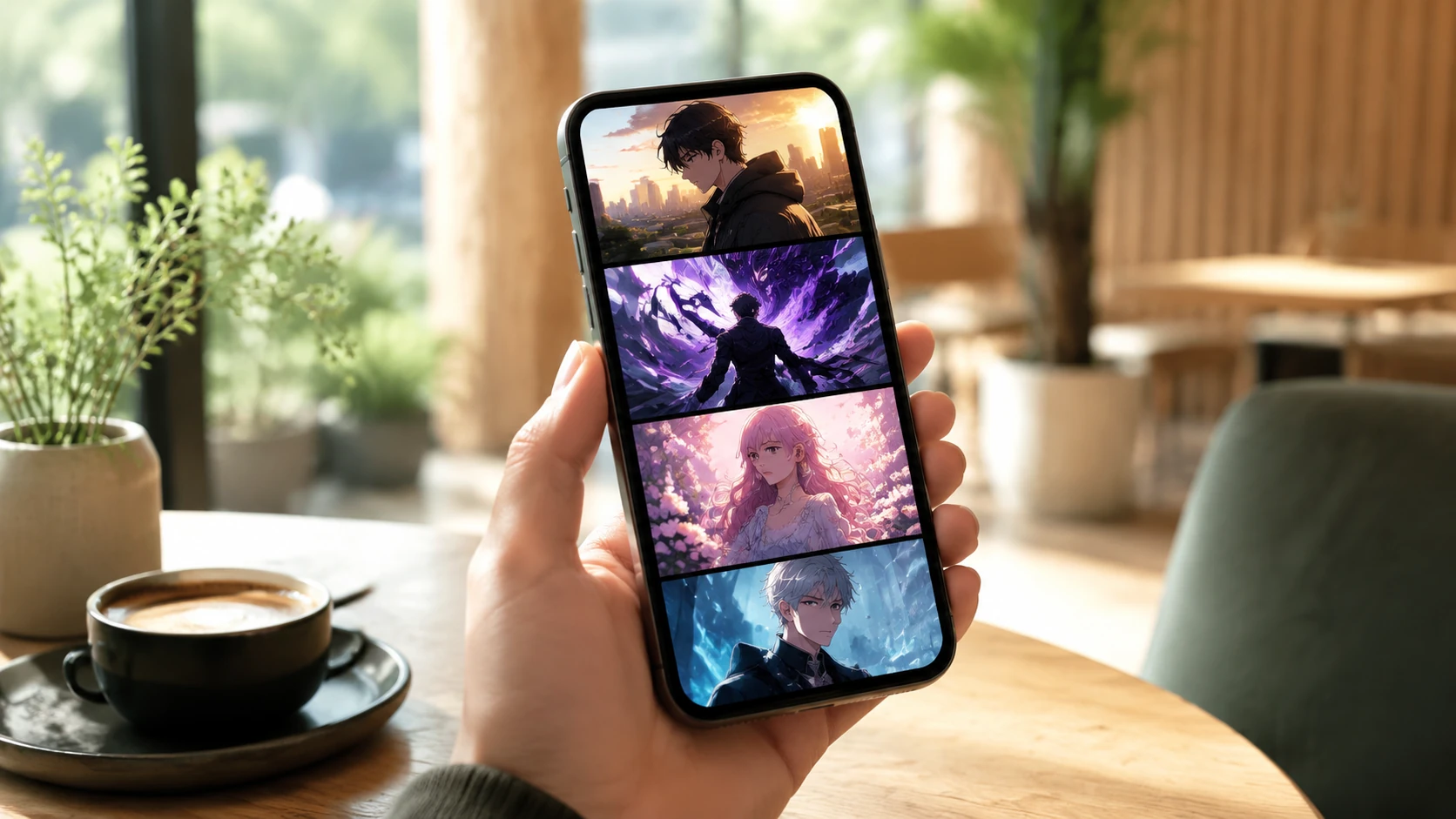
In the hyper-competitive landscape of 2026, webtoon success is increasingly dictated by a metric known as 'Attention Elasticity.' This measures how easily a reader can bounce out of a story and snap back into it without losing the narrative thread. As mobile multitasking becomes the default reading habit, creators can no longer assume they have the reader's undivided attention for more than 90 seconds at a time. The 2026 'Contextual Retention' (CR) Audit has emerged as the gold standard for engineering narratives that survive the chaos of the mobile-first era. This framework isn't about dumbing down content; it's about optimizing the delivery of complex information so it can be processed during the 'gaps' in a reader's daily life.
The Anatomy of Contextual Drift
Contextual Drift occurs when the gap between reading sessions is long enough that the reader forgets the immediate emotional stakes, character names, or spatial orientation of a scene. In 2026, with the average webtoon consumer following 15+ titles simultaneously, this drift is the silent killer of long-term retention. A CR Audit identifies these 'drift zones'—usually located at the start of chapters or after complex dialogue-heavy sequences—and implements 'Narrative Anchors' to stabilize the reader's experience. By treating the webtoon as a user interface (UI) as much as a story, creators can significantly reduce the cognitive friction that leads to 'unsubscribing' behavior.
The Anchor-Bridge-Pulse Model
The CR Audit utilizes the 'Anchor-Bridge-Pulse' (ABP) model to evaluate chapter health. Anchors are visual landmarks that ground the reader. Bridges are narrative transitions that connect the previous session's emotions to the current panel. Pulse refers to the rhythmic insertion of curiosity gaps that keep the 'swipe' reflex active. If a chapter lacks a strong Anchor, the reader feels lost. If it lacks a Bridge, they feel disconnected. If it lacks a Pulse, they get bored. Mastering this triad allows for a story that feels 'fast' even when it is deeply thematic or complex.
- Environmental Anchors: Distinctive 3D assets or lighting schemes that define a scene.
- Emotional Bridges: Dialogue or internal monologues that briefly reference the character's current motivation.
- Rhythmic Pulses: Tension spikes every 2,000 pixels to maintain engagement.
Engineering for Small-Screen Cognition
A critical component of the 2026 CR Audit is 'Cognitive Load Optimization.' On a small mobile screen, every extra word or overly detailed panel border adds to the reader's mental effort. To optimize for high-speed multitasking, creators must adopt a 'Mobile-First Hierarchy.' This means prioritizing the most important narrative information—usually the character's eyes and the primary action—in the center of the vertical scroll path. Peripheral details should be kept minimal unless they serve as specific 'Anchors.' This ensures that even if a reader is skimming at high speed, the 'core' of the story is absorbed subconsciously.
The Role of Reactive Dialogue in 2026
Dialogue in a CR-optimized webtoon serves a dual purpose: advancing the plot and providing 'Contextual Insurance.' Reactive dialogue—where characters mention their current status or goals as part of a natural reaction to an event—is the most effective way to keep a distracted reader informed. For instance, instead of a character stating their goal in a vacuum, they might complain about the difficulty of that goal while performing an action. This provides the reader with 'passive context,' allowing them to pick up the story's direction without needing to scroll back to previous chapters to remember why a specific character is in a specific room.
Conclusion: The Creator as a Narrative Architect
The 2026 'Contextual Retention' Audit marks a shift from 'storytelling' to 'narrative architecture.' In an age where attention is the most valuable currency, the creators who succeed are those who respect their readers' time and cognitive constraints. By auditing your work for Anchors, Bridges, and Pulses, you ensure that your webtoon isn't just a story they read—it's a story they can live with, even in the busiest moments of their day. Retention isn't about being the loudest; it's about being the most effortlessly accessible.
FAQ
What is a Contextual Retention (CR) Audit?
It is a 2026 framework for evaluating how well a webtoon maintains reader engagement and coherence during fragmented mobile reading sessions.
How often should I perform a CR Audit on my series?
Ideally, every 5-10 chapters, or whenever you notice a drop-off in 'middle-of-chapter' retention metrics.
Does CR optimization limit my artistic freedom?
No. It simply provides a structure for delivering your art in a way that is accessible to the modern reader's habits and hardware.