The 2026 ‘Semantic-Trope’ (ST) Engineering Standard: Designing Webtoon Hooks for AI-Agent Recommendation Engines
In 2026, readers no longer search for webtoons; AI agents find stories for them. Learn how to engineer your narrative tropes for maximum machine-legibility and organic discovery.
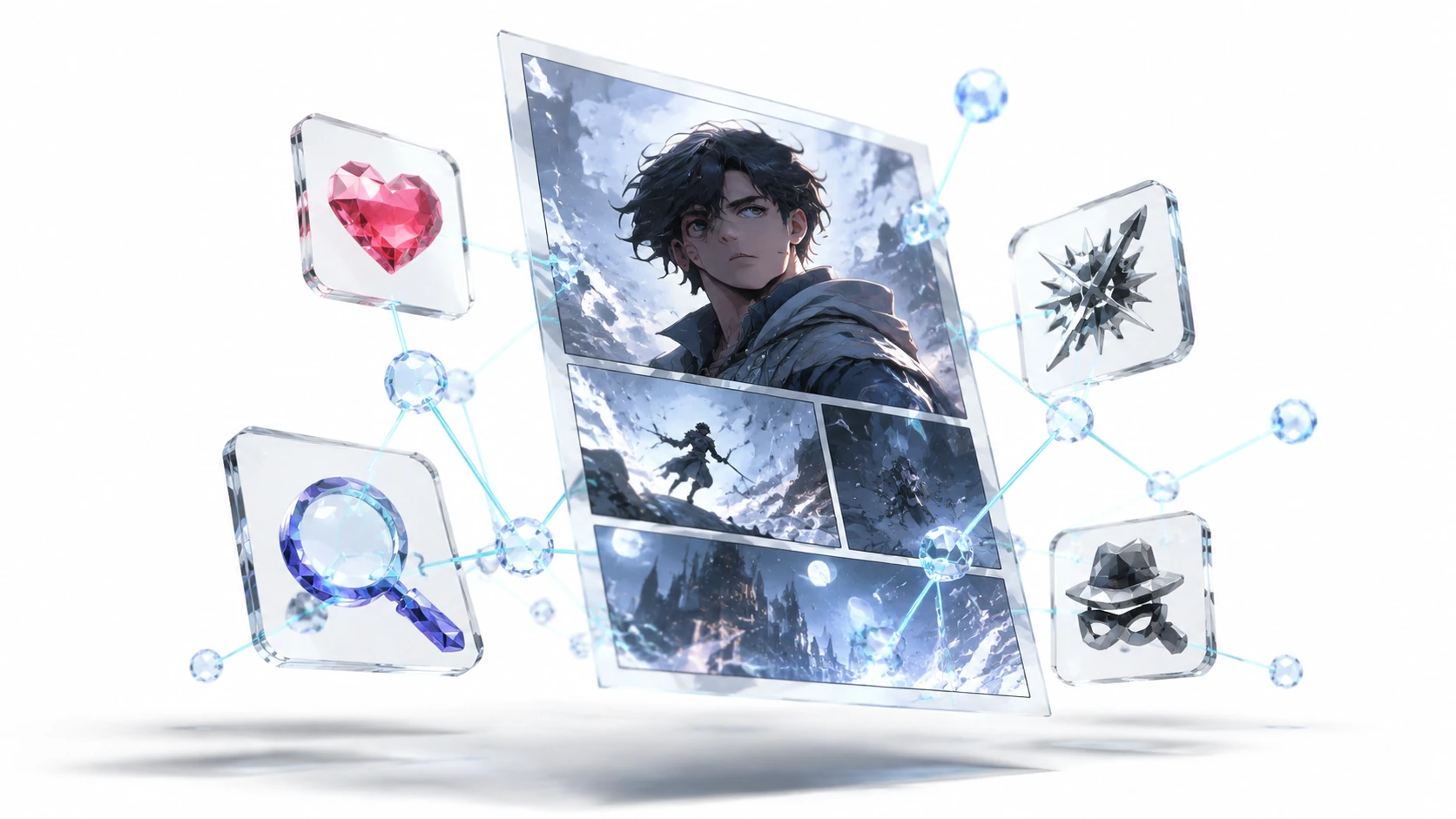
By 2026, the digital comic market has moved beyond simple search bars. Today, discovery is mediated by sophisticated AI personal assistants—agents that understand a reader's mood, past engagement history, and even their current 'narrative fatigue' levels. For creators, this means that traditional SEO is no longer enough. To be found, your webtoon must be 'machine-legible.' This doesn't mean writing for robots; it means structuring your story's core units—its tropes—so that recommendation engines can accurately identify who will love your work. The Semantic-Trope (ST) Engineering Standard is the definitive framework for this new era of publishing.
Understanding the 2026 Discovery Landscape
In the current landscape, AI agents use 'Vector Search' to connect readers with content. Instead of looking for the word 'vampire,' the agent looks for a specific 'narrative energy'—perhaps a mix of gothic aesthetics, high-stakes political intrigue, and slow-burn romance. If your story contains these elements but they are buried under vague titles or inconsistent pacing, the AI agent cannot 'see' them. Semantic-Trope Engineering solves this by making these elements explicit at the architectural level of your script and storyboard.
The Three Layers of the ST Standard
To properly engineer a webtoon for 2026 discovery, you must address three layers of semantic signaling in your opening chapters. These layers provide the 'training data' the AI needs to build your series' profile.
1. The Surface Layer (Environmental Signals)
This includes the genre, setting, and basic premise. These are the easiest to signal but also the most crowded. To stand out, use 'Trope Fusion'—combining two disparate surface tropes (e.g., 'Space Opera' + 'High School Cooking'). This creates a unique 'Semantic Fingerprint' that the AI can easily distinguish from generic entries.
2. The Structural Layer (Pacing and Logic)
AI models analyze the 'beat-map' of your story. Are you using a 'Slow-Burn' structure or a 'High-Octane' one? By intentionally aligning your chapter breaks and cliffhangers with established structural tropes, you help the AI match your story with readers who have a specific 'attention-span profile' for that day.
3. The Affective Layer (Emotional Intent)
This is the most powerful signal in 2026. What does the reader *feel*? Is it 'Cathartic Revenge,' 'Wholesome Comfort,' or 'Existential Dread'? By using specific visual cues (color theory) and dialogue patterns associated with these emotions, you provide high-fidelity signals to the AI's sentiment analysis engines.
The ST-Optimization Workflow
Implementing the ST Standard requires a shift in your pre-production phase. Follow this 5-step workflow to ensure your webtoon is 'AI-Ready' before you launch.
- Semantic Audit: Before drawing, list the 5 primary tropes of your story and rank them by 'Discovery Value' (how unique they are in the current market).
- Hook-Mapping: Ensure the first 15 panels of Chapter 1 contain at least one visual or textual signal for each of your top 3 tropes.
- Multimodal Synchronization: Check that your art style (color, line weight, panel density) matches the emotional 'vector' of your script.
- Metadata Layering: Write your series description using 'Semantic Keywords'—phrases that describe the *experience* of reading, not just the plot.
- Consistency Verification: Every 10 chapters, re-evaluate if your story is still delivering on the 'Semantic Promise' made in the beginning.
Conclusion: Sovereignty Through Clarity
The goal of the 2026 Semantic-Trope Engineering Standard is not to limit creativity, but to empower it. In an age where millions of stories are uploaded every day, the greatest risk to a creator is not 'being bad,' but 'being unknown.' By learning to speak the language of the discovery agents, you ensure that your unique human perspective finds its way to the readers who need it most. This is the new era of creator sovereignty: where your story's soul is perfectly translated for the digital world.
FAQ
What is a 'Semantic Trope'?
A Semantic Trope is a narrative unit (like a character archetype or plot beat) that has been optimized for AI-agent recognition through consistent visual and textual signaling.
Does ST Engineering make my story predictable?
No. ST Engineering is about the *clarity* of your signals, not the *simplicity* of your plot. You can still have complex twists, as long as the AI understands the 'vector' of the story.
How do AI agents 'see' my webtoon?
In 2026, recommendation models use multimodal LLMs that analyze both the text in your speech bubbles and the visual composition of your panels simultaneously.