The 2026 Mood-Index (MI): Why Readers Search by 'Vibe' Over Genre
In 2026, readers are ditching genre tags for 'Mood-Index' searches like 'Low-Friction Healing' or 'High-Density Hype.' Learn how to optimize your story for the sentiment-driven economy.
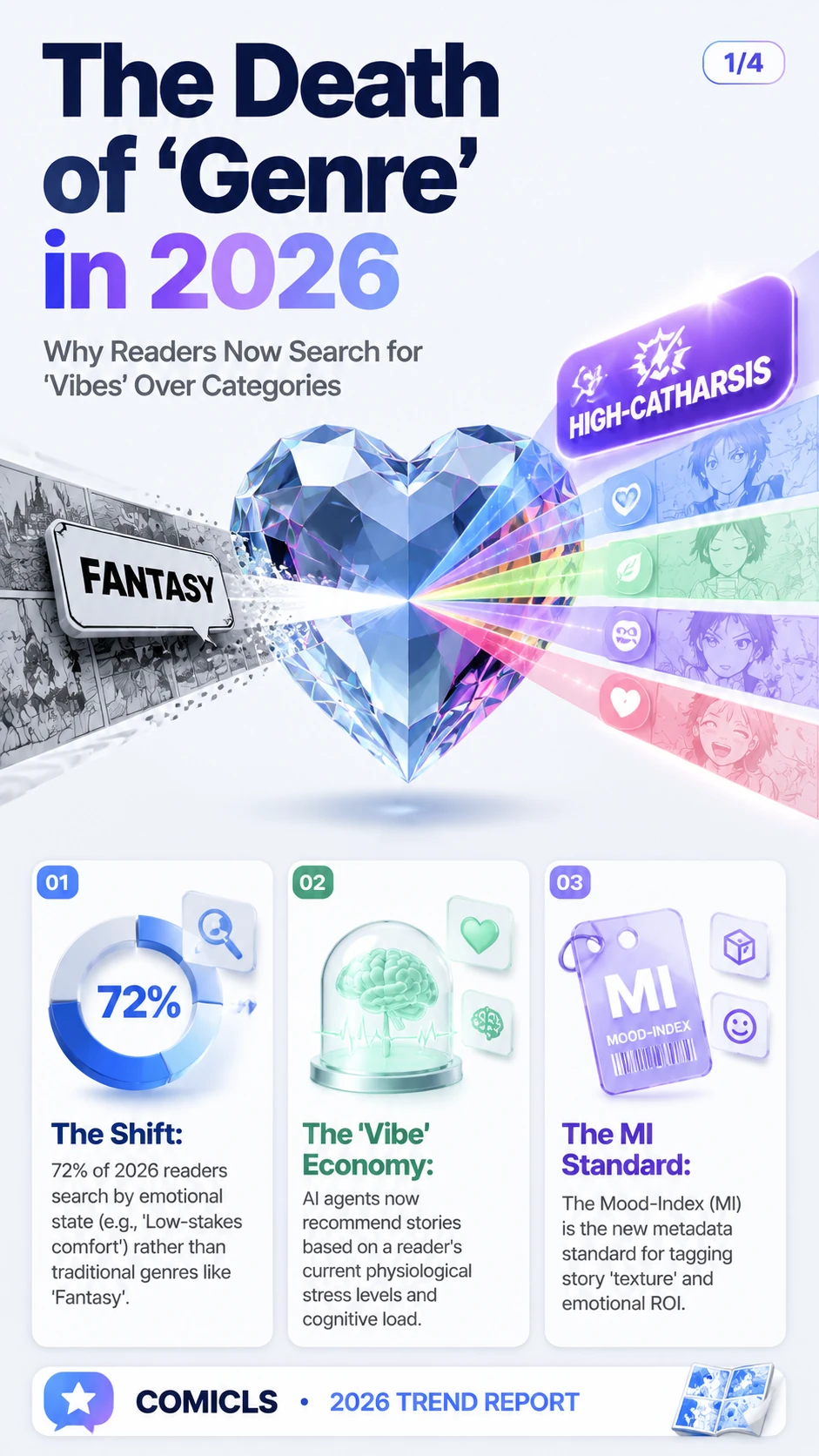
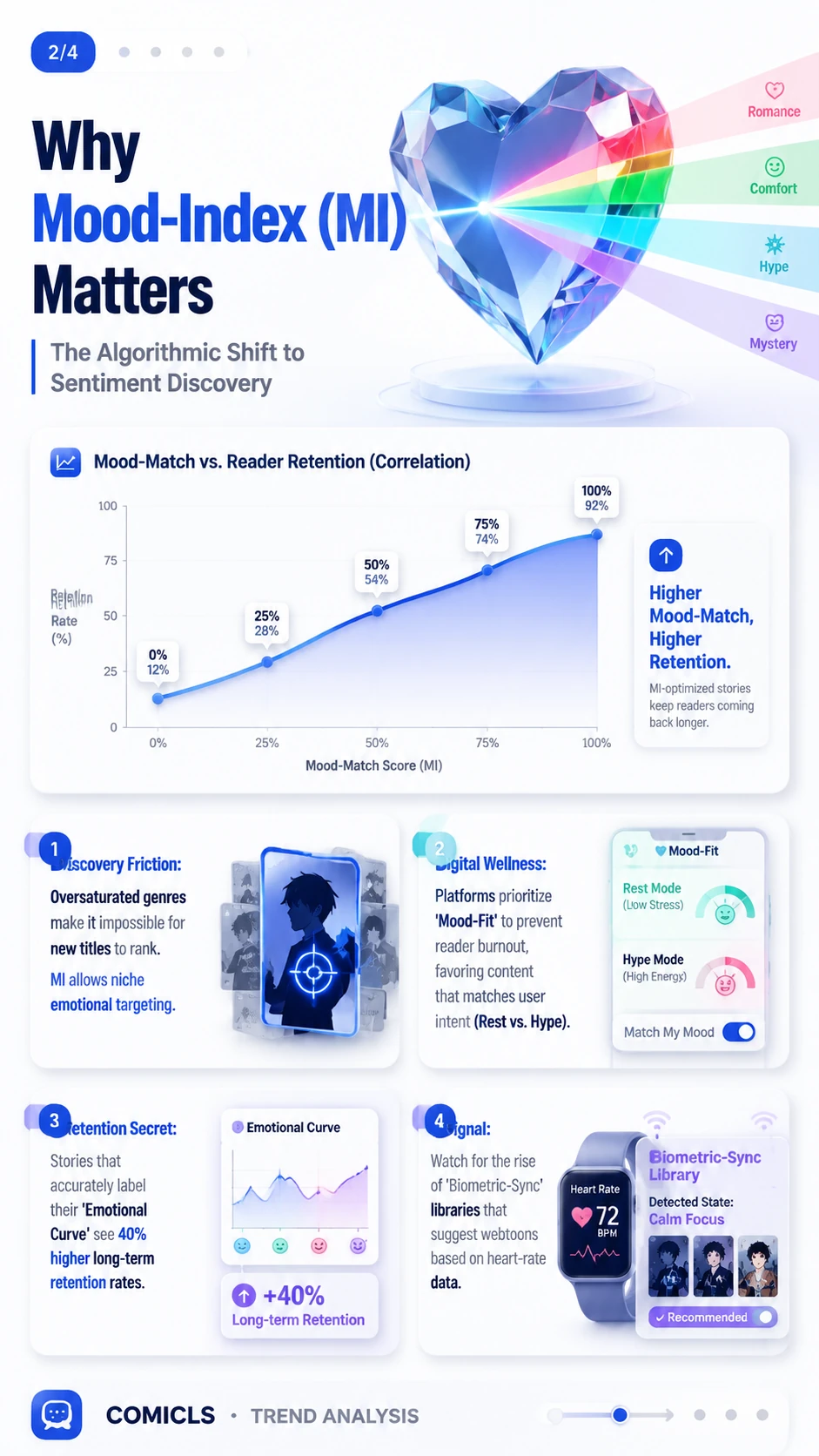
By 2026, the way readers discover new stories has shifted from rigid genre categories to fluid emotional 'vibes.' This shift is driven by the Mood-Index (MI) standard, a metadata framework that prioritizes the emotional ROI of a story over its plot tropes. As AI recommendation engines become more sophisticated, they are increasingly matching content to a reader’s current mental state and digital wellness needs.
- Page 1 explores the decline of traditional genre tagging and the rise of sentiment-driven search behaviors.
- Page 2 explains why platforms are adopting Mood-Index discovery to combat reader burnout and improve retention.
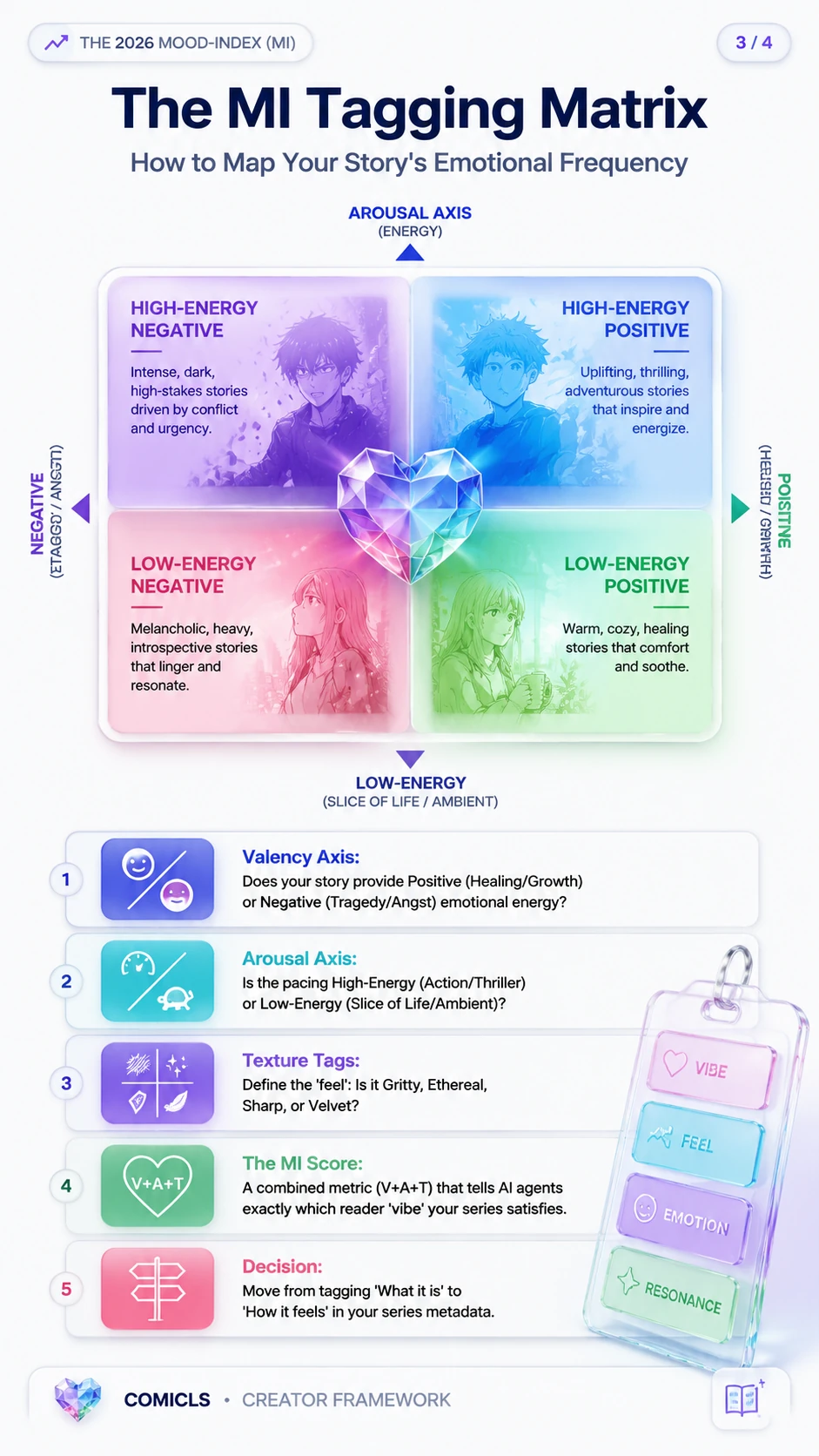
- Page 3 provides a practical matrix for creators to map their story’s valency, arousal, and texture frequencies.
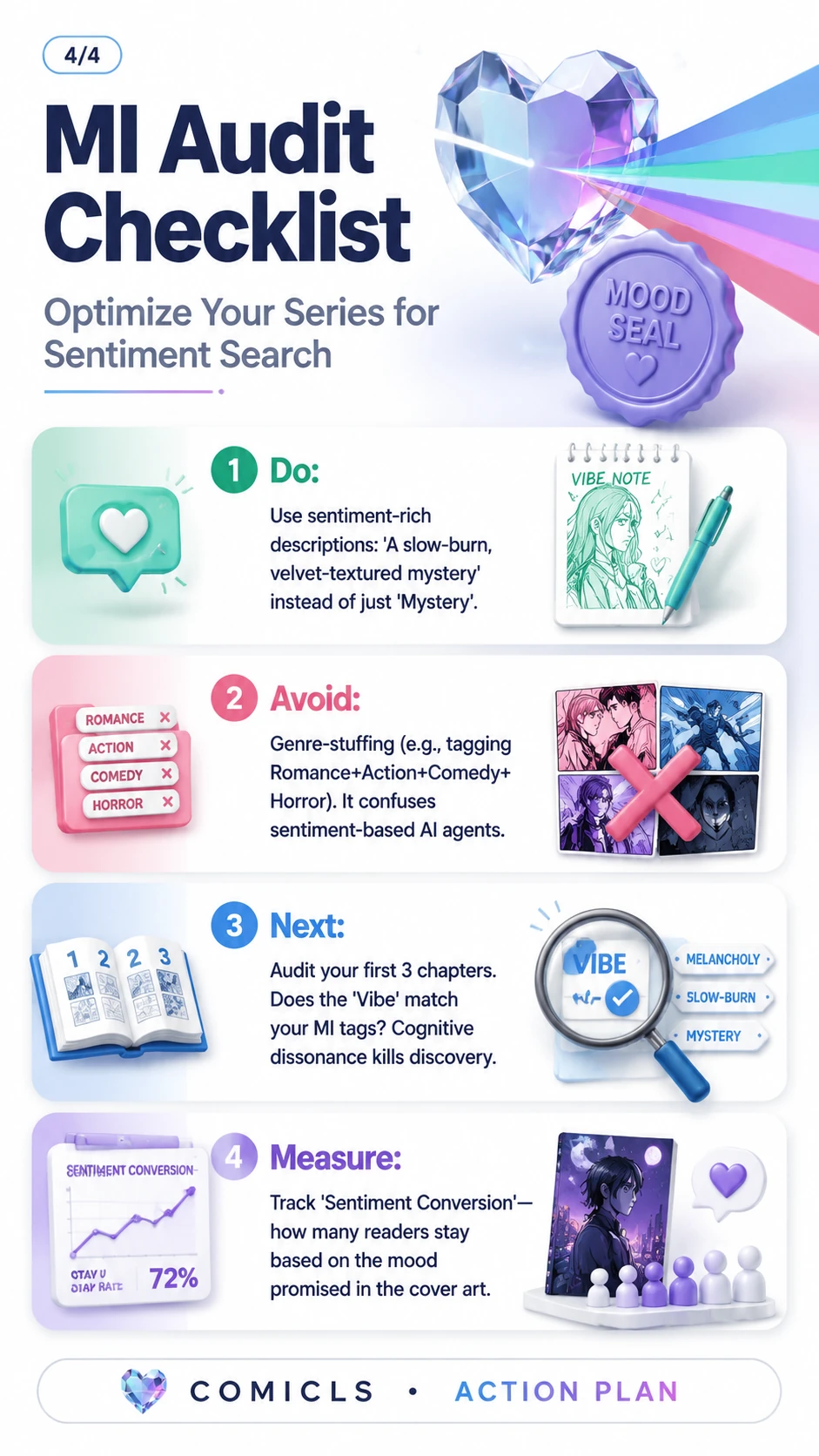
- Page 4 offers a concrete action plan for auditing series metadata to thrive in the 2026 'Vibe' economy.
FAQ
What is the Mood-Index (MI) in comics?
It is a 2026 metadata standard that tags stories based on emotional sentiment (e.g., Valency and Arousal) rather than just plot genres.
How do I optimize my webtoon for mood-based search?
Focus on 'Texture Tags' in your metadata, describing the feel of the story (like 'Gritty' or 'Healing') and ensuring your art style matches the emotional promise.