The 2026 ‘In-Story-Discovery’ (ISD) Shift: Ending External Ad Reliance
Discover why the 2026 In-Story-Discovery (ISD) shift is replacing external ads with organic narrative portals. Learn to engineer reader migration through immersive story nodes.
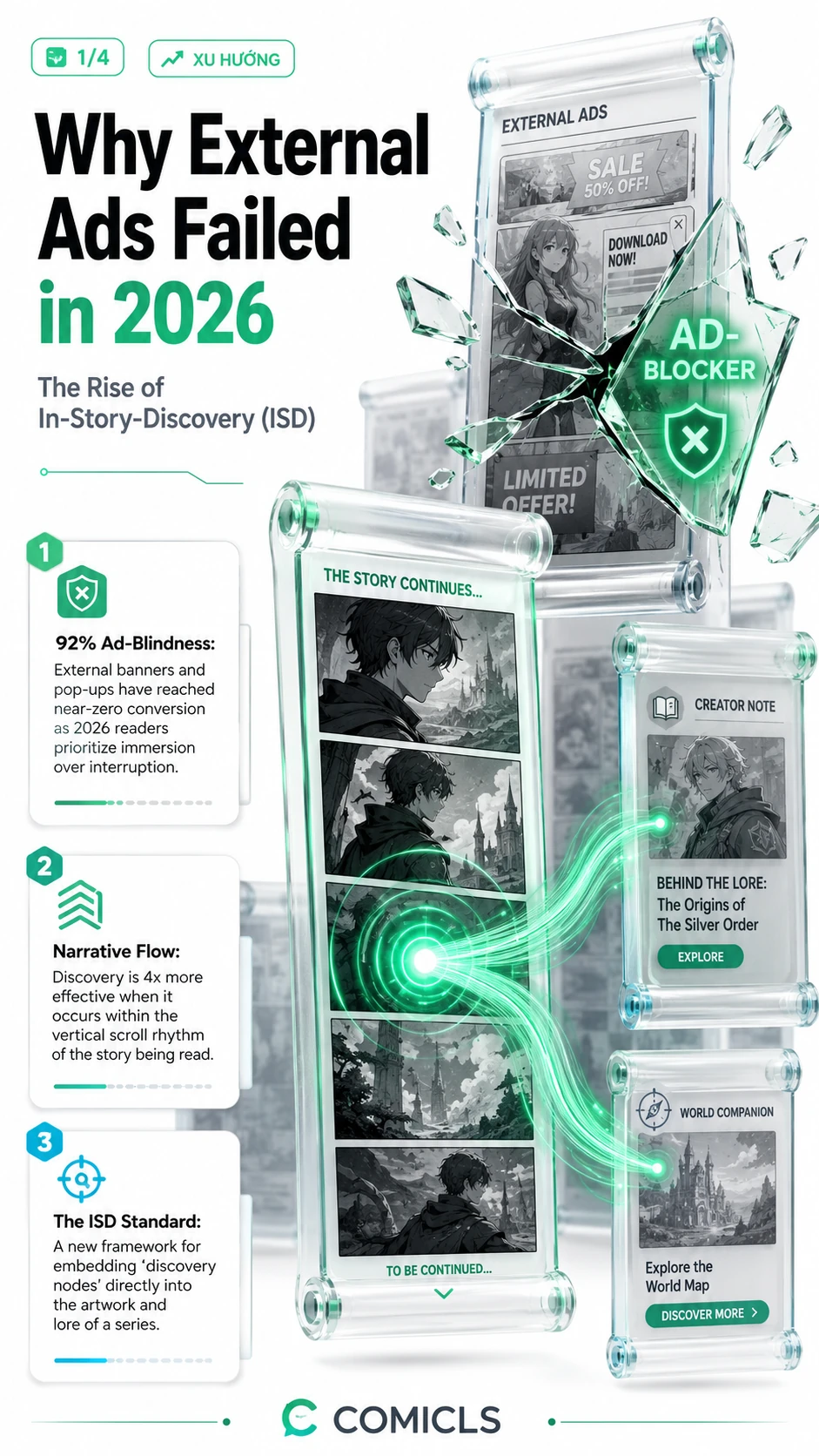
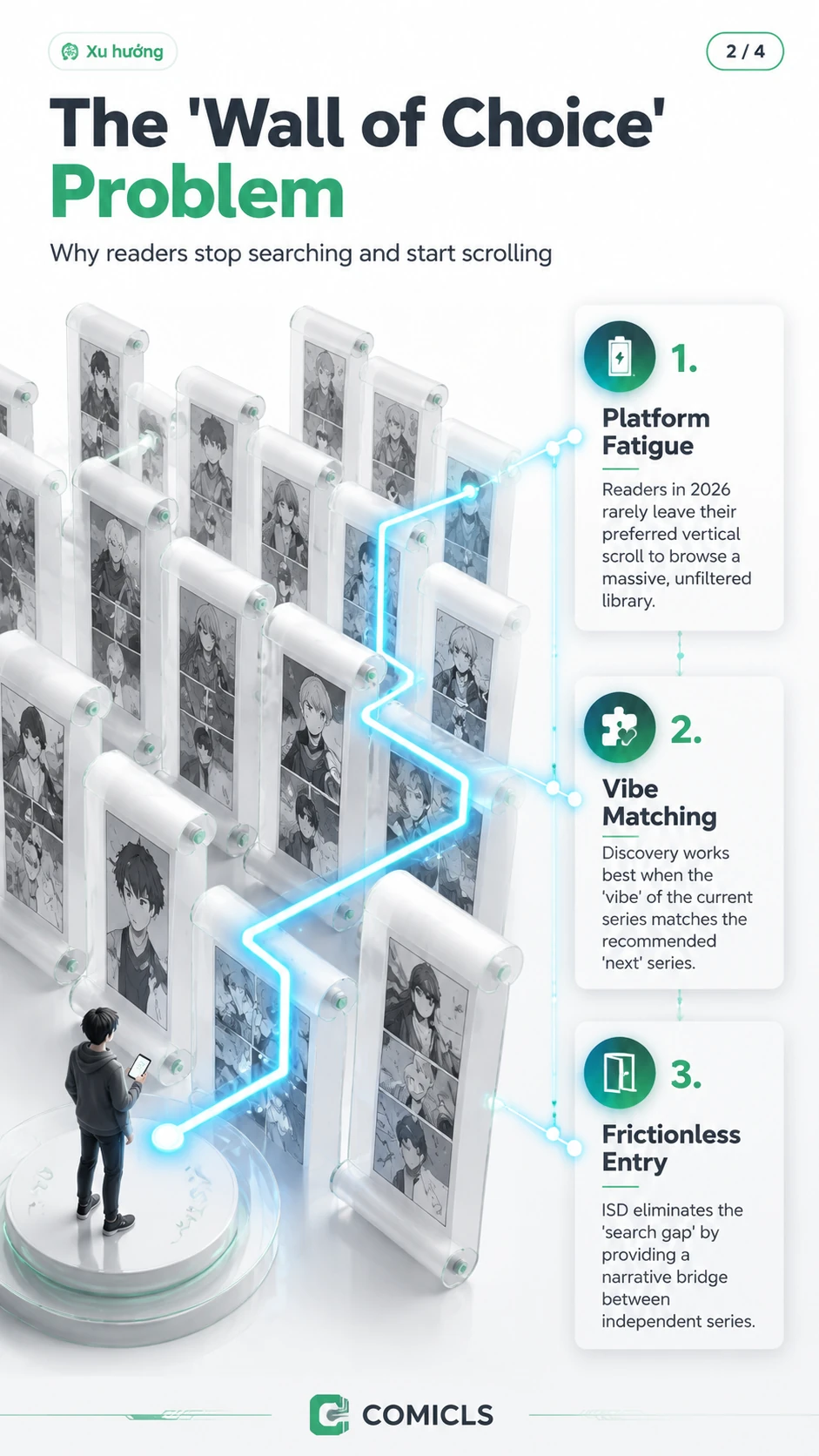
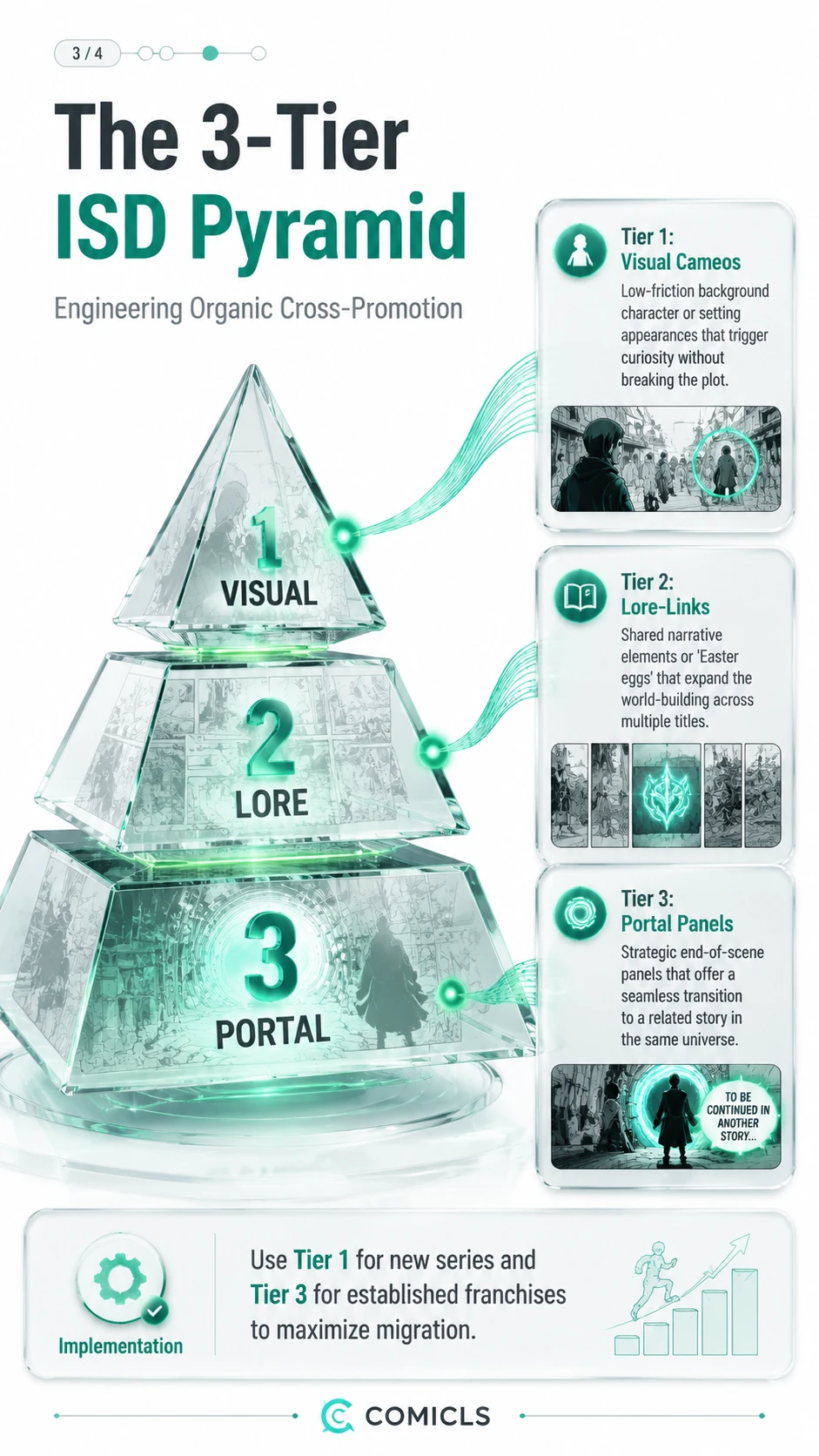
The 2026 comic market is moving away from traditional advertising. As readers become increasingly 'ad-blind,' creators and studios are turning to the In-Story-Discovery (ISD) standard. This framework allows for the organic cross-promotion of titles within the vertical scroll narrative, ensuring that the discovery of new content feels like an extension of the current reading experience rather than a commercial interruption. By embedding discovery nodes—such as visual cameos, shared lore, and portal panels—directly into the art, creators can significantly boost reader migration and retention across their entire portfolio.
- In-Story-Discovery (ISD) replaces external ads with narrative-integrated nodes.
- The shift is driven by a 92% decline in conversion for traditional webtoon banners.
- The 3-Tier ISD Pyramid includes Visual Cameos, Lore-Links, and Portal Panels.
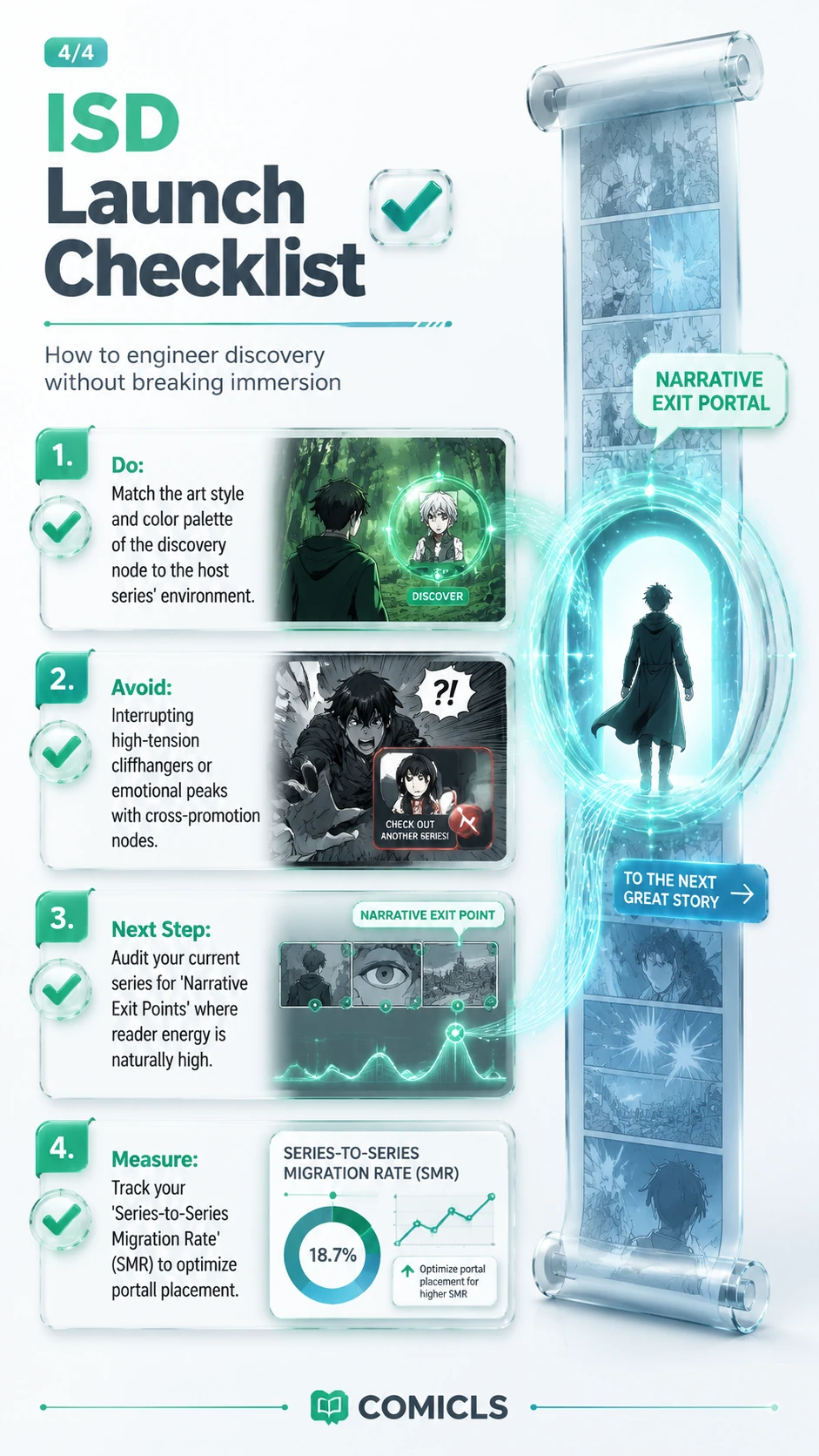
- Successful ISD implementation requires matching the art style and timing of the host series.
FAQ
What is the In-Story-Discovery (ISD) Standard?
ISD is a 2026 framework for embedding cross-promotional elements directly into the narrative and artwork of a webtoon or manga to drive organic reader migration.
How do I implement ISD without annoying my readers?
Focus on Tier 1 (Visual Cameos) and Tier 2 (Lore-Links) to keep the promotion subtle, and only use Tier 3 (Portal Panels) at the end of chapters or scenes.
What is the Series-to-Series Migration Rate (SMR)?
SMR is the metric used to track how many readers successfully transition from one title to another via an ISD node.