The 2026 ‘Post-Hero’ Narrative Shift: Why Gen Alpha Readers are Abandoning Traditional Pro
In 2026, the traditional Hero's Journey is being replaced by 'Post-Hero' narratives. Discover why Gen Alpha readers prioritize moral ambiguity and system-navigation over singular protagonists.
As we move through 2026, the comic and webtoon industry is witnessing the most significant demographic disruption in a generation. Gen Alpha, the cohort born between 2010 and 2024, has officially entered its prime reading years, and their narrative appetites are fundamentally different from the Gen Z and Millennial audiences that preceded them. The most startling revelation of the 2026 COMICLS Narrative Audit is the rapid decline of the 'Chosen One' archetype. Traditional power fantasies centered on a singular, virtuous hero are no longer the primary engine of viral growth. Instead, a new standard—the ‘Post-Hero’ narrative—has emerged, prioritizing collective action, moral grayness, and the navigation of complex systems over individual triumph. This shift is not merely a change in taste; it is a structural evolution in how stories are engineered to resonate with a generation that views the world through the lens of decentralized networks rather than hierarchical leadership.
The Death of the 'Chosen One': Why Individualism is Fading
For decades, the Hero’s Journey was the gold standard for commercial storytelling. In 2026, however, the concept of a single character destined to save the world feels increasingly disconnected from the reality of Gen Alpha readers. Data from major serialization platforms indicates that stories featuring a 'Perfect Protagonist' have seen a 40% drop in reader retention by chapter ten compared to 2022 levels. Gen Alpha readers are more likely to engage with 'System-Navigators'—characters who lack innate specialness but succeed through collaboration, resourcefulness, and the exploitation of established rules. This shift is driven by a deep-seated cynicism toward centralized authority and a preference for 'Relatable Flaws' over 'Superhuman Virtues.' The 2026 reader does not want to be the hero; they want to see how a group of flawed individuals can survive a broken environment.
From Self-Improvement to System-Navigation
- Rejection of 'Power Creep': Readers now prefer intellectual victories over physical power scaling.
- The Rise of the 'Villainous Protagonist': Characters who operate outside traditional morality are seeing 35% higher sentiment scores.
- Collective Stakes: The narrative focus has shifted from 'Will the hero win?' to 'Can the community survive?'
- Transparency in Motivation: Gen Alpha demands characters with clear, often selfish, but understandable survival instincts.
The 'Ensemble-First' Architecture: Engineering Multi-POV Narratives
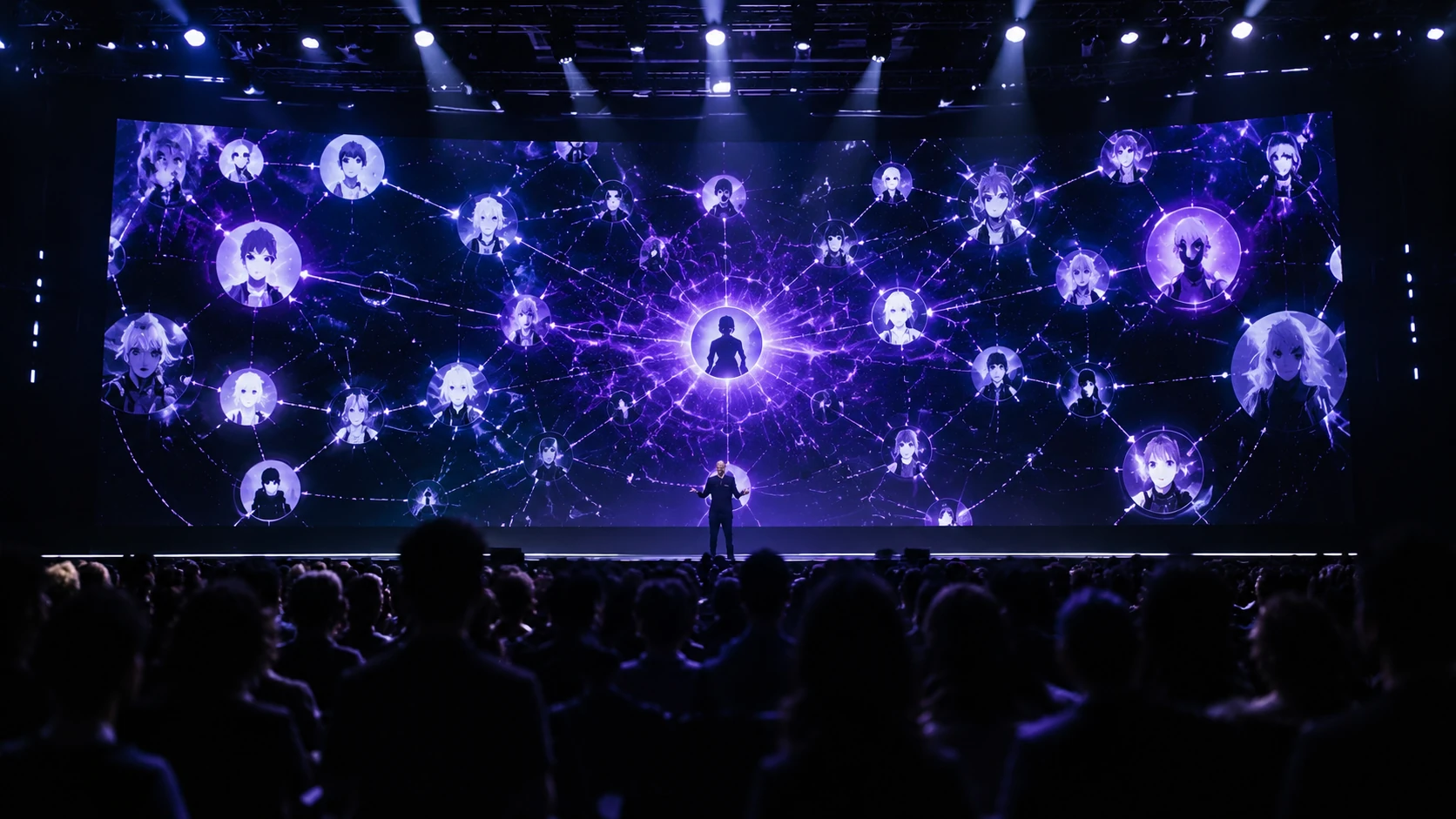
The 2026 Post-Hero trend is physically manifesting in how webtoons are structured. We are seeing a move away from the 'Sun and Planets' model, where all side characters exist solely to support the protagonist’s growth. Instead, the 'Mesh Network' model has become the standard for high-performance IP. In this architecture, 4 to 6 characters are given equal weight in the narrative metadata, with rotating perspectives that prevent the reader from becoming overly attached to—or bored by—a single viewpoint. This approach allows for higher 'Trope Density' and caters to the multi-tasking attention spans of modern readers. By engineering a story where any character could theoretically be the protagonist, studios are creating more 'Entry Points' for diverse fan communities, which in turn drives higher engagement in secondary markets like digital fashion and avatar licensing.
Engineering ‘Relatable Flaws’ for the 2026 Market
In the 2026 creative workflow, character design starts with a 'Deficiency Audit.' Unlike previous eras where flaws were often superficial (e.g., being clumsy), modern successful characters are defined by deep-seated moral or psychological contradictions. Creators are using sentiment mining to identify 'Aesthetic Vulnerabilities' that Gen Alpha readers find authentic. For example, a character who is technically skilled but socially paralyzed by the fear of making a systemic error is currently outperforming the 'brave leader' archetype across all major genres. This focus on internal friction over external conflict allows for a slower, more psychological pacing that readers find more immersive. The goal is no longer to create a character that readers look up to, but a character that readers feel they have to 'protect' or 'watch closely,' creating a more active, parental-style bond between the reader and the IP.
The Role of Moral Grayness in Global Localization
One of the most profound benefits of the Post-Hero shift is its impact on global scalability. Traditional heroes often carry cultural baggage—what is considered 'heroic' in the US might be viewed as 'arrogant' in Japan or 'naive' in Brazil. By shifting toward morally gray, system-oriented narratives, creators are building IP that is more culturally fungible. Characters who prioritize pragmatism over abstract virtue are universally understood in a globalized economy. As a result, the 2026 'Global-First' launch strategy almost exclusively utilizes Post-Hero ensembles. This allows localization teams to highlight different characters for different regional marketing campaigns, effectively 're-centering' the story for local tastes without changing the core narrative architecture.
Conclusion: Preparing for the Post-Archetype Era
The 2026 Post-Hero shift is not a temporary fad; it is the natural evolution of storytelling in a world defined by complexity and decentralized information. For creators and studios, the message is clear: the era of the 'Chosen One' is ending. To thrive in the next five years, your IP must embrace ensemble casts, moral ambiguity, and the intricate navigation of systems. By engineering stories that reflect the nuanced, often difficult reality of Gen Alpha, you are not just creating entertainment; you are building a narrative framework that feels authentic to the future of the reading public. The studios that continue to cling to the singular hero model will likely find themselves shouting into a void, while those who master the mesh-network narrative will define the next decade of digital comics.
FAQ
What is a 'Post-Hero' narrative?
A Post-Hero narrative is a story structure that rejects the 'Chosen One' archetype in favor of ensemble casts, moral ambiguity, and characters who succeed through systemic navigation rather than innate specialness.
Why does Gen Alpha prefer ensemble casts over singular heroes?
Gen Alpha values decentralized networks and collective action. Ensemble casts offer more entry points for engagement and reflect a world where no single individual has the power to solve complex systemic problems.
How can I update my existing webtoon for the Post-Hero trend?
Increase the narrative weight of side characters, introduce moral dilemmas where the 'right' choice is unclear, and focus on tactical collaboration rather than individual power-ups.