The 2026 ‘Dual-Pane’ Reading Habit: How Multi-Device Synchronization is Redefining Webtoon
In 2026, the vertical scroll is no longer a solitary experience. Discover how readers are using 'Dual-Pane' setups to sync webtoon lore, maps, and soundtracks across multiple devices simultaneously.
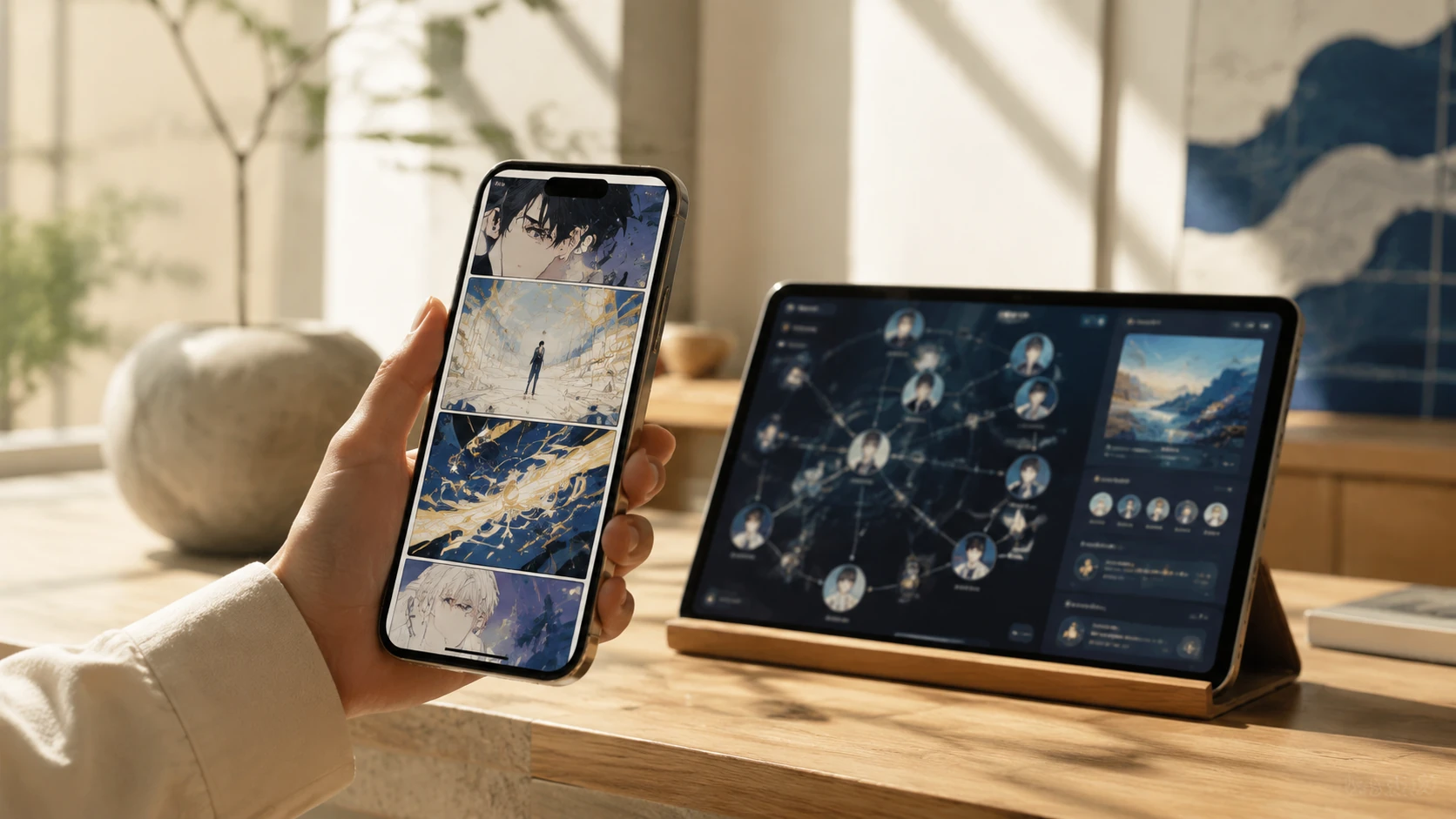
For over a decade, the mobile webtoon experience was defined by the singular constraints of the smartphone screen. However, as we move through 2026, a significant shift in reader behavior has emerged: the 'Dual-Pane' reading habit. No longer content with a solitary vertical scroll, high-intent readers are now leveraging multi-device synchronization to deepen their immersion. This trend involves using a primary device—usually a smartphone—for the core narrative, while a secondary device like a tablet, foldable, or smart-display acts as a 'narrative companion.' This second screen provides real-time updates of character bibles, interactive maps, and diegetic lore that changes based on the reader’s current scroll position. For COMICLS strategists, this represents a pivot from linear consumption to a multi-layered ecosystem where the story lives across the reader's entire hardware stack.
The Technical Architecture of Synchronized Immersion
The rise of Dual-Pane reading is driven by the maturation of the 'Narrative-Sync Protocol' (NSP), a 2026 industry standard that allows webtoon platforms to broadcast metadata to local networks. When a reader scrolls to a specific panel, the metadata triggers the secondary device to display relevant supplementary content. This might include a detailed 3D render of the current setting, a live-tracking 'relationship web' that highlights which characters are currently in the scene, or even an orchestral score that adjusts its intensity based on the scrolling speed. Unlike previous attempts at 'second-screen' content, which required manual navigation, the 2026 iteration is frictionless and automated. This creates a high-fidelity 'command center' for reading that appeals particularly to Gen Alpha and 'power-readers' who treat comic consumption as a high-engagement hobby rather than a passive distraction.
Key Components of the Companion Screen
- Live Lore Wikis: Automated glossaries that explain complex terminology the moment it appears on the main screen.
- Interactive Cartography: Maps that highlight the protagonist's movement in real-time, providing a sense of scale and geography often lost in vertical panels.
- Dynamic Soundscapes: Synchronized audio layers that use spatial positioning to match the visual direction of the scroll.
- Community 'Ghost' Comments: A secondary feed showing top-tier fan theories and reactions without cluttering the primary art panels.
Why Readers are Abandoning the Single-Screen Experience
The psychological driver behind this trend is 'Cognitive Layering.' As webtoon narratives become increasingly complex—incorporating deep-lore, non-linear timelines, and massive ensemble casts—the single mobile screen often feels claustrophobic. Readers find it frustrating to constantly flip between the story and the 'About' page or a fan wiki to remember a character's backstory. By offloading these cognitive demands to a secondary device, the primary reading experience remains pure and uninterrupted. Data from the first half of 2026 shows that readers utilizing a Dual-Pane setup have a 40% higher retention rate over 50+ chapters compared to single-screen readers. They are not just consuming the story; they are living within the IP's ecosystem, which significantly boosts the perceived value of the content and justifies higher subscription tiers.
Monetization and High-Value Retention
From a business perspective, the Dual-Pane habit opens up new avenues for 'Utility-Based Monetization.' Platforms are now offering 'Immersion Packages' as premium add-ons. For instance, a basic reader sees the panels, but a 'Gold Tier' subscriber gains access to the synchronized companion feed. This creates a tangible difference in the reading experience without locking the core story behind a paywall—a move that satisfies both the need for revenue and the demand for 'Helpful Content' signals. Furthermore, these companion screens serve as a high-conversion environment for 'Phygital' merchandise and limited-edition collectibles. When a reader sees a legendary item on their phone and simultaneously sees its 360-degree technical breakdown and 'Buy Now' link on their tablet, the friction between inspiration and purchase is effectively eliminated.
The Risk of 'Feature Fatigue'
Despite the benefits, creators and platforms must be wary of over-engineering the experience. If the companion screen becomes too distracting or requires constant tactile interaction, it breaks the 'flow state' essential for deep reading. The goal of the Dual-Pane habit is to support the narrative, not to turn it into a cluttered dashboard. Successful 2026 implementations focus on 'Ambient Information'—data that is useful at a glance but doesn't demand the reader's full focus away from the main artwork. The most effective companion screens use dark-mode aesthetics and minimalist typography to ensure they complement rather than compete with the primary device's light and color.
Future Outlook: The Road to Spatial Reading
Looking toward 2027, the Dual-Pane habit is likely a transitionary phase toward full spatial computing. As AR glasses become more ergonomic, the 'companion screen' will move from a physical tablet to a virtual window floating in the reader's peripheral vision. However, for the current market, the phone-and-tablet combo remains the gold standard for accessibility and comfort. Studios that master the art of 'Synchronized Storytelling' now will have a significant competitive advantage as the industry moves toward these more immersive formats. The narrative is no longer confined to the glass in your hand; it is expanding to fill the room, and the creators who understand how to orchestrate this multi-device symphony will lead the next era of digital comics.
FAQ
What is the Dual-Pane reading habit?
It is a 2026 trend where readers use a secondary device, like a tablet, to display synchronized lore, maps, and soundtracks while reading a webtoon on their smartphone.
Do I need a special app for multi-device sync?
Most major 2026 webtoon platforms have integrated the Narrative-Sync Protocol (NSP), allowing their official apps to communicate across devices on the same network automatically.
Does this trend work for manga and traditional comics?
Yes, while it started with vertical-scroll webtoons, digital manga publishers are adopting dual-pane features to show translated SFX or historical context on companion screens.