The 2026 Collaborative Canon Framework: Scaling Webtoon IP Through Community-Led World-Bui
The 2026 shift from monolithic authorship to collaborative canon allows studios to scale webtoon universes exponentially. Learn the governance models that protect IP while empowering fan-led narrative expansion.
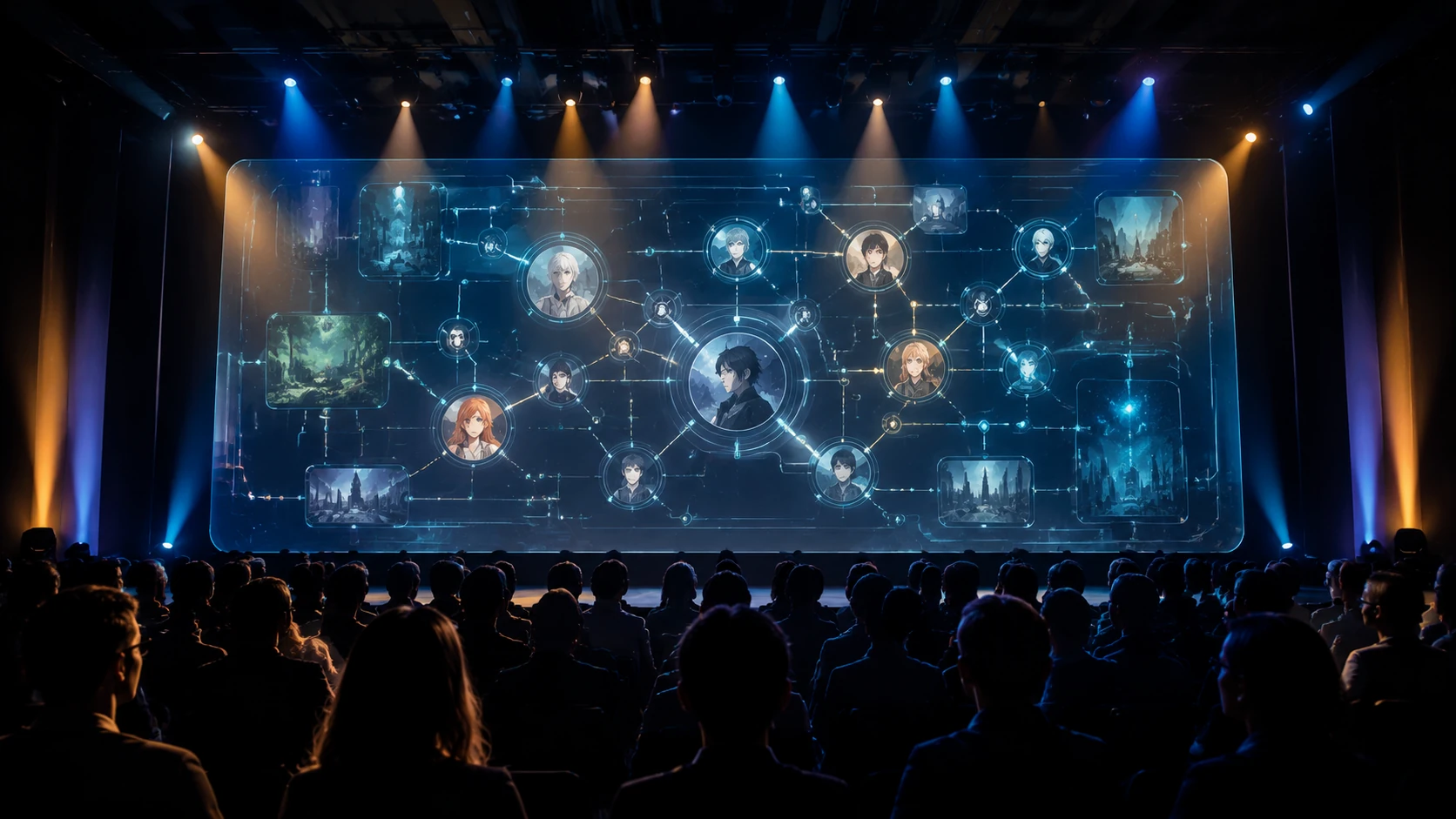
By 2026, the traditional model of the 'monolithic author'—a single creator or studio controlling every facet of a narrative universe—is being challenged by the Collaborative Canon Framework (CCF). As digital comic ecosystems become increasingly saturated, the most successful IPs are those that have transitioned from being 'read' to being 'inhabited.' This shift is driven by a new generation of readers who demand agency in the stories they consume. The CCF is not about relinquishing control; it is a sophisticated governance model that allows creators to open up 'narrative sandboxes' where fans can contribute to the lore, character backstories, and even side-plots, all while the core IP remains protected and legally sound. This collaborative approach creates a self-sustaining growth engine that scales faster than any solo studio production could ever achieve.
The Death of Monolithic Authorship: Why Collaboration is the New Standard
The 2026 market has proven that the speed of content consumption far outstrips the speed of human production. To maintain relevance, studios are moving away from the 'wait-and-watch' model and toward 'active lore participation.' In this environment, the creator acts more as a Chief Lore Officer (CLO) or Narrative Architect than a traditional writer. By providing the structural integrity of the world—the physics, the primary history, and the core character arcs—the creator allows the community to fill in the 'white space' of the universe. This doesn't just increase engagement; it creates a massive volume of auxiliary content that keeps the IP trending in semantic search and recommendation algorithms, even during mid-season breaks.
The Governance Layer: Protecting IP While Empowering Fans
The primary risk of collaborative canon is 'narrative drift'—where community contributions contradict the core themes or quality of the original work. To solve this, the 2026 framework introduces a tiered governance layer. This system categorizes contributions into three distinct levels of authority, ensuring that the brand remains cohesive while rewarding the most dedicated contributors.
- Core Canon: The primary storyline and character arcs produced by the original studio, which remain immutable.
- Validated Lore: Community-created backstories, side characters, or world details that have been officially vetted and 'stamped' by the creator.
- Sandbox Lore: The 'wild west' of fan theories and alternative paths that exist within the ecosystem but do not impact the primary narrative.
- Lore-Consistency Engines (LCE): AI-driven tools used by moderators to ensure that new fan submissions do not violate established world rules or character DNA.
The Role of Narrative Sandboxes
A 'Narrative Sandbox' is a specific setting or time period within the webtoon universe where the studio explicitly invites fan creation. For example, a fantasy webtoon might open a 'Sandbox' for the history of a specific city-state that the main characters never visit. This allows the community to build out the world without the risk of 'spoiling' or 'breaking' the main plot. These sandboxes often serve as testing grounds for future spin-offs, with the most popular fan-created elements being officially licensed and integrated into the Core Canon.
Monetizing the 'Prosumer': Revenue Sharing in 2026
The Collaborative Canon Framework isn't just a creative tool; it's a financial strategy. In 2026, the 'prosumer' (a fan who both consumes and produces content) is a key revenue driver. Studios are utilizing micro-transaction models and smart contracts to facilitate a new economy of community-led content. When a fan-created character becomes popular enough to be featured in an official side-story, the original creator and the fan-contributor can share in the licensing royalties via automated IP protocols.
Technical Implementation: Lore Engines and Metadata
Managing a collaborative canon requires more than just a Discord server. It requires a 'Lore Registry'—a semantic database where every character, location, and event is tagged with metadata. In 2026, these registries are often interoperable, allowing fans to use 'character assets' across different platforms while maintaining the IP's visual and narrative integrity. This technical backbone ensures that no matter how large the universe grows, the 'source of truth' is always accessible and verifiable by the studio.
Common Pitfalls to Avoid
The most common mistake studios make is 'over-moderation.' If the barriers to entry are too high, the community will simply move to third-party fan-fiction sites where the studio has zero control and zero revenue potential. The goal is to create a 'low-friction, high-recognition' environment. Conversely, 'zero-moderation' leads to brand dilution. The 2026 standard is to provide clear, automated guidelines and reward high-quality, lore-compliant behavior with 'Official Contributor' status and physical collectibles.
Conclusion: The Future of Sovereign IP is Community-First
The Collaborative Canon Framework represents the final evolution of the creator-reader relationship. By 2026, the most valuable IPs are no longer static files on a server; they are living, breathing ecosystems that grow through the collective imagination of thousands. For webtoon and manga creators, this model offers a path to scaling their brand far beyond their individual capacity, turning a single series into a multi-generational franchise powered by the very people who love it most.
FAQ
Does collaborative canon mean I lose my copyright?
No. In the 2026 framework, creators use 'Sovereign IP' contracts that grant fans the right to create within the world while the studio retains ownership of the core copyright and a percentage of any commercial spin-offs.
What is a Lore-Consistency Engine?
It is an AI-assisted tool that checks community-submitted content against a studio's 'World Bible' to ensure that new characters or plot points don't contradict established lore or visual style.
How do I start a collaborative canon for my webtoon?
Start by identifying 'Narrative Sandboxes'—areas of your world you don't intend to cover in the main series—and invite your community to fill them in using a structured submission portal with clear lore guidelines.