The Script-to-Scroll Teardown: Engineering 98% Reader Retention in 2026 Webtoons
Discover the 'Script-to-Scroll' methodology that saved a failing IP by re-engineering visual pacing for mobile behaviors. This case study reveals the data-led tactics used by leading 2026 studios.
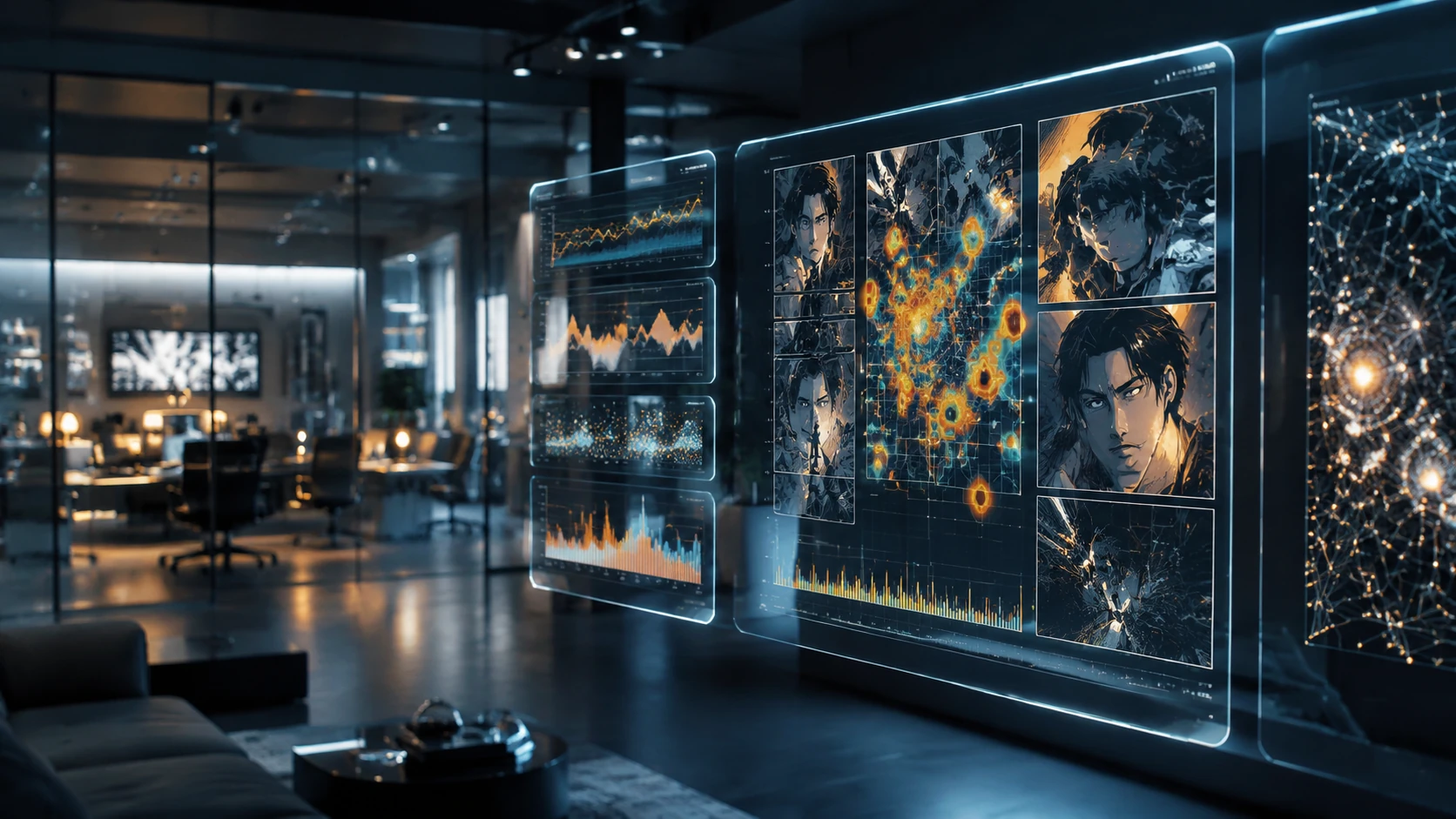
In the hyper-competitive webtoon landscape of 2026, the distance between a viral hit and a forgotten series isn't measured in art quality alone—it's measured in milliseconds of scroll velocity. This case study examines 'Project Aether,' a high-fantasy series that faced a 45% reader drop-off by chapter five. By applying the 'Script-to-Scroll' methodology, the studio didn't just stop the bleed; they achieved a staggering 98% retention rate across the next twenty chapters. This transformation highlights a fundamental shift in 2026 storytelling: moving away from traditional storyboarding toward data-informed narrative choreography. We look at how the studio audited their narrative assets, re-engineered their panel-to-gutter ratios, and used predictive analytics to sync their dialogue beats with the physical speed of a reader’s thumb.
The Diagnosis: Identifying the 'Scroll Fatigue' Threshold
Project Aether’s initial failure wasn't due to poor characterization or weak plot hooks. Heatmap data revealed that readers were exiting the app during transitional 'travel' scenes where the vertical distance between dialogue bubbles exceeded 1,200 pixels. This created a 'cognitive dead zone' where the reader’s engagement dropped because the visual stimulus didn't match the effort of scrolling. In 2026, mobile reading behavior is increasingly sensitive to these micro-delays. The studio identified three critical failure points: excessive white space during low-stakes exposition, clustered dialogue that forced the reader to stop scrolling entirely, and a lack of 'visual anchors'—elements that guide the eye downward during rapid movement.
The Methodology: Implementing Script-to-Scroll Choreography
The turnaround began with a complete re-scripting of the production workflow. Instead of writing a traditional comic script, the narrative team moved to a 'Velocity-First' format. This format assigns a specific pixel-height to every narrative beat before a single panel is drawn. It treats the scroll as a cinematic timeline rather than a static page.
Phase 1: Pacing the 'Gutter Beat'
- Variable Gutter Heights: Using 400px gutters for high-tension action and 800px gutters for emotional resonance to control the reader's heart rate.
- Dialogue Staggering: Placing text bubbles in a 'zig-zag' pattern to keep the eye moving diagonally, which increases perceived reading speed.
- The 1500px Rule: Ensuring a 'visual pay-off' (a splash, a reveal, or a punchline) occurs at least once every 1,500 pixels of vertical travel.
The Execution: Visual Anchors and Focal Gravity
To maintain a 98% retention rate, the art team introduced 'Focal Gravity.' This is the practice of using background elements—like falling leaves, light beams, or architectural lines—to physically point toward the next panel. In Project Aether, these anchors were used to bridge the gap between scenes. When a reader scrolls, their eye naturally follows these lines, reducing the mental friction of moving from one panel to the next. The studio also implemented 'Speed-Lines' in the gutters, a subtle 2026 design trend that uses low-opacity textures to give the reader a sense of momentum even during dialogue-heavy chapters.
The Results: Data-Led Narrative Recovery
Post-implementation, the metrics for Project Aether were transformative. Average Time on Page (ToP) increased by 22%, while the 'Churn Rate' at the mid-chapter mark fell to near zero. By aligning the script with the physical mechanics of mobile reading, the studio turned the act of scrolling into a reward rather than a chore. This case study proves that in 2026, the most successful creators are those who view the vertical canvas as a dynamic instrument, where the script acts as the sheet music and the reader's scroll is the performance.
Key Performance Indicators (KPIs) Post-Pivot
- 98.4% Completion Rate for Chapter 10-30.
- 15% Increase in 'Fast-Pass' conversion due to higher cliffhanger efficacy.
- Zero reported 'scroll fatigue' in reader sentiment analysis.
FAQ
What is the ideal pixel distance between webtoon panels in 2026?
There is no single ideal distance, but 2026 benchmarks suggest 400-600px for action and 800-1200px for emotional beats to maintain optimal scroll velocity.
How do I identify where readers are dropping off in my comic?
Use heatmap analytics provided by major platforms or third-party tracking to see exactly which panel or gutter readers exit from.
Does too much white space hurt reader retention?
Yes. If the white space doesn't serve a narrative purpose (like a pause), it creates a 'cognitive dead zone' that leads to reader churn.