The 2026 Global Color-Sync Standard: Solving Visual Drift in Distributed Comic Production
As comic production moves to a distributed global model in 2026, the Global Color-Sync Standard (GCSS) has emerged as the critical technology for preventing visual drift. This framework allows studios to maintain perfect character and atmosphere consistency across different hardware, software, and c
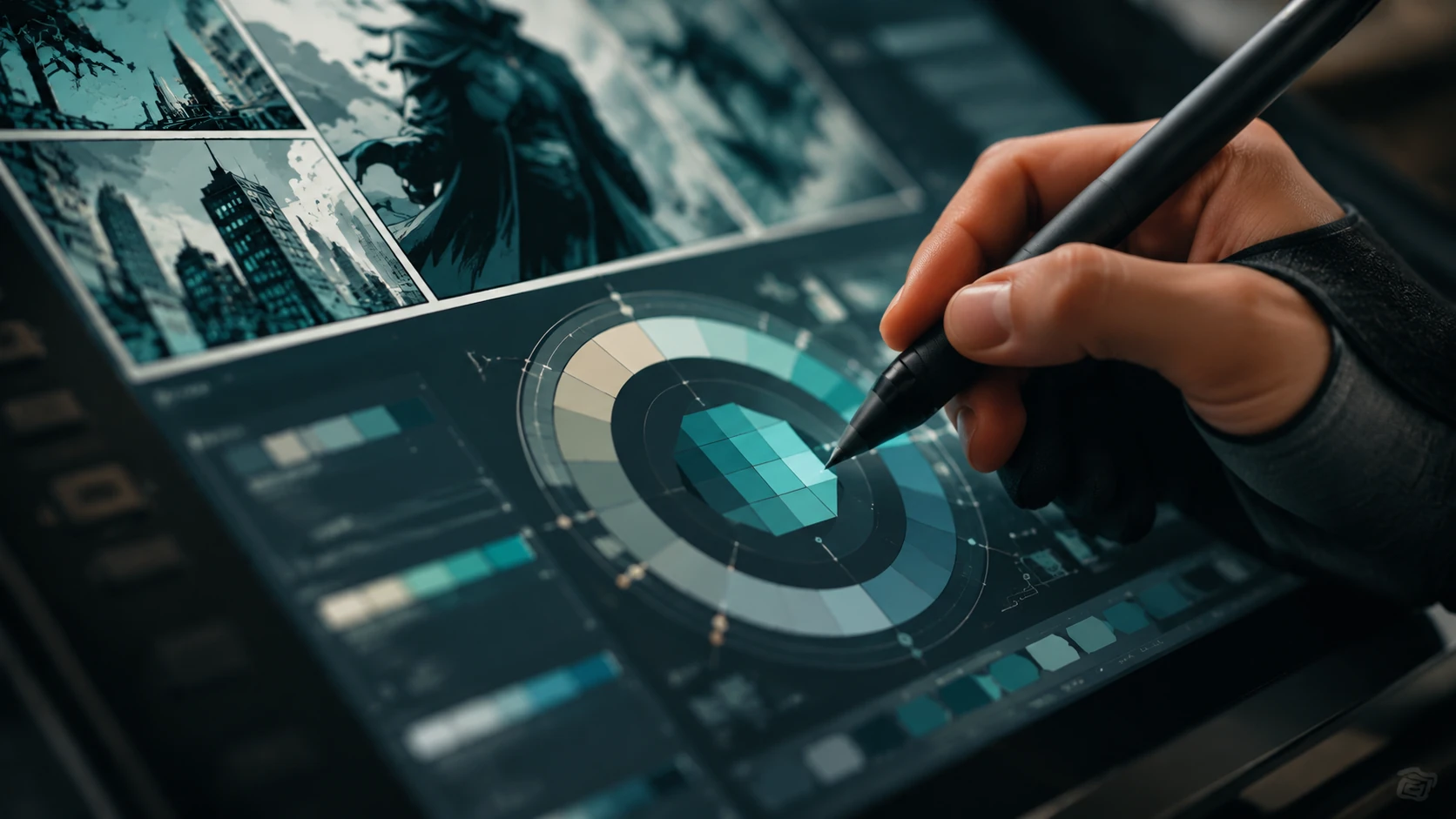
By 2026, the comic and webtoon industry has fully transitioned from solo-creator endeavors to sophisticated, distributed production pipelines. With background artists in Seoul, line artists in Paris, and colorists in New York, the 'Visual Drift'—the subtle, unintended shift in character colors and environmental lighting—became a multi-million dollar problem for major IP holders. The industry's answer is the 2026 Global Color-Sync Standard (GCSS). This technological framework ensures that a character’s skin tone or a signature magical effect remains identical across every device, chapter, and artist, regardless of the hardware or software being used. This isn't just about aesthetics; it is about protecting the brand integrity of intellectual property in a market where visual consistency is the primary trust signal for readers.
What is Visual Drift and Why Does it Kill IP Value?
Visual drift occurs when the collective output of a distributed team fails to align with the series' original 'Master Look.' In the early 2020s, this was often hand-waved as 'stylistic variance,' but in the competitive landscape of 2026, readers are hyper-sensitive to quality. When a protagonist’s hair shifts from a deep navy to a dull grey between chapters because two different artists used different monitor calibrations, the immersion is broken. This technical friction leads to higher churn rates and lower engagement metrics. For studios aiming for animation or live-action adaptation, visual drift creates a massive 'Technical Debt' that must be corrected at great expense during the pre-visualization stage of the licensing process.
The Architecture of the 2026 Global Color-Sync Standard
The GCSS functions similarly to the ACES (Academy Color Encoding System) used in film, but optimized for the specific needs of vertical-scroll and digital-native art. It moves beyond simple hex codes to a device-independent color space. This means the standard doesn't just say 'use this blue'; it defines how that blue should behave under different atmospheric lighting scripts—be it a sunset scene or a fluorescent-lit office. The standard relies on three core pillars: Semantic Color Rigging, OpenColorIO (OCIO) integration, and the Master Look-Up Table (MLUT).
1. Semantic Color Rigging
Unlike traditional flat fills, semantic rigging attaches a 'role' to every color. Instead of 'Color #A4B2,' the asset is tagged as 'Protag_Skin_Midtone.' If the lead colorist updates the Master Palette to reflect a change in the series' lighting direction, the GCSS-enabled software automatically propagates that change across all active project files in the distributed cloud, ensuring instantaneous global alignment.
2. OpenColorIO (OCIO) for Comics
In 2026, OCIO has become the backend for all major comic production software. It allows artists to see exactly how their work will look on a calibrated OLED smartphone, an E-ink reader, or a high-end print volume, all while working on their local monitor. This eliminates the 'export-and-pray' workflow that plagued early digital creators.
Implementing GCSS in Your Studio: A Technical Workflow
Transitioning to a GCSS-compliant workflow requires a shift in the 'Pre-Production' phase of a series. Before the first panel is even sketched, a Technical Art Director must establish the series' Color Bible. This involves setting the target gamut (typically Display P3 for 2026 mobile devices) and creating the primary MLUTs for common scenes. For distributed teams, the workflow follows a strict 'Check-in/Check-out' process through a centralized Lore Engine that validates color metadata before any chapter is approved for the next stage of production.
- Establish a Master Palette in a device-independent color space (CIE Lab).
- Distribute OCIO configuration files to every artist in the pipeline.
- Implement mandatory monitor calibration checks for all remote contractors.
- Use automated 'Color-Audit' scripts to flag assets that deviate more than 2% from the Master Look.
- Include lighting script metadata in every storyboard to guide the colorist's initial pass.
The Future: Real-Time Dynamic Color Grading
Looking beyond 2026, the GCSS is evolving into 'Dynamic Grading.' This will allow webtoon platforms to adjust the color temperature of a comic in real-time based on the reader’s environment or their device's battery-saving settings, without losing the artist’s original intent. By mastering these standards today, studios are essentially future-proofing their stories for the next generation of sensory-aware reading devices and immersive AR displays.
Checklist: Is Your Production Pipeline GCSS-Ready?
- Hardware: Are all artists using monitors capable of 95% DCI-P3 coverage?
- Software: Does your primary drawing app support OCIO v2.3 or higher?
- Asset Management: Are your character sheets using semantic color tags or just static swatches?
- Training: Has your team been briefed on the difference between 'local color' and 'atmospheric color' in a sync-standard environment?
- Audit: Do you have a weekly 'Visual Integrity' review to catch drift early?
FAQ
Does GCSS limit an artist's creative freedom?
No. GCSS provides the technical guardrails (color space and consistency) while allowing artists full freedom in how they apply lighting, texture, and mood within those parameters.
Can independent creators use GCSS?
Yes. Most modern 2026 software includes 'Lite' versions of these standards, allowing solo creators to maintain consistency across long-running series more easily.
What happens if I don't use a color standard?
You risk 'Visual Drift,' which leads to lower reader retention, higher costs during adaptation to other media, and potential rejection from major global distribution platforms.