Comics news and insights for your local market
Follow webtoon, manga, manhwa, AI comic, creator economy, and storytelling trends curated for each region.

The 2026 ‘Topical Gap’ Analysis (TGA): Engineering Comic IP for Unmet Search Intent
Discover how the 2026 Topical Gap Analysis (TGA) framework allows creators to identify 'narrative vacuums' in the market. Learn to align your creative vision with verified search intent for maximum IP growth.

The 2026 ‘Layer-Semantic’ File Standard (LSFS): Engineering Interoperable Comic Assets
The 2026 Layer-Semantic File Standard (LSFS) marks a pivotal shift from flat images to data-rich, interoperable comic assets. This technical framework allows creators to maintain IP fidelity while deploying across mobile, print, and AR ecosystems.
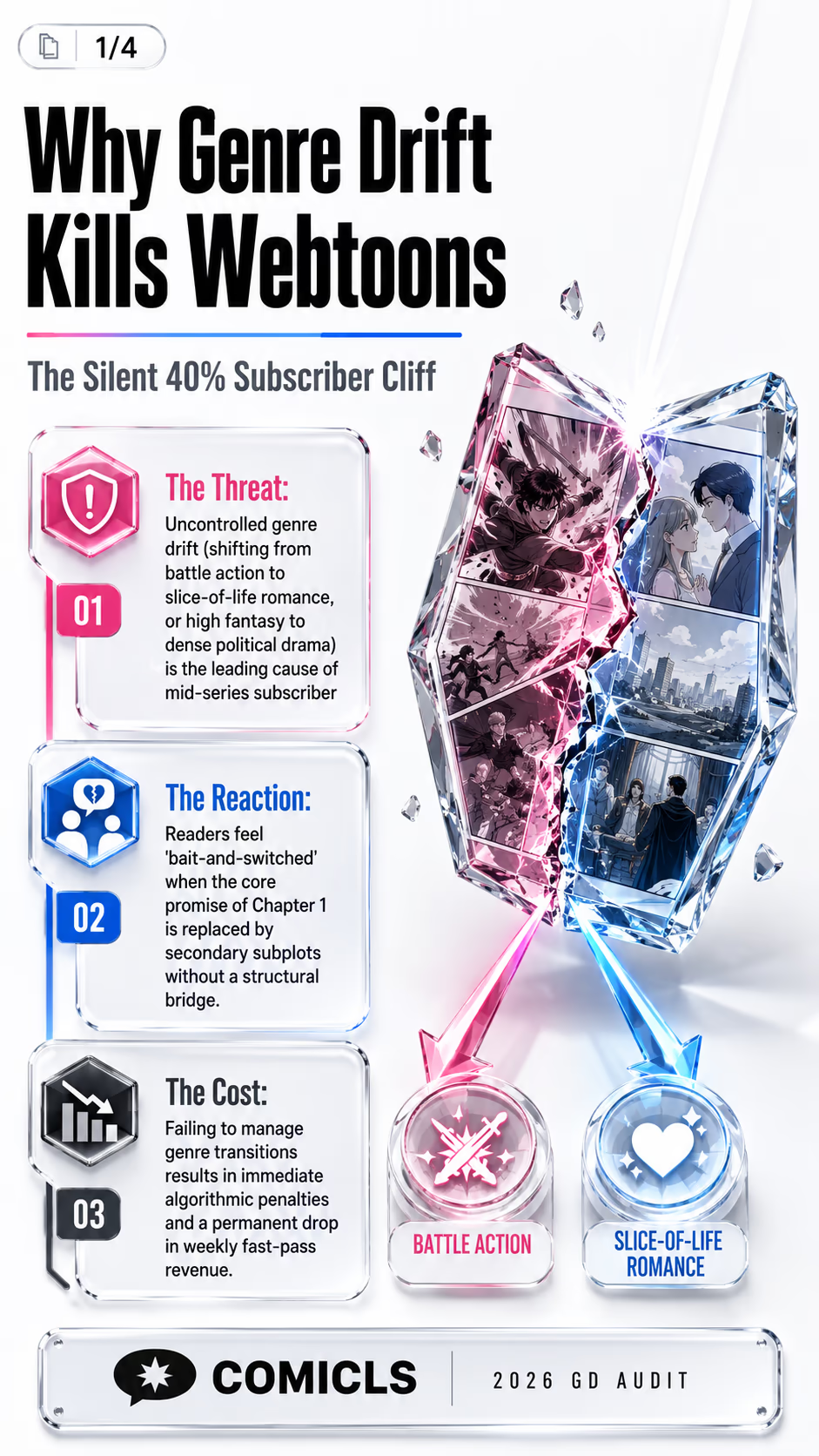
Why Genre Drift Kills Webtoons: The 2026 GD Audit
When long-form series shift from action to romance or fantasy to politics, reader churn spikes. Master the 2026 GD Audit to transition genres safely.
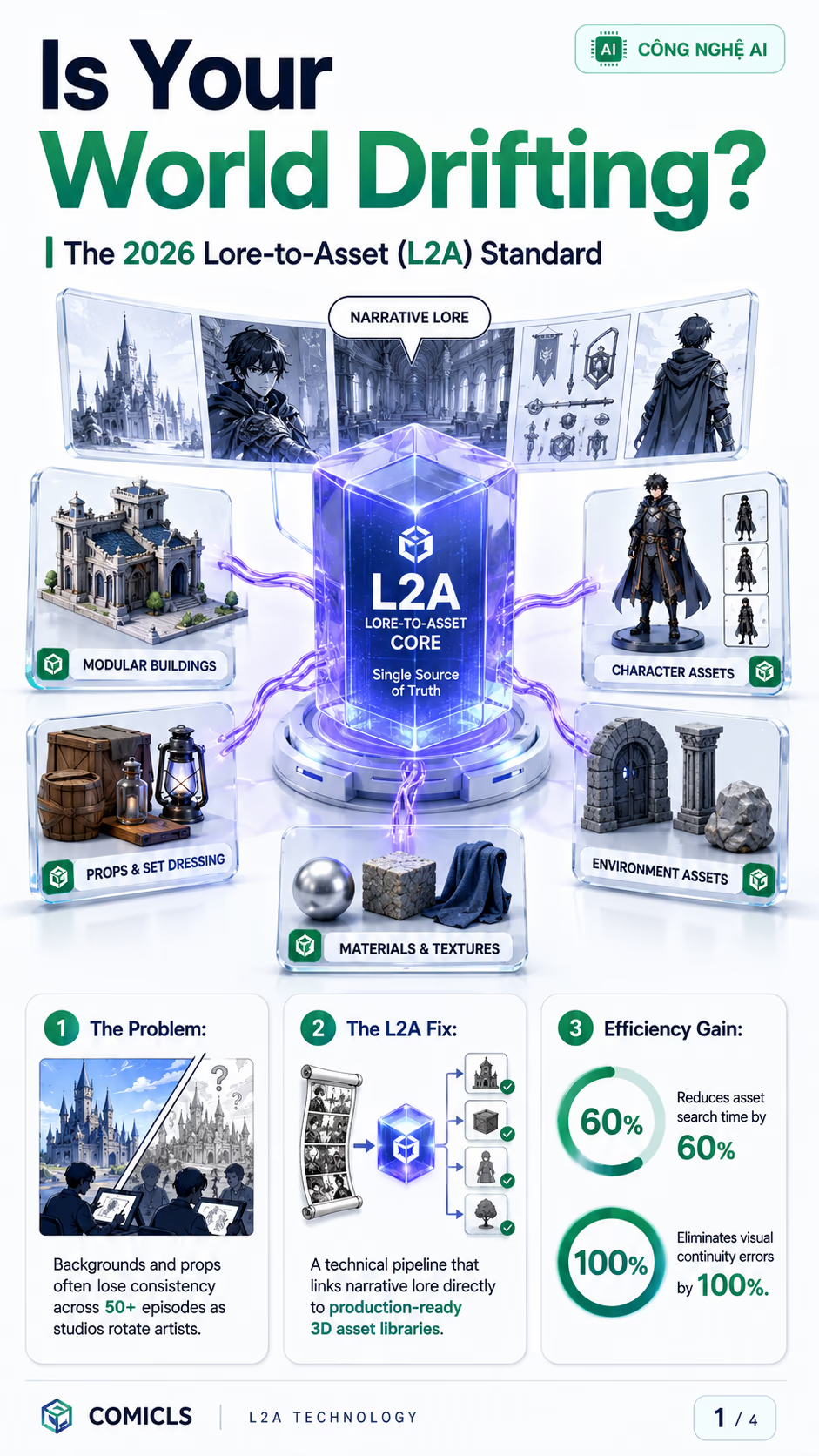
Does Your Lore Scale? The 2026 L2A Tech Standard
Discover the 2026 L2A standard for linking narrative lore to production-ready 3D assets. Solve background drift and boost studio efficiency by 40%.
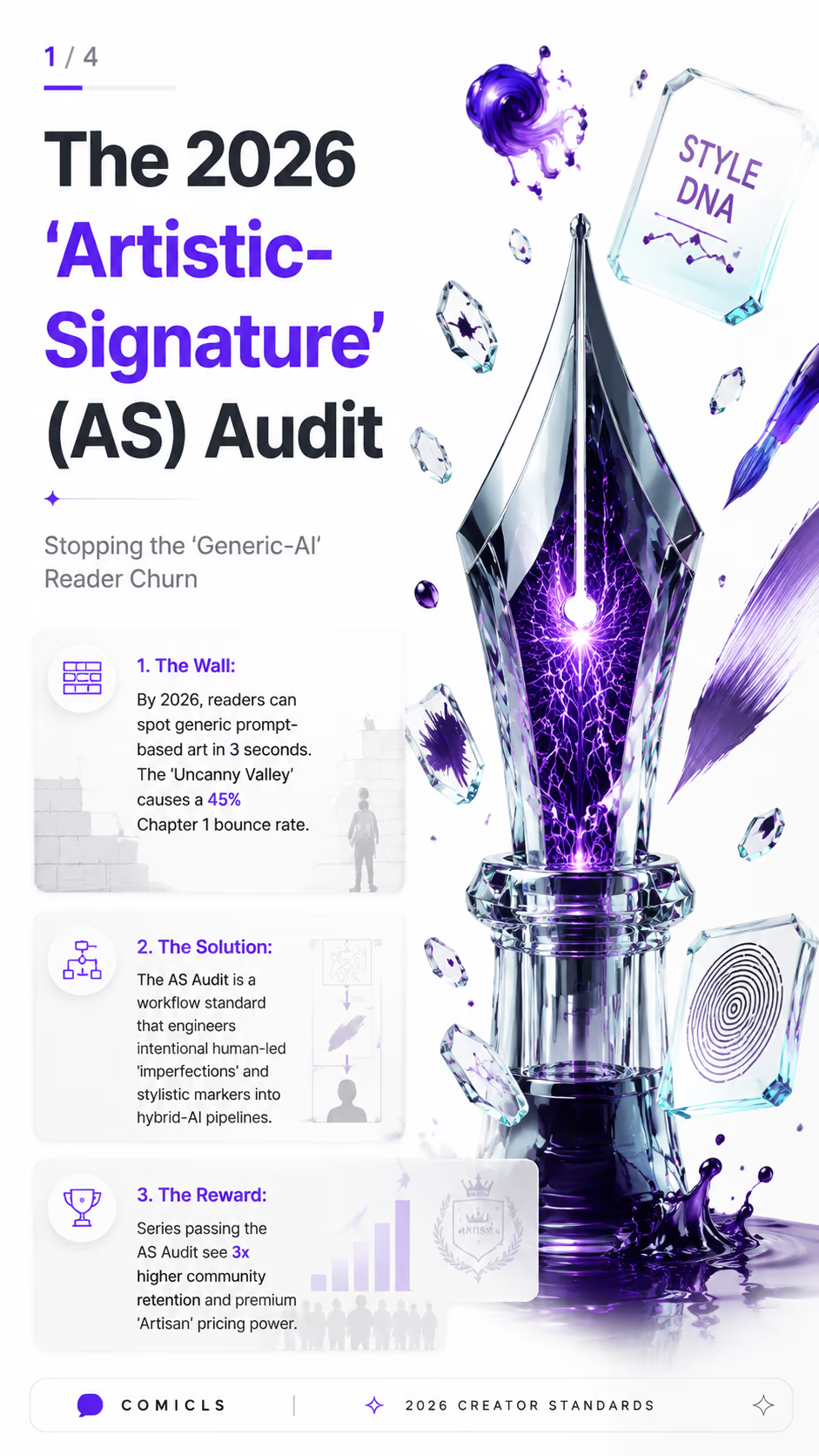
The 2026 ‘Artistic-Signature’ (AS) Audit: Fixing the AI-Uncanny Valley
Discover the 2026 AS Audit—a strategic framework for creators to engineer 'human-signature' markers into their webtoons and manga to bypass reader AI-fatigue.
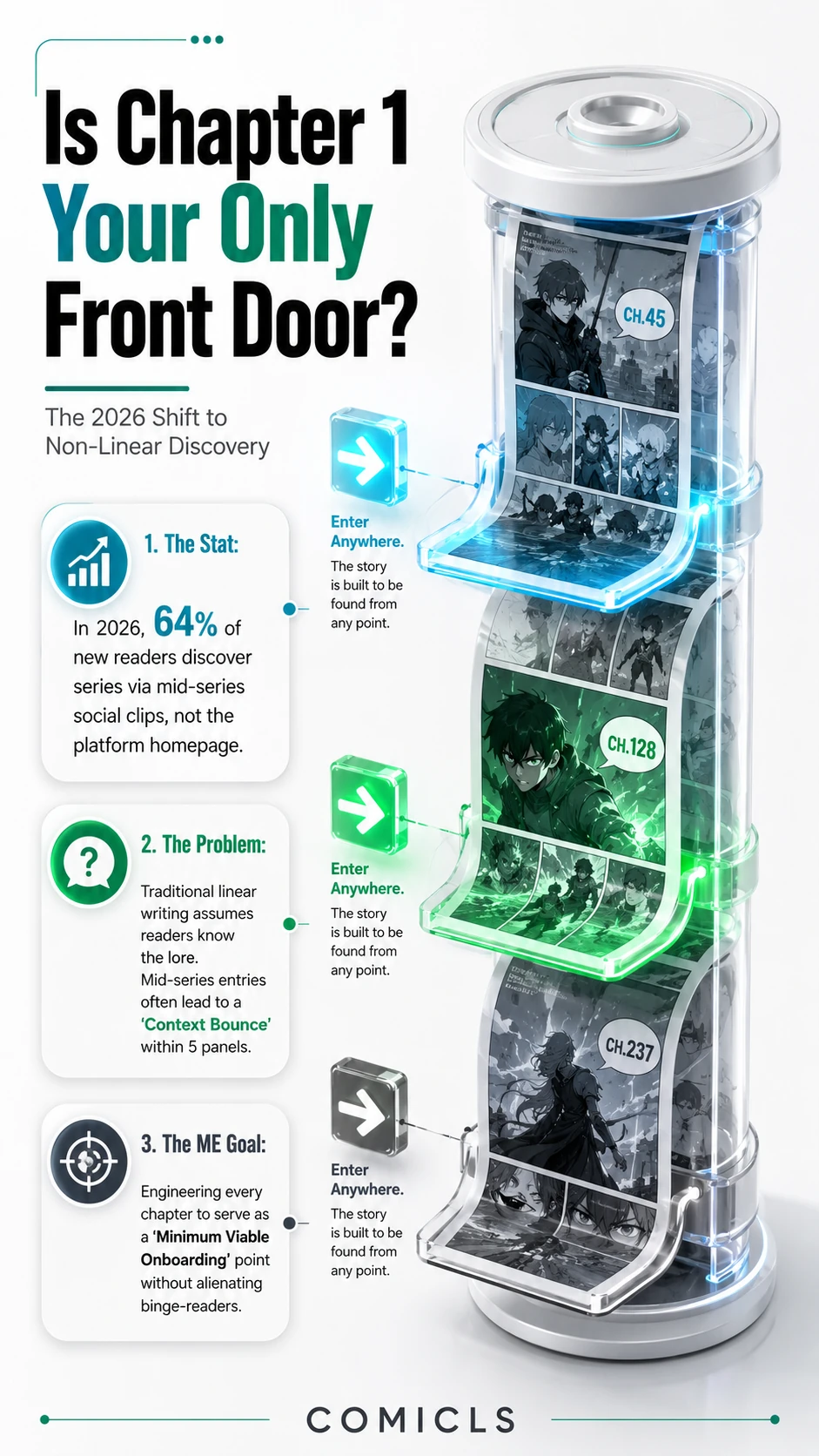
Does Your Webtoon Pass the 'Multi-Entry' (ME) Test?
In 2026, readers no longer start exclusively at Chapter 1. Discover the Multi-Entry (ME) Standard to turn every chapter into a high-conversion 'front door' for your series.
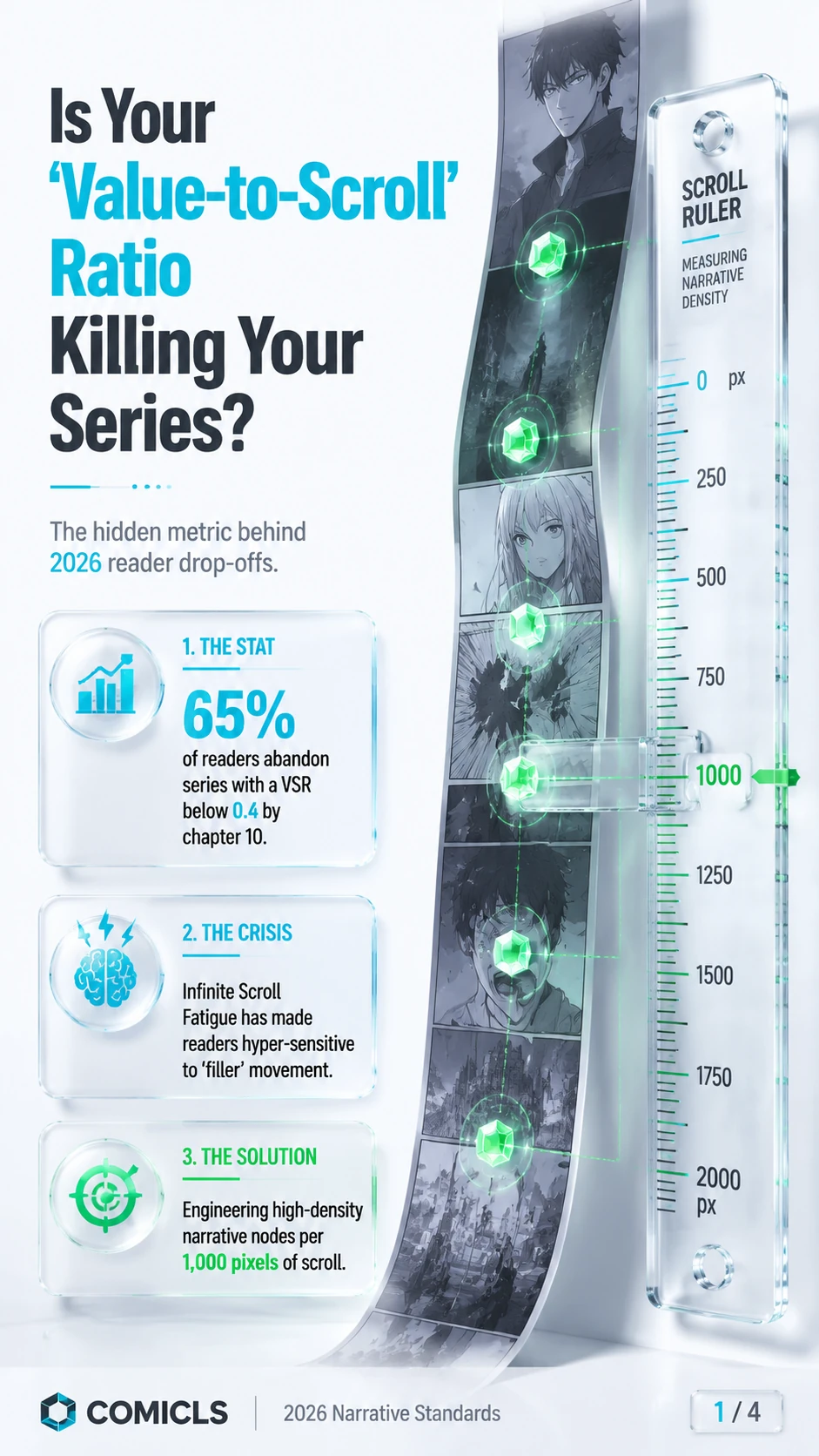
Fixing the 'Value-to-Scroll' Ratio in Your Webtoon
In 2026, 'Infinite Scroll Fatigue' is the leading cause of series abandonment. Learn how the Value-to-Scroll (VSR) metric helps creators engineer high-retention chapters.
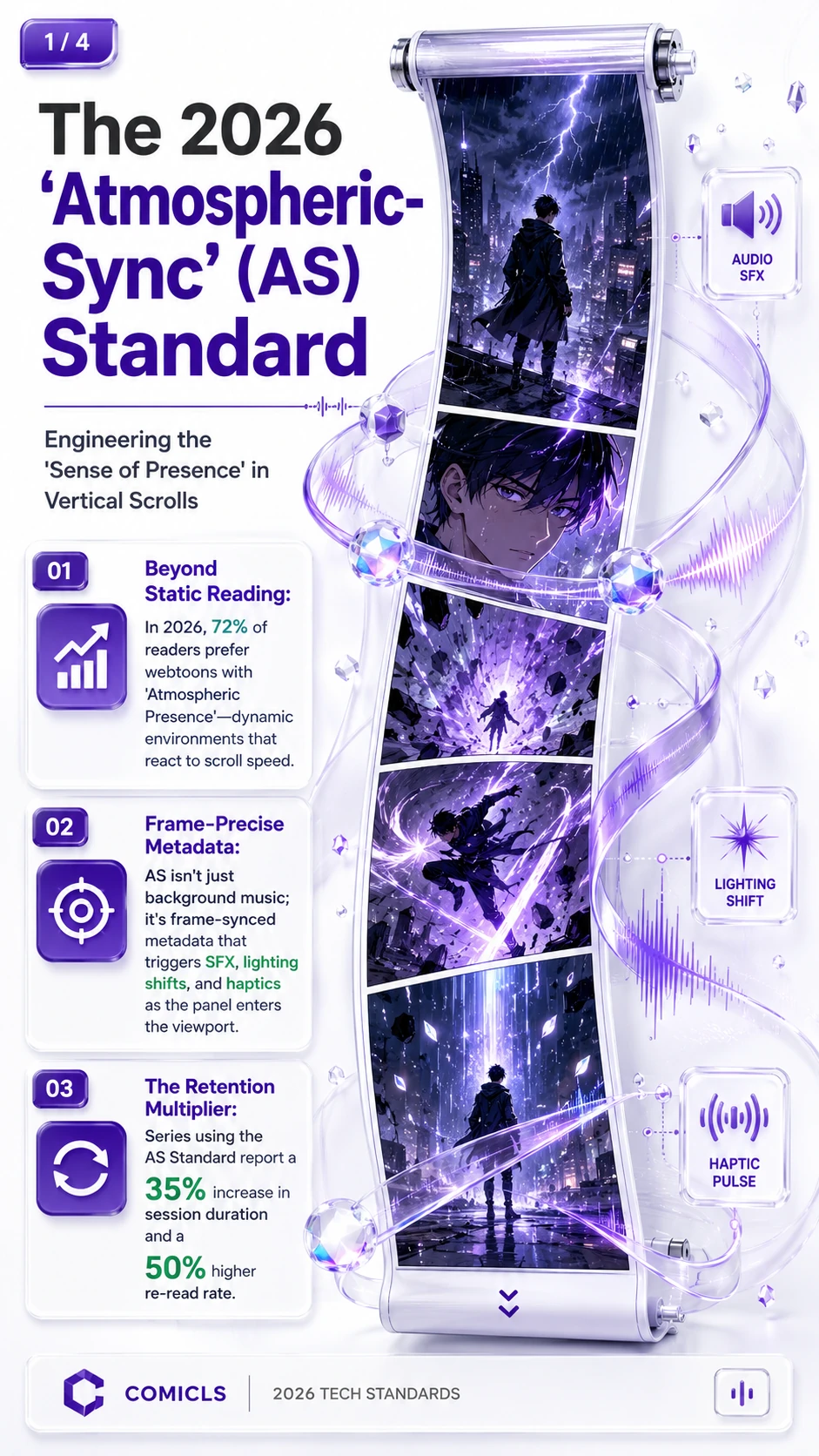
The 2026 ‘Atmospheric-Sync’ (AS) Standard: Engineering Immersive Audio
Master the 2026 AS Standard to bridge the gap between static panels and cinematic immersion. Learn to engineer frame-precise audio-visual metadata for vertical scroll comics.
AI Technology

The 2026 Semantic Storytelling Standard: Engineering Webtoon Lore for AI Search Discovery
In 2026, readers no longer find comics via generic tags; they use AI-driven semantic search to discover specific lore, tropes, and character dynamics. This framework teaches creators how to index their narratives for the next generation of search engines.
The 2026 ‘Asset-Modularity’ (AM) Workflow: Engineering Comics for Instant Social-First Rep
Transition from static comic files to modular asset architectures. Learn how the 2026 AM workflow enables instant repurposing of webtoon panels for viral social video and immersive media.
The 2026 ‘Dynamic-Pathing’ Technical Standard: Engineering Non-Linear Webtoons for High-Re
The 2026 ‘Dynamic-Pathing’ standard is revolutionizing vertical comics by allowing creators to integrate non-linear choices directly into the scroll. This technical framework enables high-retention, personalized reading experiences without the overhead of game development.

The 2026 ‘Zero-Search’ Discovery Standard: Engineering Webtoon IP for AI Answer Engines
In 2026, readers no longer search for keywords; they ask AI agents for stories that match their mood. Learn how to engineer your comic IP to be discoverable in the age of generative answer engines.
Latest
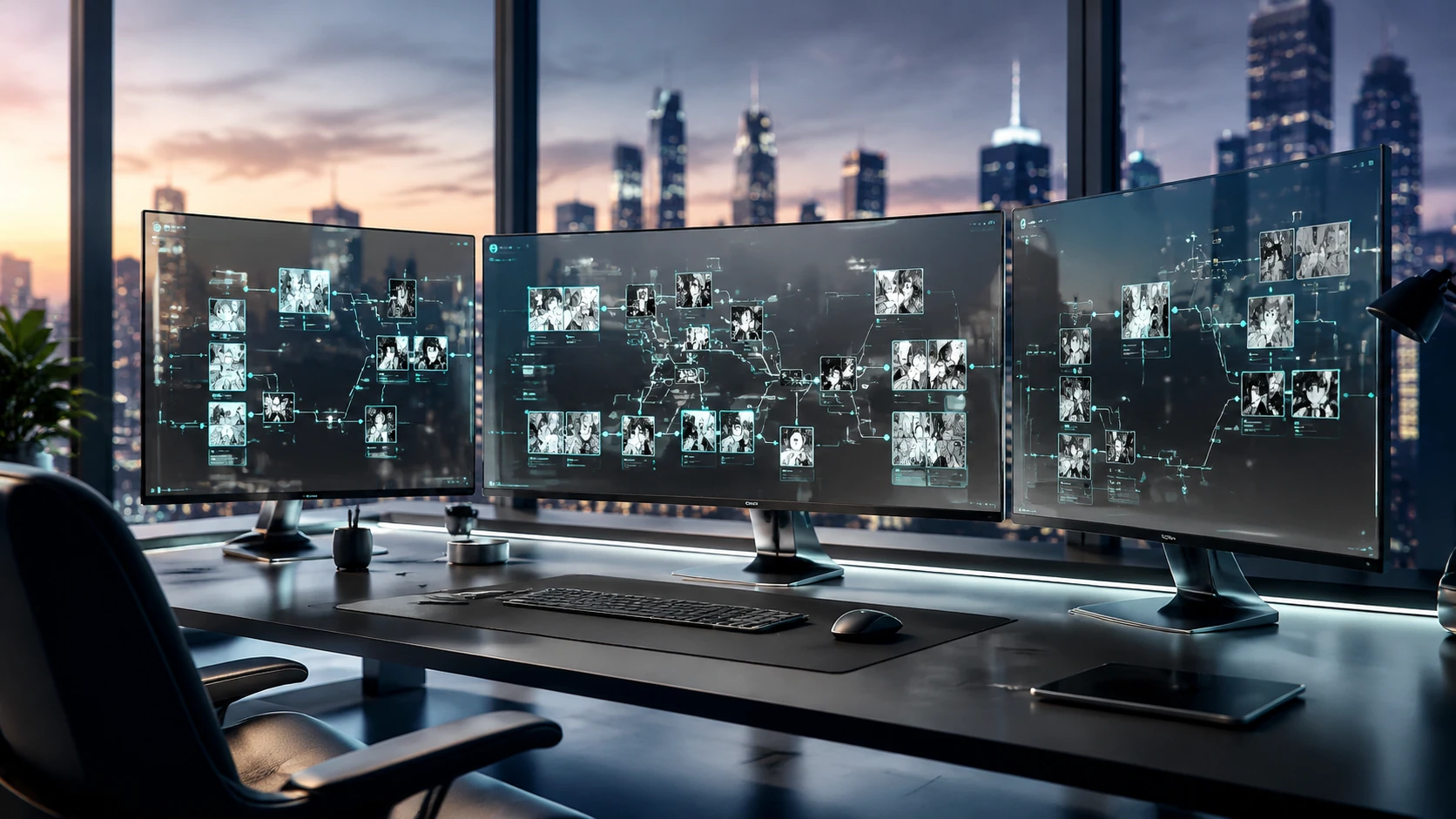
The 2026 ‘Multi-Path’ Comic Architecture: Engineering Branching Narratives for the Gamifie
Discover the 2026 technical framework for branching path webtoons, where reader choices drive narrative outcomes through state-persistent panel architecture. Learn how to bridge the gap between static scrolling and gamified storytelling to maximize retention.
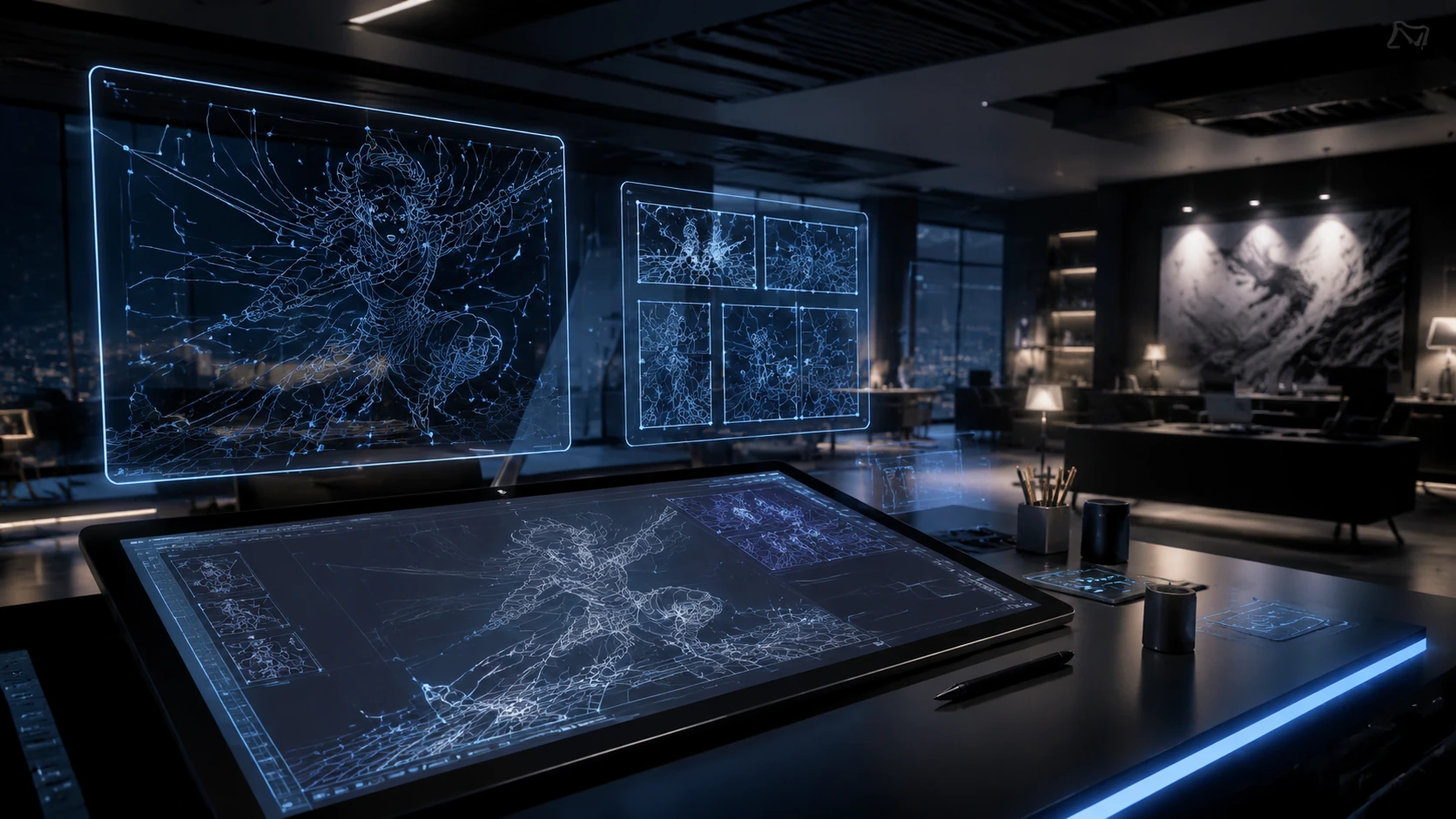
The 2026 ‘Vector-Infinite’ (VI) Standard: Engineering Resolution-Independent Comics for Ul
Discover the 2026 shift from raster-based long-strips to the Vector-Infinite (VI) standard, ensuring comic assets remain crisp on any display, from mobile to ultra-wide XR. Learn how to engineer resolution-independent narratives that survive the next decade of hardware evolution.

The 2026 ‘Immunized Asset’ Protocol: Engineering Comic IP Against Model Scraping
Master the 2026 framework for safeguarding your artistic DNA from unauthorized AI training. This guide explores adversarial perturbation, semantic watermarking, and the shift toward sovereign datasets.
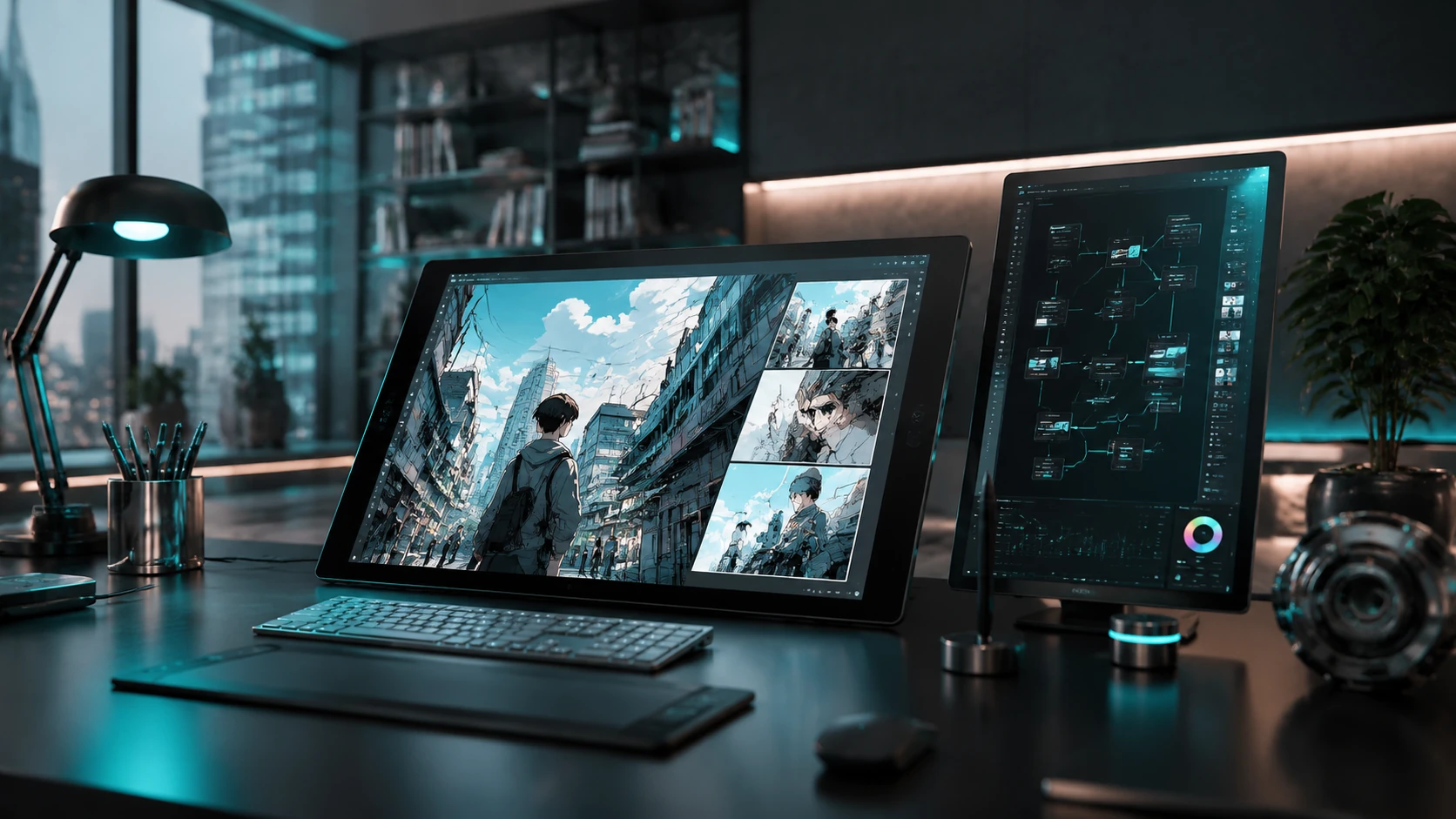
The 2026 ‘Context-Aware’ Comic Architecture: Engineering Dynamic Content for Personalized
Discover the 2026 shift from static panels to Context-Aware Comics (CAC). Learn how to engineer webtoons that adapt their visuals and pacing based on reader environment and metadata.
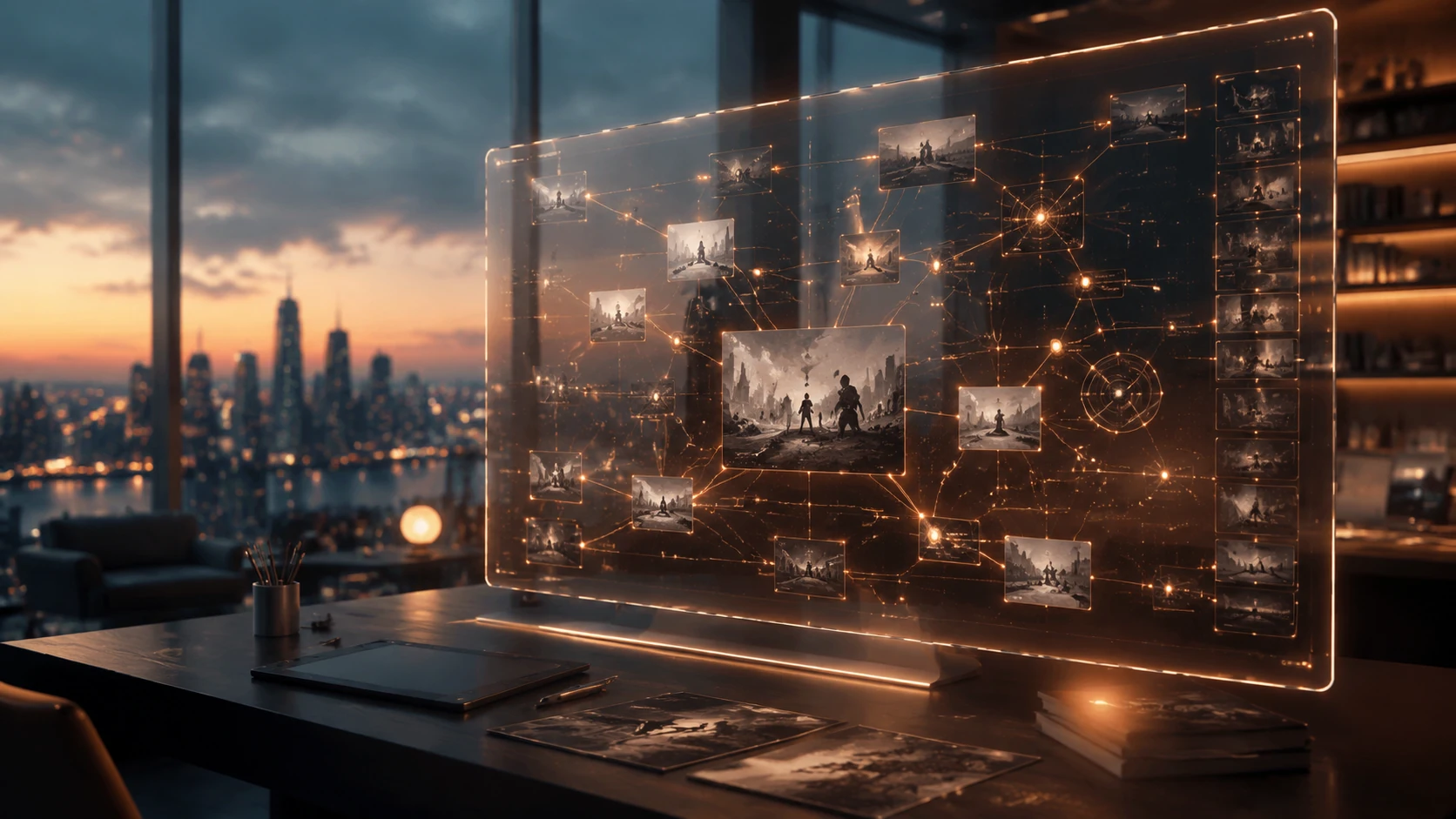
The 2026 ‘Elastic Narrative’ Framework: Engineering Multi-Ending Webtoons for the Interact
The 2026 Elastic Narrative Framework (ENF) represents the shift from linear vertical scrolling to dynamic, choice-based storytelling. Discover how studios are using node-based architecture to deliver personalized reader outcomes without tripling production costs.
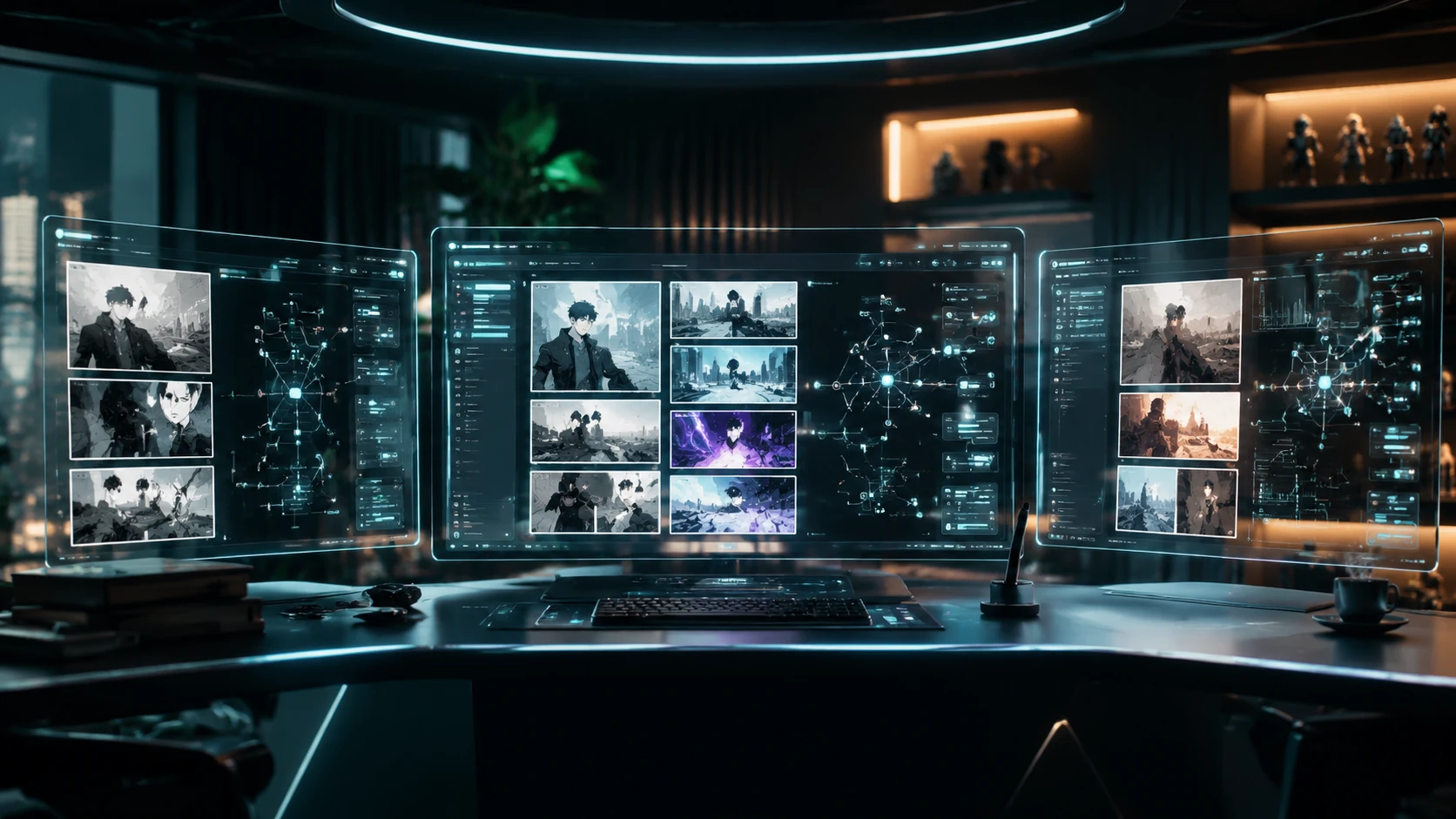
The 2026 ‘Zero-Latency’ Translation Architecture: Engineering Real-Time Localization for G
The era of regional delays is over. Discover how Zero-Latency Translation (ZLT) uses neural context engines to synchronize global webtoon launches in seconds.
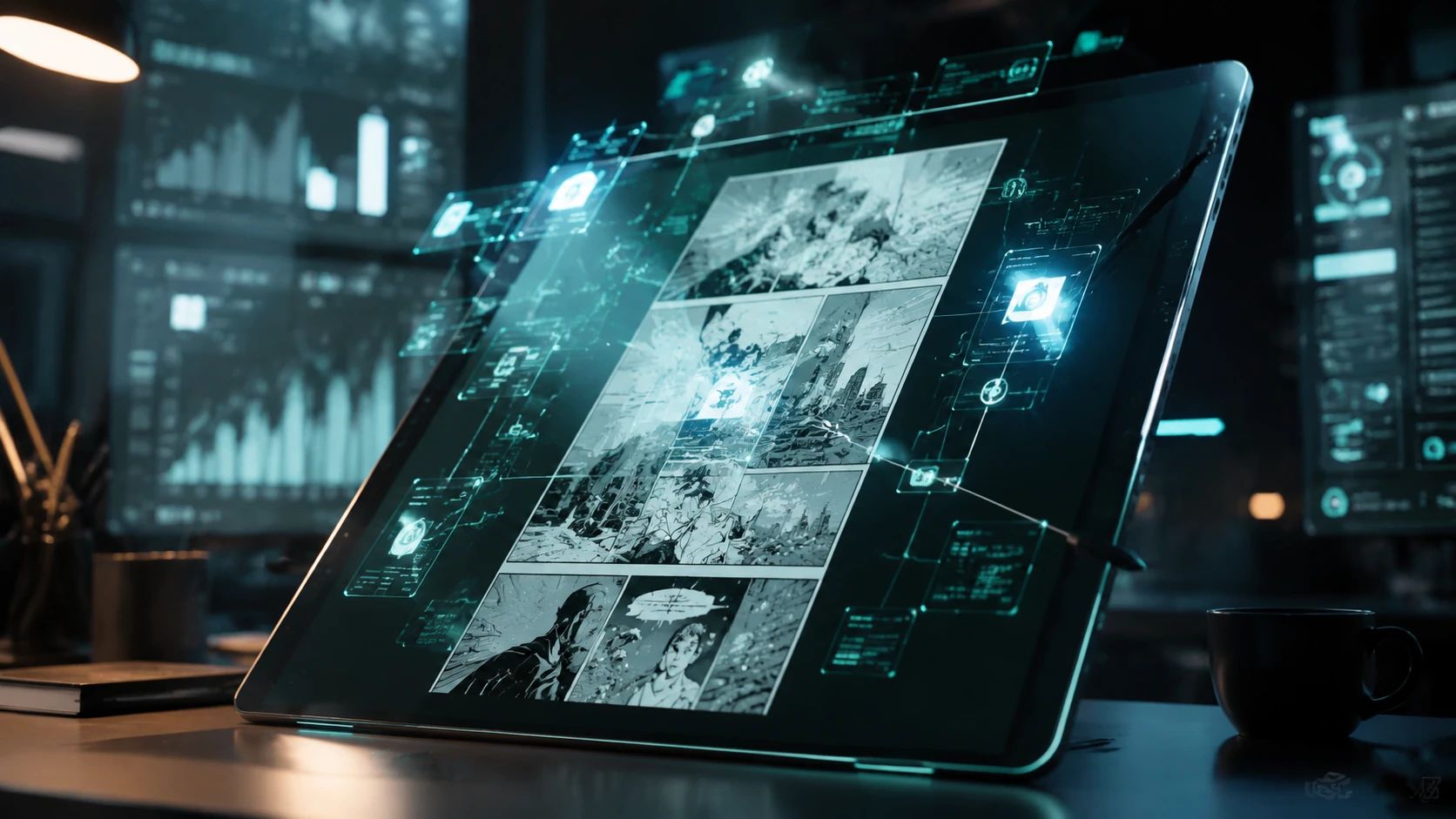
The 2026 ‘Semantic Panel’ Architecture: Engineering Webtoons for Universal Accessibility a
In 2026, accessibility is no longer optional; it is a core discovery signal. Learn how semantic panel architecture allows creators to reach visually impaired readers while boosting AI-driven search visibility.
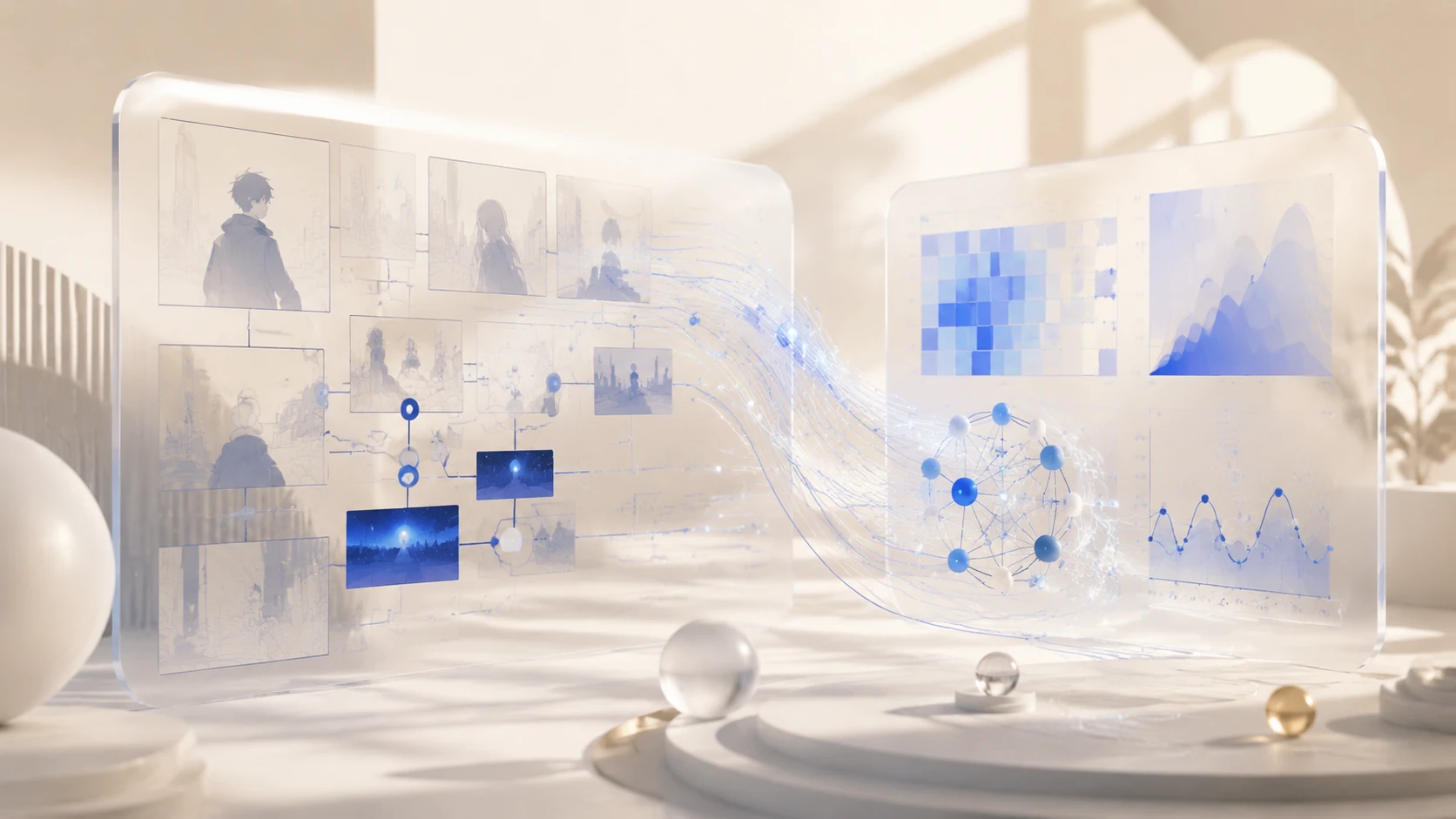
The 2026 Narrative-Driven Data Privacy Standard: Engineering Zero-Party Data through Inter
In 2026, the intersection of data privacy and webtoon engagement is being redefined by Narrative-Driven Data (NDD). Discover how creators are building high-value reader profiles through story-based choices rather than invasive cookies.
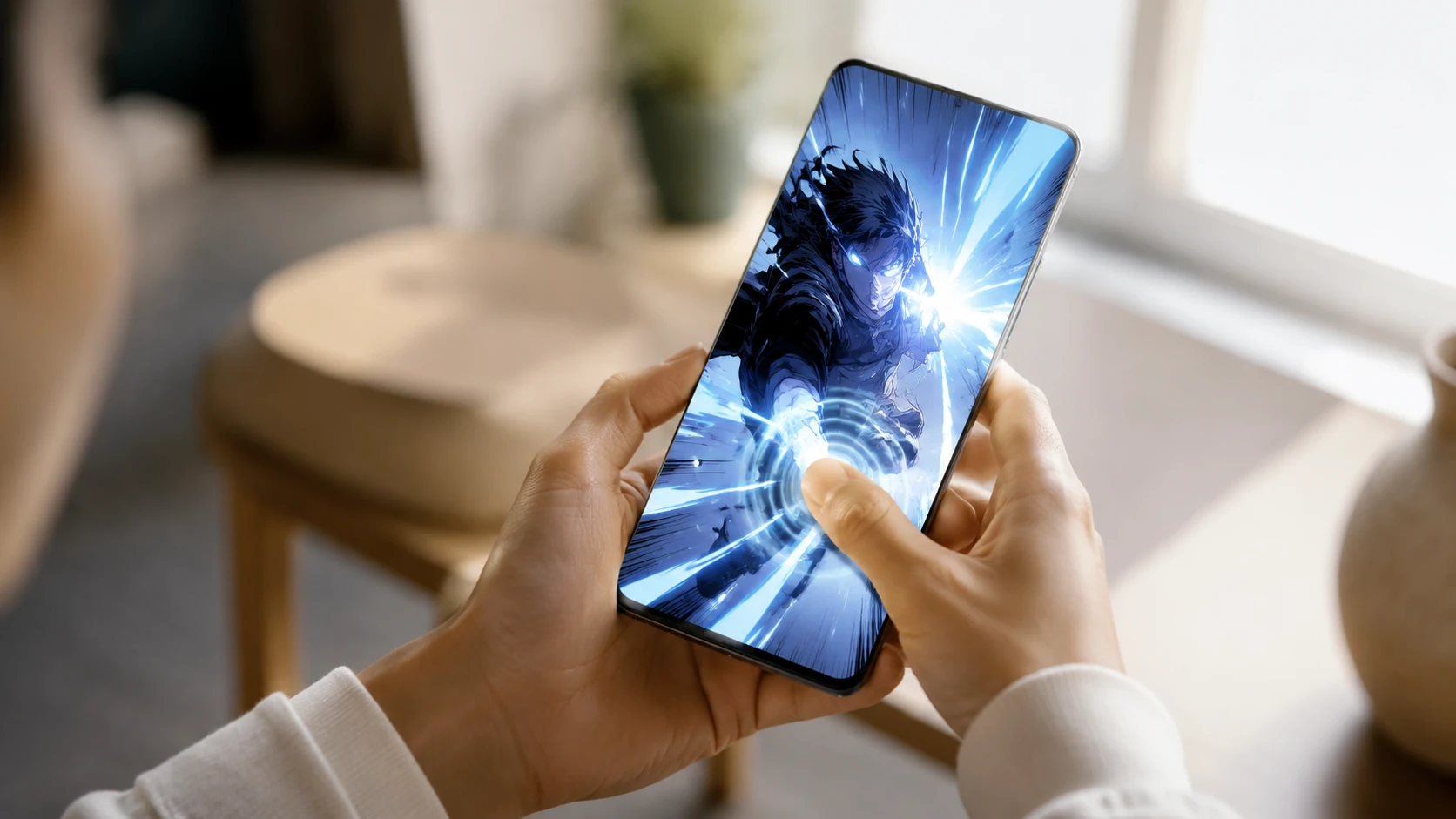
The 2026 Haptic-Narrative Integration (HNI) Standard: Engineering Tactile Feedback for Imm
Discover the 2026 Haptic-Narrative Integration (HNI) standard, a technical framework for embedding synchronized tactile feedback into vertical-scroll comics.

The 2026 ‘Responsive Webtoon’ Architecture: Engineering Adaptive Layouts for Foldables and
The era of the fixed-width vertical scroll is ending. Discover how to engineer context-aware webtoon layouts that adapt seamlessly to foldables and multi-screen devices in 2026.
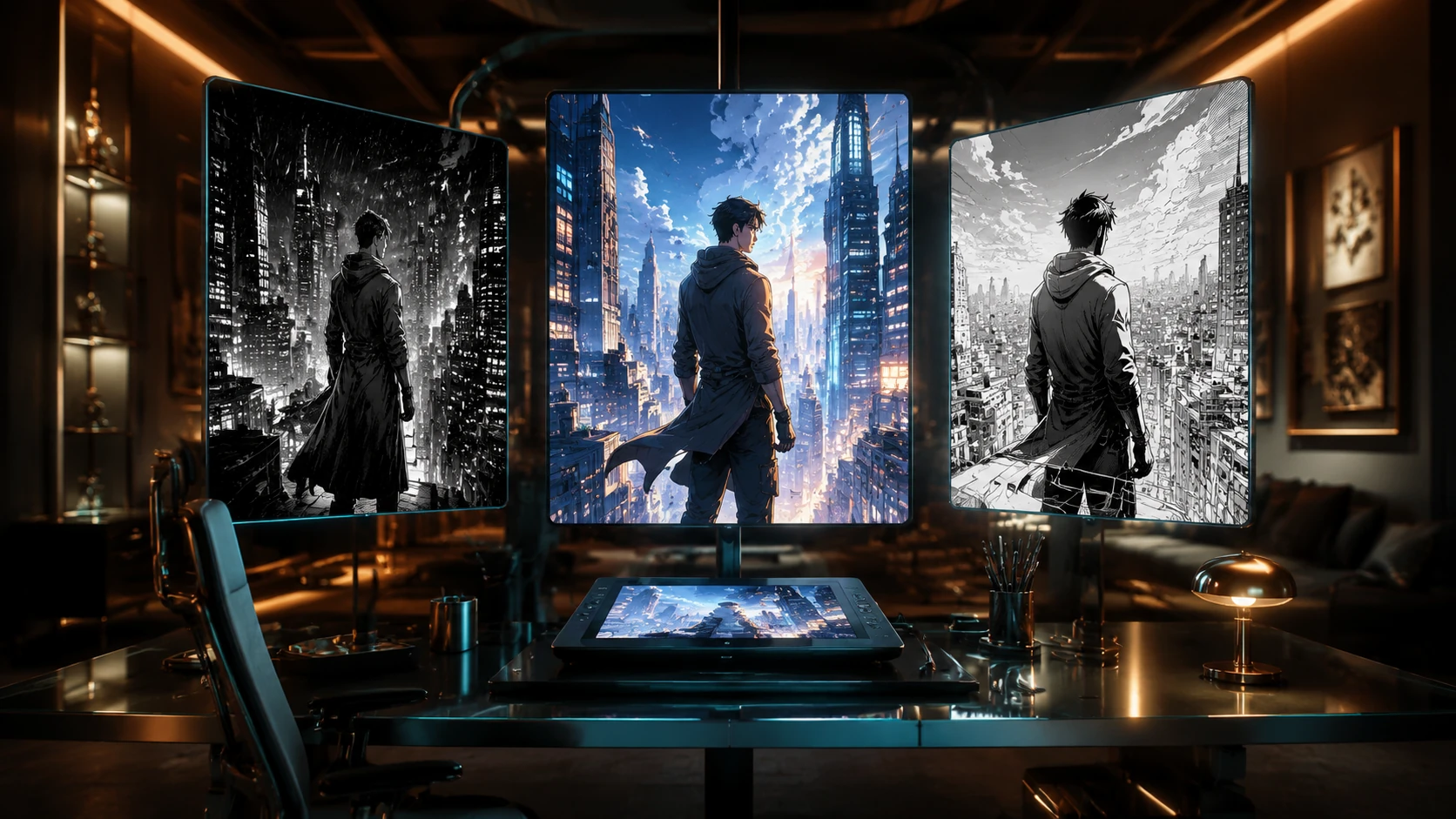
The 2026 ‘Style-Variant’ Pipeline: A Technical Guide to Engineering Multi-Aesthetic Comic
Discover the 2026 production standard for creating 'Style-Variant' comics, allowing creators to release the same narrative in multiple aesthetic styles for different global markets.
The 2026 Narrative Asset Portability (NAP) Standard: Engineering Comics for Platform Indep
Discover the 2026 Narrative Asset Portability (NAP) standard, a framework designed to liberate creators from platform lock-in. Learn to engineer modular, resolution-independent comic assets that ensure your IP remains portable and future-proof.
The 2026 Narrative Continuity Protocol (NCP): Engineering Lore Synchronization for Cross-M
Learn how the 2026 Narrative Continuity Protocol (NCP) prevents lore drift in multi-platform IP franchises. Discover the technical standards for real-time lore synchronization between comics, games, and streaming media.
The 2026 ‘Narrative Pivot’ Framework: Engineering Real-Time Story Adaptation Based on Read
Discover how the 2026 Narrative Pivot Framework allows creators to use real-time sentiment data to adjust plot points and character arcs without sacrificing narrative integrity.
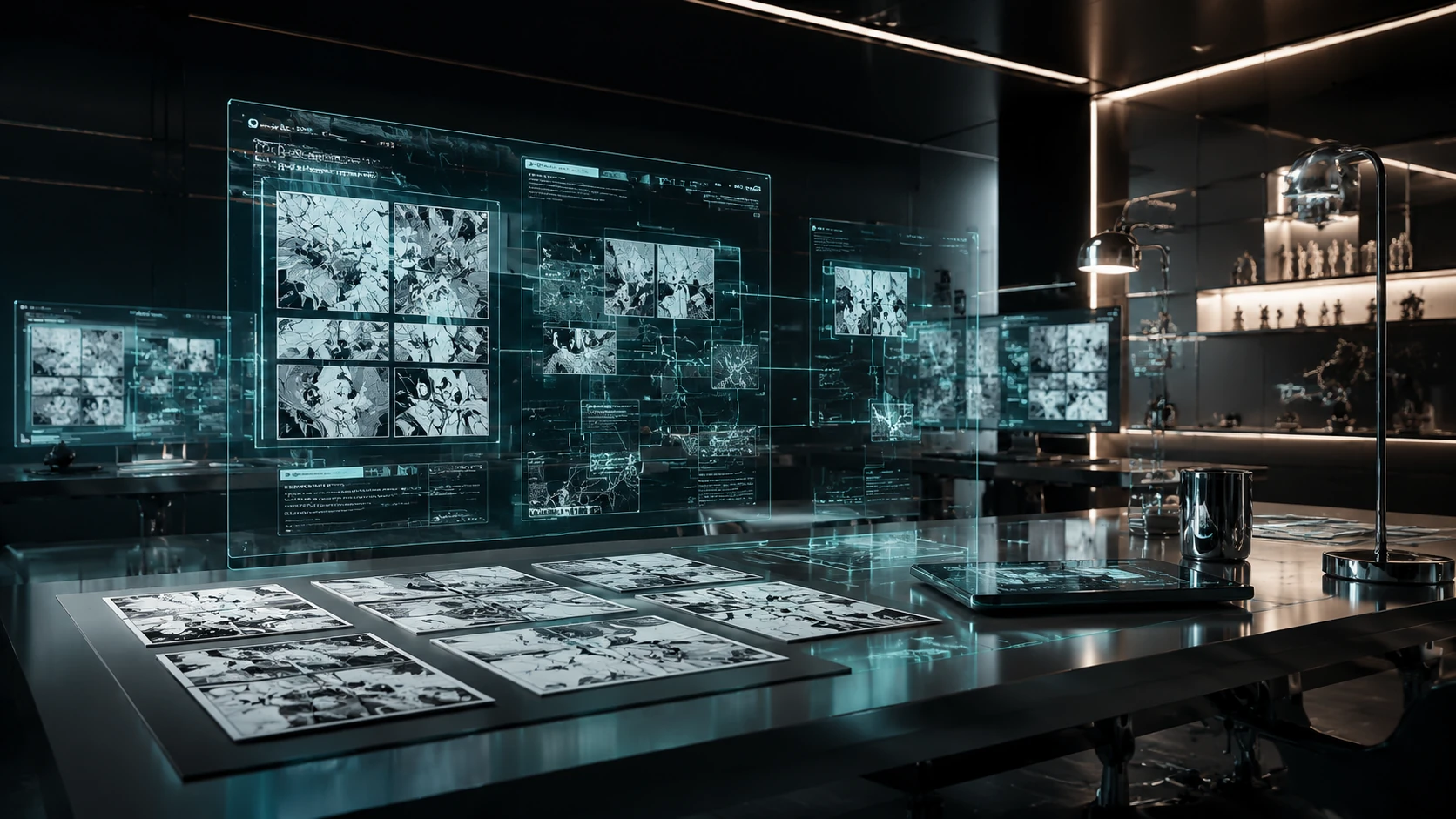
The 2026 Visual-First Search (VFS) Standard: Engineering Comics for AI Visual Indexing
As search engines shift from text-based queries to visual-first recognition, comic creators must adapt. The 2026 VFS Standard provides a technical framework for making panels and characters discoverable by AI crawlers.
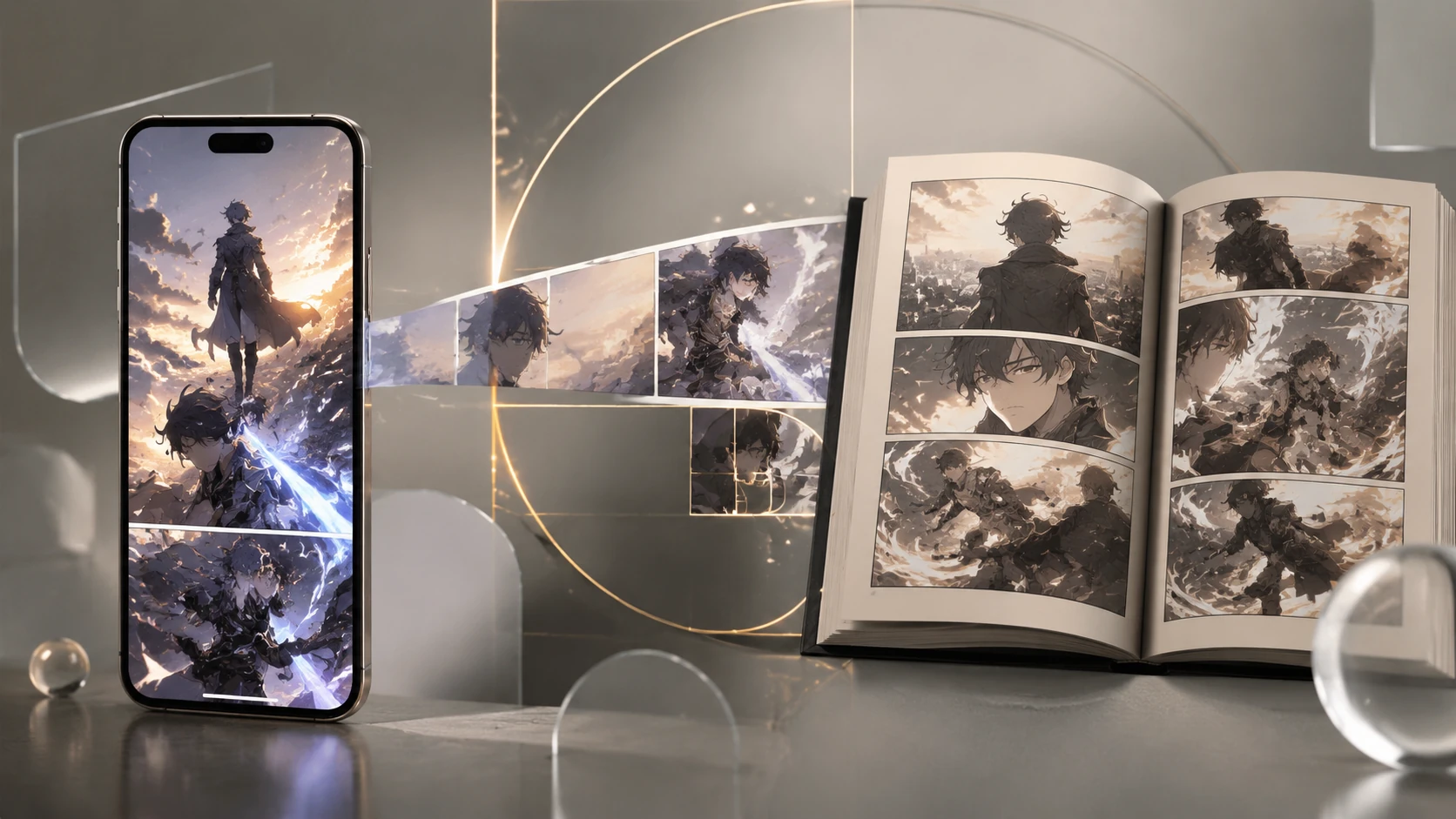
The 2026 Hybrid-Format Architecture: Engineering IP for Simultaneous Scroll and Print Succ
In 2026, the divide between vertical webtoons and traditional manga pages has collapsed. Master the hybrid-format architecture to ensure your IP scales across every medium without costly redesigns.
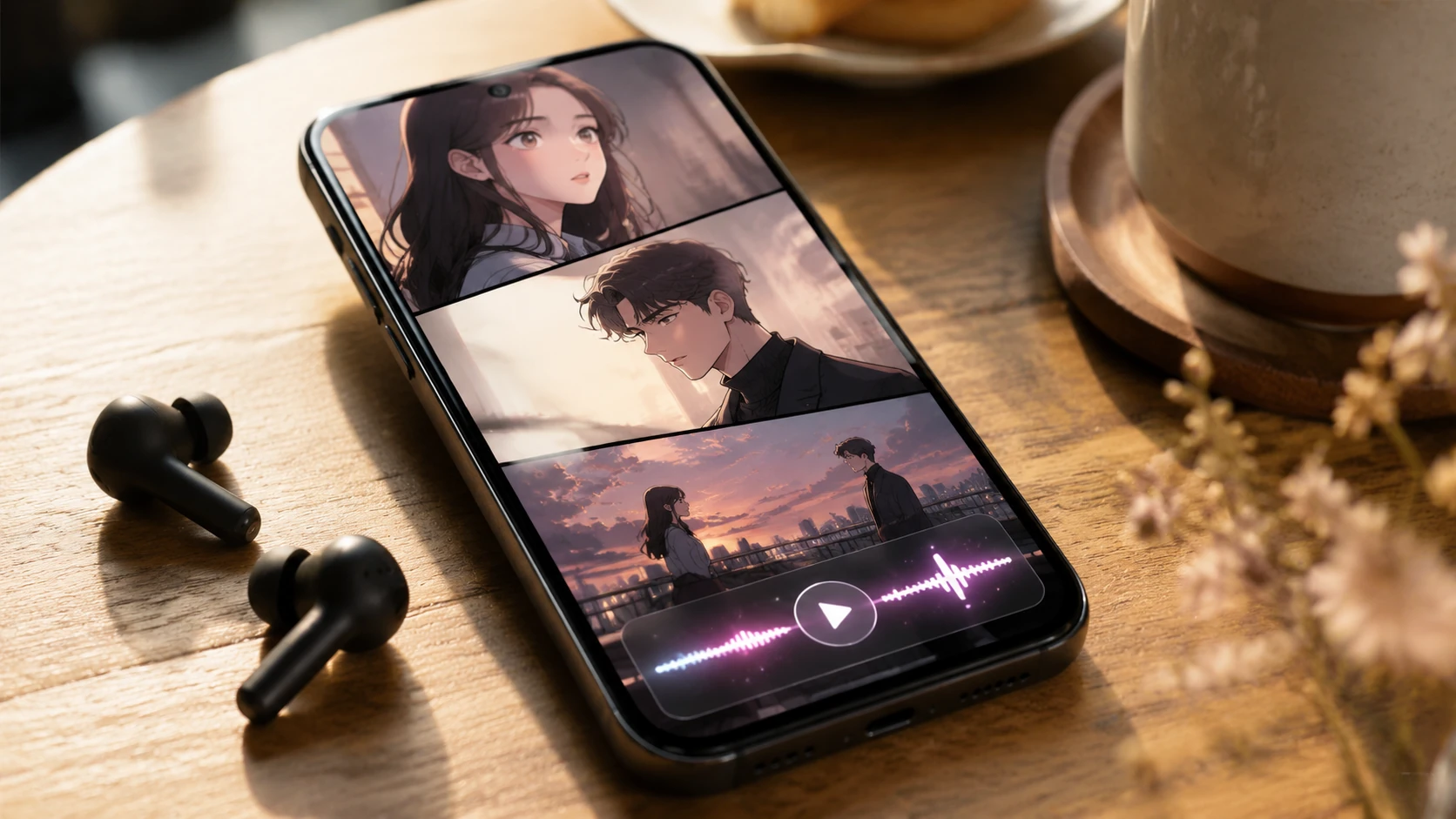
The 2026 Audio-Comic Hybrid Standard: Engineering Narrated Webtoons for the Multi-Tasking
Learn how the 2026 shift toward audio-integrated webtoons is unlocking new revenue streams and accessibility for mobile-first creators.
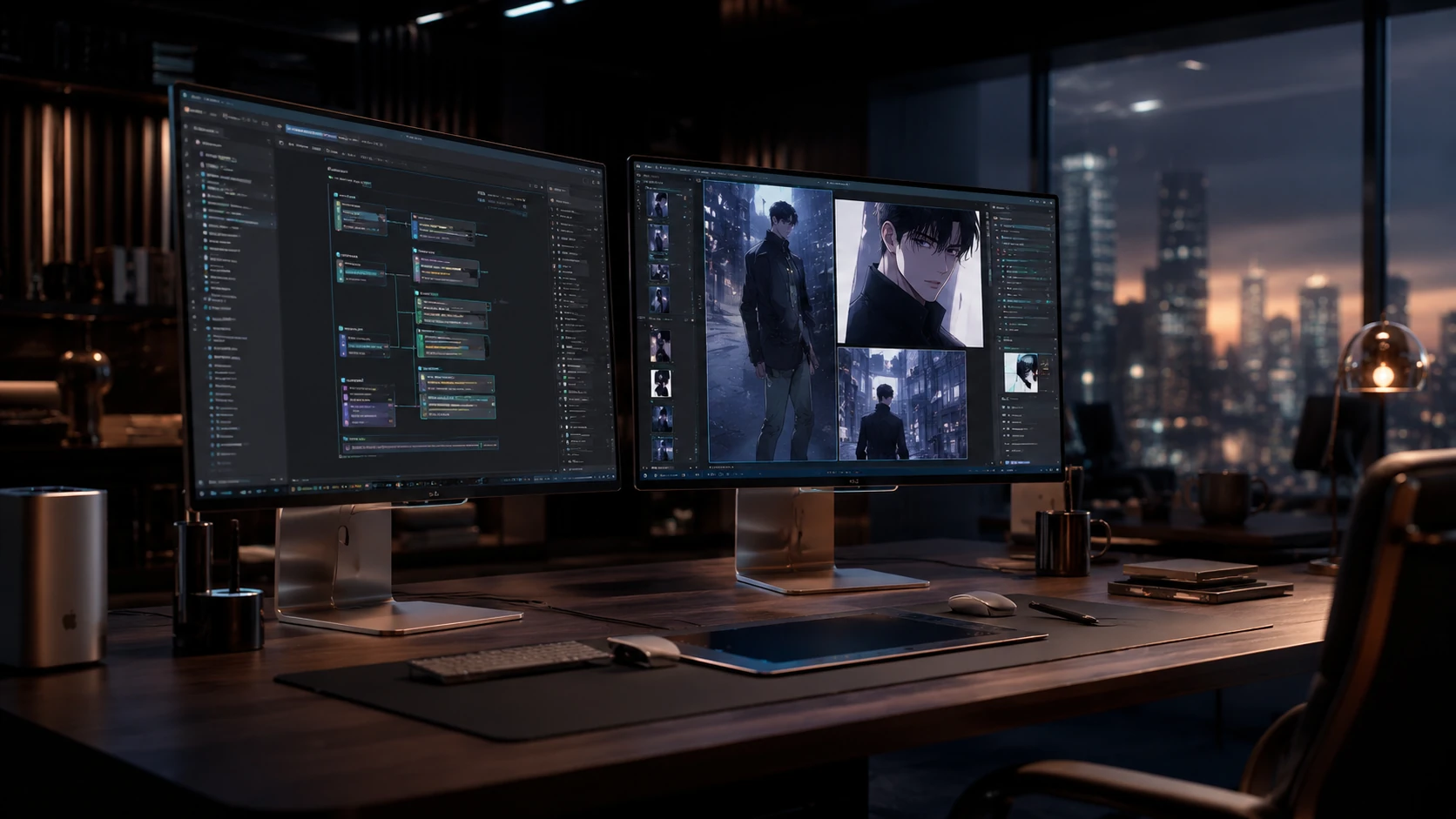
The 2026 Script-to-Engine (S2E) Standard: Engineering Machine-Readable Narratives for Mult
In 2026, the traditional prose script is evolving into the Script-to-Engine (S2E) protocol, a machine-readable data format that allows a single narrative file to drive webtoon production, game development, and AR experiences simultaneously.