The 2026 ‘Zero-Latency’ Translation Architecture: Engineering Real-Time Localization for G
The era of regional delays is over. Discover how Zero-Latency Translation (ZLT) uses neural context engines to synchronize global webtoon launches in seconds.
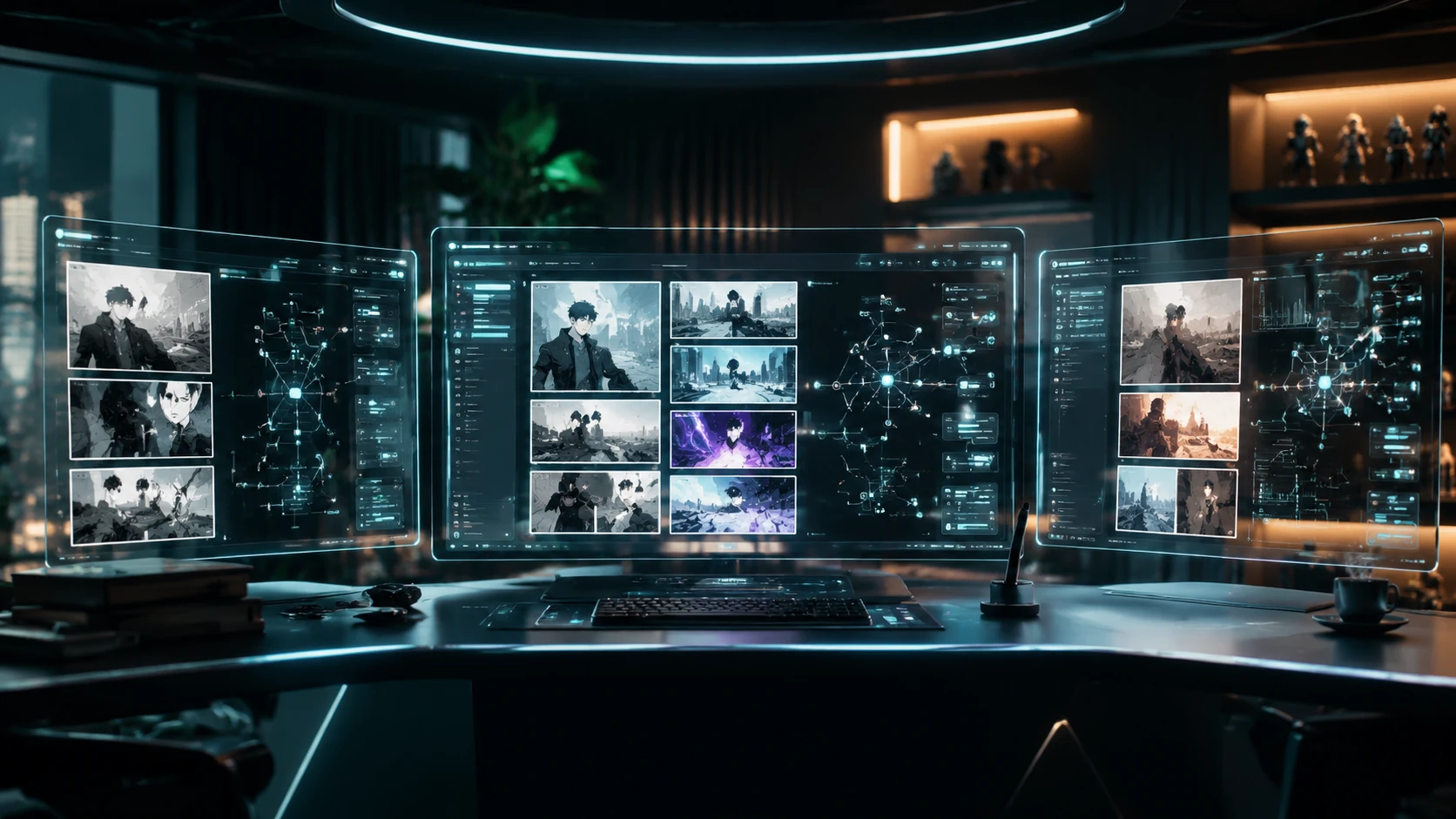
For decades, the global comic and webtoon industry was plagued by the 'localization gap'—the weeks or months between a home-market release and its international debut. By 2026, this friction has been effectively engineered out of the system. The emergence of the ‘Zero-Latency’ Translation (ZLT) architecture has fundamentally shifted the publishing landscape. No longer are creators forced to choose between speed and quality; instead, modern production pipelines now integrate localization as a real-time background process. This shift is not merely about using AI for translation; it is about a sophisticated stack of neural context engines, automated typesetting protocols, and human-in-the-loop verification layers that allow a chapter released in Seoul to be available in Paris, New York, and São Paulo within seconds of the original upload. For independent studios and major platforms alike, ZLT is the new baseline for global competitiveness.
The Mechanics of Zero-Latency Translation (ZLT)
Unlike the primitive machine translation tools of the early 2020s, the 2026 ZLT framework operates on the principle of 'Narrative Contextualization.' It doesn't just translate words; it analyzes the visual data of the panel, the character's emotional state, and the ongoing lore density of the series. By utilizing multi-modal LLMs (Large Language Models) that can 'see' the art, the architecture understands that a specific Korean honorific should be translated as a casual nickname in English based on the visual proximity and facial expressions of the characters. This level of semantic awareness ensures that the 'soul' of the story remains intact, even at the speed of light.
Neural Context Engines vs. Literal Translation
The core of the ZLT stack is the Neural Context Engine (NCE). This engine maintains a 'Series Bible' in its temporary memory, ensuring that terminology, character voices, and world-building facts are consistent across 40+ languages simultaneously. If a character refers to a specific magical artifact in Chapter 1, the NCE ensures the same terminology is used in Chapter 100, regardless of which language is being served. This eliminates the 'translation drift' that often occurs in long-running serials managed by multiple human translators over several years.
Automated Typesetting and Dynamic Text Boxes
One of the most significant technical hurdles in webtoon localization has always been the physical layout. German and Spanish text, for example, often take up 20-30% more space than English or Korean. In 2026, the ZLT architecture solves this through 'Dynamic Responsive Typesetting.' As the translation is generated, the system automatically adjusts font sizes, line spacing, and even the dimensions of speech bubbles to ensure optimal readability. This process occurs within the 'Semantic Panel' architecture, where text is treated as a flexible layer rather than a static image element.
- Vector-based speech bubbles that expand or contract based on text volume.
- Automatic SFX (Sound Effect) redrawing that maintains the original artist's brush style.
- Smart-kerning algorithms that prioritize mobile legibility in vertical scroll formats.
- Perspective-aware text placement for signs and background environmental storytelling.
The Human-in-the-Loop (HITL) Verification Layer
Despite the speed of ZLT, the 2026 standard emphasizes the necessity of the Human-in-the-Loop (HITL) layer. Rather than translating from scratch, human editors now act as 'Cultural Curators.' They monitor the real-time output of the ZLT engines, flagging nuanced cultural idioms or sensitive content that requires a human touch. This hybrid model has reduced localization costs by 70% while increasing output volume by over 500%. The role of the translator has evolved into that of a Narrative Quality Assurance (NQA) specialist, focusing on the high-level emotional resonance of the work.
Strategic Implications for Independent Studios
For small-to-mid-tier studios, the 2026 ZLT architecture is an equalizer. It allows a five-person team to compete on a global scale by removing the financial and logistical barriers of manual localization. By launching 'Day-and-Date' globally, these studios can capture viral trends as they happen, preventing the rise of unauthorized fan-translations that previously siphoned off revenue. This 'Global-First' approach maximizes the Narrative-Market Fit (NMF) across multiple territories simultaneously, significantly increasing the IP's valuation for potential media adaptations.
Risk Management: Avoiding Cultural Hallucinations
The primary risk in zero-latency pipelines is the 'Cultural Hallucination'—where the AI misinterprets a local gesture or reference and replaces it with an inappropriate or nonsensical equivalent. To mitigate this, 2026 platforms use 'Localization Guardrails'—pre-defined datasets of cultural taboos and region-specific context that the ZLT engine must verify against before the final push to the reader's device.
FAQ
What is Zero-Latency Translation (ZLT) in webtoons?
ZLT is a 2026 technical standard that uses neural engines and automated typesetting to translate and publish webtoons in multiple languages simultaneously with the original release.
Does real-time translation replace human translators?
No, it shifts their role. Human experts now act as Cultural Curators and Quality Assurance specialists, refining the AI's output for nuance and cultural accuracy.
How does ZLT handle sound effects (SFX)?
Modern ZLT architectures use style-transfer algorithms to redraw SFX in the target language while maintaining the original artist's unique brushwork and aesthetic.