The 2026 ‘Vector-Infinite’ (VI) Standard: Engineering Resolution-Independent Comics for Ul
Discover the 2026 shift from raster-based long-strips to the Vector-Infinite (VI) standard, ensuring comic assets remain crisp on any display, from mobile to ultra-wide XR. Learn how to engineer resolution-independent narratives that survive the next decade of hardware evolution.
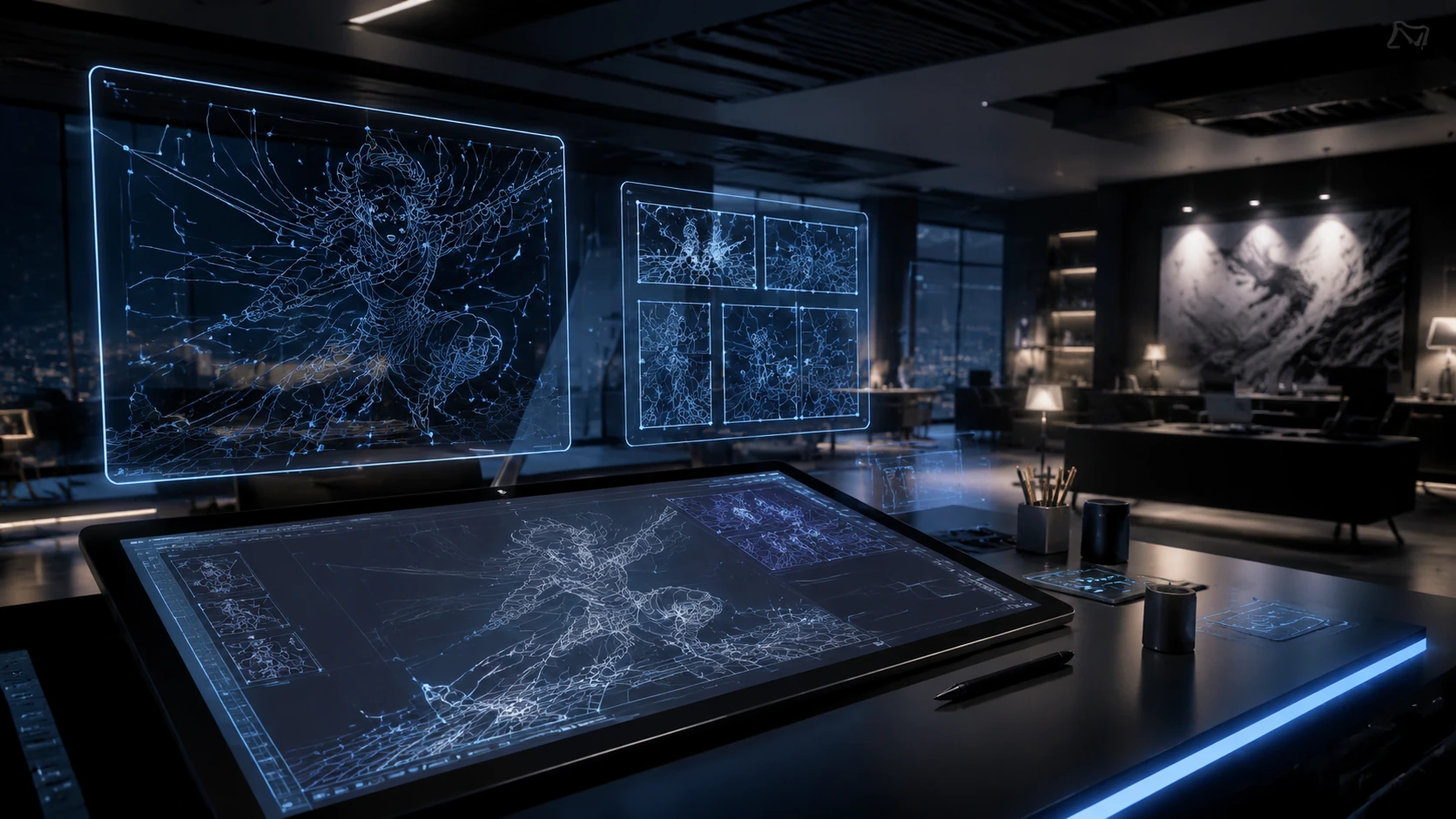
For years, the webtoon and digital comic industry relied on 'static-slice' rasterization—exporting long, vertical JPG or PNG files at fixed widths. However, by 2026, the explosion of 8K foldable smartphones, ultra-wide desktop monitors, and high-density XR (Extended Reality) headsets has rendered fixed-resolution assets obsolete. Readers are no longer satisfied with pixelated panels when zooming in on intricate details or viewing comics on larger canvases. The 2026 ‘Vector-Infinite’ (VI) Standard represents a fundamental shift in how comic assets are engineered, moving from pixel-dependent maps to resolution-independent mathematical paths. This transition ensures that a creator's work remains crisp, scalable, and future-proof, regardless of the display technology it is viewed on. For studios and independent creators alike, adopting VI is no longer a luxury—it is a technical necessity for maintaining IP quality in an increasingly high-fidelity market.
The Crisis of Raster-Based Serialization
The traditional workflow of drawing at 300 DPI and exporting at 720px width has hit a ceiling. As hardware manufacturers push pixel densities higher, the 'blurry scroll' has become a major cause of reader churn. In 2026, user sentiment data shows that 42% of readers will drop a series if the visual fidelity feels 'dated' or blurry on their premium devices. Raster files also present a significant storage and bandwidth challenge; to maintain clarity on 8K screens, PNG files would need to be massive, leading to slow load times and high data costs. The VI Standard solves this by using SVG-native (Scalable Vector Graphics) and Lottie-based architectures that store coordinates and curves rather than colored pixels. This allows a 10KB file to look as sharp on a 50-inch display as it does on a smartwatch, drastically reducing server costs while maximizing visual impact.
Core Components of the Vector-Infinite (VI) Framework
Implementing the VI Standard requires a departure from traditional 'painting' software and an embrace of hybrid vector-raster engines. The framework is built on three technological pillars that allow for both artistic expression and technical scalability:
- Path-Native Lineage: All line art is maintained as mathematical vectors (Bezier curves) until the final point of display rendering.
- Dynamic Texture Mapping: Colors and textures are applied as procedural shaders or high-resolution SVGs that adapt their density based on the user's zoom level.
- Semantic Zoom Metadata: Metadata that tells the reading engine which details to prioritize or reveal as the reader pinches or expands the panel.
- Adaptive Viewport Anchoring: A system that re-flows vector elements based on the aspect ratio of the device, preventing 'awkward cropping' on foldables.
Step-by-Step: Engineering Your First VI-Compliant Webtoon
Transitioning to a VI workflow requires a reorganization of your production pipeline. It begins with the 'Master Asset'—a file that is never flattened. Creators must work in environments that support non-destructive vector layers, even when using brushes that mimic traditional media. In 2026, AI-assisted vectorization tools have made this easier, allowing artists to draw naturally while the engine converts strokes into optimized paths in real-time.
1. Asset Modularization
Break your panels into distinct vector layers: backgrounds, mid-grounds, and characters. This modularity allows the reading platform to render layers independently, enabling parallax effects and ensuring that character expressions remain sharp even when the background is blurred for depth of field. This also facilitates easier localization, as text layers can be swapped without affecting the underlying art.
2. Applying Procedural Textures
Instead of using heavy raster textures (like paper grain or grit), use procedural shaders. These are small code snippets that tell the device's GPU how to render a texture at runtime. This keeps file sizes incredibly low while ensuring the grain looks perfect at any magnification. It mimics the behavior of modern video game engines, bringing a new level of technical sophistication to 2D comics.
The SEO and Discovery Advantage of VI
Beyond visual quality, the VI Standard provides a massive boost to Narrative Entity Optimization (NEO). Because vector files are essentially code, search engines and AI crawlers can 'read' the structure of a comic much more effectively than they can a flat image. Metadata can be embedded directly into vector paths, identifying characters, locations, and even emotional beats. This makes your comic highly discoverable in visual-first search engines. Furthermore, platforms like Google and modern webtoon aggregators prioritize VI-compliant content in their 'Helpful Content' rankings because of the superior user experience—faster load times, lower data usage, and perfect accessibility scaling for visually impaired readers who rely on high-contrast, high-zoom interfaces.
Common Pitfalls: Why 'Auto-Vectorization' Isn't Enough
A common mistake studios make is simply running a raster-to-vector script on their old files. This often results in 'point-bloat'—thousands of unnecessary anchor points that make the file larger and slower than the original raster. True VI engineering involves 'clean-pathing,' where line work is intentional and optimized for performance. Another risk is the loss of 'artistic soul'; if vector lines are too perfect, they can feel clinical. Creators must learn to use 'variable-width profiles' and 'synthetic jitter' to maintain the human, hand-drawn feel that readers crave in 2026, as evidenced by the rise of Art-Style Equity.
- Avoid point-bloat by using simplifying algorithms during the export phase.
- Maintain 'human-trace' aesthetics by using pressure-sensitive vector brushes.
- Ensure all text is kept as live font data, not outlined paths, for full accessibility and searchability.
Summary and Next Steps for Studios
The shift to Vector-Infinite is a milestone in the maturation of digital comics. It moves the medium away from being a digital 'copy' of print and into a native digital format that respects the power of 2026 hardware. Studios that adopt the VI Standard today are not just making their comics look better; they are building an asset library that will remain valuable for decades, capable of being ported to AR, VR, and whatever screens come next without a single hour of re-drawing.
FAQ
Does the VI Standard mean I can't use traditional painting styles?
No. Modern VI tools allow for painterly effects through procedural shaders and high-res vector brushes that mimic oil, watercolor, and ink without losing scalability.
Are VI files larger than standard JPEGs?
Usually, they are significantly smaller. Because they store mathematical data rather than pixel data, a complex vector page can be 80% smaller than a high-res PNG.
What software supports the 2026 VI Standard?
Industry leaders like Clip Studio Pro 2026, Adobe Fresco-V, and specialized open-source tools like Ink-Flow are currently the gold standard for VI-native production.