The 2026 ‘Elastic Narrative’ Framework: Engineering Multi-Ending Webtoons for the Interact
The 2026 Elastic Narrative Framework (ENF) represents the shift from linear vertical scrolling to dynamic, choice-based storytelling. Discover how studios are using node-based architecture to deliver personalized reader outcomes without tripling production costs.
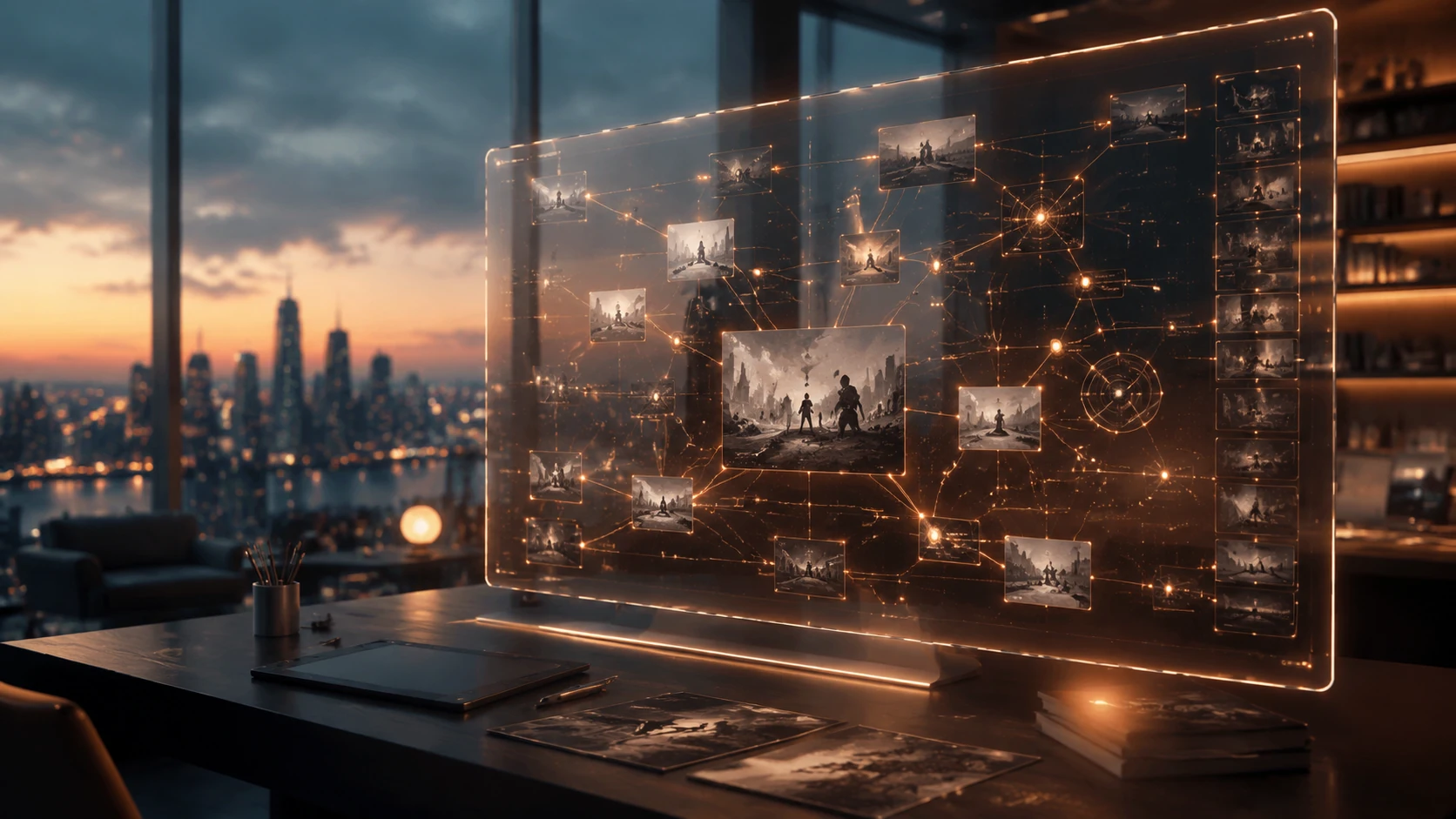
For over a decade, the webtoon industry was defined by the 'Infinite Scroll'—a linear, downward progression that prioritized pacing and visual flow. However, as we move through 2026, the market is experiencing a fundamental shift toward the 'Elastic Narrative' Framework (ENF). This technological standard allows creators to move beyond static, one-way storytelling into a dynamic environment where reader choices, past behavior, and interactive 'checkpoints' alter the story’s trajectory. Unlike early experimental branching comics, ENF provides a standardized technical architecture that integrates seamlessly with existing vertical-scroll platforms, enabling multi-ending outcomes without the traditional friction of app-switching or slow-loading game engines. For the first time, the line between reading a comic and playing a narrative-driven game is being erased, creating a high-retention environment that drives significant LTV growth.
Defining the 2026 Elastic Narrative Framework (ENF)
ENF is more than just 'choose your own adventure' for mobile screens; it is a backend infrastructure that manages narrative state and asset delivery. At its core, the framework uses a 'Node-and-Bridge' logic. Instead of a single image strip, the webtoon is broken into modular nodes. When a reader reaches an 'Elastic Point,' the platform fetches the next node based on a set of logic triggers. These triggers can be explicit (the reader clicks a button) or implicit (the reader spends more time on a certain character's panel, signaling interest). This semantic layer allows the story to 'stretch' or 'shrink' based on the reader’s psychographic profile, ensuring that the narrative payoff feels personalized rather than randomized.
The Three Pillars of Elastic Architecture
- State Persistence: The ability for the platform to remember a reader's choice in Chapter 2 and reflect that consequence in Chapter 50.
- Modular Asset Loading: A streaming protocol that only loads the specific branch the reader is currently viewing, preventing data lag and keeping the experience 'snappy'.
- Semantic Tagging: Using AI-driven metadata to tag every panel with emotional or plot-relevant data, allowing for real-time pacing adjustments.
The 'Loom' Production Method: Scaling Without Tripling Costs
The primary barrier to multi-ending narratives has always been the production cost. If a story has three endings, does it require 300% more art? In 2026, the 'Loom' method solves this through high-asset reuse and 'Common-Path' engineering. Creators design a central 'Core Spine' for the story that accounts for 70% of the visual assets. The remaining 30% consists of 'Variable Nodes'—specific panels, backgrounds, or dialogue bubbles that change based on the branch. By using hybrid AI-human pipelines to maintain character consistency across these variables, studios can produce a story with four distinct endings for only 1.4x the cost of a traditional linear series. This efficiency is the key to making ENF a commercially viable standard for mid-tier and indie creators alike.
Monetizing Divergence: The New Revenue Streams
The transition to Elastic Narratives is fundamentally changing how platforms monetize content. In a linear model, the reader pays for access. In an ENF model, the reader pays for 'Agency.' This has led to the rise of 'Lore-Unlocks' and 'Fate-Reset' tokens. If a reader is unhappy with a tragic outcome in their specific playthrough, they can purchase a 'Narrative Rewind' to explore an alternative branch. Data from early 2026 reveals that interactive series using ENF see a 45% higher average revenue per user (ARPU) compared to linear series, as readers often pay to explore 'The Road Not Taken' after completing their primary path.
Technical Implementation: Preparing Your Pipeline
Implementing ENF requires a shift in how writers and artists collaborate. Traditional scripts are being replaced by flowcharts and logic-gates. Writers must now function as 'System Designers,' ensuring that no matter which path a reader takes, the character arcs remain coherent and the world-building logic holds firm. This requires a robust Narrative Continuity Protocol (NCP) to avoid 'logic breaks'—situations where a character references an event that didn't happen in the reader's specific branch. Modern 2026 production software now includes automated 'Lore-Checkers' that flag these inconsistencies during the storyboarding phase.
Checklist for ENF-Ready IP
- Script as a Flowchart: Map out every decision point and its long-term consequence.
- Asset Tagging: Ensure all character sprites and backgrounds are modular and easy to swap.
- State Logic Document: Define exactly what variables (e.g., 'Hero Trust Level') are tracked throughout the series.
- Platform Compatibility: Verify that your target platform supports the 2026 Narrative Asset Portability (NAP) standard for interactive elements.
Risks: The Trap of Choice Fatigue
While interactivity is a powerful tool, it comes with the risk of 'Choice Fatigue.' If a reader is forced to make a decision every three panels, the immersion is broken, and the experience feels more like a chore than a story. The 2026 industry standard suggests a 'Pacing Ratio' of one major choice every 150 vertical panels. This allows the reader to sink into the story's atmosphere before being pulled back into an active decision-making state. Furthermore, choices must feel meaningful; 'false choices' where different options lead to the exact same dialogue lines are quickly spotted by modern audiences and can lead to a 'trust-signal' drop in the platform’s algorithm.
FAQ
What is the difference between ENF and a visual novel?
While both offer branching paths, ENF is optimized for the vertical-scroll webtoon format and mobile reading behavior, maintaining the 'scrolling' rhythm rather than the static 'click-to-advance' style of visual novels.
Do I need to be a programmer to use the Elastic Narrative Framework?
No. By late 2026, most major webtoon creation tools offer 'no-code' interfaces where you can drag and drop narrative nodes and set logic triggers visually.
Will interactive webtoons replace traditional linear ones?
Unlikely. Linear stories remain the standard for focused, high-impact auteur storytelling, whereas ENF is becoming the standard for high-engagement, community-driven, and gamified IP.