The 2026 ‘Asset-Modularity’ (AM) Workflow: Engineering Comics for Instant Social-First Rep
Transition from static comic files to modular asset architectures. Learn how the 2026 AM workflow enables instant repurposing of webtoon panels for viral social video and immersive media.
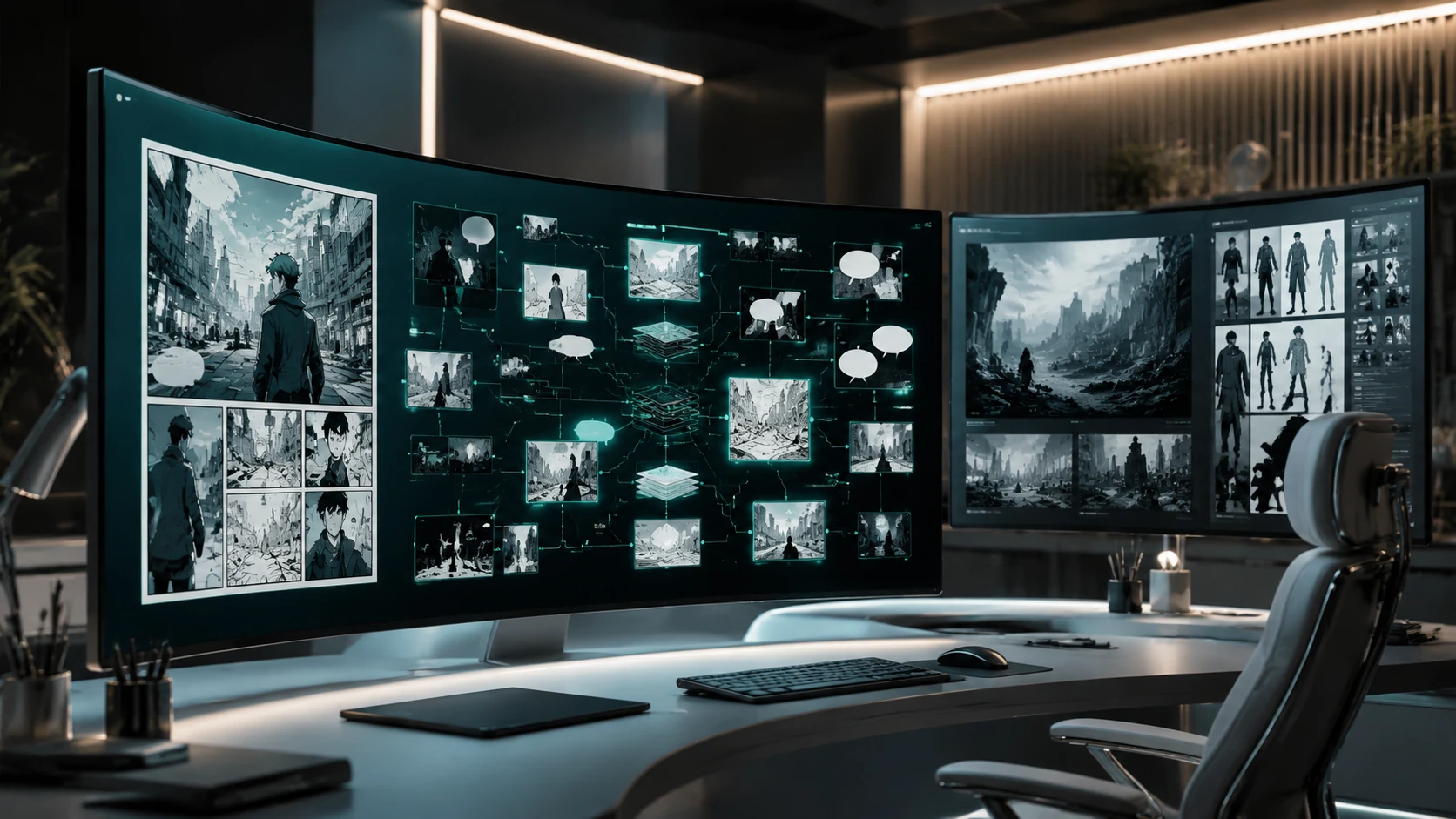
In 2026, the traditional 'flat' comic file is becoming a legacy format. As platform algorithms increasingly favor multi-format distribution—specifically the 'Social-First' video cycle—creators who bake modularity into their production pipeline are seeing a 300% increase in cross-platform discovery. The 'Asset-Modularity' (AM) workflow is no longer just a productivity hack; it is a fundamental engineering requirement for survival in the 2026 attention economy. By structuring comic assets as independent, machine-readable layers from day one, studios and independent creators can pivot from a vertical-scroll chapter to a 15-second viral 'Short' or 'Reel' in minutes rather than days. This article explores the technical standards of the AM framework and how it is revolutionizing the way IP is managed for a multimodal future.
The Shift from Static Pages to Dynamic Repositories
Historically, comic creation focused on the final output: the page or the scroll. Once the flat image was exported, repurposing that content for marketing or other media required tedious manual editing. The 2026 AM Standard flips this paradigm. Under this workflow, a comic is not treated as a series of images, but as a repository of discrete assets. Each panel is a container for character models, environmental layers, and semantic text nodes. This modularity allows for 'liquid content'—the ability for the story's visual elements to flow seamlessly into different aspect ratios, interactive formats, and video-first environments without losing quality or narrative intent.
The Three Pillars of the AM Workflow
Implementing the Asset-Modularity workflow requires a shift in how files are structured and managed. It moves beyond simple folder organization into a standardized architectural framework that AI tools and automation scripts can interpret.
1. Semantic Layer Hierarchy
In an AM-compliant file, layers are not just named 'Layer 1' or 'Background.' They follow a strict naming convention (e.g., CHR_Protagonist_Action, ENV_Skyline_Night, SFX_Impact_Glow). This semantic labeling allows automated tools to identify and isolate specific characters or effects, making it possible to generate character-focused marketing clips or parallax animations at the push of a button.
2. Vector-Raster Hybridization
To ensure assets remain high-fidelity across platforms, creators are adopting the 2026 VI (Vector-Infinite) standard for line art and text while maintaining raster textures for painterly aesthetics. This ensures that a character designed for a mobile screen can be scaled up for a cinematic teaser without pixelation, providing the flexibility needed for multi-medium IP expansion.
Engineering for the Social-First Discovery Loop
Today’s readers often discover their next favorite series through 10-second character-driven videos on TikTok, Reels, or YouTube Shorts. The AM workflow enables 'Social-First' engineering, where creators can automatically extract character assets to create 'vibe-checks,' power-level comparisons, or lore explainers. Because the backgrounds and characters are separate, the AM framework allows for automated 'camera-work'—simulated pans, zooms, and depth-of-field shifts—that turn static comic panels into high-engagement motion content without the need for a dedicated animator.
Technical Implementation: The AM Transition Checklist
- Adopt a standardized naming convention across all production files (PSD, CLIP, or KRA).
- Separate characters from backgrounds consistently, ensuring 'clean-fill' behind character silhouettes.
- Use modular text bubbles that are detached from the art to facilitate machine-translation and accessibility screen-reading.
- Store high-frequency assets (main characters, recurring locations) in a centralized library for cross-chapter consistency.
- Integrate automated export scripts that generate vertical video assets alongside standard vertical-scroll exports.
The Role of AI in Asset Recomposition
In 2026, AI is used not as a generator of art, but as a manager of assets. AI-assisted recomposition tools can take an AM-structured file and intelligently 'refill' missing background data when a character is moved or resized. This 'Generative In-Painting' for modular assets means that a creator can change a panel's composition from a wide shot to a close-up without redrawing, provided the underlying asset structure is sound. This drastically reduces the labor-cost of creating 'Special Edition' or 'Director’s Cut' chapters for premium subscribers.
Future-Proofing Your IP Portfolio
The ultimate goal of the AM workflow is IP longevity. By treating your comic as a collection of high-quality, modular components, you are preparing your work for technologies that haven't even gone mainstream yet. Whether it is an AR overlay that lets readers see characters in their room or an interactive reading app where the backgrounds shift based on the time of day, modular assets are the prerequisite for the next generation of storytelling.
FAQ
What is the biggest mistake when starting an AM workflow?
The most common error is inconsistent layer naming. Without a strict, semantic naming convention, automation tools cannot distinguish between a character and a background, negating the benefits of modularity.
Do I need special software for Asset-Modularity?
Most professional tools like Clip Studio Paint and Photoshop support the layering needed, but 2026 workflows often integrate with third-party asset managers or custom scripts to handle bulk exports for social media.
Does this increase production time for each chapter?
Initially, yes (by about 10-15%). However, it reduces marketing and repurposing time by 90%, resulting in a massive net gain in productivity and IP reach over the life of a series.