Comics news and insights for your local market
Follow webtoon, manga, manhwa, AI comic, creator economy, and storytelling trends curated for each region.

The 2026 ‘Narrative-Agility’ (NA) Engineering Standard: Designing Modular Webtoon IP for the Fragmented Attention Economy
In 2026, linear reading is no longer the default. The Narrative-Agility (NA) Standard provides a framework for engineering modular story units that maintain high retention across social snippets, AI summaries, and fragmented consumption habits.

The 2026 ‘Cross-Genre Synthesis’ (CGS) Framework: Engineering High-Retention Webtoon Hybrids for Fragmented Reader Demographics
In 2026, 'pure' genres are failing. Discover the CGS Framework for engineering high-retention narrative hybrids that dominate the fragmented webtoon market.
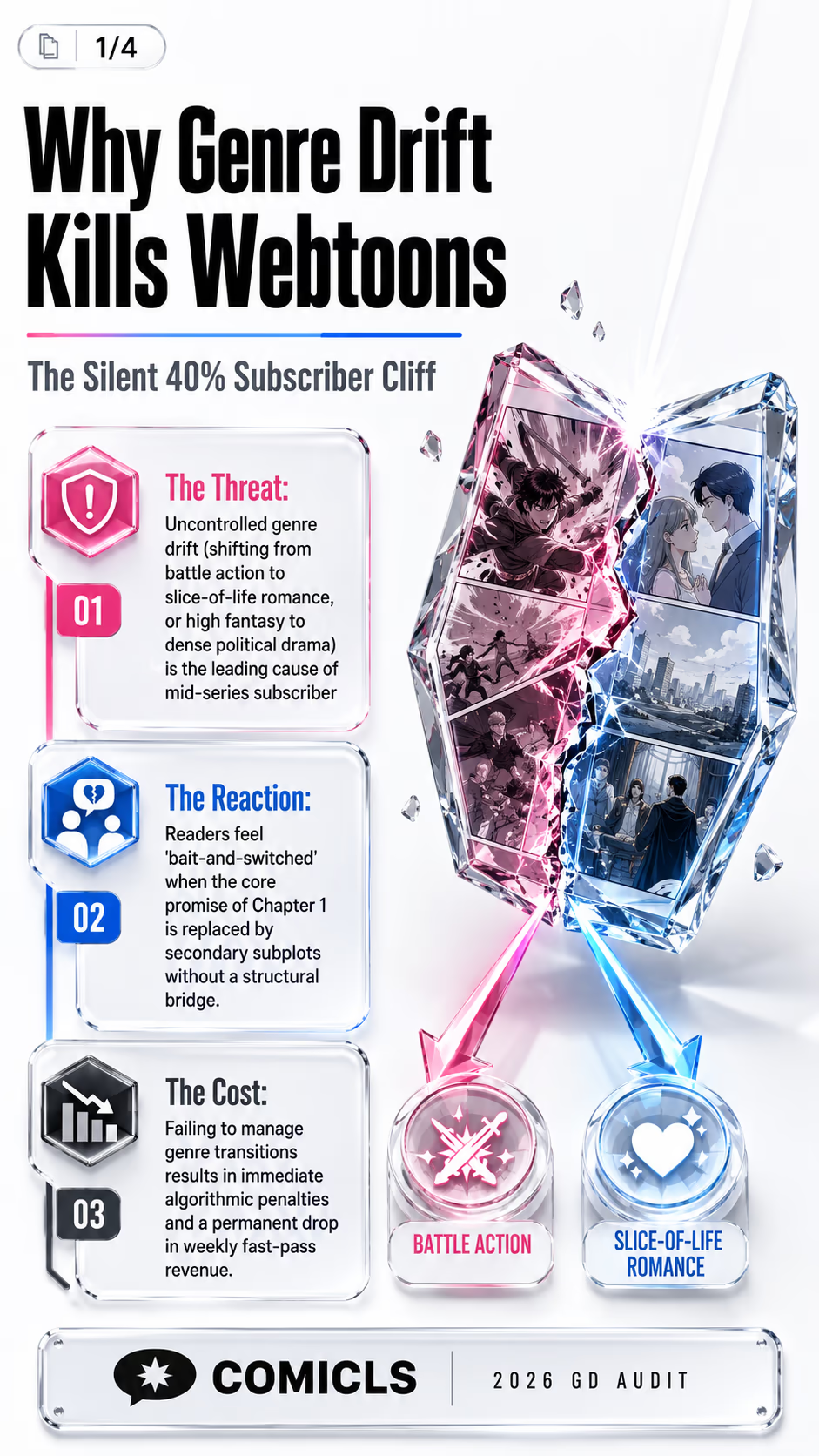
Why Genre Drift Kills Webtoons: The 2026 GD Audit
When long-form series shift from action to romance or fantasy to politics, reader churn spikes. Master the 2026 GD Audit to transition genres safely.
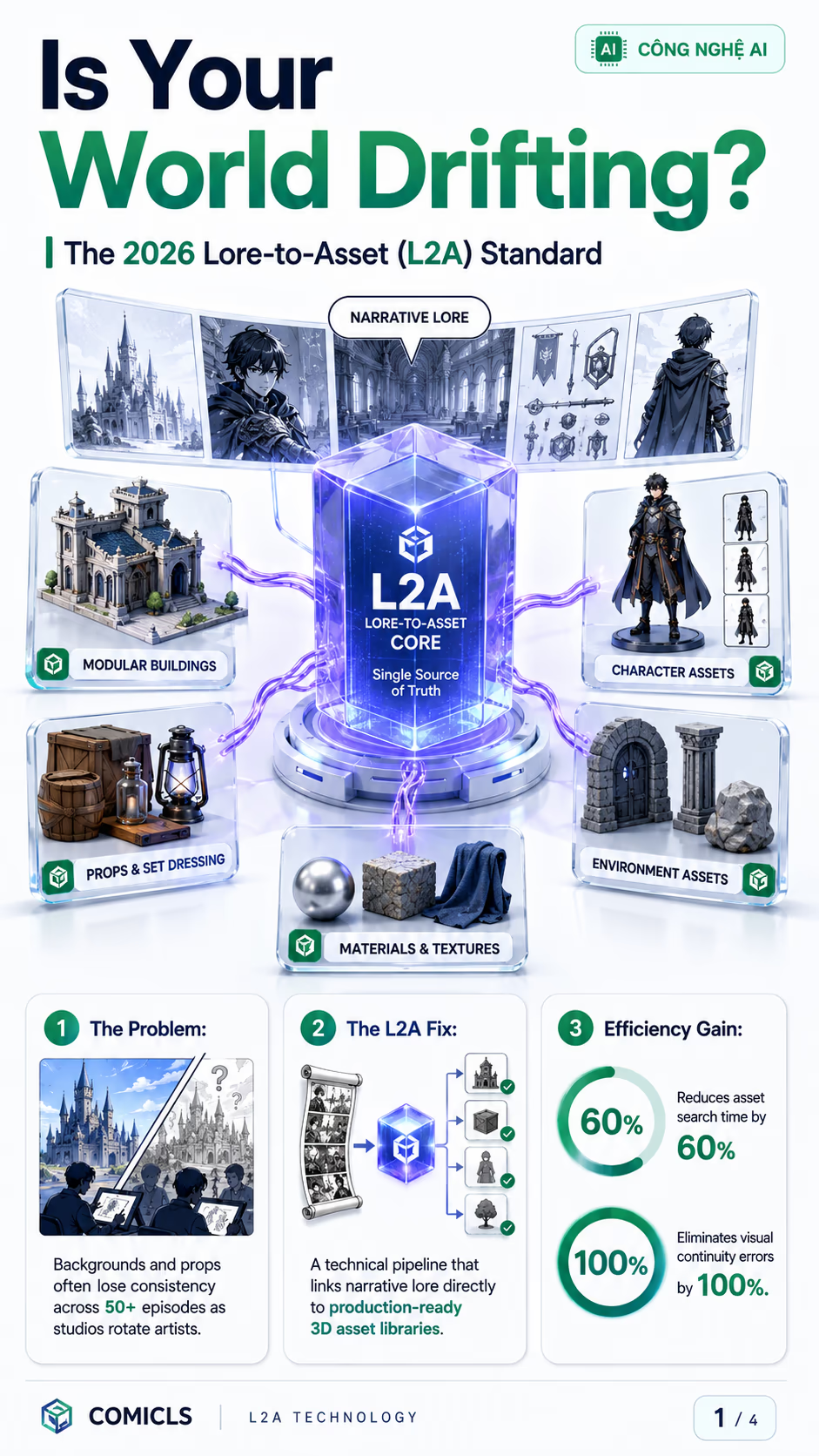
Does Your Lore Scale? The 2026 L2A Tech Standard
Discover the 2026 L2A standard for linking narrative lore to production-ready 3D assets. Solve background drift and boost studio efficiency by 40%.
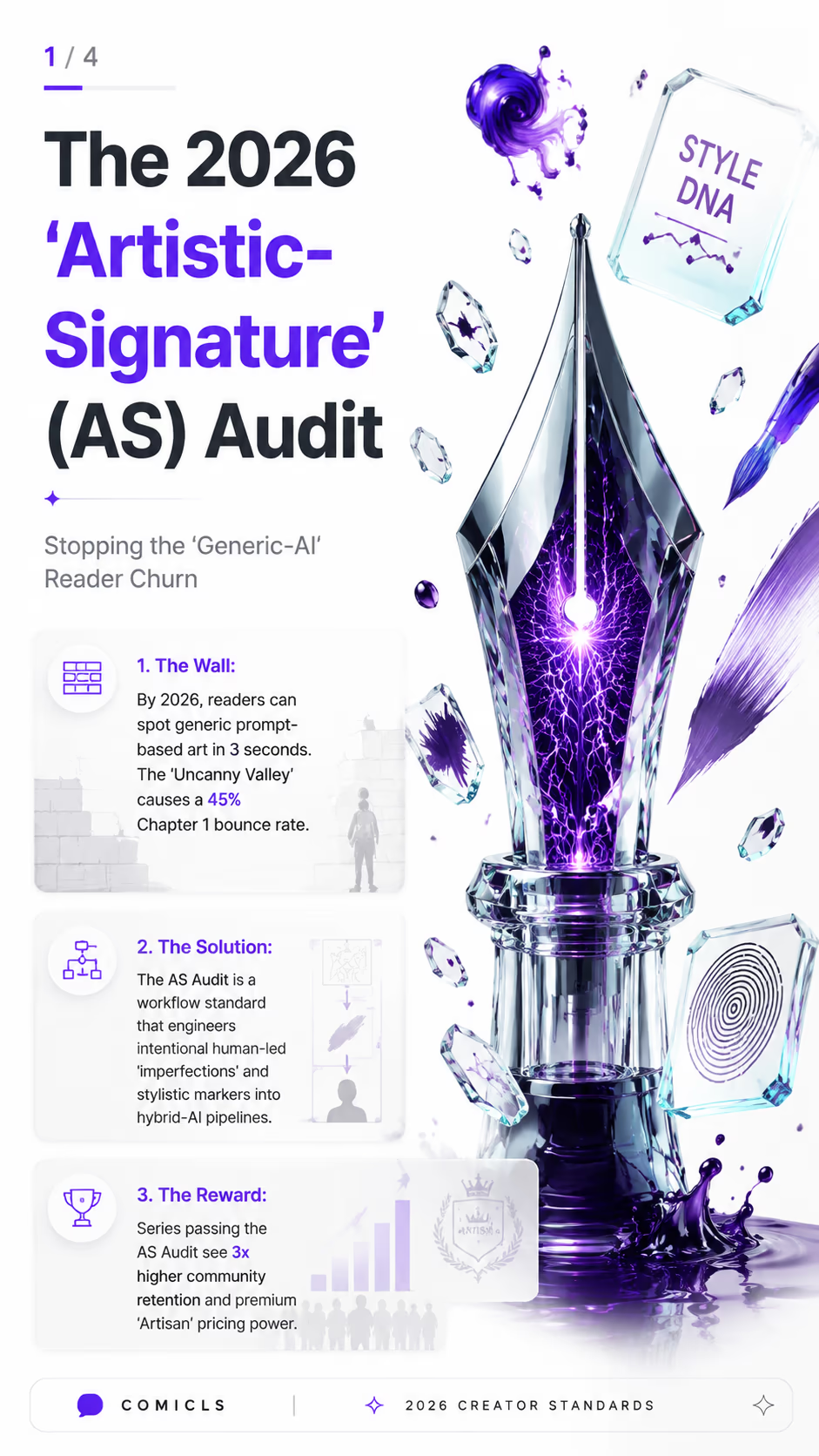
The 2026 ‘Artistic-Signature’ (AS) Audit: Fixing the AI-Uncanny Valley
Discover the 2026 AS Audit—a strategic framework for creators to engineer 'human-signature' markers into their webtoons and manga to bypass reader AI-fatigue.
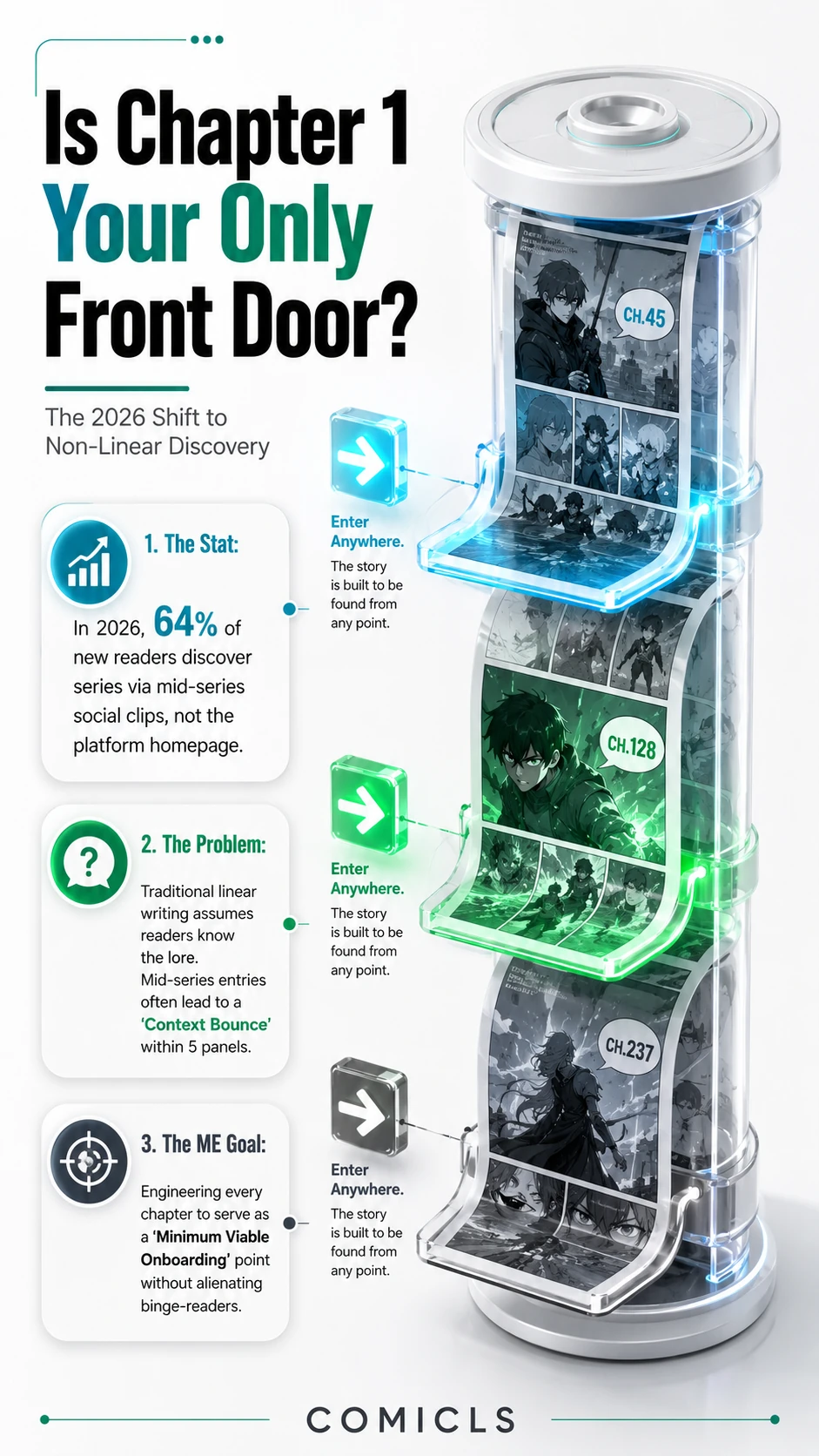
Does Your Webtoon Pass the 'Multi-Entry' (ME) Test?
In 2026, readers no longer start exclusively at Chapter 1. Discover the Multi-Entry (ME) Standard to turn every chapter into a high-conversion 'front door' for your series.
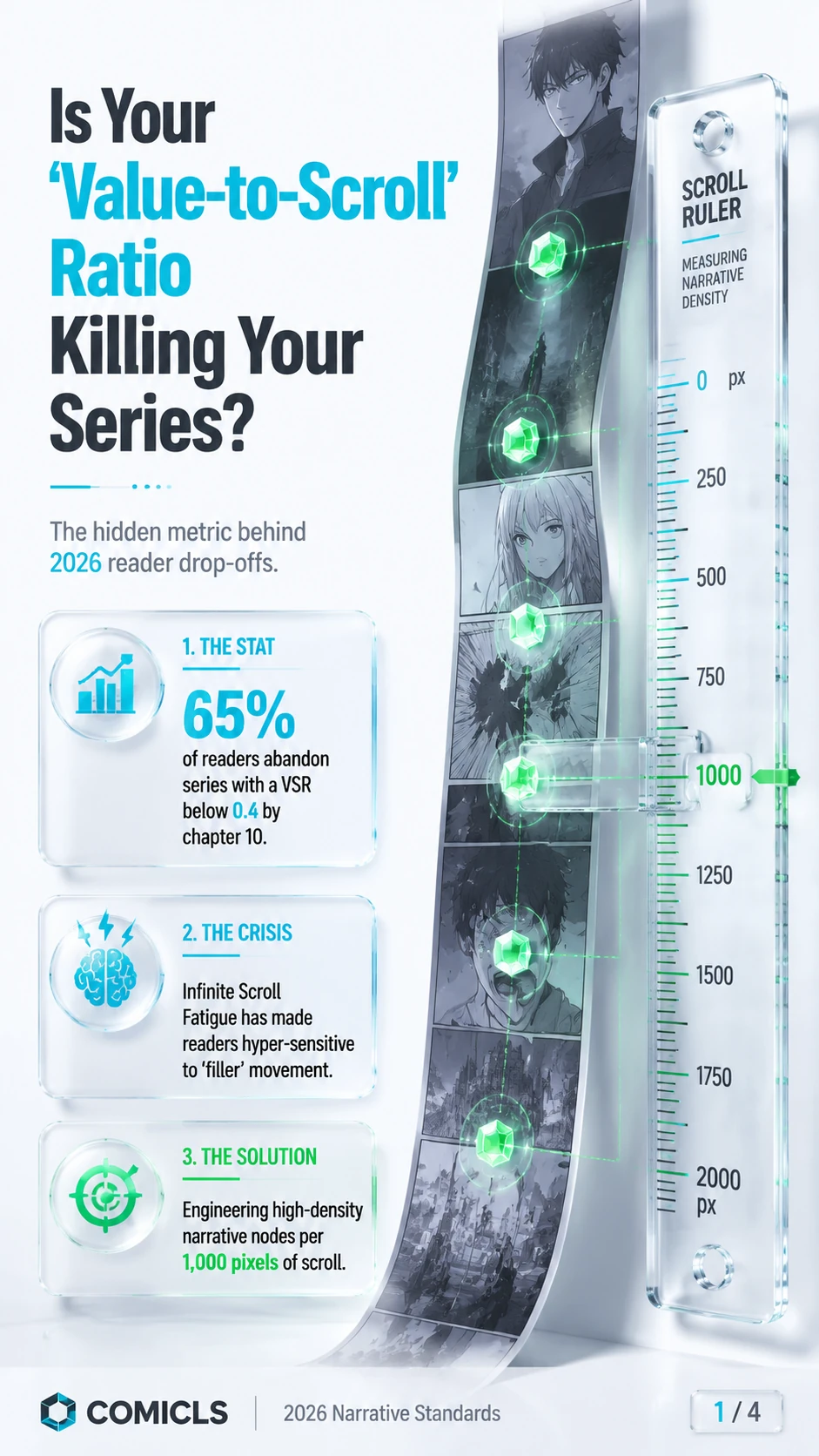
Fixing the 'Value-to-Scroll' Ratio in Your Webtoon
In 2026, 'Infinite Scroll Fatigue' is the leading cause of series abandonment. Learn how the Value-to-Scroll (VSR) metric helps creators engineer high-retention chapters.
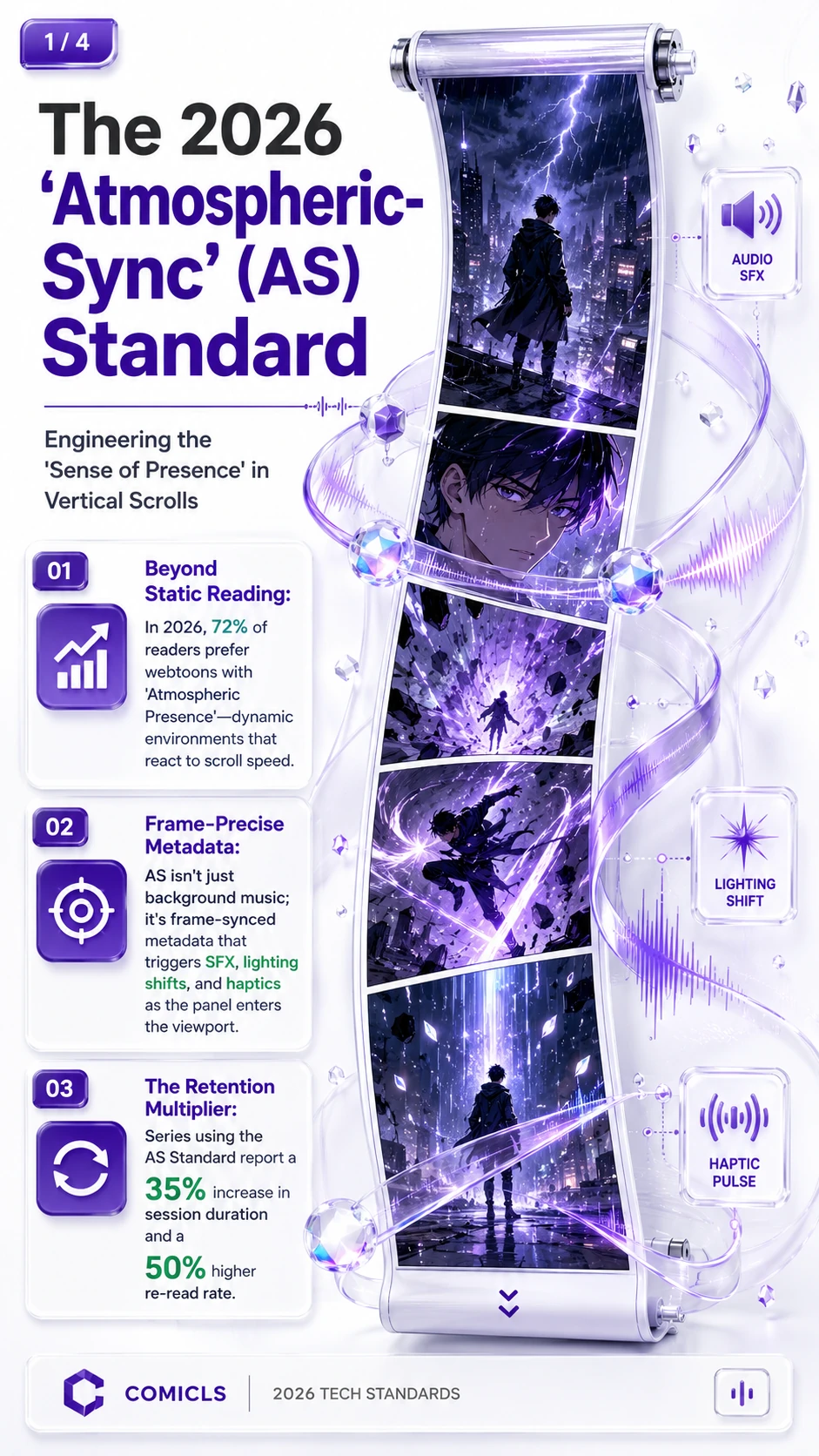
The 2026 ‘Atmospheric-Sync’ (AS) Standard: Engineering Immersive Audio
Master the 2026 AS Standard to bridge the gap between static panels and cinematic immersion. Learn to engineer frame-precise audio-visual metadata for vertical scroll comics.
All

The 2026 ‘Collective-Agency’ (CA) Narrative Framework: Engineering Multi-Character Synergy for the Post-Solo-Leveling Reader Era
In 2026, the 'Solo-Leveling' fatigue has hit a breaking point. Learn how to engineer the 'Collective-Agency' (CA) framework to build high-retention ensemble narratives that maximize reader investment through multi-character synergy.
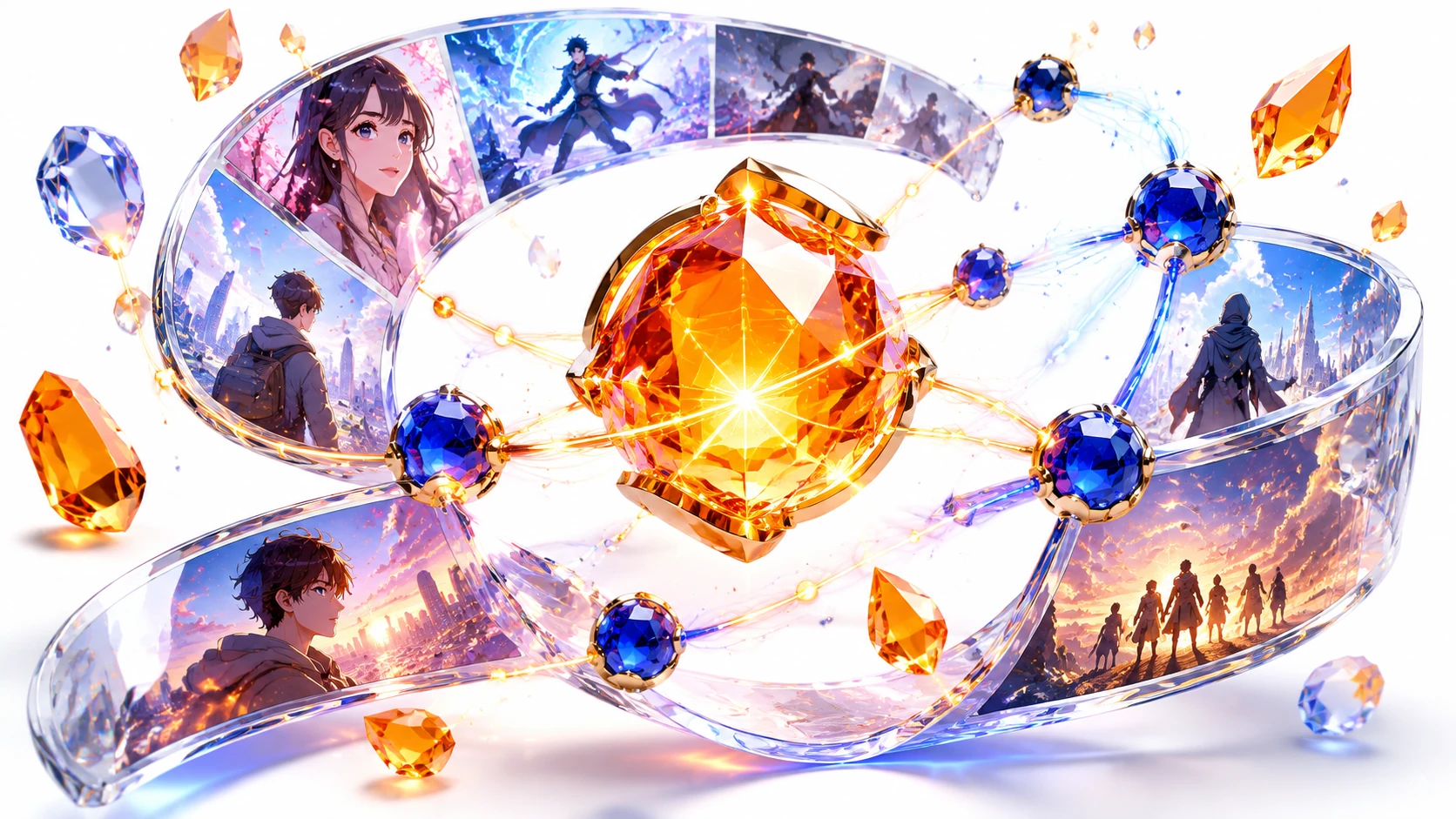
The 2026 ‘Sunk-Cost Engagement’ (SCE) Framework: Engineering Reader Investment for High-LTV Webtoon Conversion
In 2026, raw impressions are no longer the primary driver of comic revenue. The Sunk-Cost Engagement (SCE) Framework provides a blueprint for engineering deep reader investment through time, emotion, and social equity.

The 2026 ‘Asset-Sovereignty’ (AS) Model: Engineering a High-Margin Ownership Economy for Independent Webtoon Studios
The 2026 market is shifting from platform-locked subscriptions to 'Asset Sovereignty.' This guide explores how to engineer high-margin ownership models for independent comic IP.
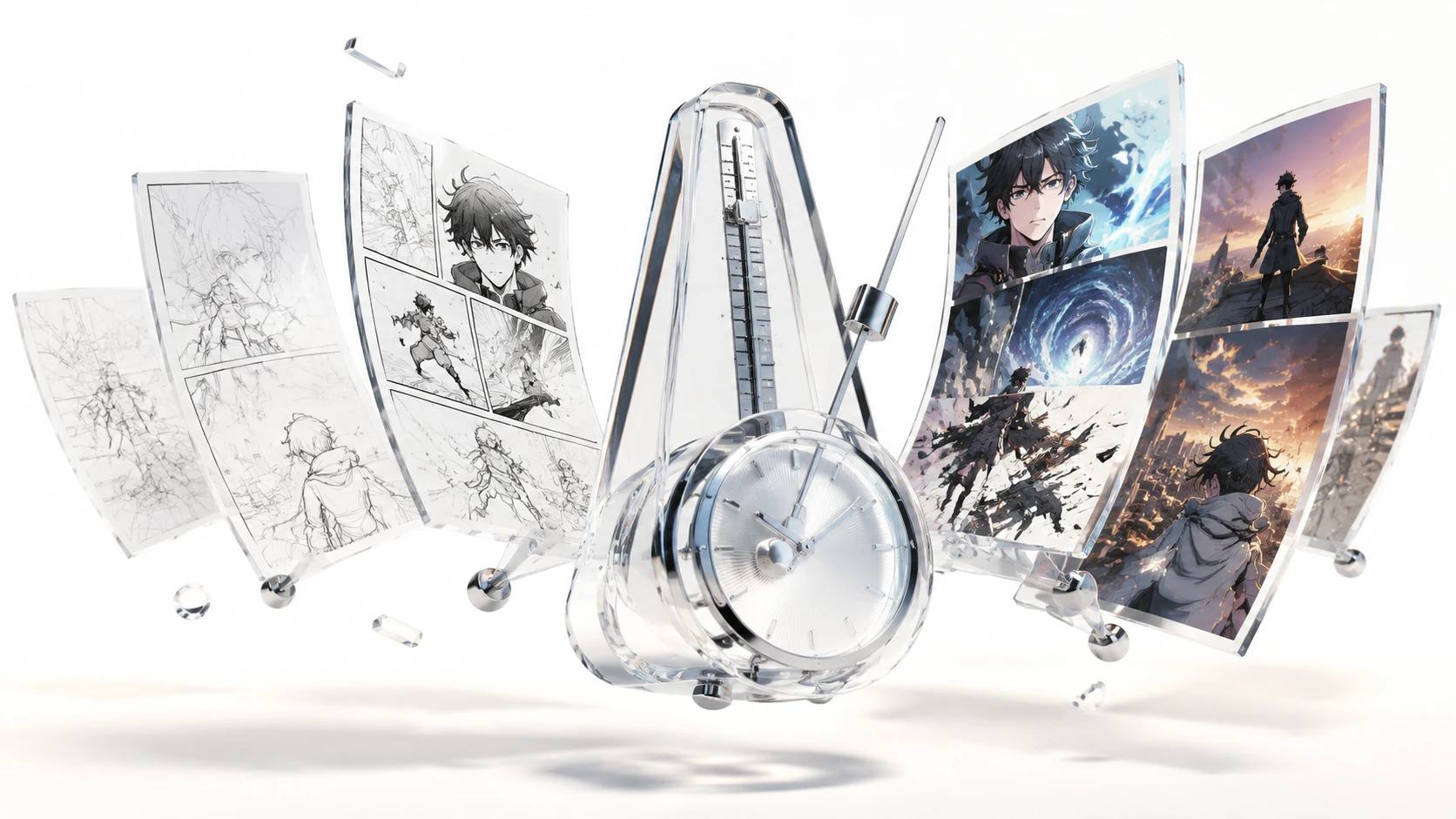
The 2026 ‘Narrative-Velocity’ (NV) Audit: Engineering Sustainable Release Cadence for Independent Webtoon Studios
In the high-frequency market of 2026, independent studios must master 'Narrative-Velocity' (NV) to survive. This audit framework provides the technical roadmap for balancing speed, quality, and creator sustainability.
Latest

The 2026 ‘Emotional-Resonance’ (ER) Index: How Sentiment-Driven Discovery is Disrupting Traditional Webtoon Genres
In 2026, the traditional genre-tagging system has collapsed. Discover how the Emotional-Resonance (ER) Index and sentiment-driven AI are redefining how readers find their next favorite story.
The 2026 ‘Companion-Narrative’ (CN) Architecture: Engineering Multi-Modal Engagement for High-LTV Webtoon Franchises
In 2026, vertical scrolling is only the beginning. Discover how to engineer a 'Companion-Narrative' ecosystem that leverages second-screen utility, ambient audio, and deep-lore layers to maximize reader retention and lifetime value.
The 2026 ‘Semantic-Trope’ (ST) Engineering Standard: Designing Webtoon Hooks for AI-Agent Recommendation Engines
In 2026, readers no longer search for webtoons; AI agents find stories for them. Learn how to engineer your narrative tropes for maximum machine-legibility and organic discovery.
The 2026 ‘Narrative-Redundancy’ (NR) Engineering Standard: Building Anti-Fragile Plot Architectures for Sustainable Long-Form Webtoon Franchises
Master the 2026 Narrative-Redundancy (NR) framework to prevent series collapse. Learn how to engineer anti-fragile plot architectures that survive writer transitions and multi-year serialization.

The 2026 ‘Cognitive-Empathy’ (CE) Engineering Standard: Designing Webtoon Characters for Deep Parasocial Connection in the Post-Bot Content Era
In an era of AI-generated content saturation, the 2026 Cognitive-Empathy (CE) Standard provides a framework for engineering characters that trigger deep, human-centric parasocial bonds.
The 2026 ‘Attention-Yield’ (AY) Metric: Engineering Webtoon ROI for the Post-Impression Advertising Era
The 2026 shift from impressions to 'Attention Yield' (AY) is redefining how webtoons are valued. Discover how to engineer your narrative for high-depth engagement and premium revenue.
The 2026 ‘Open-IP Mesh’ (OIM) Protocol: Engineering Collaborative Universe Franchising for Independent Comic Creators
The 2026 Open-IP Mesh (OIM) Protocol is revolutionizing how independent creators build shared universes. Discover the engineering behind technical lore-syncing and automated revenue splits.
The 2026 ‘Narrative-Safety’ (NS) Verification Standard: Engineering Brand-Safe Webtoon IP for Global Programmatic Advertising
The introduction of the 2026 Narrative-Safety (NS) Standard is fundamentally shifting how webtoon platforms attract high-tier advertisers by providing granular, AI-verified brand safety at the panel level.

The 2026 ‘Semantic-Lore’ (SL) Documentation Standard: Engineering Webtoon Narrative Bibles for AI-Agent Reasoning and Multi-Platform Consistency
In 2026, the 'Semantic-Lore' (SL) Standard has replaced traditional static story bibles with machine-readable narrative frameworks. This shift enables AI agents to reason through complex webtoon lore, ensuring perfect multi-platform consistency and dominant search visibility.

The 2026 ‘Transcreation-First’ (TF) Localization Standard: Engineering Cross-Border Webtoon Hits through Cultural Semantics and Slang-Mapping
Move beyond literal translation. Learn the 2026 TF Standard to engineer webtoons that resonate across borders through deep cultural semantics and slang-mapping.
The 2026 ‘Narrative-Utility’ (NU) Protocol: Engineering Webtoon IP for Procedural, Educational, and B2B Consumption Markets
In 2026, the vertical scroll format has transcended entertainment. The Narrative-Utility (NU) Protocol provides the engineering framework for converting complex procedural data into high-retention comic-based information systems.

The 2026 ‘Universal IP Passport’ (UIP) Standard: Engineering Seamless Cross-Platform Liquidity for Independent Comic Creators
The 2026 Universal IP Passport (UIP) is dismantling the walled gardens of the comic industry. Learn how this standardized metadata container allows creators to move IP across platforms and media with zero friction.
The 2026 ‘Attentional-Elasticity’ (AE) Framework: Engineering High-Retention Webtoons for the Post-Scrolling Fatigue Era
In 2026, infinite scrolling has reached a psychological breaking point. The Attentional-Elasticity (AE) Framework provides a blueprint for engineering narratives that expand and contract based on reader energy.
The 2026 ‘Narrative-Supply-Chain’ (NSC) Resilience Standard: Engineering Anti-Fragile Production Pipelines for Global Webtoon Studios
Discover the 2026 Narrative-Supply-Chain (NSC) standard. Engineering production resilience is now the primary metric for studio valuation and global IP scalability.
The 2026 ‘Narrative-Unit’ (NU) Valuation Standard: Engineering Granular IP Metrics for the Webtoon M&A and Studio Acquisition Market
The 2026 shift from platform traffic to 'Narrative-Unit' (NU) metrics is revolutionizing how webtoon studios are valued. Learn to engineer your IP for high-liquidity M&A and studio acquisitions.

The 2026 ‘Lore-Governance’ (LG) Case Study: Engineering Series Longevity through Decentralized Community Storytelling
This case study examines the 'Project Astra' turnaround, where decentralized lore governance was used to reverse narrative entropy and triple reader retention.
The 2026 ‘Micro-Community’ Retention (MCR) Standard: Engineering Private Reader Hubs for Sustainable Creator Independence
Master the 2026 Micro-Community Retention (MCR) framework. Learn to engineer private reader hubs that bypass platform algorithm fatigue and secure direct-to-fan revenue.
The 2026 ‘Neuro-Narrative’ Design Standard: Engineering Webtoons for Cognitive Retention in the Post-Distraction Era
Discover the 2026 framework for engineering webtoons that synchronize with reader brain chemistry. Move beyond simple cliffhangers to master deep cognitive retention and narrative resonance.