The 2026 ‘Companion-Narrative’ (CN) Architecture: Engineering Multi-Modal Engagement for High-LTV Webtoon Franchises
In 2026, vertical scrolling is only the beginning. Discover how to engineer a 'Companion-Narrative' ecosystem that leverages second-screen utility, ambient audio, and deep-lore layers to maximize reader retention and lifetime value.
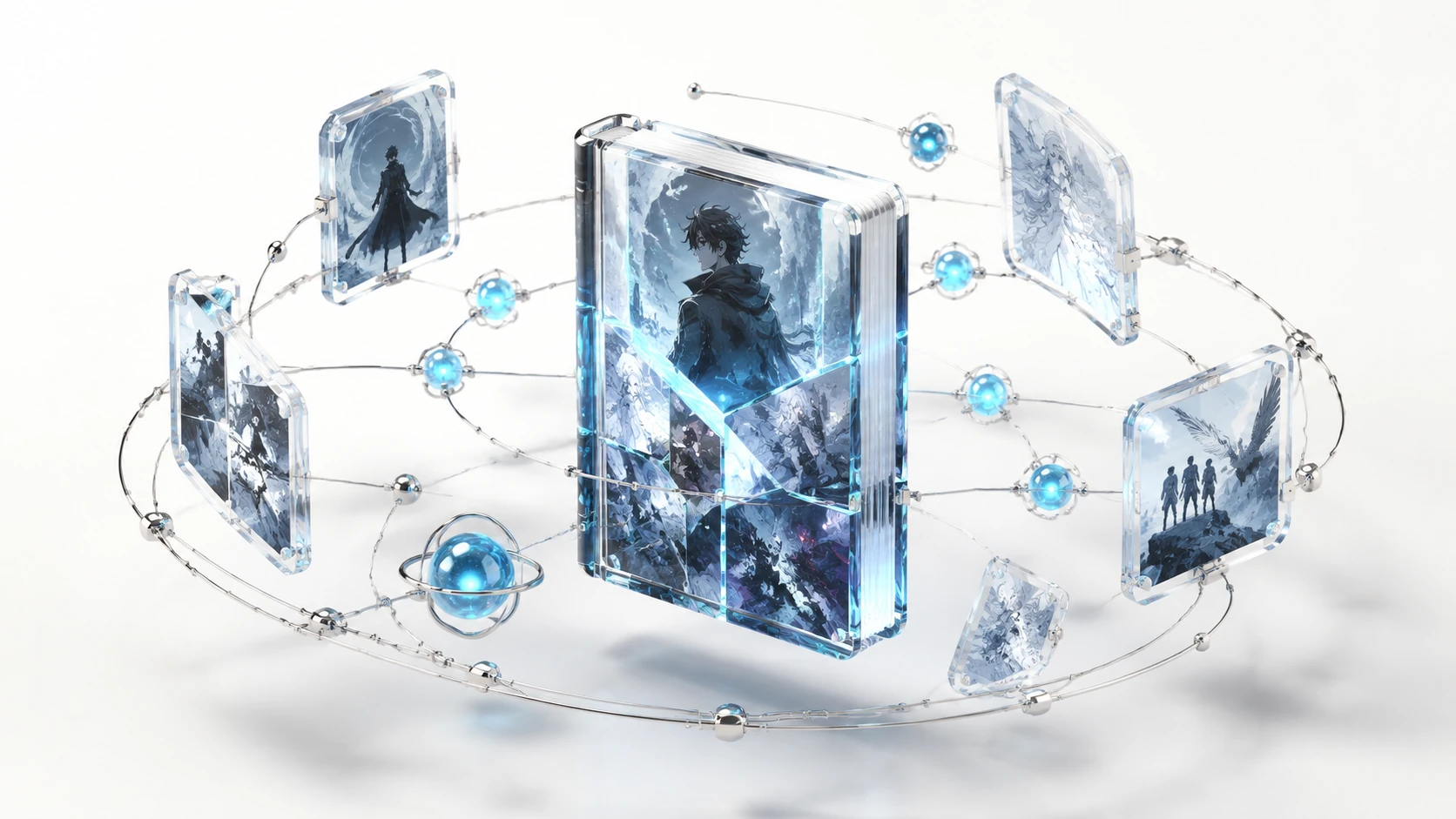
The year 2026 marks the end of the 'passive scrolling' era for webtoons and digital comics. As the market reaches peak saturation with AI-assisted content, the value proposition for readers has shifted from simple consumption to immersive participation. The 'Companion-Narrative' (CN) Architecture is the strategic response to this shift. It is a framework for engineering a multi-layered story ecosystem where the primary vertical-scroll comic acts as the sun, and various companion assets—audio-scapes, interactive maps, and character-driven social feeds—act as planets in a high-gravity orbit. This multi-modal approach doesn't just increase the time a reader spends with your IP; it fundamentally changes the nature of the relationship from a transactional 'read-and-forget' habit to a persistent 'Universe Citizenship' that drives significantly higher Lifetime Value (LTV).
The Anatomy of the Companion-Narrative (CN) Framework
At its core, CN Architecture is about 'Narrative Persistence.' In 2026, the most successful creators are those who recognize that their readers are almost always multitasking. By providing a second-screen experience—whether it’s a character's simulated social media profile that updates in real-time or a digital 'scrapbook' that reveals hidden lore as they read—creators can capture the 'attention gaps' that occur between weekly chapter releases. This framework relies on three distinct layers of engineering: the Ambient Layer (sensory), the Utility Layer (cognitive), and the Social Layer (emotional). Each layer serves a specific psychological need, ensuring that the reader remains 'locked in' to the story's gravity well even when they aren't actively scrolling through panels.
Layer 1: The Ambient Sensory Layer
The Ambient Layer is the most immediate way to upgrade a webtoon's value. In 2026, standard static images are often supplemented by 'Scroll-Synced Audio.' Using modern metadata standards, creators can embed triggers into their vertical files that tell a companion app exactly what soundscape to play based on the reader's scroll position. This creates a cinematic experience where the music swells during a climax or the sound of rain intensifies as the protagonist enters a storm. For creators, this layer is now easily engineered using AI-generative audio tools that analyze the color palette and emotional sentiment of the panels to produce unique, royalty-free atmospheric tracks, reducing production overhead while doubling immersion.
The Economics of CN: Moving Beyond Platform Ad-Rev
One of the most critical drivers for adopting CN Architecture is the stabilization of creator income. Traditional webtoon monetization—relying on platform ad-revenue and 'Fast Pass' coins—has become increasingly volatile as platform fees rise and algorithms shift. By engineering a Companion-Narrative, creators can establish a 'Sovereign Revenue' model. This involves offering the 'Core IP' (the comic) on major platforms to maximize reach, while gating the 'Companion Suite' (the interactive maps, audio logs, and deep-lore bibles) behind a direct-to-reader subscription or a 'Companion Pass.' This not only increases per-reader revenue by up to 85% but also ensures that the creator owns the primary relationship—and the data—of their most loyal fans.
- Sovereign Data Ownership: Direct access to reader emails and consumption habits via your companion app.
- Tiered Monetization: Offering 'Lore-Only' tiers for hardcore fans and 'Ambient' tiers for casual readers.
- IP Liquidity: A well-documented CN ecosystem is significantly more attractive to studios looking for transmedia acquisitions (anime, games, etc.) because the world-building is already modularized.
- Churn Reduction: Companion content provides a reason for readers to stay engaged during 'hiatus' periods or between seasons.
Implementation: The 2026 'Sync-and-Scale' Workflow
Engineering a CN ecosystem sounds daunting, but the 2026 production pipeline is built for efficiency. The key is 'Asset Modularity.' When you design a character or a setting, you are no longer just creating a 2D asset for a panel; you are creating a 'Master Entity.' This entity's metadata—personality traits, historical background, visual variants—is stored in a 'Lore Ledger.' AI agents then use this ledger to populate the various companion layers. For instance, the character's 'Sim-Chat' layer can be automated to respond to reader comments based on the character's established 'voice,' and the 'Utility Layer' map can update its political borders automatically based on the events of the latest chapter. This 'Just-in-Time' (JIT) production ensures that the companion content scales alongside the story without requiring the creator to hire a massive team.
Common Pitfalls: Avoiding Narrative Entropy
The biggest risk in CN Architecture is 'Narrative Entropy'—the point where the companion content becomes so dense or disorganized that it creates 'cognitive friction' for the reader. To avoid this, creators must follow the 'Core-First' rule: the primary webtoon must always be understandable as a standalone experience. The companion layers should enhance the story, never be a prerequisite for understanding the basic plot. Furthermore, creators must ensure 'Lore Consistency' across all layers. In 2026, specialized 'Lore-Checking' AI agents are often used to scan the primary comic and all companion assets to ensure that a character's eye color or a historical date remains consistent across the entire ecosystem, preventing the immersion-breaking 'lore drift' that can kill a franchise's momentum.
Conclusion: The Future is Spatial and Sovereign
As we move further into 2026, the distinction between a 'webtoon creator' and a 'world-builder' will continue to blur. The Companion-Narrative Architecture is not just a trend; it is the natural evolution of storytelling in a multi-device, AI-augmented world. By engineering stories that exist in the gaps of a reader's life—through their headphones, their second screens, and their social interactions—creators can build franchises that are not only more profitable but more resilient to the shifting whims of platform algorithms. The goal is to create a story that doesn't just end when the reader reaches the bottom of the scroll, but one that continues to live, breathe, and generate value in the background of their daily experience.
FAQ
What is the primary benefit of Companion-Narrative (CN) Architecture?
The primary benefit is a significant increase in Reader Lifetime Value (LTV) and retention. By offering second-screen engagement like interactive maps and audio-scapes, you create a more immersive 'universe' that readers are willing to pay for through sovereign subscriptions, bypassing traditional platform fee structures.
Does creating companion content require a large team?
In 2026, no. Most CN content is produced through 'Asset Liquidification' and AI-orchestration, where primary story assets are procedurally converted into companion logs, soundscapes, and interactive wiki updates using automated workflows.
Can I use CN Architecture on existing webtoon platforms?
Yes, but with a 'Hybrid' approach. You keep the main comic on platforms like Webtoon or Tapas for reach, while hosting the high-value companion layers on your own app or site to capture revenue and reader data directly.