The 2026 ‘Narrative-Redundancy’ (NR) Engineering Standard: Building Anti-Fragile Plot Architectures for Sustainable Long-Form Webtoon Franchises
Master the 2026 Narrative-Redundancy (NR) framework to prevent series collapse. Learn how to engineer anti-fragile plot architectures that survive writer transitions and multi-year serialization.
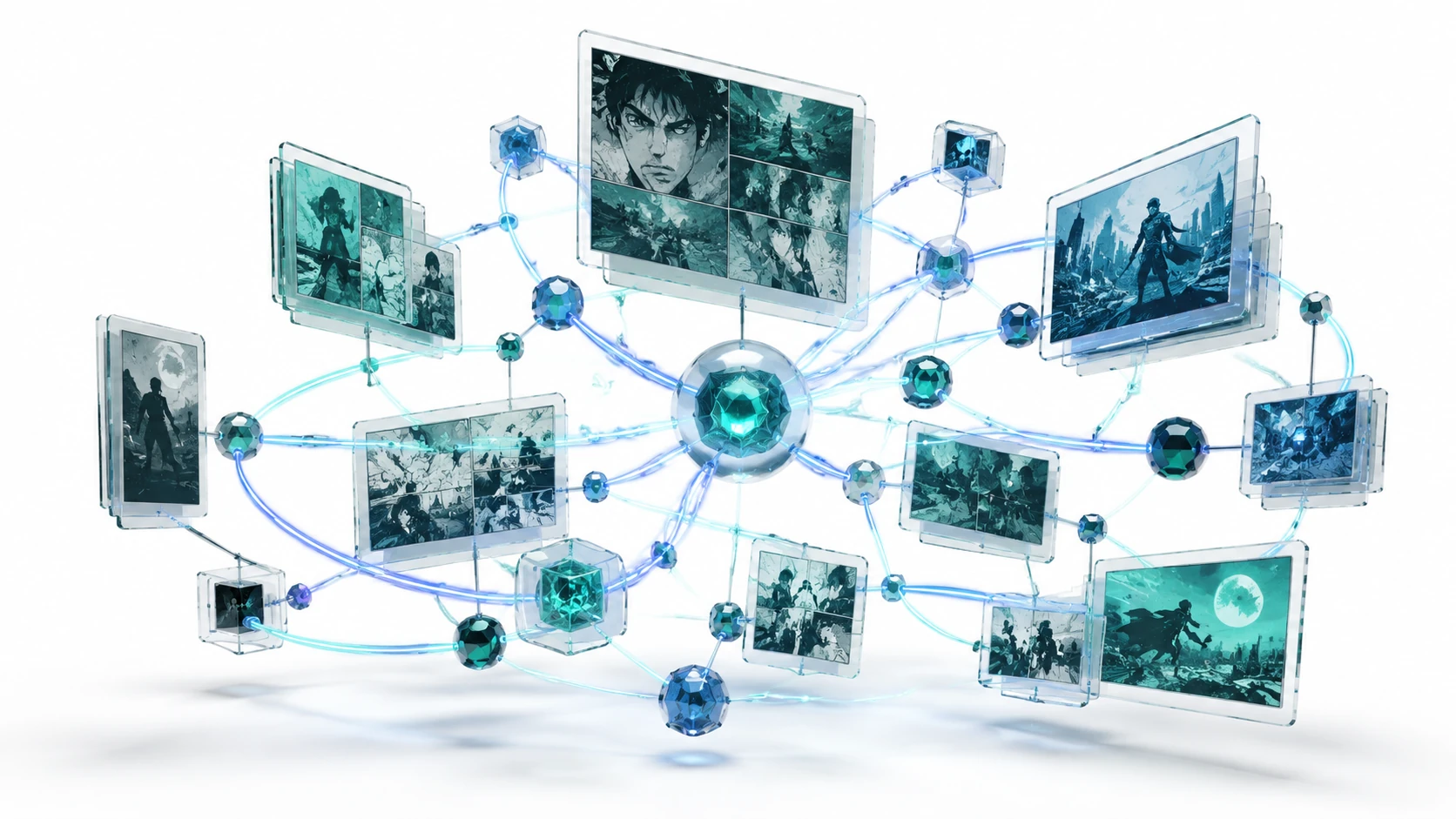
The 2026 webtoon landscape is defined by the 'Longevity Crisis.' As series increasingly target 500+ chapters to maximize IP value and reader LTV, the structural integrity of these stories often collapses. Narrative-Redundancy (NR) Engineering is the professional standard developed to combat this 'Series Fatigue.' It treats storytelling not as a linear path, but as an anti-fragile system of interconnected nodes. By building structural redundancy into a plot, creators ensure that their work remains coherent and engaging even if key creative personnel change or if a specific plot thread fails to resonate with the audience.
The Mechanism of Narrative Redundancy
At its core, NR Engineering is about eliminating 'Single Points of Failure' in a script. In traditional storytelling, if the main protagonist's journey becomes stagnant, the entire series loses momentum. In an NR-engineered series, the 'Core Narrative' is supported by 'Shadow Arcs'—latent storylines that run parallel to the main plot. These arcs are not mere filler; they are fully realized narrative paths that can be elevated to primary status if the main arc needs a pivot. This creates a 'Self-Healing' story structure where the narrative weight is distributed across multiple entities and themes.
Defining the 'Shadow Arc' Protocol
A Shadow Arc must mirror the central theme of the series but through a different lens. For example, if the main theme is 'the corruption of power,' the primary arc might follow a hero becoming a tyrant, while the Shadow Arc follows a secondary character building a grassroots resistance. If the primary arc's pacing slows down, the Shadow Arc provides a built-in 'pacing boost' that maintains reader retention without requiring a forced or jarring plot twist. This dual-track system is the secret behind the most resilient webtoons of 2026.
- Thematic Alignment: Ensure all arcs support the same core message.
- Character Autonomy: Shadow protagonists must have independent agency.
- Resource Decoupling: Ensure sub-plots can function even if main characters are absent.
- Structural Fail-safes: Design 'Relay Points' where arcs can swap priority.
Entity-State Persistence (ESP) in 2026
Long-form consistency is the primary challenge of multi-year serialization. The NR Standard introduces Entity-State Persistence (ESP), a methodology for tracking character development as a set of verifiable data points. This prevents 'Character Drift'—the phenomenon where a character's personality or knowledge base changes inconsistently over time. By maintaining a 'Semantic Character Bible,' creators and studios can ensure that any writer—human or AI-assisted—can step in and produce dialogue that is 100% consistent with the character's established 'Entity State.'
Engineering the 'Safe-Exit' and 'On-Ramp' Strategy
The NR Standard advocates for 'Modular Serialization.' Instead of one continuous line, stories are engineered into 50-chapter 'Narrative Units' (NUs). Each unit contains a 'Safe-Exit'—a point where a reader could stop and feel a sense of completion—and an 'On-Ramp'—a point where a new reader can join without feeling lost. This modularity increases the 'Adaptation Liquidity' of the IP, making it easier to convert specific arcs into standalone movies, games, or seasons of an anime without needing the full 500-chapter context.
The 2026 NR Audit for Independent Creators
Independent creators can implement the NR Standard by performing a monthly 'Structural Audit.' This involves mapping out the next 20 chapters and identifying potential 'pacing traps.' If the story is too dependent on a single revelation, the creator should engineer a 'Redundant Mystery' to provide secondary engagement. This proactive approach to narrative stability is what separates professional-grade 2026 creators from hobbyists, and it is a key metric used by platforms like COMICLS to determine which series receive promotional support.
- Audit the 'Mystery-to-Resolution' ratio every 10 chapters.
- Map the 'Entity Relationship Web' to ensure no character is isolated.
- Identify 'Lore Debt' and schedule 'Rejuvenation Chapters' to fix it.
- Verify that every 'Cliffhanger' has at least two possible resolutions.
Summary and Next Steps
Adopting the 2026 Narrative-Redundancy Standard is a strategic investment in the longevity and value of your IP. By moving away from fragile, linear storytelling and toward anti-fragile, networked architectures, you protect your work from the volatility of the modern attention economy. To get started, begin by documenting your 'Lore Bible' semantically and identifying the 'Shadow Arcs' in your current project. The goal is to build a story that is stronger than the sum of its parts—a narrative ecosystem that can thrive for years to come.
FAQ
What is the Narrative-Redundancy (NR) Standard?
The NR Standard is a 2026 structural engineering framework for storytelling that uses redundant plot threads (Shadow Arcs) and modular units to ensure series longevity and consistency.
Does NR engineering make a story feel repetitive?
No. When done correctly, redundancy provides structural stability behind the scenes. The reader experiences a more coherent and well-paced story, not a repetitive one.
How does NR affect IP valuation?
NR-certified IPs are valued higher because they are 'de-risked.' They are easier to adapt into other media and can survive transitions in the creative team without losing audience engagement.
Is AI required for the NR Standard?
While not strictly required, AI tools are commonly used in 2026 to audit lore consistency and simulate plot branching, making the NR process much more efficient for small teams.