The 2026 ‘Narrative-Unit’ (NU) Valuation Standard: Engineering Granular IP Metrics for the Webtoon M&A and Studio Acquisition Market
The 2026 shift from platform traffic to 'Narrative-Unit' (NU) metrics is revolutionizing how webtoon studios are valued. Learn to engineer your IP for high-liquidity M&A and studio acquisitions.
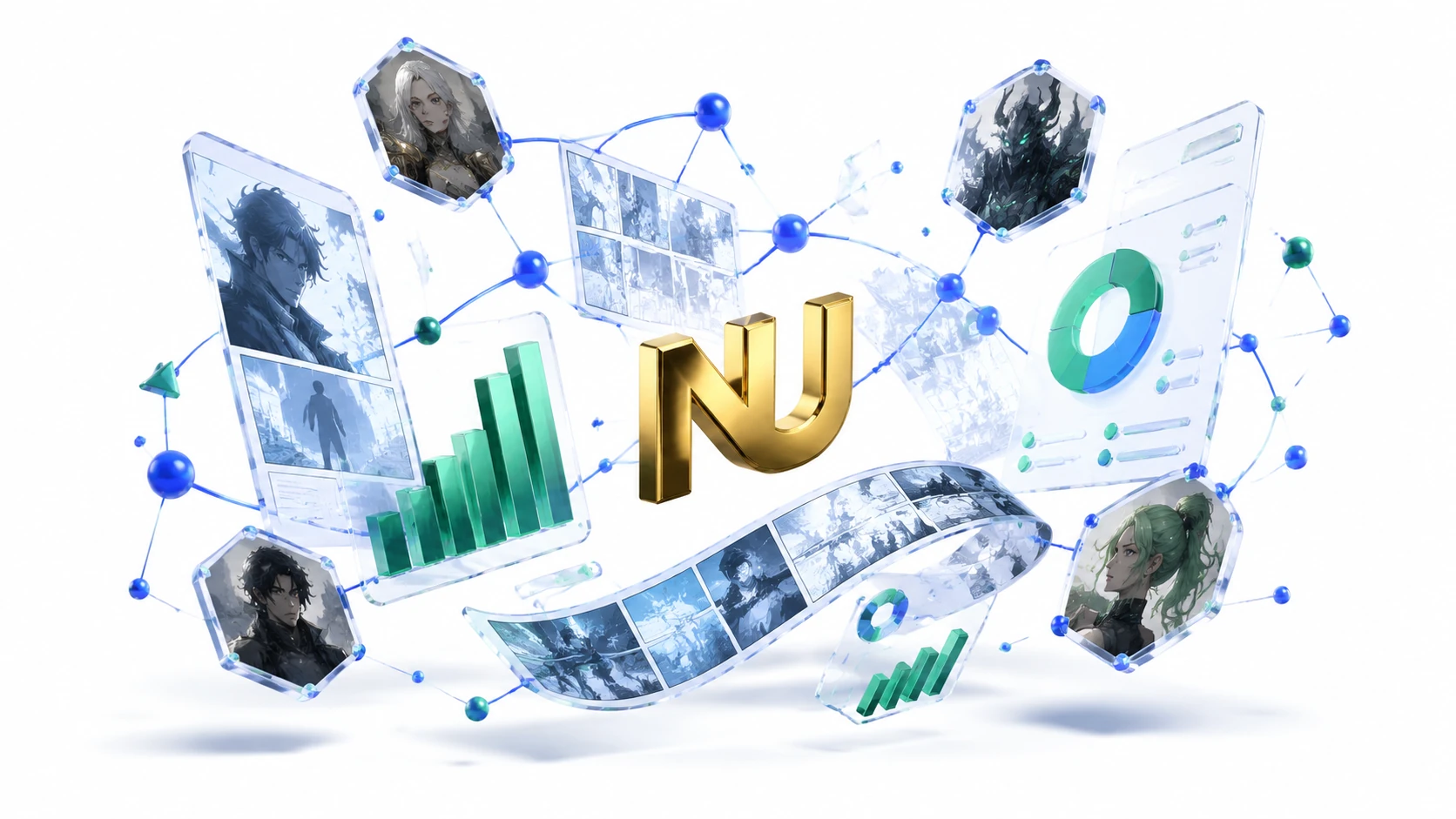
In 2026, the global webtoon market has matured into a sophisticated financial ecosystem where intellectual property (IP) is no longer valued by crude metrics like views or likes. The industry has standardized around the 'Narrative-Unit' (NU) Valuation framework—a method that treats individual story elements as high-liquidity assets. This shift has been driven by the massive wave of studio acquisitions from gaming giants and streaming services who require IP that is 'pre-engineered' for cross-platform adaptation. For independent studios and creators, understanding how to quantify and optimize their NU value is the difference between a modest living and a multi-million dollar exit.
The Shift from Traffic to Portability: Why 2026 is Different
The 2026 market correction proved that platform traffic is a 'volatile asset.' As algorithms change and platforms rise and fall, the only stable value remains in the narrative itself. Acquirers now look for 'Narrative Portability'—the ease with which a webtoon's world can be converted into a video game, an AI-driven companion, or a serialized animation. This requires a level of technical and narrative documentation that was previously reserved for high-budget Hollywood franchises. Studios that fail to adopt the NU standard often find their valuations 'haircut' by up to 60% during due diligence because their assets are too difficult to extract from the comic format.
The Three Dimensions of NU Value
- Entity Portability: The degree to which character designs and assets are standardized for 3D ingestion and multi-format use.
- Semantic Density: The structural integrity of the lore, ensuring that the world-building is consistent enough for AI-led expansion and spin-offs.
- Monetization Velocity: The speed at which a new reader converts into a high-LTV asset through diegetic merchandising or digital collectibles.
Engineering for Equity: A Creator’s Workflow for 2026
To maximize studio valuation, creators must shift their focus from 'pacing for weekly retention' to 'engineering for long-term equity.' This involves creating a 'Narrative Bible' that is as much a technical document as it is a creative one. Every major character must have a 'State-Persistence' profile, and every lore rule must be mapped in a semantic lattice. This allows potential acquirers to run simulations on the IP's longevity and cross-market resonance. In 2026, the most valuable studios are those that provide 'Turnkey IP'—narratives that are ready for immediate multi-modal deployment.
FAQ
What is a Narrative-Unit (NU) in webtoon valuation?
An NU is a quantified measure of a story's individual assets (characters, lore, world-building) based on their ability to be adapted across different media formats like games and film.
Why did MAU stop being the primary valuation metric in 2026?
Platform traffic (MAU) is now considered a 'leased' asset. In 2026, investors prioritize 'owned' narrative assets that can survive independently of platform algorithms.
How can an independent creator increase their NU value?
By creating modular character bibles, maintaining strict lore consistency, and ensuring their IP is formatted for easy ingestion into multi-modal AI and gaming pipelines.