The 2026 ‘Open-IP Mesh’ (OIM) Protocol: Engineering Collaborative Universe Franchising for Independent Comic Creators
The 2026 Open-IP Mesh (OIM) Protocol is revolutionizing how independent creators build shared universes. Discover the engineering behind technical lore-syncing and automated revenue splits.
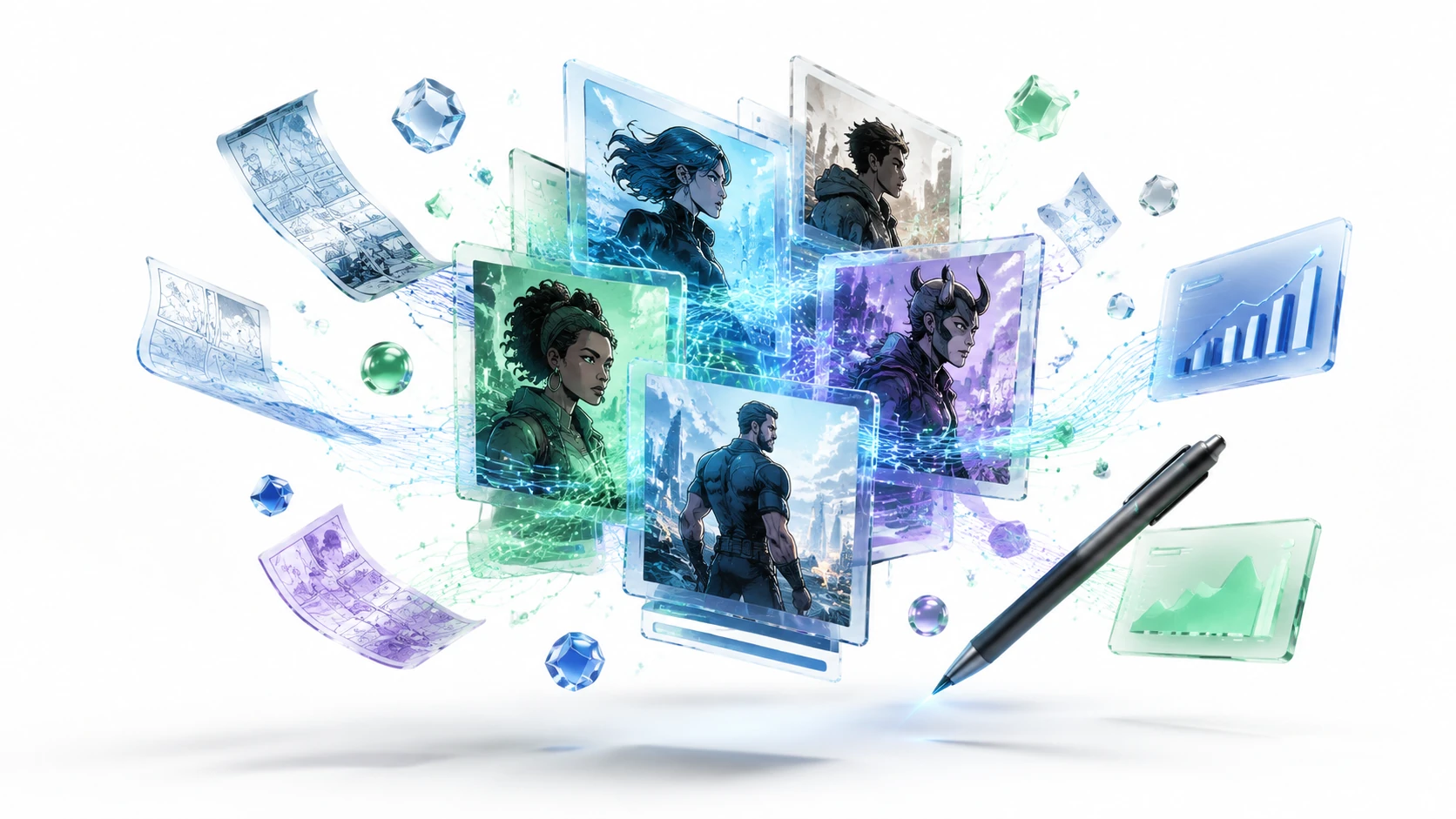
The 2026 Open-IP Mesh (OIM) Protocol is the definitive engineering standard for independent comic creators seeking to build shared universes without the oversight of a centralized platform or studio. As the digital comic market becomes increasingly fragmented, the ability to 'link' individual IPs into a cohesive narrative network has become a critical competitive advantage. This protocol provides the technical infrastructure for lore synchronization, automated royalty distribution, and cross-series audience portability, allowing independent creators to achieve the scale of major franchises while maintaining their creative sovereignty.
The Engineering of Audience Portability
At its core, the OIM protocol is about reducing the Friction of Discovery. In 2026, AI-driven search engines and recommendation agents prioritize 'Entity Clusters'—groups of related content that demonstrate deep topical authority. By engineering a shared universe, creators transform their individual series into nodes within a larger, more authoritative network. When a reader engages with one series in the mesh, the metadata signals to the AI agent that the other series in the network are highly relevant, effectively creating a self-sustaining discovery loop.
Technical Requirements for Mesh Participation
- Machine-Readable Lore Bibles: All world-building data must be stored in a standardized format (like JSON-LD) to allow for automated consistency checks.
- Unified Entity IDs: Characters, locations, and unique items must have persistent digital identifiers that remain consistent across all participating titles.
- Smart-Contract Royalty Gates: Revenue sharing must be handled programmatically to prevent administrative bloat and ensure trust between collaborators.
- Synchronized Metadata Updates: Changes to the 'Core Lore' must be pushed to all participants via a version-controlled repository, similar to a software development workflow.
Managing Lore Debt and Consistency
One of the most significant risks in collaborative storytelling is 'Narrative Debt'—the accumulation of contradictions that eventually break reader immersion. The OIM protocol addresses this by implementing a 'Layered Canon' system. The 'Core Layer' contains the fundamental rules and history of the world that all creators must follow. The 'Branch Layer' allows for individual creator expression, while the 'Experimental Layer' provides a space for non-canonical 'what-if' scenarios. This engineering approach ensures that the primary shared universe remains stable while still allowing for creative flexibility.
The Economic Multiplier of Shared IP
The OIM protocol isn't just a creative framework; it’s a financial one. By sharing characters and settings, creators can launch 'Cross-Series Events' that drive massive spikes in engagement across all participating titles. Furthermore, the protocol enables 'Fractional Merchandising,' where a single product—such as a map of the shared world or a group poster—generates revenue that is automatically split between all contributors based on their 'Narrative Weight' within the mesh. This reduces the individual risk and upfront cost of product development.
Common Mistakes in OIM Implementation
- Vague Legal Agreements: Relying on 'gentleman's agreements' rather than technical smart contracts leads to disputes as the IP grows.
- Lore Over-Engineering: Trying to define every minor detail of the world too early, which stifles individual creator creativity.
- Inconsistent Metadata: Failing to update character tags or location URIs, which breaks the AI discovery signals.
- Ignoring the Exit Strategy: Not having a technical protocol for how a creator can cleanly leave the mesh without breaking the lore for everyone else.
Future Outlook: The Rise of the Federated Studio
By 2027, we expect the emergence of 'Federated Studios'—collectives of independent creators who operate as a single entity for marketing and licensing purposes while remaining legally separate. These organizations will be built entirely on the OIM protocol, using its technical standards to manage thousands of interconnected series. For the individual creator, this means the ability to participate in a global-scale franchise while retaining 100% ownership of their unique characters and the freedom to walk away at any time.
FAQ
What is the Open-IP Mesh (OIM) Protocol?
OIM is a 2026 technical and legal framework that allows independent comic creators to build shared universes with automated lore-syncing and revenue-sharing.
How does OIM help with SEO and discovery?
By cross-linking metadata and entity tags, OIM creates a high-authority 'Topic Cluster' that AI search engines recognize, boosting the visibility of all participating series.
Do I lose ownership of my characters in an OIM mesh?
No. The OIM protocol is engineered to protect creator sovereignty, allowing you to share world-building elements while retaining 100% ownership of your primary characters.
Is OIM only for webtoons?
While highly popular in the vertical-scroll webtoon market, the OIM standard is format-agnostic and can be applied to manga, novels, and even indie games.