The 2026 ‘Narrative-Utility’ (NU) Protocol: Engineering Webtoon IP for Procedural, Educational, and B2B Consumption Markets
In 2026, the vertical scroll format has transcended entertainment. The Narrative-Utility (NU) Protocol provides the engineering framework for converting complex procedural data into high-retention comic-based information systems.
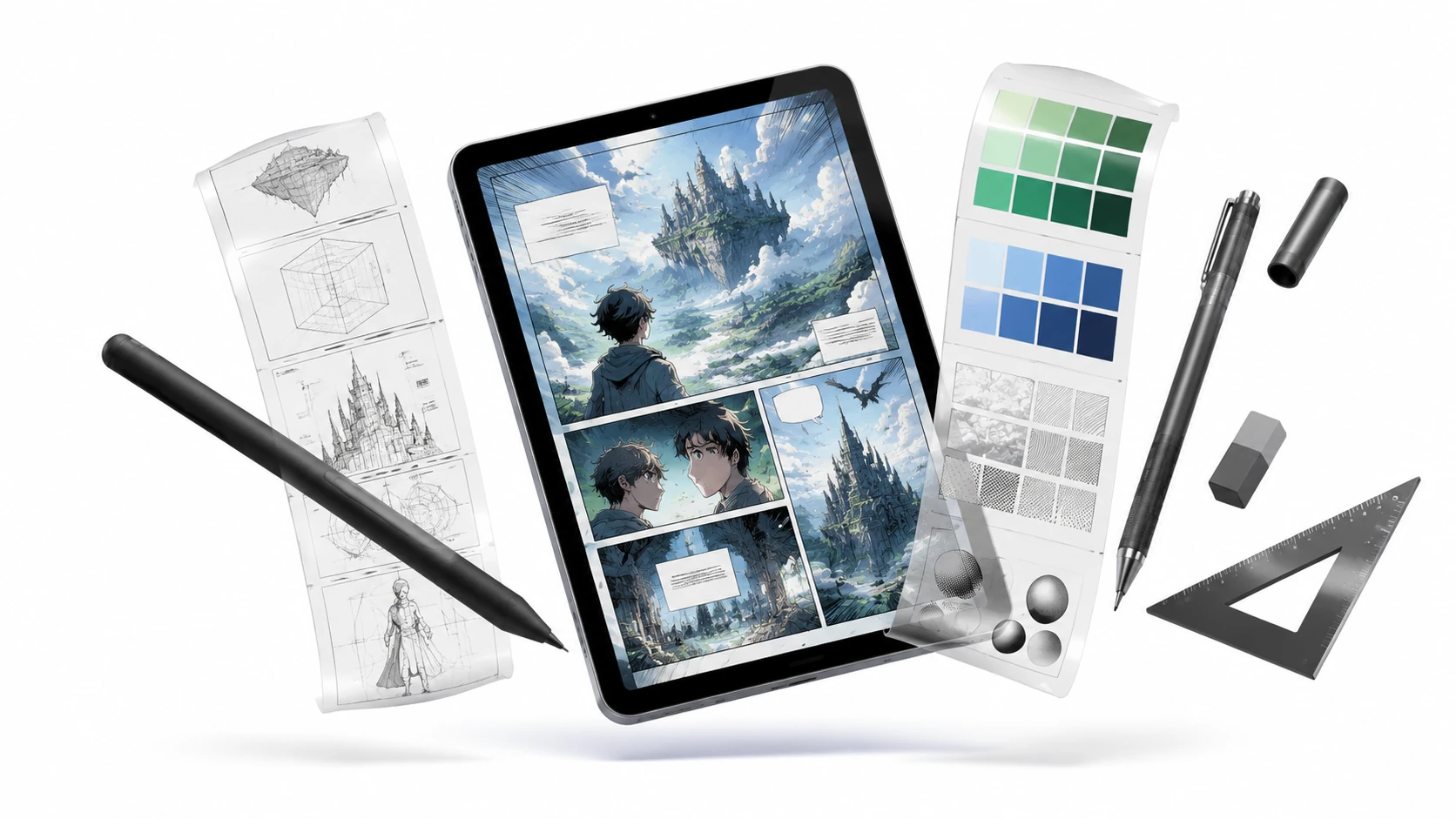
By 2026, the vertical scroll format has moved beyond the realm of pure entertainment, establishing itself as the most efficient delivery mechanism for complex, high-retention information. The 'Narrative-Utility' (NU) Protocol is the industry's response to the collapse of traditional training models. As cognitive load increases across the global workforce, companies are abandoning static PDFs and long-form videos in favor of 'Utility Webtoons'—narrative-driven, mobile-first procedural guides engineered for the modern attention economy. This framework doesn't just present data; it engineers a cognitive pathway that ensures information is absorbed, retained, and ready for application. For creators and studios, the NU market represents a massive, untapped B2B revenue stream that values clarity, rhythm, and instructional efficiency over traditional dramatic tension.
The Engineering of Information-Comics
At its core, the NU Protocol treats every chapter of a webtoon as a 'Knowledge Sprint.' Unlike entertainment comics that rely on emotional hooks, utility comics use 'Logical Hooks.' A logical hook is a panel or sequence that identifies a specific problem the reader faces and immediately offers a visual pathway to the solution. This requires a deep understanding of information architecture. Every visual element—from the line weight of a technical diagram to the choice of background color—is chosen to minimize cognitive friction. In 2026, the success of a utility webtoon is measured by its 'Time-to-Mastery' metric, which tracks how quickly a reader can perform a task after consuming the content.
The Concept of Semantic Scaffolding
Semantic Scaffolding is the process of building a narrative framework that supports complex data. Instead of presenting a list of facts, the NU Protocol embeds those facts into a 'Spatial Narrative.' For example, in a medical training webtoon, the human body might be treated as a 'landscape' that the reader navigates panel by panel. This spatial orientation leverages the brain's natural ability to remember locations better than abstract lists. By the time the reader finishes the scroll, they have a mental map of the procedure, not just a memorized list of steps. This engineering approach is what differentiates a 2026 utility comic from a simple 'infographic'—the latter is a static map, while the former is a guided journey.
- Use 'Visual Verbs' to illustrate active steps rather than passive descriptions.
- Implement 'Mental Reset Zones' using intentional white space to prevent information fatigue.
- Utilize 'Anchor Panels' for high-fidelity reference points within a fluid narrative.
- Tag all assets with AI-readable metadata to ensure future-proof discoverability.
Monetizing the Knowledge Economy
The shift toward the NU Protocol is creating a new class of creator: the 'Information Architect.' These creators are not just artists; they are consultants who work with subject matter experts to translate complex systems into visual lore. In 2026, the monetization of these assets happens through B2B licensing, internal corporate training contracts, and 'Knowledge-as-a-Service' (KaaS) platforms. A well-engineered utility webtoon on a specialized topic—such as blockchain logistics or renewable energy maintenance—can command a valuation far higher than a generic fantasy webtoon because of its direct impact on organizational efficiency and ROI.
Technical Implementation and Metadata Standards
To reach full utility, webtoons must be searchable at the panel level. The 2026 NU technical standard mandates the use of 'Semantic Layering.' This involves embedding structured data within the comic file format (such as LSFS) that describes the content of each panel. When a user or an AI agent searches for a specific procedure, the system can 'deep-link' directly to the relevant section of the webtoon. This transforms the comic from a static image file into a dynamic database of visual knowledge. Creators must now think about their work in terms of 'Knowledge Units' (KUs) that can be repurposed across different platforms and contexts.
FAQ
What is the Narrative-Utility (NU) Protocol?
It is an engineering framework for creating vertical scroll comics that prioritize information delivery, procedural training, and B2B communication over traditional entertainment.
How do utility webtoons differ from regular webtoons?
Utility webtoons focus on task mastery, rhythmic pacing for retention, and task-linked visuals, whereas regular webtoons focus on emotional arcs and dramatic tension.
Why is the vertical scroll better for training than video?
Vertical scroll allows for 'self-paced' consumption, immediate referencing (back-scrolling), and a higher density of visual-spatial information that mimics mobile reading habits.
Can I use AI to create NU-standard webtoons?
Yes, AI is frequently used to generate technical diagrams and help with metadata tagging, but the narrative engineering and information hierarchy still require human architectural design.