Why 'Chapter-Utility' (CU) is 2026’s Core Webtoon Monetization Metric
In 2026, readers are rejecting long, filler-heavy chapters. The Chapter-Utility (CU) standard helps creators engineer high-value episodes that maximize per-chapter ROI.
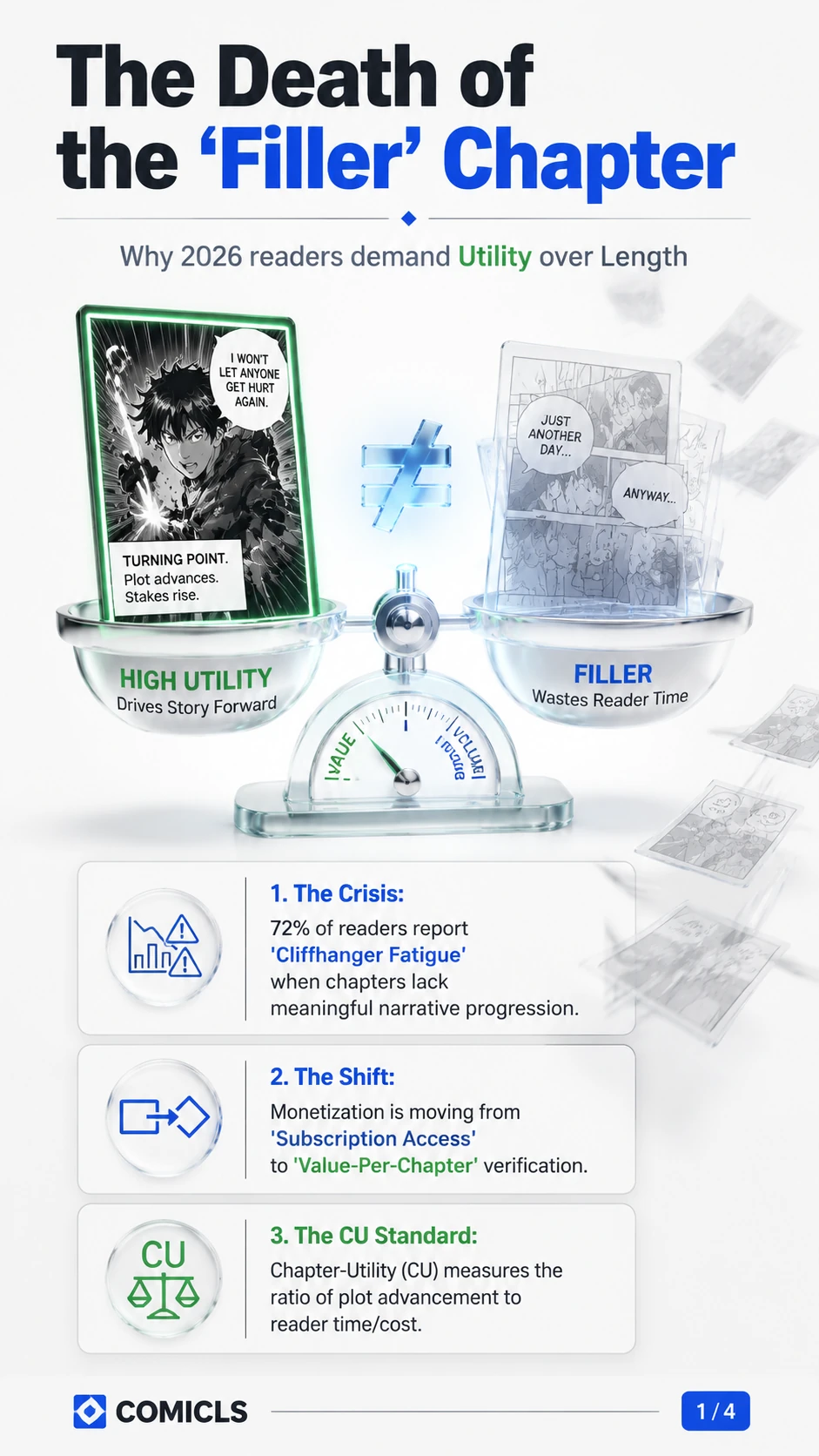
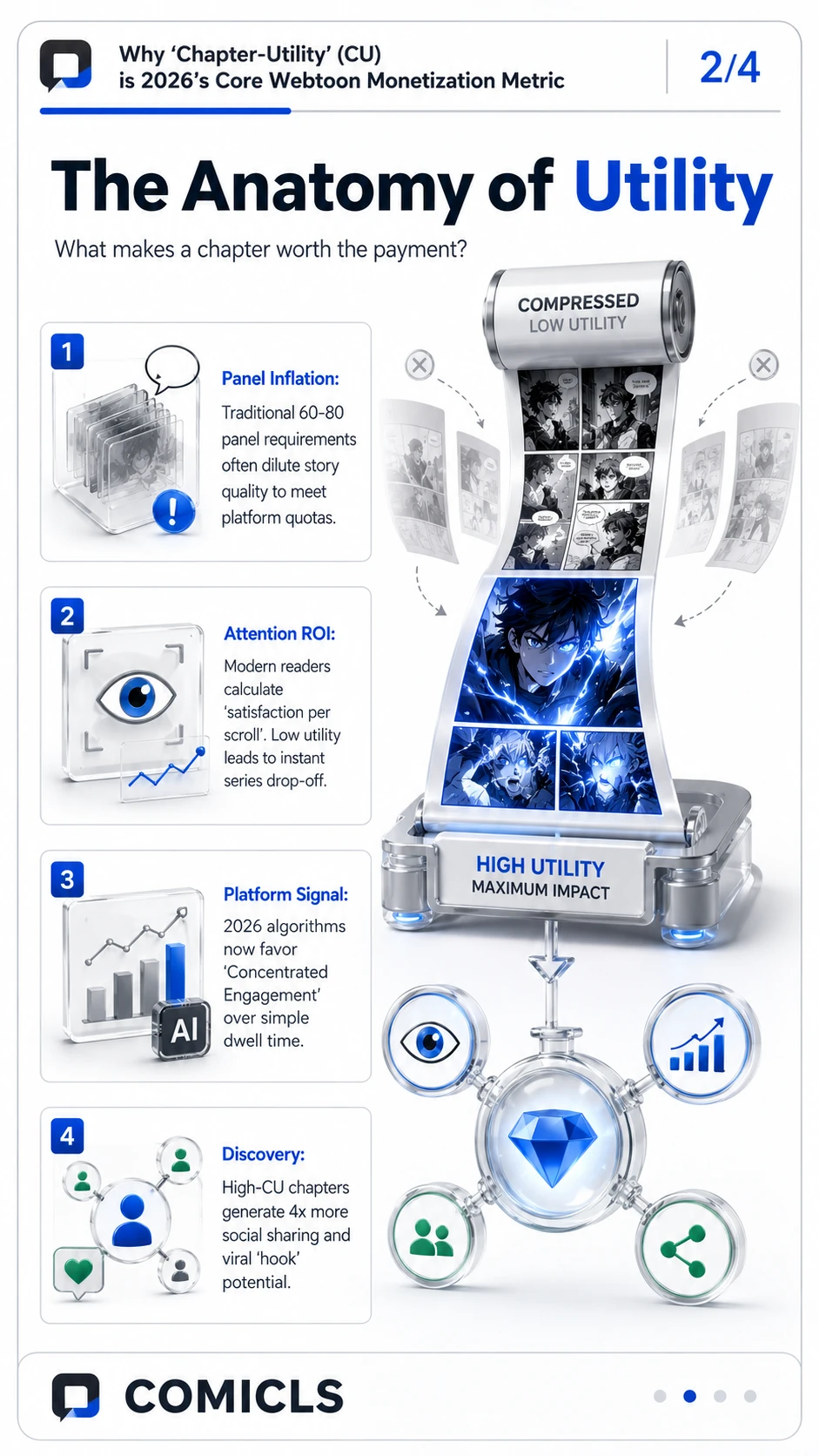
In the hyper-competitive comic market of 2026, the traditional metric of 'chapter length' has become a liability. Readers, facing subscription fatigue and limited attention spans, are now performing a mental 'cost-benefit analysis' for every chapter they unlock. This has given rise to the Chapter-Utility (CU) standard, a framework that prioritizes narrative density and emotional payoff over raw panel counts. Studios and independent creators who master this metric are seeing significantly higher retention rates and better monetization outcomes compared to those stuck in the 'volume-first' era.
- The shift from quantity-based production to utility-based engineering.
- Why 'Filler Fatigue' is the leading cause of mid-series reader drop-off in 2026.
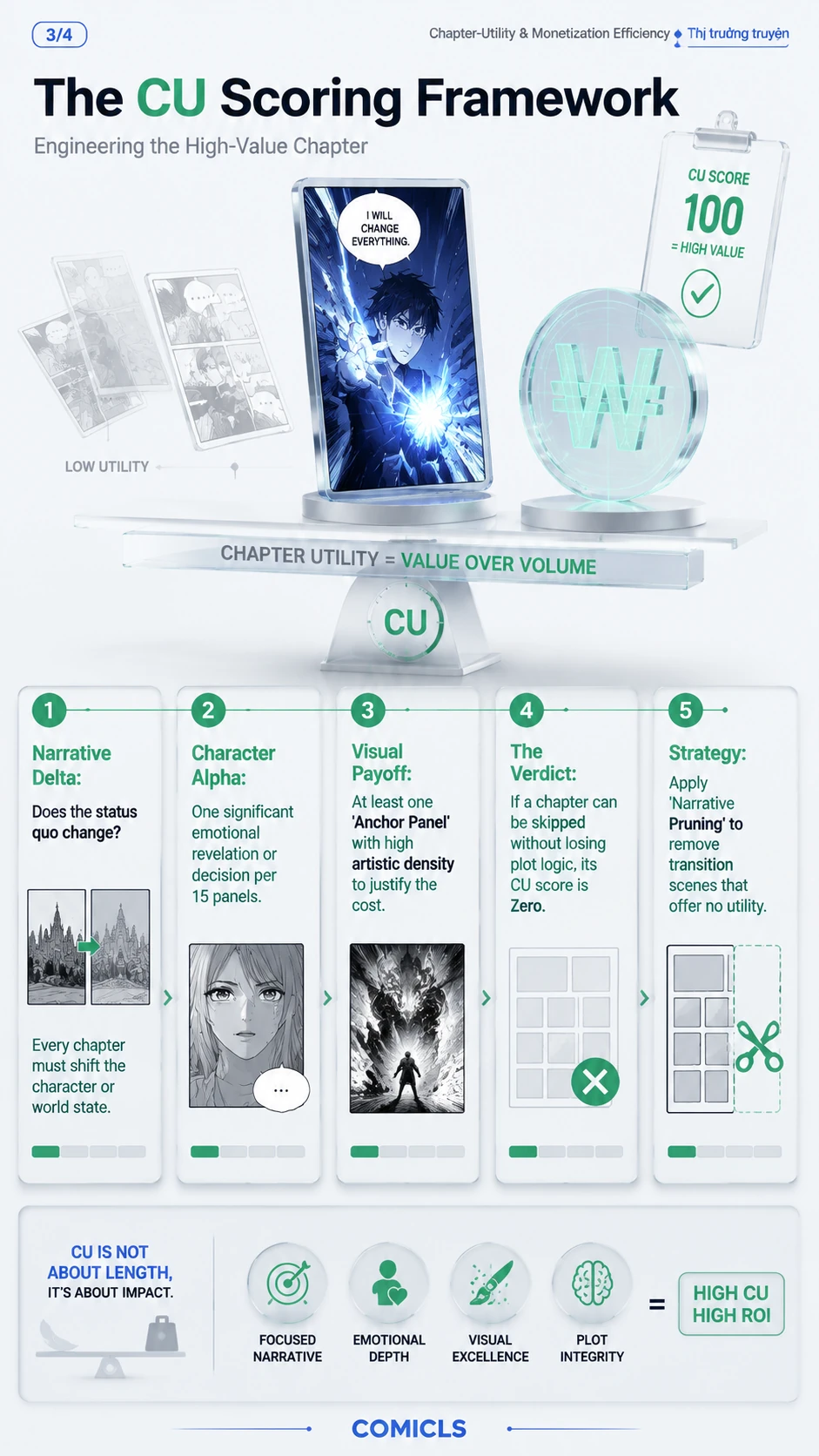
- The 4-axis CU framework: Narrative Delta, Character Alpha, Visual Payoff, and Information Density.
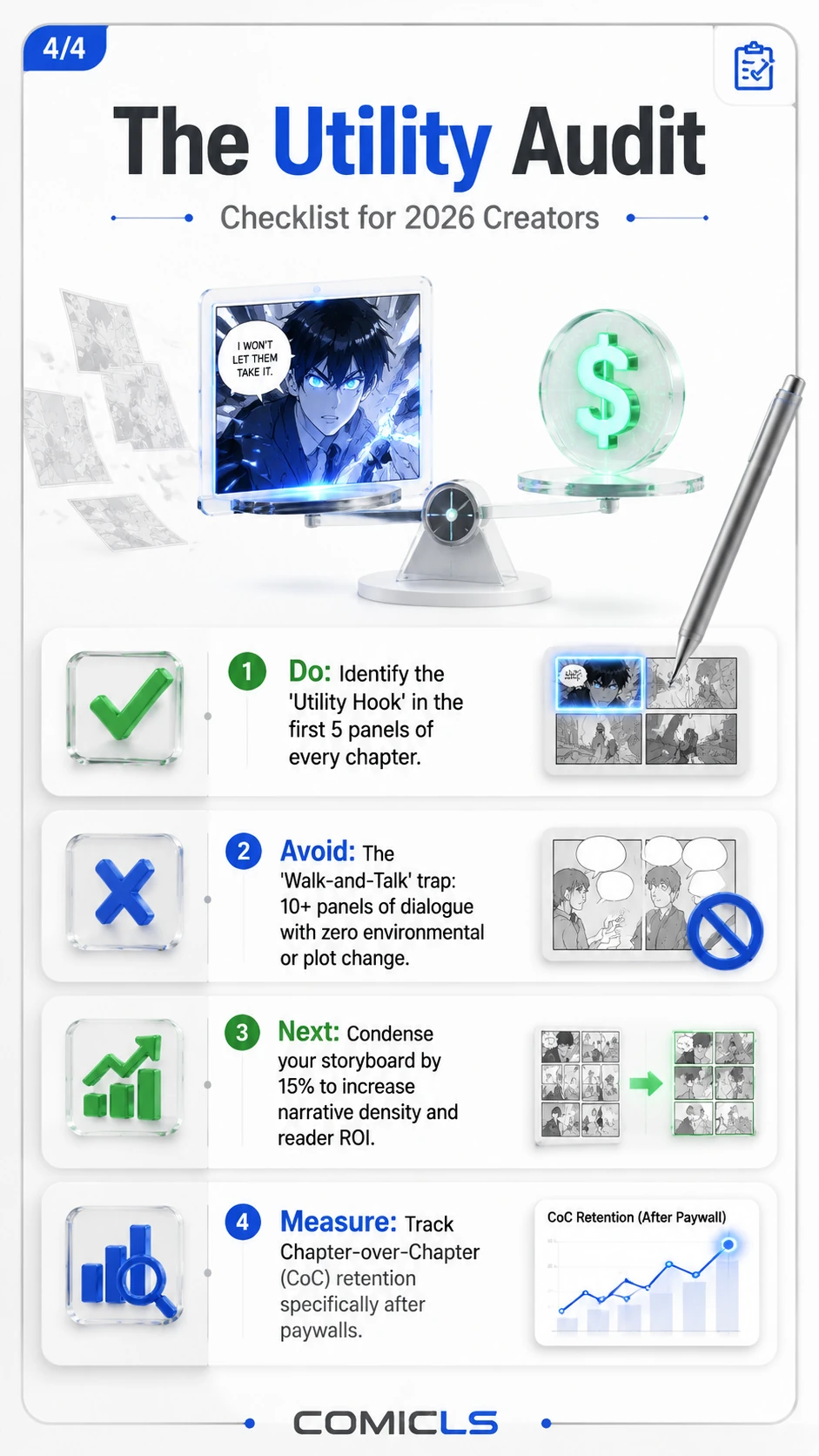
- Practical auditing steps to prune low-utility content and maximize per-chapter ROI.
FAQ
What is a good Chapter-Utility score for a webtoon?
A high CU score means that every chapter contains at least one permanent change to the narrative state and one significant visual anchor, ensuring the reader never feels the content was 'skippable'.
Does higher utility mean shorter chapters?
Not necessarily, but it often leads to 'denser' chapters. It encourages creators to cut unnecessary transitions and repetitive dialogue in favor of meaningful progression.