Webtoon Print Failure: A 2026 Case Study on S2V ROI
Most webtoon-to-print projects lose 40% of potential revenue due to poor layout engineering. This case study explores how the S2V Standard transforms digital scrolls into high-margin physical assets.
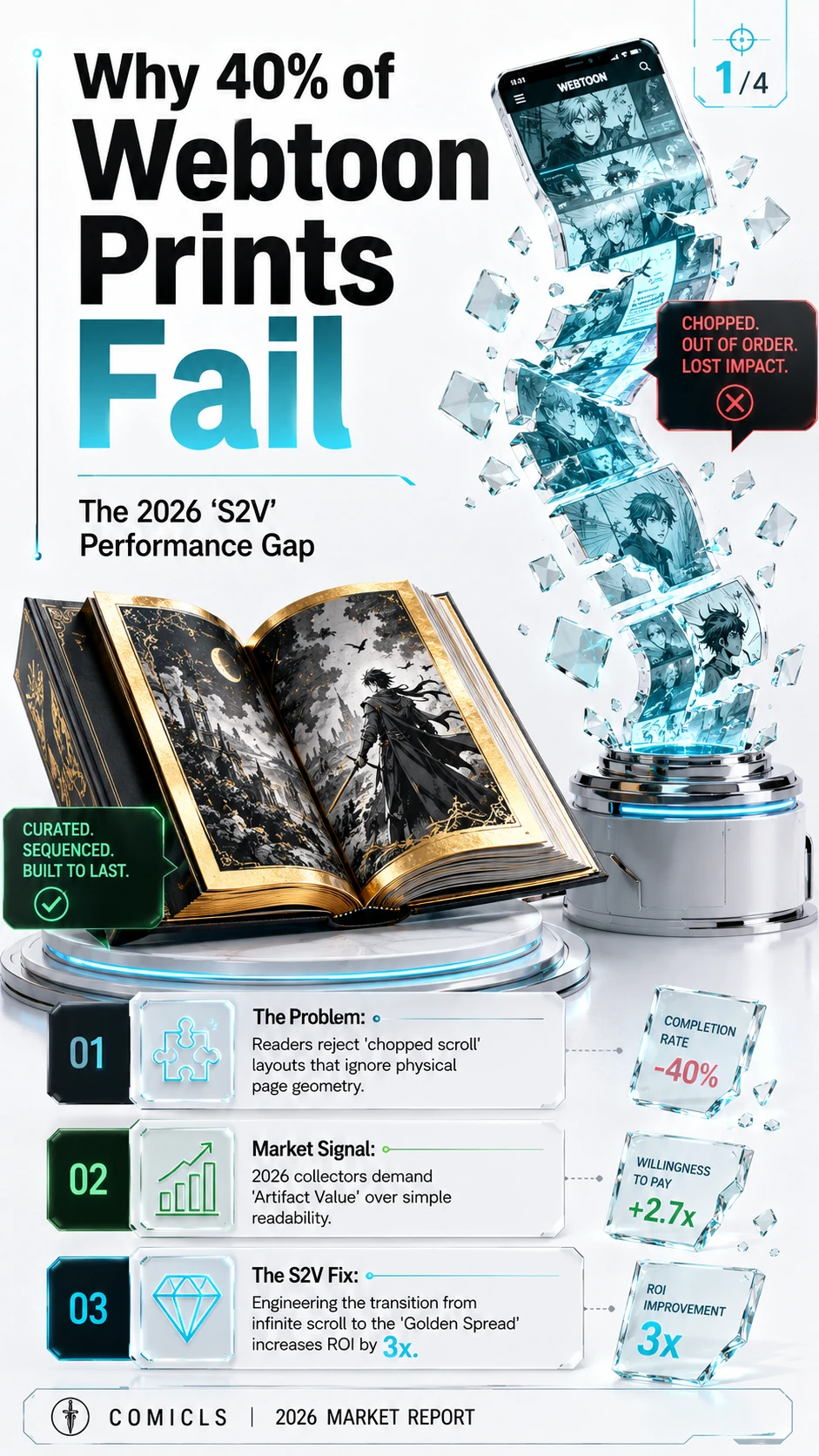
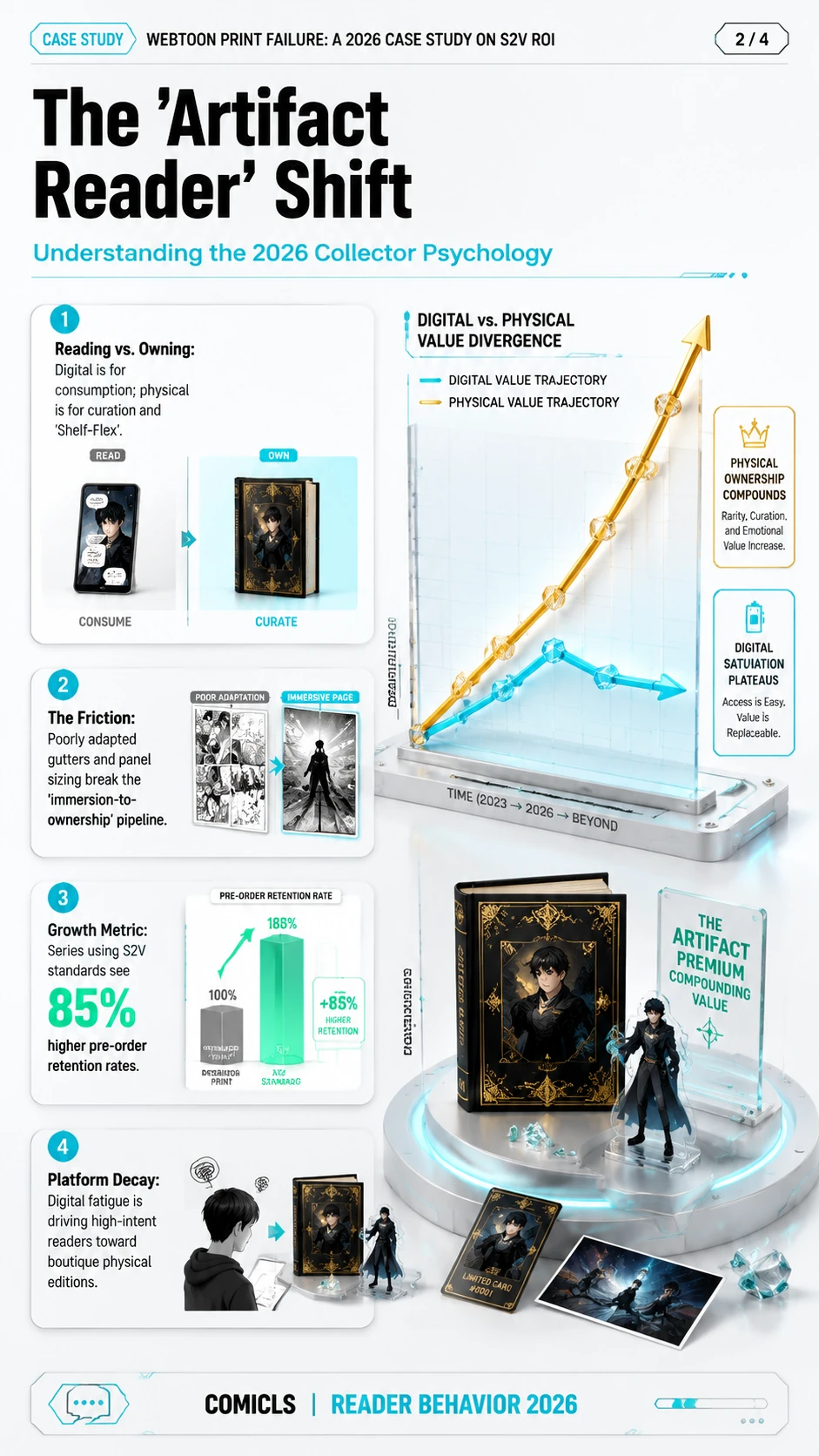
In 2026, the jump from webtoon to physical volume is no longer a simple copy-paste task. As digital readers become more selective, the 'Artifact Reader' demographic now demands a physical experience that feels native to the page, not a repurposed mobile file. This case study breaks down why traditional adaptations are losing money and how the Serial-to-Volume (S2V) Standard restores the prestige of the printed book.
- The 'Collector's Paradox': Why high digital views don't always equal high print sales.
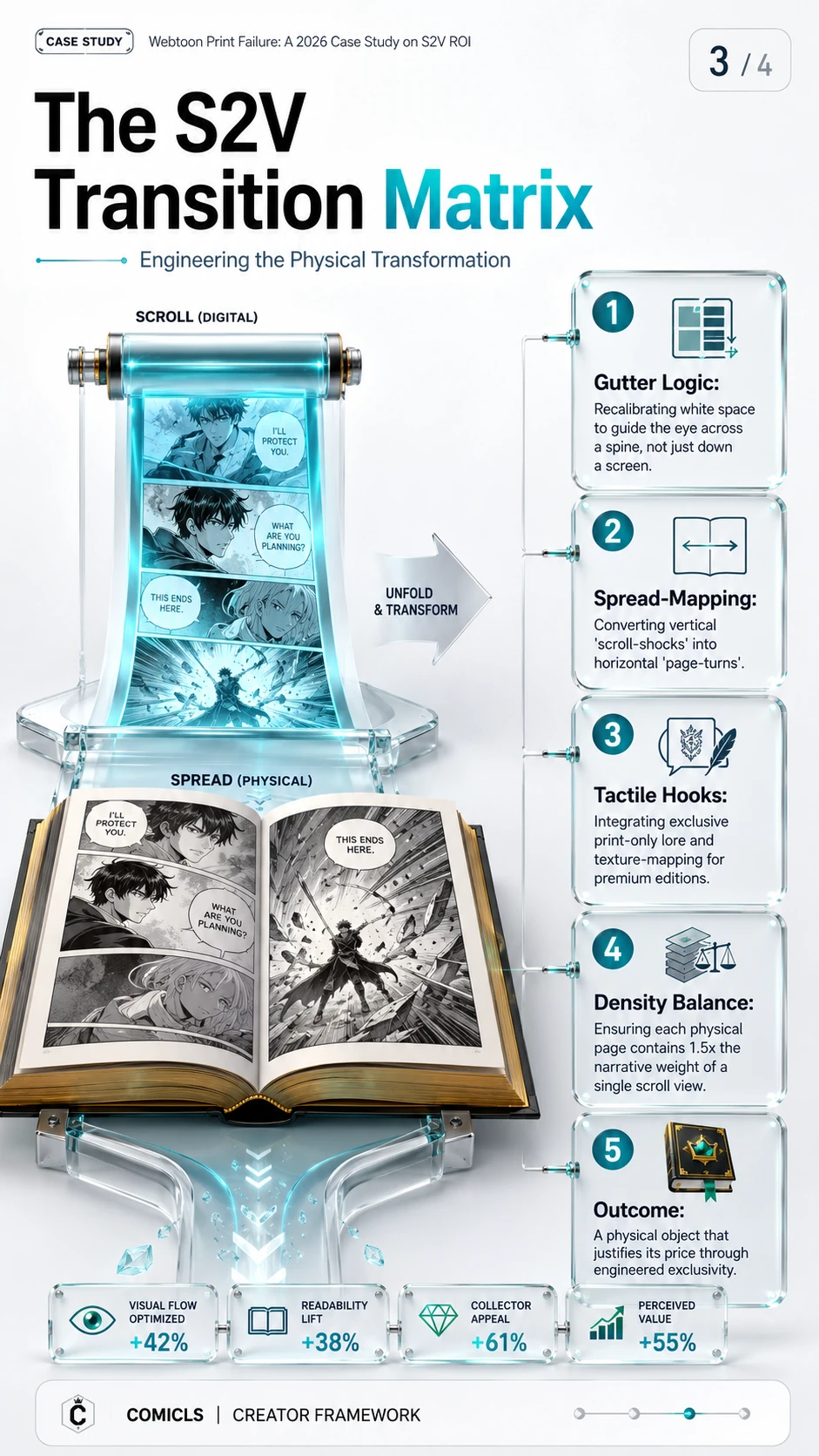
- Engineering the 'Golden Spread' to replace vertical scroll pacing.
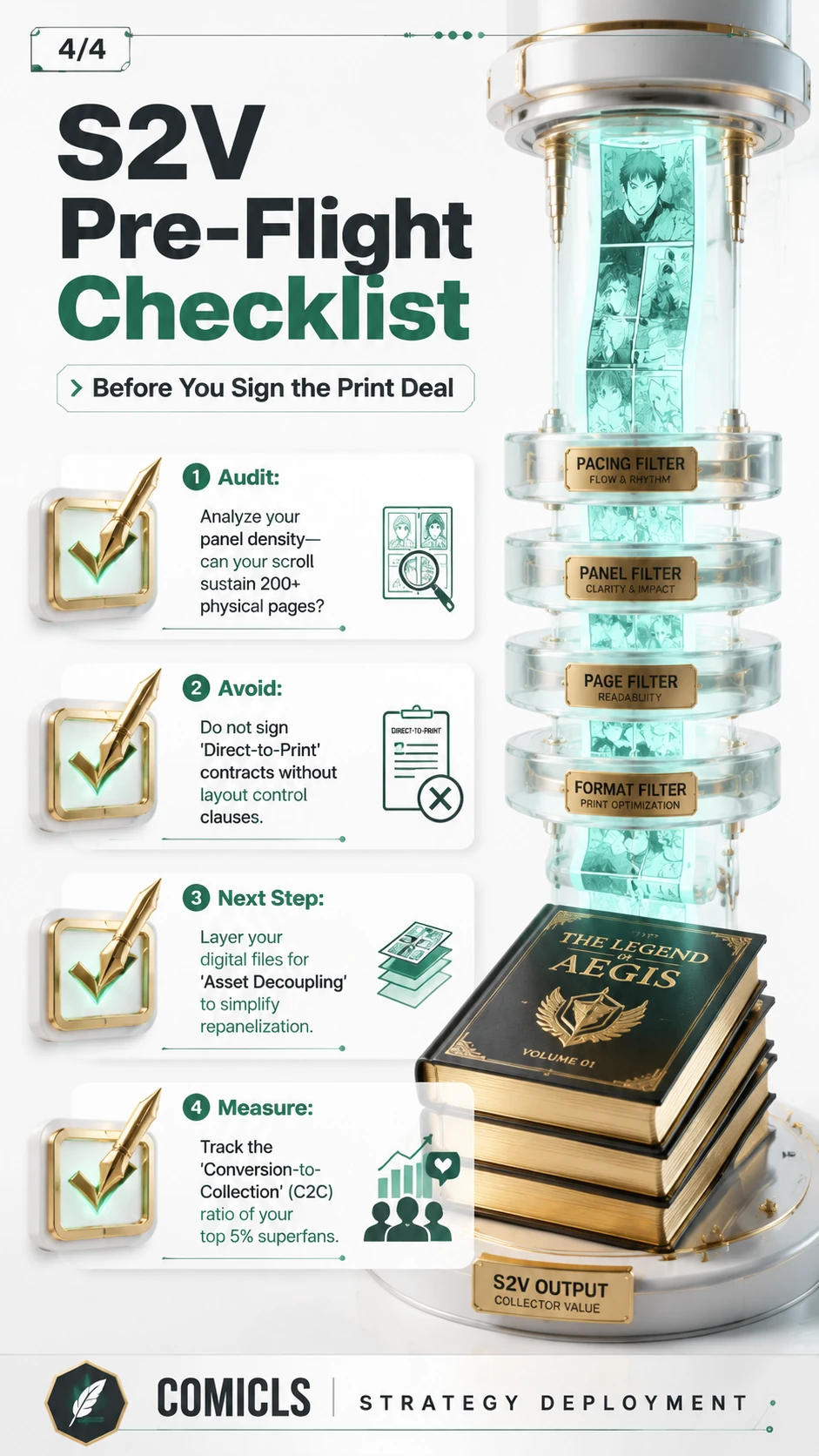
- How to audit your series for 'Print-Readiness' before approaching publishers.
- Maximizing revenue through the Conversion-to-Collection (C2C) metric.
FAQ
What is the S2V Standard?
The S2V (Serial-to-Volume) Standard is a 2026 framework for re-engineering vertical webtoon layouts into horizontal print formats without losing narrative impact.
Why do webtoon prints fail in the market?
Most failures stem from 'Scroll Fatigue' on the page—simply stacking vertical panels in a book creates awkward eye-tracking and diminishes the collector's value.