Webtoon Merch Rights: The 2026 'Phygital' Revenue Guide
In 2026, secondary rights are the primary growth engine for independent webtoon creators. Learn the 'Phygital' framework to maximize merchandise ROI without losing IP control.
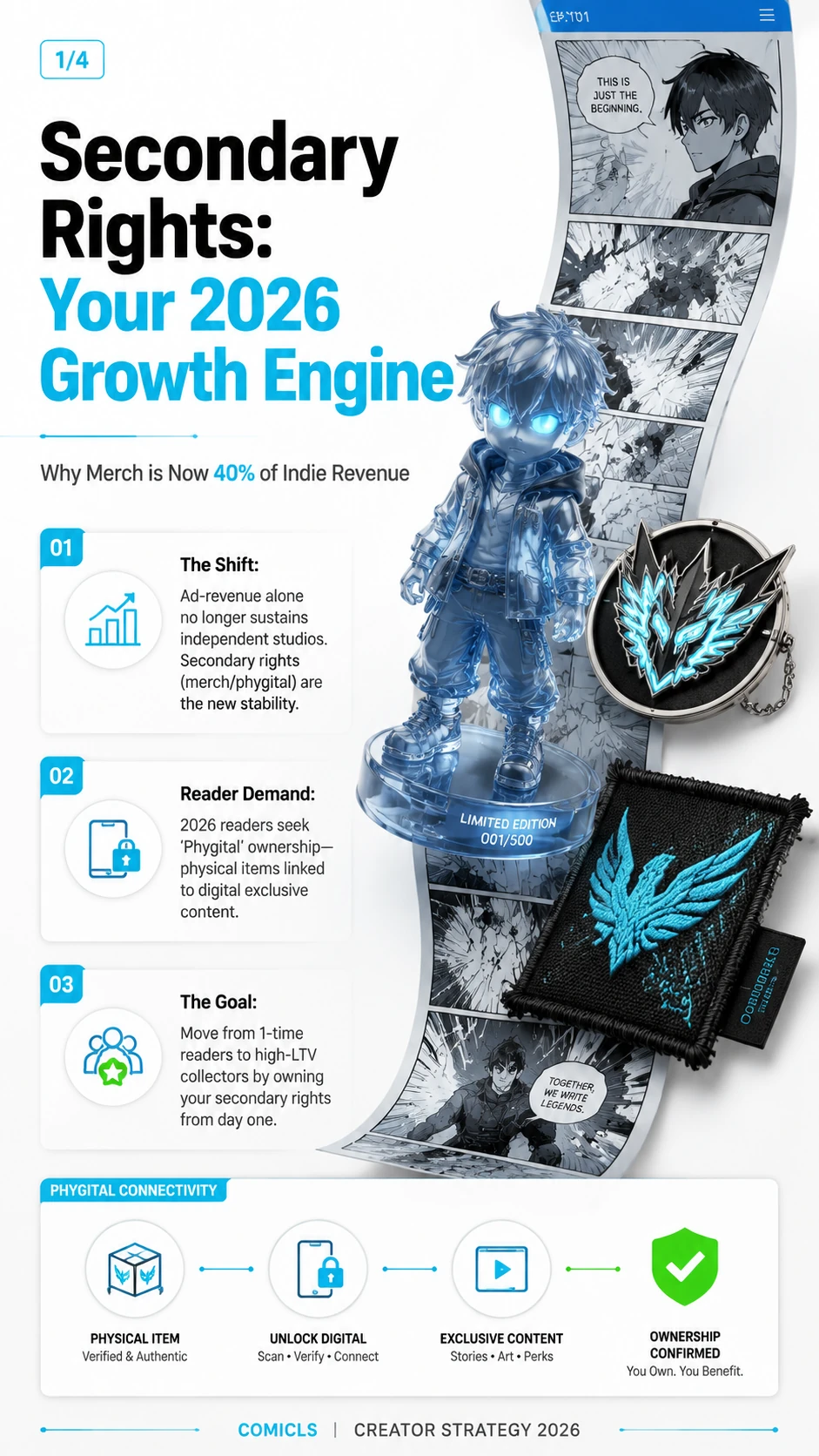
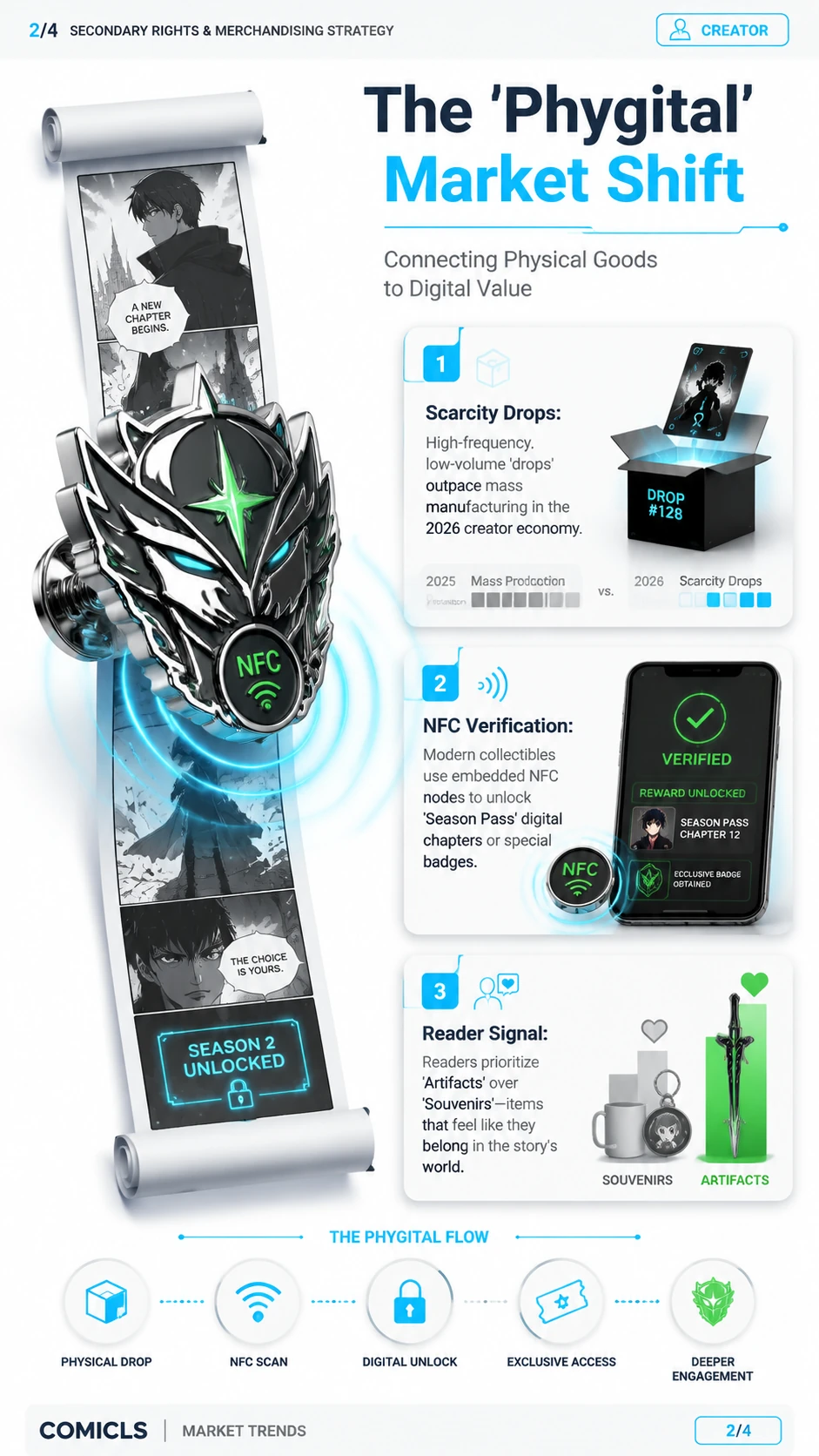
As we enter 2026, the monetization landscape for webtoon creators has fundamentally shifted. Relying solely on platform ad-revenue and page views is no longer a viable long-term strategy for independent studios. The real wealth generation lies in Secondary Rights—the ability to turn a digital narrative into a physical ownership experience. This 'Phygital' model combines high-quality physical collectibles with digital utility, creating a deeper bond between the creator and the superfan.
- Learn why secondary rights are the primary revenue driver for indie creators in 2026.
- Discover the Phygital shift and how NFC-enabled collectibles are changing reader engagement.
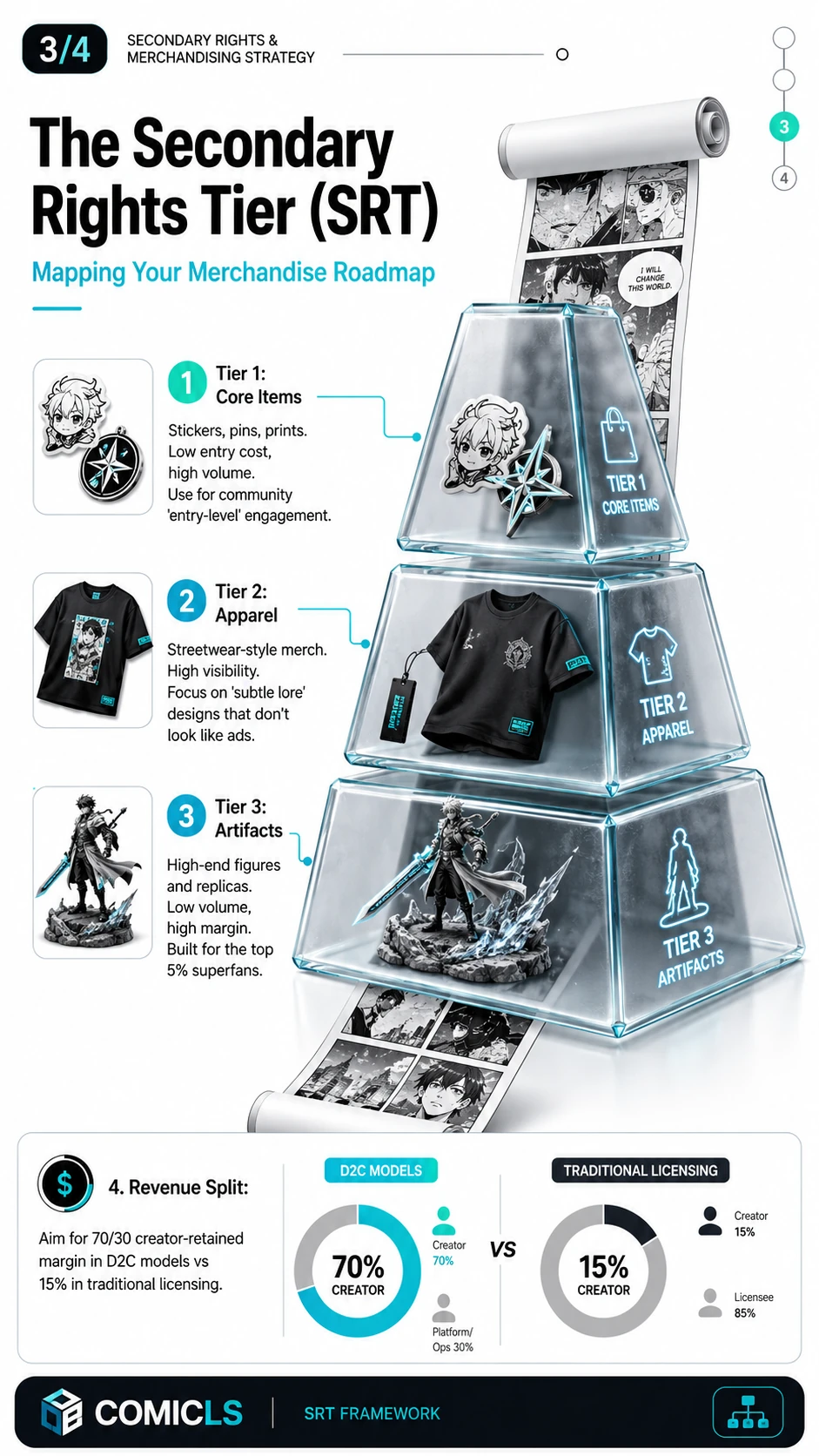
- Master the 3-Tier Secondary Rights (SRT) framework for scaled merchandise growth.
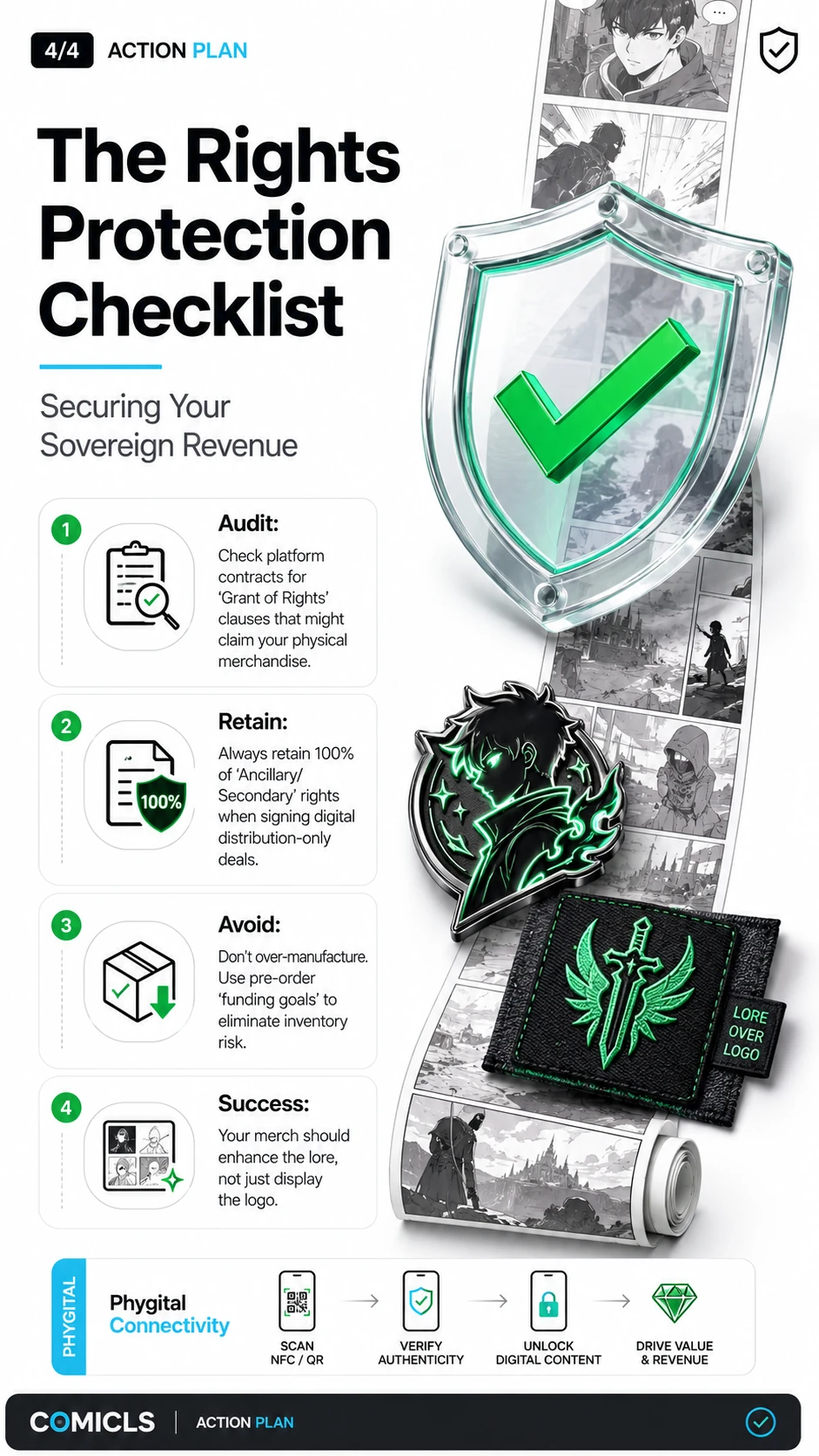
- Use the Rights Protection Checklist to ensure you retain ownership of your physical IP.
FAQ
What are secondary rights in webtoons?
Secondary rights refer to the legal authority to create and sell products based on your IP, including merchandise, apparel, physical books, toys, and media adaptations.
What is a 'Phygital' collectible?
A Phygital collectible is a physical product (like a vinyl figure) that includes a digital component (like a QR code or NFC chip) that unlocks exclusive digital content or verified ownership.
How much revenue can merchandise generate for creators?
In 2026, successful independent creators report that secondary rights and direct-to-consumer merchandise account for 30% to 50% of their total series revenue.