The Zero-Waste Studio: A 2026 Case Study in Modular Asset Libraries and Production Efficie
Explore the shift from manual frame-by-frame drawing to modular asset assembly. This case study breaks down the workflow that saved a top-tier webtoon from burnout-induced hiatus.
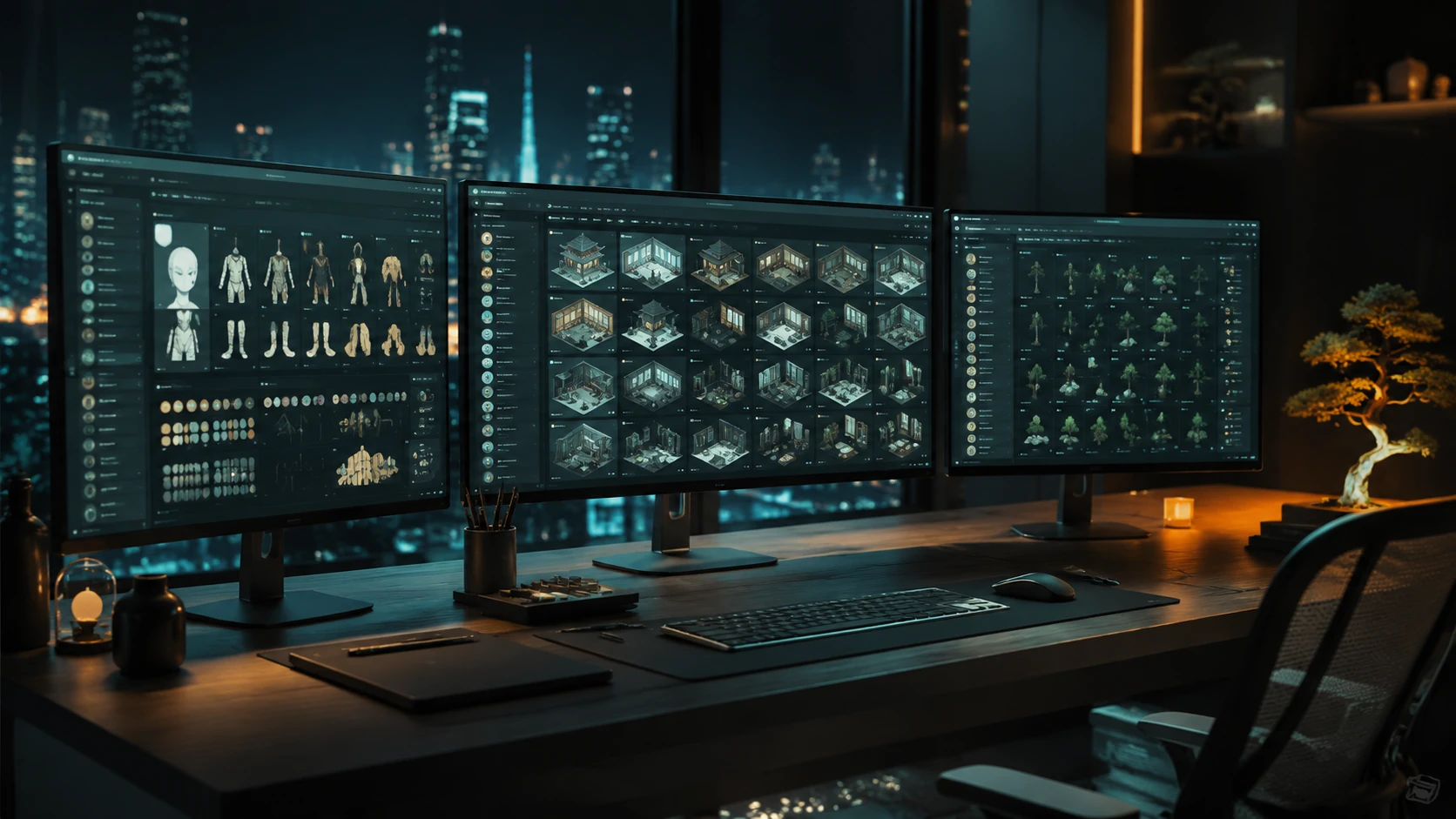
By mid-2025, the digital comic industry reached a breaking point. The 'High-Frequency Standard'—requiring 60+ panels per week with elite-tier rendering—led to a record number of creator hiatuses and series cancellations. This case study examines Nexus Draft, a mid-sized independent studio that pivoted from traditional frame-by-frame production to a 'Zero-Waste' modular workflow in 2026. Facing a 30% drop in reader retention due to inconsistent update schedules, the studio re-engineered their entire pipeline. Instead of viewing each chapter as a fresh drawing task, they treated their series as a living software project, building a semantic asset library that allowed for rapid assembly without sacrificing the hand-drawn soul of their IP. The result was not just a recovery in retention, but a 45% reduction in lead time and a 20% increase in net profit margins.
The Scenario: Breaking the Cycle of Production Debt
Nexus Draft’s flagship series, *Aether Bound*, was a critical success but a logistical nightmare. The lead artist spent 70% of their time on repetitive tasks: redrawing the protagonist’s complex armor from different angles and recreating the same neo-noir cityscapes. This 'Production Debt' meant that narrative quality suffered as the team rushed to meet Friday deadlines. The studio realized that scaling human effort was no longer viable in the 2026 market, where AI-augmented competitors were flooding platforms with high-polish content. They needed a system that automated the mundane while elevating the creative.
The Approach: Implementing Semantic Modular Design
The studio moved away from static PSD files to a modular 'Character DNA' system. They developed a library of high-fidelity 3D base models with 2D style-transfer layers that perfectly mimicked the lead artist's line weight and brush texture. These weren't just simple 3D puppets; they were semantically tagged assets. For example, a 'Protagonist_Sad_SideProfile' asset included pre-configured lighting rigs and facial muscle presets.
- Asset Tokenization: Every background, prop, and character pose was cataloged with metadata, making them instantly searchable by the storyboard team.
- Style Transfer Consistency: Using proprietary AI loras trained exclusively on the lead artist’s previous 50 chapters to ensure new assets never looked 'artificial'.
- Environmental Modules: Instead of drawing new rooms, the team built modular 'Set Pieces'—reusable 3D environments that could be rendered from any angle with consistent lighting.
The Execution: From Sketching to Assembling
The workflow shifted dramatically. The lead artist transitioned into the role of 'Creative Director and Key Frame Specialist.' Storyboarders would 'block' scenes using the modular library, assembling 80% of the panel visual data in hours rather than days. The lead artist then stepped in for the final 20%—adding emotional nuance, custom effects, and 'hero' panels that required unique composition. This hybrid approach ensured that the 'uncanny valley' of 3D/AI was avoided, as human touch remained the final gatekeeper of every frame.
Overcoming the 'Copy-Paste' Aesthetic
One major risk identified early was visual stagnation. If readers noticed the same background or pose too often, immersion would break. Nexus Draft solved this by implementing a 'Variational Layer' policy. Each reused asset had to be modified by at least 15%—whether through lighting shifts, foreground debris, or perspective warping—to ensure the world felt dynamic and alive.
The Results: Data-Driven Success
After six months of the Zero-Waste workflow, Nexus Draft reported metrics that have since become a benchmark for the 2026 creator economy. Production time per 60-panel chapter dropped from 110 man-hours to just 62. Crucially, the 'Drop-off Rate' at the mid-chapter mark decreased by 18%, as the team used their saved time to focus on better narrative pacing and cliffhanger architecture.
The 2026 Playbook: How to Modularize Your Workflow
For creators looking to replicate this success, the transition requires an upfront 'Development Phase' before a series launch. You must spend time building your library before you draw your first panel. This 'Day-Zero' investment is what separates sustainable 2026 franchises from short-lived projects.
- Step 1: Audit your recurring elements (characters, key locations, recurring props).
- Step 2: Create 'Master Assets' for these elements with 360-degree visibility.
- Step 3: Establish a style-transfer pipeline (AI or manual) to keep assets cohesive.
- Step 4: Use a semantic tagging system (e.g., Notion or specialized DAM tools) to organize your library.
- Step 5: Reserve 20-30% of your production time for 'Human Polish' on every panel.
FAQ
What is a modular asset library in comics?
It is a collection of pre-made, reusable visual components—such as character poses, backgrounds, and props—that are tagged and organized for quick assembly into comic panels.
Does modular production make the art look generic?
Not if managed correctly. The 'Nexus Draft' model uses human-led 'Hero Polishing' on every frame to ensure the final art maintains a unique, hand-drawn feel.
Is this workflow suitable for solo creators?
Yes. While it requires an upfront time investment to build the library, it significantly reduces the weekly workload, making it easier for solo artists to maintain long-term schedules.