The World Bible Standard: Architecting Lore Assets for Cross-Media Licensing in 2026
In the 2026 creator economy, a comic is only as valuable as its documentation. Learn how to build a professional World Bible that secures high-value licensing deals across animation, gaming, and film.
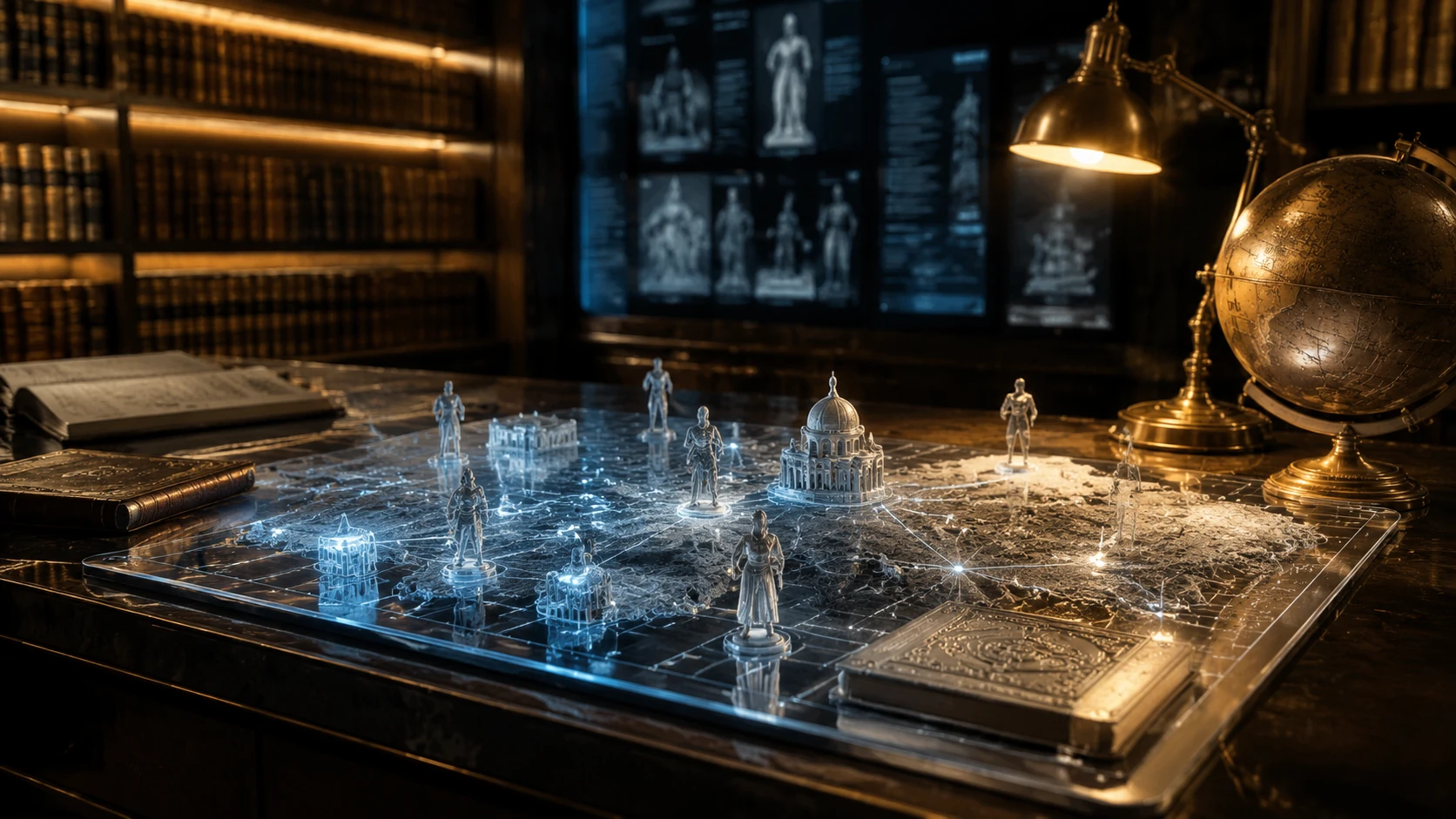
By 2026, the global comic and webtoon market has shifted from a 'hits-driven' industry to an 'IP-driven' ecosystem. For creators and studios, the value of a story is no longer measured solely by weekly view counts or ad revenue; it is calculated based on the portability of its assets. This transition has birthed a new industry standard: the Professional World Bible. Unlike the messy notebooks or scattered digital folders of the past, a 2026 World Bible is a structured, metadata-rich repository designed to survive the rigors of cross-media licensing audits. Whether you are pitching to a streaming giant for an animated series or a game studio for an open-world adaptation, your 'lore documentation' is the technical manual that proves your IP is scalable, consistent, and ready for multi-million dollar investment. This guide explores the architectural requirements of a modern narrative asset and how to build one that meets the demands of 2026's licensing landscape.
The Shift from Narrative to Narrative Infrastructure
Historically, worldbuilding was seen as a secondary creative task—something authors did in the margins of their scripts. In 2026, worldbuilding has become the primary infrastructure. When a platform like Netflix or Crunchyroll evaluates a webtoon for adaptation, their legal and creative teams perform 'lore due diligence.' They aren't just looking for a good plot; they are looking for a cohesive system. A well-constructed World Bible serves as a single source of truth that prevents 'continuity debt'—the expensive process of fixing narrative contradictions during production. By standardizing your lore into a structured format, you reduce the 'onboarding friction' for third-party studios. This means animators, voice actors, and game designers can step into your world with zero ambiguity, significantly lowering production costs and increasing the likelihood of a greenlight.
The Four Pillars of a Licensed Narrative Asset
- Character DNA: Beyond visual design, this includes psychographic profiles, speech patterns, and historical trauma nodes that dictate behavior across different formats.
- Systemic Mechanics: The 'rules' of the world—magic systems, economic structures, or technological limits—that must remain consistent in a video game or tabletop spin-off.
- Environmental Blueprints: Geographic and architectural standards that allow background artists to maintain visual continuity without constant creator supervision.
- Semantic History: A chronological timeline of events with 'impact tags' that show how past events influence current character motivations and political landscapes.
Architecting for Portability: The Metadata Layer
The most significant advancement in 2026 is the integration of semantic metadata into lore documentation. A professional World Bible is no longer a static PDF; it is a dynamic database. Each character, location, and item is tagged with attributes that allow AI-driven production tools to 'understand' the world. For instance, tagging a character's costume with 'cultural origin: Northern Steppes' and 'material: cured leather' allows a costume designer for a live-action adaptation to instantly source references that align with your vision. This level of detail protects the integrity of your IP as it moves through different hands. Without this metadata, your IP is at risk of 'dilution,' where the essence of the story is lost because the external production team didn't have the context required to make informed creative decisions.
Standardizing the 'Lore Engine'
Modern creators are utilizing 'Lore Engines'—specialized software that links narrative threads and flags contradictions in real-time. If you change a character's age in chapter 50, the engine should automatically flag every related event in the World Bible that now contains a chronological error. This technical rigor is what separates hobbyist creators from professional IP architects in the 2026 market. Studios are increasingly requiring these digital lore assets as part of the delivery package in licensing contracts, ensuring that the 'human' creator's vision is mathematically preserved in the digital workflow.
Avoiding the 'Continuity Trap' in Long-Running Series
One of the greatest risks to IP valuation in 2026 is narrative bloat. As webtoons and manga reach hundreds of chapters, the complexity of the world can become a liability. A World Bible acts as a 'pruning tool.' By documenting the core 'canon' versus 'flavor text,' creators can maintain a lean IP that is easy for new readers to enter and for studios to adapt. This involves creating a 'Core Canon Registry'—a list of non-negotiable elements that must remain unchanged in any adaptation. This protects the 'Character DNA' while allowing the flexibility needed for different formats (like a 90-minute film vs. a 50-hour RPG). Creators who master this balance are finding themselves with significantly higher leverage during contract negotiations, as they are providing a 'production-ready' universe.
The Role of the Narrative Consultant
As the stakes for IP rise, a new role has emerged: the Narrative Auditor. These professionals review World Bibles to ensure they are 'licensing-ready.' They look for gaps in the magic system, inconsistencies in character arcs, and 'dead-end lore' that doesn't contribute to the franchise's growth. For creators looking to scale, investing in an audit before the pitching phase is becoming a mandatory step in the professional workflow.
Conclusion: Your World is Your Wealth
The 2026 comic landscape rewards the architect as much as the artist. While the initial spark of a story comes from creativity, its longevity is built on documentation. By adopting the World Bible Standard, you aren't just taking notes; you are building a financial asset. A structured, portable, and metadata-rich world is the ultimate insurance policy for your IP, ensuring that no matter how many hands your story passes through, its soul remains intact. As the boundaries between comics, games, and film continue to blur, those who treat their lore as infrastructure will lead the next generation of global franchises.
FAQ
What is the difference between a World Bible and a simple series wiki?
A wiki is a fan-facing summary of what happened, while a World Bible is a creator-facing technical manual that defines *how* the world works, including mechanics, internal logic, and licensing constraints.
Do I need a World Bible if I'm an independent creator?
Yes. Even for indie creators, a World Bible ensures consistency as your series grows and makes you 'licensing-ready' if a sudden adaptation opportunity arises.
What software should I use for a 2026-standard World Bible?
Relational databases like Obsidian, Notion, or dedicated tools like World Anvil and LoreHub are the current standards for structured narrative data.