The Sustainable Creator Blueprint: Managing High-Frequency Webtoon Production in 2026
As the 2026 comic market demands hyper-frequent updates, creators face a systemic burnout crisis. This guide outlines the modular frameworks and mental health strategies necessary to build a decade-long career in digital storytelling.
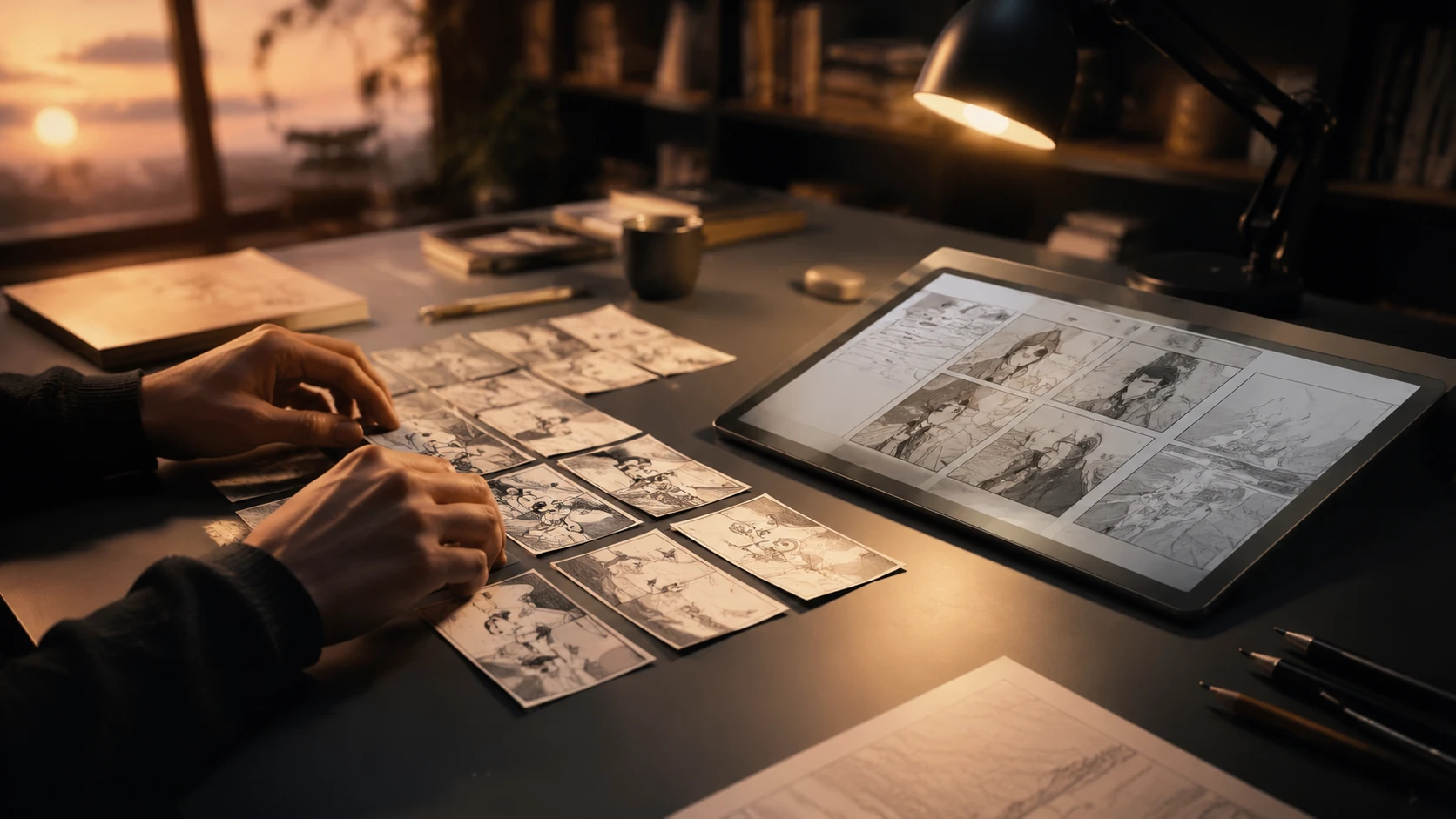
By 2026, the digital comic market has reached a state of hyper-frequency. Readers no longer wait weeks for updates; the industry standard has shifted toward semi-weekly or even daily micro-drops, fueled by the efficiency of AI-assisted rendering and modular assets. However, this 'always-on' publishing cycle has birthed a secondary crisis: systemic creator burnout. While the tools have become faster, the human cognitive load required to maintain narrative integrity and emotional resonance has tripled. For the 2026 creator, success is no longer defined by how fast you can draw, but by how sustainably you can manage your creative energy. This guide explores the 'Sustainable Creator Blueprint,' a framework designed to help independent artists and small studios navigate the high-pressure demands of modern webtoon platforms without sacrificing their mental health or the quality of their IP.
The 2026 Burnout Paradox: Why More Tools Didn't Mean Less Work
In the early 2020s, the promise of AI and 3D background assets was a reduction in labor hours. In 2026, we see the 'Burnout Paradox' in full effect: because production is faster, platforms and audiences have increased their expectations for volume. What used to be a 60-panel weekly chapter is now often split into three 25-panel updates per week to satisfy algorithmic discovery. This shift from 'marathon' to 'sprint' storytelling creates a constant state of low-level stress. Creators are no longer just artists; they are managers of complex AI pipelines, social media community leads, and IP strategists. This fragmentation of focus is the primary driver of exhaustion. To survive, creators must transition from a 'brute force' production model to a 'modular' one that treats creative energy as a finite, non-renewable resource.
The Modular Buffer System: Architecting Your Freedom
The most successful creators in 2026 utilize a 'Modular Buffer System.' This involves more than just having five chapters in reserve; it is the practice of decoupling the creative phases of production to prevent 'context switching' fatigue. Instead of working on one chapter from sketch to final polish in a single week, creators batch their tasks across a 4-week rolling cycle. This approach allows the brain to stay in one 'mode'—such as scriptwriting or color grading—for longer periods, which significantly reduces the cognitive cost of starting and stopping complex tasks. By the time Chapter 10 is being published, the creator is already refining the 'Lore Engine' for Chapter 25, ensuring that the narrative remains cohesive even when the physical production is being handled by a hybrid AI-human workflow.
Implementing the Batching Workflow
- Scripting & Storyboarding: 1 week of pure narrative focus for 4 chapters.
- Asset Preparation: Use 3D environments and AI style-transfer models to prep all backgrounds for the month.
- The High-Focus Sprint: 10 days of character acting and 'human-in-the-loop' linework.
- The Polish Phase: Final lettering, SFX, and haptic feedback integration.
The 'Human-Only' Zone: Protecting Your Creative Spark
In a 2026 production environment, the line between human effort and AI automation is blurred. To avoid burnout, creators must define their 'Human-Only' zones—parts of the process that are strictly off-limits to automation. For many, this is the character's emotional 'acting' and the core thematic script. When a creator tries to automate the emotional core of their work, they often experience 'creative dissociation,' where they no longer feel connected to their own story. This loss of connection is a fast track to professional apathy. By intentionally spending more time on the 'Human-Only' elements and aggressively delegating the 'Technical Grunt Work' (such as flatting, basic shading, and perspective grids) to AI tools, creators can maintain the emotional high that comes from genuine artistic expression while still meeting 2026 speed requirements.
The 4-Day Production Week: A 2026 Case Study
Contrary to the 'grind' culture of previous years, elite 2026 studios are moving toward a 4-day production week. This isn't about working less; it's about working with higher intensity and better recovery. The case study of 'Studio Solari,' an independent webtoon collective, shows that by implementing strict 'Digital Sabbath' periods and using AI to handle the 20% of tasks that took 80% of the time, they increased their output by 15% while reporting a 40% decrease in creator fatigue. The 4-day model forces creators to eliminate 'faffing'—the time spent scrolling for references or manually fixing perspective errors that modern software can now solve in seconds. It treats the creator’s rest as a vital business expense, not a luxury.
Strategies for Long-Term IP Sovereignty
Burnout is often tied to a lack of agency. When creators feel like they are on a 'treadmill' for a platform, their motivation plummets. In 2026, sustainable creators are those who maintain 'IP Sovereignty.' This means diversifying where your story lives—not just on one major webtoon portal, but through direct-to-fan memberships, limited luxury print runs, and even fractionalized IP ownership for superfans. When a creator knows that they own the 'Character DNA' and aren't solely dependent on a platform’s shifting algorithm, the psychological pressure of 'perfect performance' is alleviated. This sense of ownership provides the mental safety net required to take creative risks and pace the story for the long term, rather than just for the next week's click-through rate.
- Audit your tools: If a software isn't saving you 2 hours a week, replace it.
- Set 'Hard-Stop' hours: The 2026 market never sleeps, but your brain must.
- Build a 'Creative Peer Group': Isolation is a major burnout accelerant.
- Diversify Revenue: Financial stress is the silent partner of creative burnout.
FAQ
How many chapters should I have buffered in 2026?
The industry standard for 2026 is a 10-chapter buffer. This allows for a 4-week production cycle plus a 2-week emergency window for health or technical issues.
Can AI really help prevent burnout?
Yes, but only if used for 'low-value' cognitive tasks like background rendering, flatting, and perspective grids, leaving the 'high-value' emotional storytelling to the human creator.
What is the 'Digital Sabbath' in the comic industry?
It is a 24-48 hour period each week where creators completely disconnect from production tools and social media to allow the brain's 'default mode network' to recover.