The Science of Character Resonance: Engineering Iconic Leads for Global Webtoon Audiences
In the 2026 attention economy, a character's visual design must do more than look good—it must trigger immediate psychological resonance. Explore how to engineer iconic leads that drive reader empathy and global franchise potential.
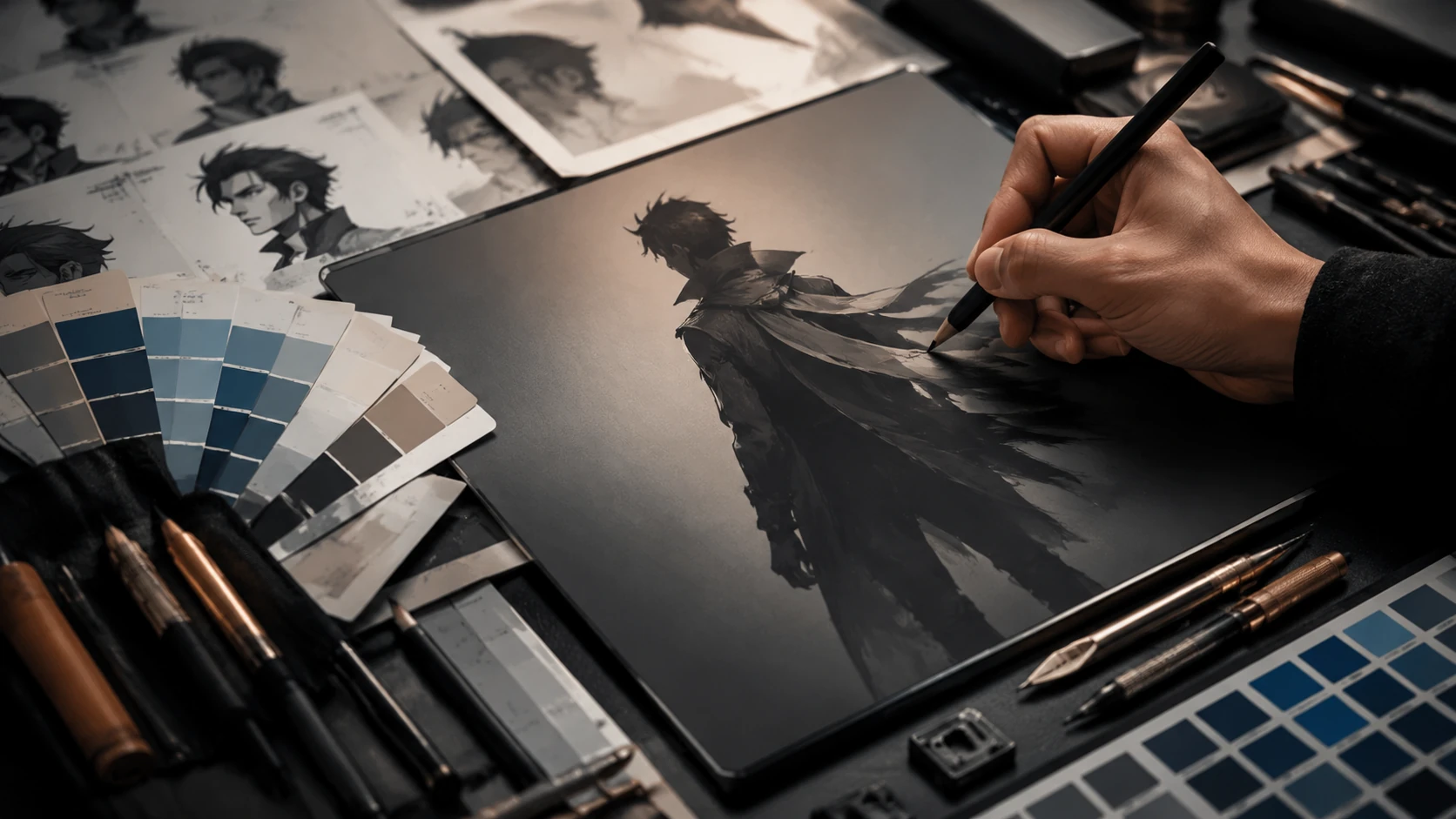
By 2026, the global webtoon market has reached a saturation point where 'good art' is no longer a competitive advantage—it is a baseline requirement. As discovery algorithms prioritize initial click-through rates and long-term retention, the burden of success has shifted from the plot to the character's visual resonance. Character resonance is the psychological phenomenon where a reader subconsciously identifies a character's personality, stakes, and role within seconds of seeing them.
The Silhouette Test: Recognition in the Age of Infinite Scroll
In the vertical scroll format, the 'Silhouette Test' has evolved. It is no longer just about having a unique hairstyle; it is about 'readability' at small scales. Readers in 2026 primarily consume content on mobile devices while multitasking. A character's outline must communicate their core energy—aggressive, passive, mysterious, or heroic—even when the image is reduced to a thumbnail.
- Angular Silhouettes: Convey danger, intelligence, or instability (common in regression or villainess manhwa).
- Circular Silhouettes: Suggest approachability, youth, or reliability (standard for slice-of-life or coming-of-age protagonists).
- Rectangular Silhouettes: Represent stability, strength, or stubbornness (ideal for tanks or stoic leads).
Emotional Priming via Color Theory
Modern 2026 creators use 'Color Priming' to bypass the reader's analytical mind. Instead of explaining a character's tragic past, creators use specific palettes to evoke the mood. For instance, muted desaturated tones paired with a single vibrant accent color (like a 'shred of red' on a grey-scale protagonist) creates an immediate sense of focused vengeance or isolated destiny.
The Empathy Gap and the Flaw-Strength Ratio
Visual design must reflect internal conflict. A 'perfect' character design is often the hardest to market. In 2026, successful character engineering involves the 'Empathy Gap'—a visual contradiction that humanizes the lead. This could be a powerful warrior with a small, delicate accessory (suggesting hidden vulnerability) or a cold CEO with a slightly messy, unpolished feature.
Designing for AI Consistency and Transmedia
As AI-assisted workflows become standard, character design must be 'logical.' Creating a lead with overly complex, non-functional accessories leads to visual drift when using generative tools. The most successful designs in 2026 are 'Modular'—they have 3-5 distinct, repeatable visual anchors (like a specific scar, a unique earring, or a signature jacket) that remain consistent across 2D panels, 3D assets, and AI-interpolated animations.
FAQ
What is the most important factor in character design for webtoons in 2026?
Immediate visual readability and psychological resonance. The character must communicate their core personality through their silhouette and color palette before the reader even reads a line of dialogue.
How many colors should a main character's palette have?
A primary palette of 3 colors (Base, Secondary, and Accent) is ideal for maintaining visual hierarchy and ensuring consistency in high-speed production environments.
Can AI help with character resonance?
AI is excellent for maintaining consistency, but the 'resonance'—the intentional psychological choices behind the design—must be engineered by the creator to ensure emotional impact.