The Live-Ops Revolution: Transforming Webtoons into Dynamic Narrative Services in 2026
In 2026, webtoons are evolving from static chapters into 'live-service' narratives that respond to reader behavior in real-time. This shift toward Live-Ops is redefining how creators maintain retention and monetize global IPs.
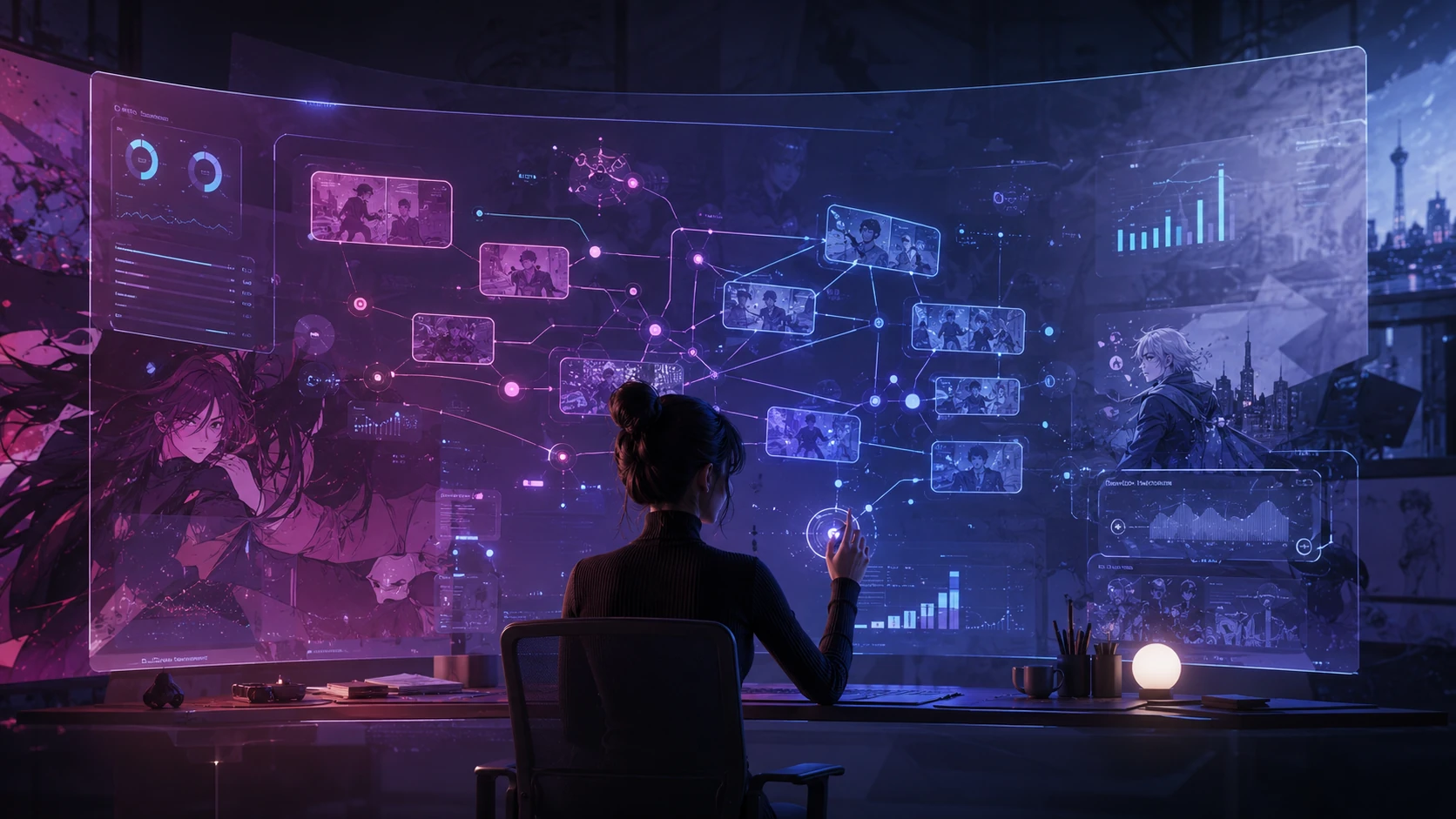
By 2026, the boundary between digital comics and live-service gaming has effectively dissolved. The 'Live-Ops' (Live Operations) model, once exclusive to the software and gaming industries, has become the dominant framework for high-traffic webtoons and manhwa. Readers no longer view a series as a static sequence of images to be consumed passively; instead, they experience it as an evolving narrative service. This shift is driven by the need to compete with short-form video and interactive entertainment for the limited attention spans of a global audience. Platforms and independent creators alike are pivoting toward dynamic content delivery, where the 'product' is not just the chapter itself, but the ongoing ecosystem of events, community-driven lore adjustments, and seasonal engagement loops that surround the core IP.
Defining Live-Ops in the 2026 Comic Ecosystem
In the context of 2026 webtoon publishing, Live-Ops refers to the continuous management of a series to keep it fresh, engaging, and profitable over a long lifecycle. Unlike the traditional 'publish and forget' model, Live-Ops involves using real-time data to influence narrative pacing, introducing limited-time digital events, and creating 'meta-content' that exists outside the main scroll. For instance, a high-performing romance webtoon might launch a 'Valentine's Narrative Event' where reader choices in a dedicated poll influence the aesthetic of the next three chapters. This isn't just about interaction; it's about creating a sense of 'presence'—the feeling that the story is happening *now*, and that missing a week means missing a communal cultural moment.
The Three Pillars of Narrative Live-Ops
- **Event-Driven Storytelling:** Implementing limited-time story arcs or 'side-quests' that coincide with real-world trends or community milestones.
- **Dynamic Metadata:** Using AI-driven tags to alter how a story is presented to different segments of the audience based on their reading history.
- **Feedback-Loop Integration:** Adjusting minor narrative beats or character focuses based on real-time sentiment analysis and heatmaps of reader engagement.
The Psychology of 'Always-On' Narratives
The success of the Live-Ops model rests on the Zeigarnik Effect and the psychology of communal participation. When a webtoon functions as a live service, it leverages 'narrative friction' to build anticipation. In 2026, top-tier creators use 'cliffhanger architecture' synchronized with platform-wide events. Readers aren't just waiting for the next chapter; they are participating in a week-long discussion, voting on character popularity which might influence future 'special illustrations,' or unlocking exclusive lore through community challenges. This creates a high-retention environment where the cost of 'churning' (leaving the series) is not just losing the story, but losing a place in the social fabric of the fandom. This psychological lock-in is what drives the industry's shift from ad-revenue to high-value micro-transactions and digital collectibles.
Seasonal Architectures vs. Perpetual Release
One of the most significant changes in 2026 is the move away from the grueling, endless weekly grind toward 'Season-Based Live-Ops.' Publishers have realized that perpetual release often leads to creator burnout and narrative dilution. Instead, webtoons are structured like television series or 'Battle Passes' in games. A season lasts 12-24 weeks, followed by a 'Live-Ops Intermission.' During this intermission, the series doesn't go dark; instead, the studio releases 'lore drops,' character Q&As, and interactive recaps that keep the algorithm warm while the core team prepares the next high-impact arc. This modular approach allows for better quality control and gives the marketing team specific 'launch windows' to drive massive influxes of new readers through coordinated visual search and social campaigns.
Monetizing the Meta-Content
Monetization in the Live-Ops era has moved far beyond the 'pay-per-chapter' model. In 2026, the most successful creators monetize the *access* and *influence* readers have within the story ecosystem. This includes 'Founders Packs' for new series, tiered memberships that offer early access to character designs, and 'Lore Keys' that unlock hidden chapters or alternate endings. By treating the webtoon as a service, creators can tap into 'Whale' dynamics—high-spending superfans who want to support the IP at a premium level. This diversified revenue stream provides a safety net for independent artists, reducing their dependency on platform-wide ad-revenue shares that have become increasingly diluted in the saturated 2026 market.
Risks of the Service-Based Model
While Live-Ops offers unprecedented engagement, it is not without risks. The most prominent danger is 'Narrative Incoherence.' If a creator listens *too* closely to community feedback or pivots too often based on data heatmaps, the story can lose its original artistic vision and structural integrity. There is a fine line between 'responsiveness' and 'fan service' that alienates the silent majority of readers who prefer a cohesive, auteur-driven experience. Furthermore, the technical overhead of managing a live service—tracking metrics, managing community events, and producing meta-content—can be overwhelming for solo creators without the aid of AI-driven editorial tools or modular asset libraries.
Strategic Safeguards for Creators
- **The 80/20 Rule:** Keep 80% of the narrative fixed to your vision; allow only 20% (cosmetics, minor dialogue, side-content) to be influenced by Live-Ops data.
- **Transparent Lore:** Maintain a 'Source of Truth' document (Lore Bible) to ensure that event-driven content doesn't contradict established world-building.
- **Automated Community Management:** Utilize AI agents to handle routine community interactions and sentiment gathering to prevent creator burnout.
The Future: AI-Driven Personalized Live-Ops
Looking toward the end of 2026, we are seeing the emergence of 'Personalized Live-Ops.' In this advanced stage, the webtoon platform's engine might serve different 'flavor text' or minor visual assets to readers based on their preferences. If the data shows a reader prefers 'World-Building' over 'Romance,' the Live-Ops engine might highlight lore-heavy side-content in their feed. This level of hyper-personalization ensures that every reader feels the narrative service is tailored to them, maximizing retention and long-term IP loyalty. The creators who master this blend of human-led storytelling and data-informed operations will be the ones who define the next decade of digital comics.
FAQ
What is Live-Ops in the context of webtoons?
Live-Ops refers to the ongoing, real-time management of a webtoon series using data-driven events, seasonal content, and community engagement to keep the story active and profitable over a long period.
How does Live-Ops help independent creators?
It allows creators to diversify their income through micro-transactions and tiered memberships, while maintaining higher reader retention through constant, smaller engagement loops between major chapter releases.
Does Live-Ops mean the readers decide the ending?
Not necessarily. Effective Live-Ops usually involves giving readers influence over minor details or side-content, while the creator maintains control over the core narrative arc to ensure quality and consistency.