The Hybrid Publishing Frontier: Bridging Digital Scroll and Luxury Print in 2026
Digital discovery is no longer the final destination. In 2026, the most successful creators are leveraging hybrid models that combine the reach of vertical scrolls with the prestige of luxury print.
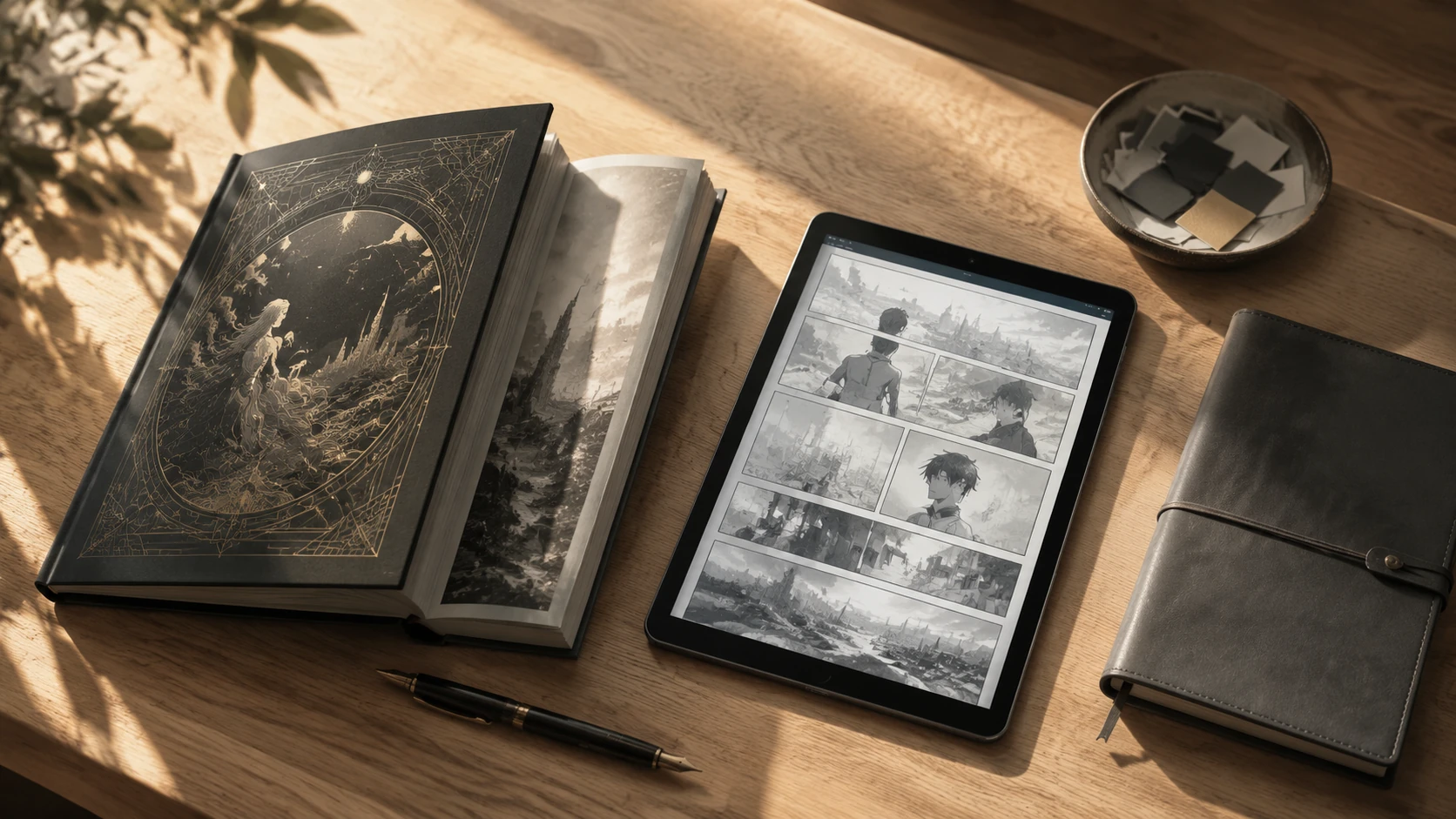
For the past decade, the narrative in the comic industry was one of digital disruption. Webtoons, manga apps, and digital-first platforms seemed destined to render paper obsolete. However, as we move through 2026, a surprising trend has solidified: the most successful 'digital' creators are now some of the biggest players in the physical print market. This isn't a retreat to old ways, but the birth of the Hybrid Publishing Frontier—a model where digital provides the reach, and print provides the permanence and prestige.
The Prestige Pivot: Why Print is the Ultimate E-E-A-T Signal
In a saturated digital market where millions of chapters are uploaded daily, a physical book has become the ultimate signal of authority and quality. For 2026 creators, a high-end print edition serves as a tangible manifestation of their IP’s value. Readers who discover a story for free on a vertical scroll platform are increasingly willing to pay a premium for a 'Library Edition' that they can own forever. This 'collectibility' factor has transformed the printing press from a mass-distribution tool into a boutique luxury service.
- Digital for Discovery: Use low-friction digital platforms to build a massive global audience.
- Print for Devotion: Offer high-margin, limited-run physical editions to your most dedicated superfans.
- IP Archiving: Physical books ensure your story survives platform changes, server shutdowns, or account deletions.
Designing for Dual Formats: The Infinite Canvas vs. The Page
One of the primary challenges in 2026 is the technical bridge between the vertical scroll and the printed page. Modern creators are now adopting 'Dual-Format Storyboarding.' Instead of retroactively butchering a vertical webtoon to fit a book, artists are designing their panels with 'flexible gutters' that can be easily rearranged into standard comic layouts without losing narrative flow or emotional impact.
The Economics of Scarcity: Boutique and POD Models
The 2026 hybrid model is powered by two main logistical engines: high-end boutique runs and advanced Print-on-Demand (POD). Many creators are moving away from massive 10,000-unit print runs that require expensive warehousing. Instead, they use tiered crowdfunding or POD services that offer near-offset quality with zero inventory risk. This allows for 'Hyper-Niche' printing, where even a creator with a modest but loyal following can profitably produce a high-quality physical product.
Sustainability and the 'Green Print' Movement
As environmental consciousness peaks in 2026, the hybrid model also addresses sustainability. Digital-first publishing drastically reduces the carbon footprint of 'failed' books that end up in pulping plants. By only printing what is already sold (or highly anticipated), the industry has moved toward a more ethical cycle. Recycled high-touch papers and soy-based inks have become standard for the premium market, further increasing the 'luxury' feel of the physical object.
FAQ
Is print still profitable for webtoon creators in 2026?
Yes, but primarily as a premium/luxury product. While digital generates the most traffic, high-end print editions often yield higher profit margins per unit through direct-to-consumer sales and crowdfunding.
How do I convert a vertical scroll comic to a print format?
The most effective method is 'Dual-Format Storyboarding,' where panels are designed with enough padding and gutter space to be re-flowed into a traditional page grid without losing narrative clarity.
What are the benefits of a hybrid publishing model?
It combines the global reach and data-gathering capabilities of digital platforms with the monetization, prestige, and archival permanence of physical books.