The Hybrid Creator: Navigating Ethical AI Integration and Copyright Security in 2026
In an era of rapid AI evolution, the most successful creators are those who blend human soul with machine efficiency. Discover the 2026 blueprint for ethical AI integration that protects your IP and enhances your storytelling.
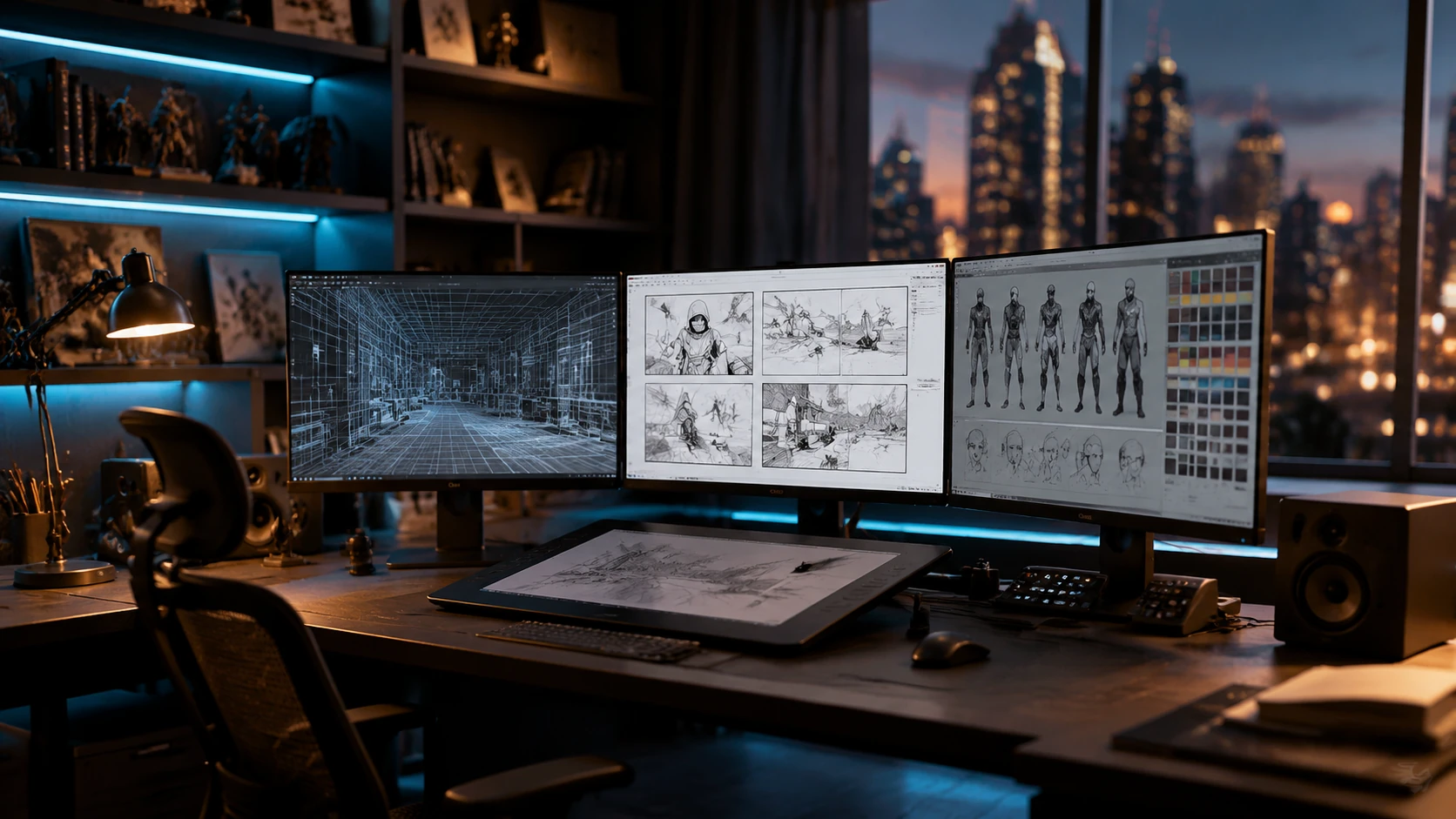
By 2026, the 'AI vs. Artist' debate has matured into a more nuanced reality: the rise of the Hybrid Creator. As generative tools become ubiquitous, the value of a story is no longer measured by the speed of its production, but by the 'Human-in-the-Loop' (HITL) signals that define its soul and its legal standing. For creators in the webtoon, manga, and graphic novel space, navigating this landscape requires more than just technical skill—it requires a strategic framework for ethical integration and intellectual property (IP) security.
The 2026 Standard: Defining the Human-in-the-Loop Workflow
The core of the 2026 creative economy is the HITL framework. This approach ensures that AI serves as a specialized assistant rather than a replacement. Major platforms and copyright offices now distinguish between 'AI-generated' (purely machine-led) and 'AI-assisted' (human-steered) content. To maintain copyright eligibility, creators must demonstrate 'substantial human authorship.' This involves using AI for laborious tasks—like flatting colors, perspective grids, or background rendering—while keeping character acting, dialogue, and narrative pacing firmly in human hands.
- Conceptual Sovereignty: All core ideas, character arcs, and thematic depth must originate from the creator.
- Iterative Steering: Using AI to generate variations, but manually selecting, masking, and over-painting to ensure unique artistic vision.
- The 70/30 Rule: A general industry benchmark where at least 70% of the final visual output contains direct human intervention or transformative editing.
Copyright Security and IP Protection
One of the biggest risks for creators today is the 'un-copyrightable' status of raw AI outputs. To protect your franchise, you must build an 'IP Fortress.' This starts with training your own Private LoRAs (Low-Rank Adaptation) based exclusively on your own hand-drawn assets. By doing this, you ensure that the AI is only reflecting your personal style, which strengthens your claim to the resulting imagery. Furthermore, keeping a detailed 'Process Log'—including initial sketches, prompt iterations, and manual polish stages—is now essential for legal defense in copyright disputes.
Ethical Integration: Building Trust with Your Audience
Transparency is the new currency of trust. Readers in 2026 are highly sensitive to 'soul-less' content. Successful creators are thriving by being vocal about their process. This includes 'Behind the Scenes' content that shows how AI is used responsibly to meet weekly deadlines without sacrificing quality. This transparency doesn't just satisfy ethical concerns; it builds a stronger brand identity centered on craftsmanship and innovation.
- AI Disclosure Labels: Using standardized icons to show which parts of the production were assisted by AI (e.g., 'AI-assisted backgrounds').
- Opt-in Ecosystems: Only using tools that respect artist 'No-AI' tags and utilize licensed training data.
- Community Dialogue: Engaging with your fandom to explain how AI allows for more frequent updates or higher-quality visual effects.
Operationalizing Efficiency: Where AI Wins
Where should a creator actually use AI? The most effective use cases in 2026 focus on 'bottleneck breaking.' Tasks that previously took 20 hours can now be compressed into 2 hours, allowing creators to focus on the 'director' aspect of storytelling. This includes automated asset management, dynamic lighting passes, and 3D-to-2D line extraction. By automating the mundane, creators can produce cinematic-quality webtoons that were previously only possible for large studios.
FAQ
Can I copyright a webtoon that uses AI-generated backgrounds?
Yes, provided there is 'substantial human authorship.' If you compose the panels, direct the characters, and transform the AI backgrounds through manual editing and integration, the overall work is generally copyrightable as a derivative or collective work.
How do I ensure my art style isn't stolen by AI?
Use 'poisoning' tools or watermarking tech like Nightshade or Glaze, and host your work on platforms with strong anti-scraping policies. Additionally, register your core character designs early to establish a legal paper trail.
What is a Private LoRA in comic creation?
A Private LoRA is a small AI model trained specifically on your own unique art style. It allows you to use AI tools to generate assets that look exactly like your hand-drawn work, ensuring style consistency and ethical safety.