The Great Restoration: Using AI to Retrofit Classic Manga for 2026 Vertical Scroll Platfor
Discover how AI-driven panel extraction and semantic colorization are breathing new life into legacy manga archives for the 2026 webtoon market. This guide explores the technical workflow of retrofitting horizontal print classics into high-performance vertical narratives.
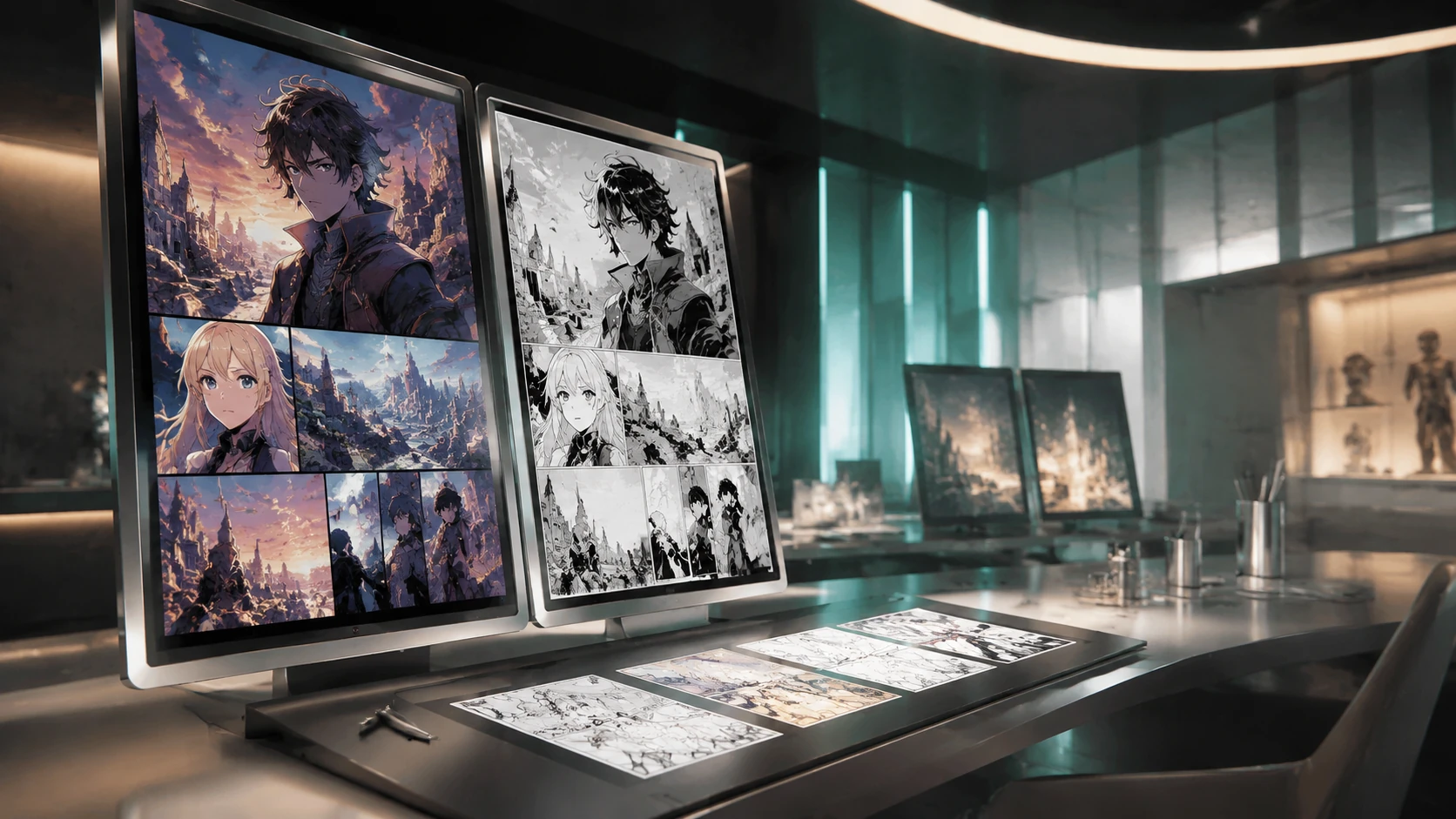
By 2026, the global hunger for 'retro' content has collided with the dominance of the vertical scroll format. While legacy manga archives from the 80s and 90s represent a goldmine of intellectual property, their original horizontal, black-and-white layouts are increasingly incompatible with the mobile-first reading habits of modern audiences. The 'Great Restoration' refers to a sophisticated technological shift where AI-driven pipelines are used not just to upscale old scans, but to fundamentally retrofit horizontal print classics into dynamic, high-fidelity vertical narratives. This process involves more than just stacking panels; it requires semantic understanding of the original narrative flow, intelligent background extension, and respect for the creator's original line-work. For publishers and independent creators, mastering this workflow is the key to unlocking the dormant value of decades of storytelling.
The 2026 Restoration Stack: From Panel Extraction to Semantic Colorization
The technical challenge of converting a traditional manga page to a webtoon lies in the 'gutter'—the white space between panels. In print, gutters are static; in vertical scroll, they are temporal, dictating the pace of the reader's thumb. Modern 2026 AI tools utilize Computer Vision (CV) to perform 'Semantic Panel Segmentation.' Instead of simple cropping, the AI identifies the narrative weight of each frame, automatically determining which panels should be full-width 'impact' shots and which should be clustered for rapid pacing. This is followed by 'Generative Outpainting,' where the AI reconstructs the edges of characters and environments that were originally cut off by the physical page border, ensuring a seamless flow in the infinite scroll.
Preserving the Mangaka's Soul: Line Weight and Texture
A common fear in restoration is the loss of the original artist's 'hand.' To combat this, 2026 workflows use 'Style-Preserving Super-Resolution.' Unlike generic upscalers that smooth out details, these models are trained on the specific hatching and ink-wash techniques of the era. The goal is to remove scan noise and paper yellowing while sharpening the intentional grit of G-pen strokes. By maintaining the integrity of the line, the restored version feels like a high-definition original rather than a synthetic recreation, a critical factor for maintaining E-E-A-T signals among hardcore fandoms.
The Automated Colorization Pipeline: Beyond Flat Fills
Colorization is the most labor-intensive part of the retrofit process. In 2026, 'Latent-Space Color Scripting' allows editors to set a color palette based on the series' emotional tone. The AI then applies 'Semantic Masking' to distinguish between skin, clothing, and background elements across thousands of chapters. The breakthrough in 2026 is 'Global Consistency Mapping'—the AI ensures that a character's jacket remains the exact same shade of blue across 500 chapters without manual intervention. This level of automated continuity allows publishers to bring 100-volume series to market in months rather than years.
- Automated Screentone Removal: AI identifies and replaces traditional halftone dots with smooth digital gradients to prevent moiré patterns on mobile screens.
- Dynamic Lettering Refit: Semantic OCR extracts original Japanese or English text and re-sets it into mobile-optimized speech bubbles that follow the vertical eye-path.
- Haptic Trigger Integration: Modern restoration scripts automatically suggest points for haptic feedback (vibrations) based on the intensity of the action panels.
Strategic Challenges: Pacing, Redrawing, and Legal Integrity
Despite the power of AI, restoration is not a 'one-click' solution. The 'Pacing Pivot' is the most difficult human-led task. A manga page designed for a two-page spread (double-spread) must be carefully re-engineered for a 9:16 vertical screen. This often requires 'Partial Redrawing,' where human artists use AI-assisted brushes to fill in the gaps created when a horizontal composition is split. Furthermore, legal teams must navigate 'Restoration Rights'—ensuring that the digital modernization respects the original contracts while allowing for the necessary alterations required by the new medium. Transparency with the audience is vital; 2026 readers expect a 'Restored with Human Oversight' badge to ensure quality.
The Future of Legacy: Interactive and Adaptive Archives
Looking beyond 2026, the restoration of classic manga is moving toward 'Adaptive Layouts.' Imagine a classic series that automatically adjusts its panel flow based on whether you are reading on a phone, a tablet, or a VR headset. By converting static pages into semantic assets today, publishers are future-proofing their IP for the next generation of spatial computing. The 'Great Restoration' is more than a trend; it is a fundamental re-architecture of comic history for the digital age.
FAQ
Does AI restoration change the original art style?
When using 2026 style-preserving models, the AI enhances existing line-work rather than replacing it. It removes scan artifacts while keeping the artist's unique pen techniques intact.
Is it legal to convert old manga into webtoons using AI?
This depends on the original contract. Most modern 'restoration' projects are led by the original publishers or involve new licensing agreements that specifically cover digital retrofitting.
How long does it take to restore a 20-volume manga series?
With a 2026 AI pipeline and human oversight, a 20-volume series can be fully colorized and reformatted for vertical scroll in 4 to 6 months, compared to years of manual work.