The Digital Archivist’s Handbook: Mastering Personal Comic Curation and Semantic Libraries
In an era of infinite digital content, the ability to curate and preserve your personal comic collection is a vital skill. This guide explores the tools and strategies for building a semantic, interoperable digital archive in 2026.
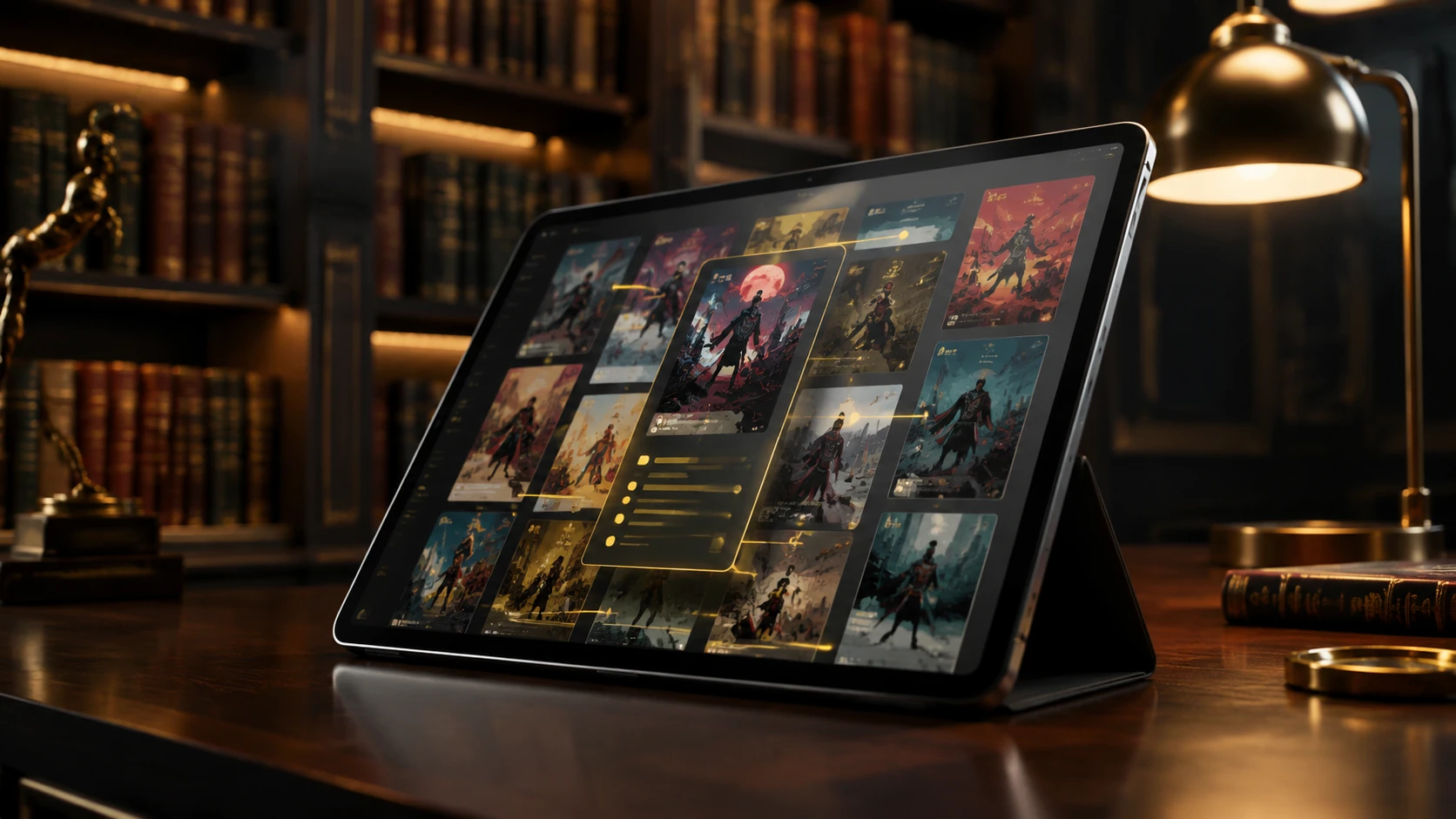
By 2026, the digital comic landscape has evolved from a series of walled gardens into a vast, interconnected ocean of content. With over 150,000 new chapters released weekly across global platforms, the 'to-read' pile has become a source of anxiety rather than joy for most enthusiasts. The challenge is no longer finding something to read, but rather maintaining a coherent, searchable, and permanent record of the stories that matter to you. Digital archiving is no longer just for librarians; it is a necessary skill for the modern reader who wants to move beyond the algorithmic feed and reclaim sovereignty over their digital collection. This guide outlines the professional-grade frameworks for curating a semantic personal library that transcends platform limitations.
The Shift to Semantic Curation: Why Folders Are Obsolete
In the early days of digital reading, organization was simple: you had folders for series and filenames for chapters. In 2026, this hierarchical model has collapsed under the weight of transmedia IP. A single webtoon might have an associated web novel, a soundtrack, a physical collectible, and multiple localized versions. Semantic curation uses metadata—not location—to define relationships. Instead of searching for a file, you search for entities, themes, and narrative arcs. This allows for a 'dynamic library' where a single series can exist simultaneously in your 'Cyberpunk' collection, your 'Strong Female Lead' shelf, and your 'In-Progress Adaptations' tracker without duplicating data.
Implementing the 2026 Metadata Standard
- Use ComicInfo.xml extensions for localized title variations and cross-platform IDs.
- Apply 'Lore Consistency' tags to track shared universes across different publishers.
- Integrate 'Reading Sentiment' metadata to filter your library by emotional resonance (e.g., 'High-Stakes Thriller' vs. 'Cozy Slice of Life').
- Leverage automated OCR tools to index dialogue for deep-text searchability within your private archive.
Step-by-Step: Building Your Sovereign Digital Archive
Building a resilient library requires moving away from platform-exclusive 'bookmarks' which can vanish if a service shuts down or loses licensing rights. A sovereign archive is one where you own the index, even if the content is hosted elsewhere. The first step involves selecting a central management hub that supports the Unified Rights Standard (URS). This allows your library to 'handshake' with various platforms to verify your access while maintaining your personalized organization and reading history independently.
Once your hub is established, the curation process moves into the 'Tagging and Layering' phase. Rather than relying on generic genre tags provided by platforms, power readers in 2026 use custom taxonomies. For example, tagging a Manhwa by its 'Art Style Evolution' or 'Pacing Velocity' allows you to find exactly what fits your current mood. This phase also includes the integration of 'Smart Folders'—automated collections that update in real-time as new chapters match your specific semantic criteria.
The Role of AI in Personal Library Management
Artificial Intelligence has transformed from a creation tool into a curation assistant. In 2026, 'Personal Librarian' AI agents can scan your reading habits and your existing archive to suggest missing links in a series or notify you when a spin-off novel is released. More importantly, these AI tools help clean up inconsistent metadata, such as differing transliterations of character names across various fan-translations and official releases, ensuring your search results are always accurate.
Avoiding Common Curation Mistakes
- Over-tagging: Creating too many hyper-specific tags that you'll never use again.
- Platform Dependence: Relying solely on a platform's 'Library' tab without an external backup of your reading list.
- Neglecting Metadata Health: Allowing 'Dead Links' to accumulate when series are delisted from major services.
- Ignoring Privacy: Using cloud-based curation tools that sell your reading data to advertisers without anonymization.
Future-Proofing Your Collection for 2027 and Beyond
As we look toward the next decade, the convergence of AR and digital libraries will mean your archive is no longer just a list on a screen—it will be a virtual space you can walk through. Preparing for this 'Spatial Reading' era means ensuring your library supports high-fidelity cover assets and 3D metadata. By mastering the art of curation today, you are not just organizing files; you are building a legacy of your digital cultural consumption that can survive the rapid shifts of the tech industry.
FAQ
What is the best format for archiving digital comics in 2026?
The industry standard has shifted toward interoperable containers like CBZ or PDF that include embedded ComicInfo.xml metadata for semantic searchability.
Can I sync my library across different reading apps?
Yes, by using tools that support the 2026 Unified Rights Standard, you can synchronize your reading progress and metadata across multiple compliant applications.
How do I protect my digital library from platform shutdowns?
Maintain a 'Sovereign Index'—a standalone database of your collection and reading history—and use tools that allow for localized caching of purchased content.