The 2026 Webtoon-to-Animation Pipeline: Navigating the New Era of Transmedia Licensing
The traditional animation pitch is dead. In 2026, the bridge between digital comics and global streaming hits is built on data-validated narrative engines and AI-assisted pre-production workflows.
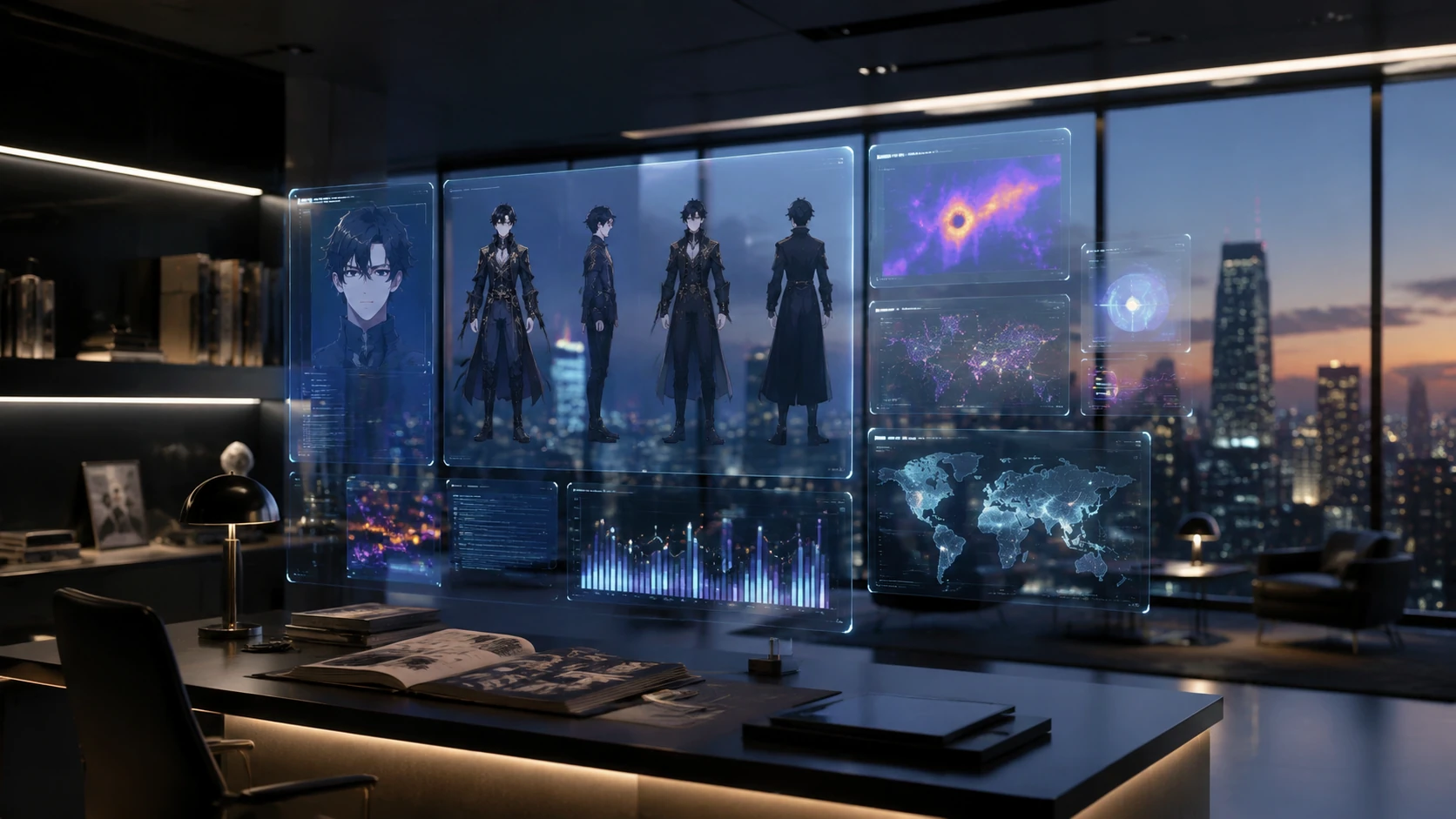
The year 2026 marks a definitive shift in how comic intellectual property (IP) transitions from the vertical scroll to the animated screen. For decades, the licensing process was a black box of subjective editorial tastes and high-risk 'blind' pitches. Today, that model has been replaced by a data-driven transmedia pipeline that prioritizes narrative validation and technical readiness. Major streaming giants and independent animation houses no longer ask for a simple pilot script; they demand a 'Validated Tech-Pack'—a comprehensive dossier including sentiment analysis, scroll-velocity heatmaps, and AI-assisted pre-visualization (pre-viz) assets that prove a story’s global resonance before a single frame of final animation is rendered. This news analysis explores the structural changes in the 2026 licensing market and what they mean for independent creators.
The Death of the 'Blind Pitch': Data as the New Script
In the current market, a webtoon’s success is no longer measured solely by 'likes' or total views. Animation studios now utilize Semantic Resonance Scores to determine if a story has the structural integrity to sustain multiple seasons. These scores are derived from how readers interact with specific narrative beats. For example, if data shows that 85% of readers in both the US and South Korea slowed their scroll speed during a specific character revelation in Chapter 14, studios see 'cross-cultural narrative hooks'—a gold mine for licensing. This shift has turned the creator's dashboard into a professional-grade pitch deck. Studios are looking for stories that have already 'self-corrected' based on reader feedback, reducing the financial risk of a $20 million animation budget.
Key Metrics Studios Demand in 2026
- Sentiment Consistency: Measuring reader emotional alignment with the protagonist’s journey across 50+ chapters.
- Character Stickiness: Data on fan-art volume and social sharing of specific character designs to gauge merchandising potential.
- Retention Velocity: The speed at which a new reader converts into a 'super-fan' who purchases early-access chapters.
- Global Semantic Fit: How well the story's core themes translate across the top five global comic-consuming languages.
Modular Production: Closing the Gap Between Panels and Frames
The most significant technical advancement in 2026 is the 'Modular Pre-Viz' workflow. Modern webtoon creators are increasingly using 3D asset libraries and AI-driven style transfer tools that allow for a seamless hand-off to animation studios. By providing a 'Digital Bible' that includes 360-degree character turnarounds, consistent lighting environments, and haptic-feedback cues, creators are slashing the pre-production time for animation by up to 40%. This technical readiness makes an IP significantly more attractive to studios looking for rapid turnaround in an era of high-speed content consumption. We are seeing a rise in 'Production-Ready Comics,' where the comic itself acts as the definitive storyboard for the future series.
IP Sovereignty and the New Licensing Contract
Contractual structures in 2026 have evolved to protect the creator’s long-term 'Narrative Integrity.' The era of 'work-for-hire' buyouts is fading, replaced by Participatory Fractional Licensing. In these models, creators retain a 'Lore Seat' on the production board, ensuring that adaptations don't deviate from the established logic of the universe. This is a direct response to the 'continuity crisis' of the early 2020s, where poor adaptations damaged the original IP's value. Modern contracts often include 'Lore Reversion Clauses,' where the rights to the animation revert to the creator if the studio fails to maintain the IP’s semantic core or fails to produce a sequel within a three-year window.
Standard 2026 Contractual Safeguards
- Transmedia Consultation Rights: Mandatory creator sign-off on major character design changes.
- Cross-Platform Revenue Sharing: A percentage of merchandise and spin-off revenue, regardless of the format.
- AI Training Prohibitions: Strict limits on using the original art to train generative models without explicit, recurring compensation.
Global Distribution: The Simultaneous Release Standard
With the rise of localized AI-dubbing and real-time cultural adaptation, 2026 animation releases are almost always 'Global-Day-One.' Studios are no longer releasing a show in Korea and waiting six months for a US dub. The pipeline now integrates localization at the script stage. For creators, this means that world-building must be 'Culture-Modular'—having a core narrative that is universal while allowing for visual or linguistic tweaks that make the story feel local in every market. This glocalized approach is what separates the billion-view franchises from the niche hits. Successful creators are those who design their worlds with global scalability in mind from the very first panel.
As we move further into 2026, the distinction between a 'comic creator' and a 'transmedia architect' will continue to blur. The winners in this new economy will be those who master the technical and data-driven aspects of the animation pipeline while maintaining the raw, emotional storytelling that made their work popular in the first place. The pipeline is open; the only question is whether your IP is ready to flow through it.
FAQ
What is a 'Validated Tech-Pack' in 2026?
A Validated Tech-Pack is a set of data and technical assets (like 3D models and engagement analytics) that prove a comic is ready for animation and has a proven audience.
Do I need an agent to get an animation deal in 2026?
While traditional agents still exist, many 2026 creators use 'IP Management Platforms' that use data to match their work with interested studios directly.
How does AI affect the webtoon-to-animation pipeline?
AI is used primarily for pre-visualization, automated rotoscoping, and real-time localization, making it faster and cheaper to adapt complex comic art styles.