The 2026 Visual Search Revolution: Mastering Image-to-Image Discovery for Webtoon Growth
In 2026, the way readers find new comics has shifted from typing queries to 'visual vibes' and image-based similarity engines. This article explores how creators can optimize for this visual-first search era.
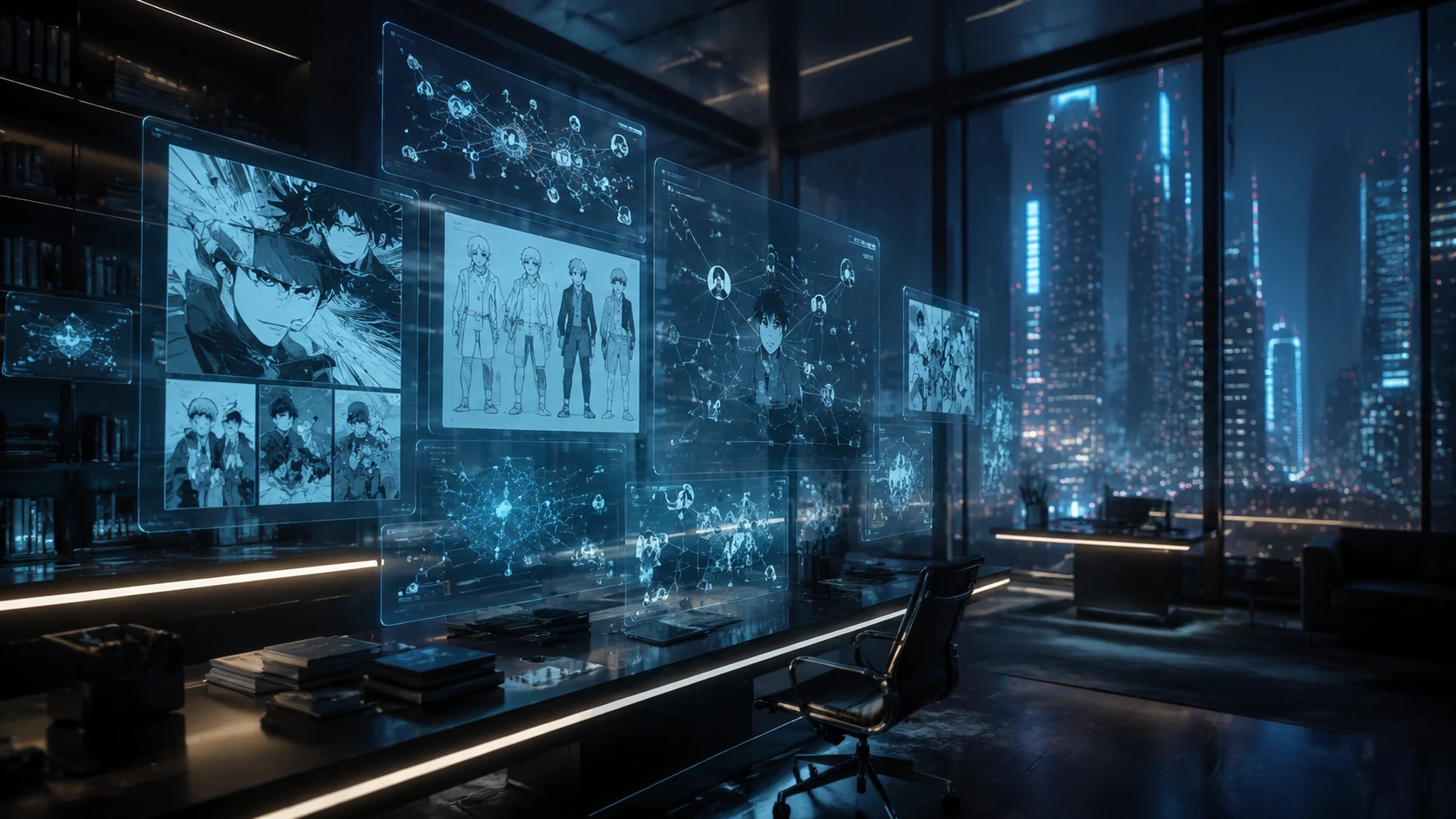
For decades, the discovery of comics and webtoons was tethered to the constraints of the text box. Readers typed 'romance manga' or 'isekai manhwa' into search engines, relying on metadata and keywords to bridge the gap between their desire and a creator's work. However, as we move through 2026, that paradigm has fundamentally shattered. The 'Visual Search Revolution' has arrived, driven by sophisticated AI vision models that allow readers to find content based on aesthetic style, character silhouettes, and visual 'mood' rather than just genre tags. This shift represents the most significant change in webtoon discovery since the invention of the vertical scroll, moving from explicit text queries to implicit visual intent.
What is Visual-First Discovery in 2026?
In the current landscape, search engines like Google and specialized platform discovery tools no longer just 'read' your comic's description; they 'see' your art. Using advanced Contrastive Language-Image Pre-training (CLIP) and proprietary vision transformers, these systems analyze the actual pixels of your panels. When a reader uses a tool like Google Lens to snap a picture of a character they like, or clicks 'Similar Visuals' on a platform like COMICLS, the algorithm isn't looking for the word 'Action'; it is looking for the specific linework, color temperature, and anatomical style that matches the source image.
The Rise of 'Visual Vibe' Queries
Readers are increasingly bypassing traditional categories in favor of visual atmosphere. A query might now look like an uploaded image of a moody, rain-slicked cyberpunk street with the command: 'Find me a story that looks like this.' For a creator, this means that your 'visual brand'—the consistent use of color palettes, panel density, and character silhouettes—now serves as your most powerful SEO asset. If your work visually aligns with high-traffic 'aesthetic clusters,' you are more likely to be surfaced in these automated similarity loops.
How AI Vision Engines 'Read' Your Panels
To optimize for this era, creators must understand the hierarchical way AI vision engines categorize visual data. Modern models decompose a webtoon panel into several layers of meaning. First, they identify the 'Global Semantic Context'—is this a high-fantasy setting or a slice-of-life school? Next, they analyze 'Style Fingerprints,' which include brush textures, line weights, and the specific way eyes or hair are rendered. Finally, they look at 'Compositional DNA,' such as how much 'white space' or 'gutter' is used between panels.
- **Style Consistency:** Engines prioritize creators who maintain a tight 'visual fingerprint' across multiple chapters, as it signals a professional and reliable IP.
- **Color Archetyping:** Specific palettes (e.g., warm gold and crimson) are automatically mapped to emotional categories like 'Regal Romance' or 'Betrayal Dramas.'
- **Character Silhouette Clarity:** Characters with distinct, high-contrast silhouettes are easier for AI to track across different platforms and fan-generated content.
Optimizing Your Comic for Visual Similarity
Strategic optimization in 2026 is no longer about keyword stuffing your description; it is about 'Visual Tagging.' This involves ensuring that your most important story beats and character introductions are rendered with high visual clarity. You want to ensure that if a reader takes a screenshot of your protagonist, the AI can immediately link that image back to your series' official repository. This is where high-quality, high-resolution rendering and consistent character design sheets become non-negotiable for growth.
The Role of Semantic Image Metadata
While the AI 'sees' the image, it still uses underlying metadata to confirm its findings. In 2026, 'Alt-Text' for webtoons has evolved into 'Semantic Descriptions.' Instead of 'Man standing in rain,' professional studios now use structured data like 'Protagonist [Name], cinematic low-angle, noir lighting, heavy hatching, emotional state: despair.' This bridge between the visual and the semantic helps the engine verify that its visual analysis is correct, boosting your authority in search results.
Risks of the Visual Search Era: Avoiding Homogeneity
A significant risk of optimizing for visual search is the 'Style Trap.' If creators only produce art that looks like existing high-traffic 'clusters' to satisfy the algorithm, the market risks becoming visually stagnant. The most successful creators in 2026 are those who find the 'Goldilocks Zone': they maintain enough visual familiarity to be discoverable in similarity loops, but introduce enough 'Visual Friction'—unique stylistic departures—to remain memorable to the human eye once discovered.
The Future: Real-Time Visual Discovery
We are moving toward a world where 'Discovery' happens in real-time. Smart glasses and integrated mobile OS features will soon allow readers to look at a billboard or a piece of street art and instantly be recommended webtoons that share that specific aesthetic. For the creator, this means that every panel you draw is a potential entry point into your entire ecosystem. Treating every chapter as a 'visual landing page' is the only way to thrive in the 2026 attention economy.
FAQ
How do I optimize my webtoon for Google Lens in 2026?
Focus on high-contrast character designs and consistent color grading. Ensure your lead characters have unique silhouettes and that your series title is visually integrated into your key art in a way that AI vision can recognize.
Does visual search replace traditional tags and categories?
No, it augments them. While AI vision identifies the 'vibe,' tags provide the structural context. In 2026, discovery is a hybrid of visual similarity and semantic intent.
Will AI-generated art have an advantage in visual search?
Not necessarily. Modern search engines prioritize 'Original Style DNA' and 'IP Authority.' Unique, human-led stylistic choices often rank higher because they don't blend into the 'average' of training data.