The 2026 Visual Literacy Audit: A Step-by-Step Guide to Reducing Reader Friction
In an era of infinite content, visual friction is the silent killer of series longevity. This guide provides a professional framework for auditing your comic's graphic density to ensure maximum reader retention.
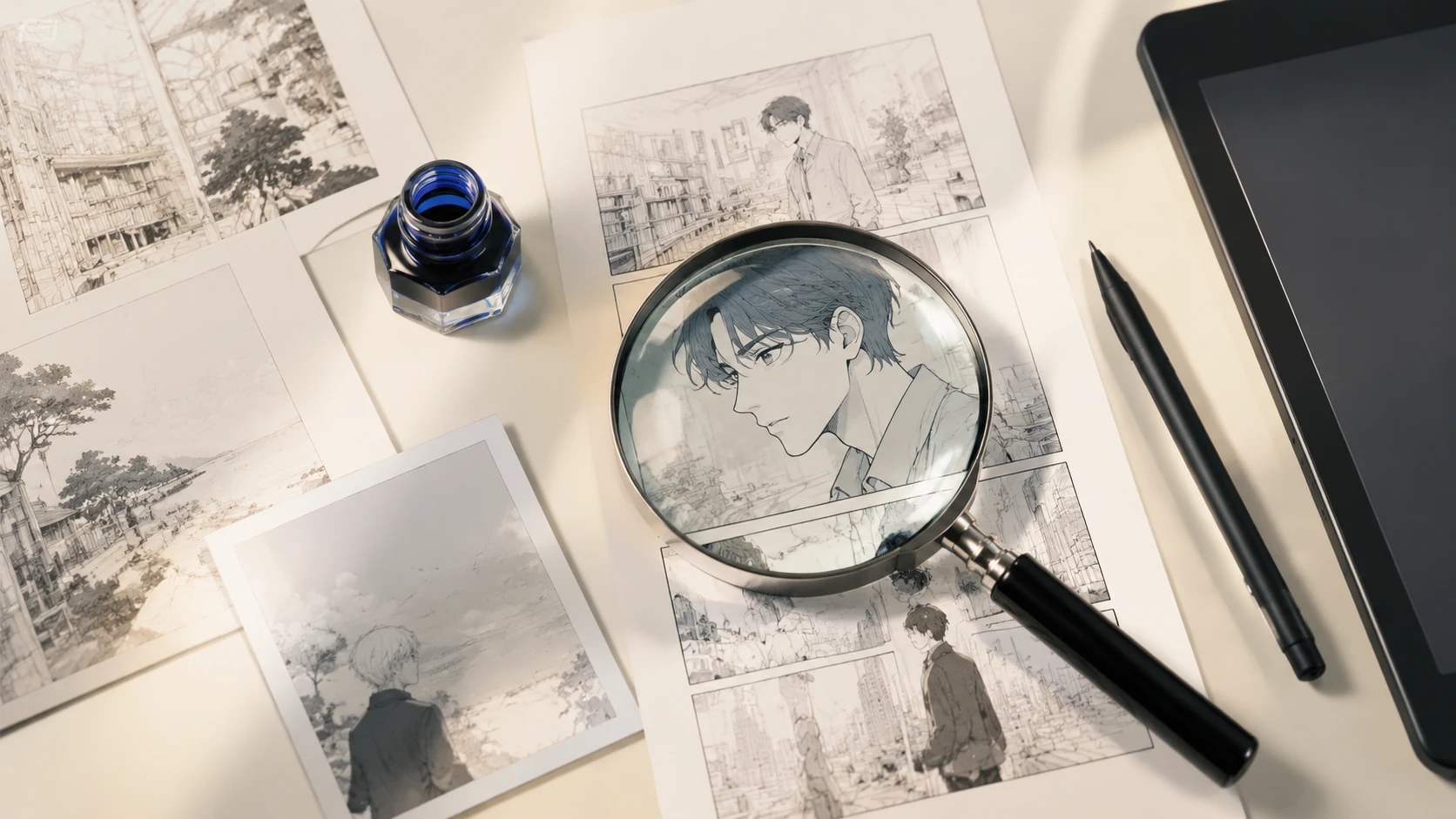
By 2026, the primary challenge for comic creators is no longer discovery, but 'visual fatigue.' With AI-generated content flooding platforms, readers have developed an subconscious defense mechanism against high-friction layouts. Visual friction occurs when the eye has to work too hard to decode a panel, identify a character, or follow the narrative flow. This cognitive tax leads to 'bounce rates' mid-chapter, even if the writing is stellar. A Visual Literacy Audit is the process of deconstructing your work through the lens of cognitive load management. It ensures that your graphic information density (GID) is perfectly calibrated for the mobile-first, short-burst reading habits of the modern audience. This guide provides a systematic workflow to identify and eliminate these invisible barriers.
Step 1: Quantifying Graphic Information Density (GID)
The first phase of the audit involves measuring the GID of your average chapter. In 2026, the 'Goldilocks Zone' for webtoons is neither too sparse nor too cluttered. High-density panels—those packed with intricate backgrounds, heavy textures, and overlapping dialogue—should be used sparingly as 'anchor points' rather than the default. To audit this, take a random 10-panel sample from your latest update. Rank each panel on a scale of 1 to 5 based on visual complexity. If your average is above 4, your readers are likely experiencing 'scroll-blindness.' They are seeing the art but not processing the story. The goal is a rhythmic oscillation between high-density 'spectacle' panels and low-density 'breathing' panels that allow the eye to rest and accelerate.
The 3-Second Rule for Mobile Consumption
- Immediate Identification: Can the reader identify the POV character within 0.5 seconds?
- Action Clarity: Is the physical movement or emotional intent of the panel clear without reading the bubbles?
- Environmental Context: Does the background support the mood without competing with the characters for attention?
Step 2: Auditing the 'Focal Path' and Eye-Tracking
Reader friction often stems from a broken 'focal path.' On a vertical scroll, the eye naturally moves in a zigzag or a central vertical line. If your panel composition forces the eye to move horizontally against the scroll or jump erratically across the screen, you are creating friction. During your audit, use a digital overlay to trace the eye's path from the top of the chapter to the bottom. Look for 'dead ends' where the eye gets stuck in a corner or 'loop-backs' where the reader has to scroll up to re-read a bubble because the visual flow was misleading. Professional 2026 studios use 'gravity-led composition,' where the visual weight of the elements pulls the reader's gaze downward effortlessly.
Step 3: Color and Contrast Calibration
Color is not just aesthetic; it is a functional tool for information hierarchy. A common mistake in the current market is the 'over-rendering' trap—applying hyper-detailed shading and lighting to every object in the panel. This flattens the hierarchy and makes it difficult for the reader to distinguish the foreground from the background. During your audit, convert your panels to grayscale. If the characters blend into the background when the color is removed, your values are too close. In 2026, 'Value Separation' is the hallmark of high-quality visual literacy. Use high contrast for focal points and low-contrast, desaturated tones for secondary environmental details to guide the reader's attention to what truly matters.
Common Pitfalls in 2026 Production
- The Asset Overload: Using too many 3D assets without manual 'linework integration,' leading to a jarring visual clash.
- SFX Clutter: Overwhelming the panel with sound effect text that obscures the character's facial expressions.
- Static Pacing: Maintaining the same panel size for the entire chapter, which induces boredom and increases the risk of skipping.
Step 4: The Dialogue-to-Visual Ratio Audit
The final step of the audit is checking the 'Textual Friction.' In the 2026 landscape, readers prefer 'show, don't tell' more than ever before. If a panel requires a paragraph of exposition to explain an emotion that the art failed to convey, the visual literacy of that sequence is low. Audit your dialogue bubbles: are they covering up the most interesting parts of your art? Are you using too many bubbles per panel? A high-retention chapter typically maintains a ratio where text occupies no more than 15-20% of the total screen real estate. If your bubbles are crowding the characters, consider breaking the dialogue into more panels or trusting your visual storytelling to carry the weight of the scene.
The Visual Literacy Audit Checklist
To maintain a high standard of series health, perform this audit every five chapters. Consistency is key to building a loyal audience that trusts your pacing. By reducing friction, you transform your comic from a chore to a seamless, immersive experience. Use the following checklist as your final quality control before hitting 'publish.'
- Check 1: Grayscale value separation between characters and backgrounds.
- Check 2: Trace the focal path to ensure a smooth vertical 'gravity' flow.
- Check 3: Verify the 3-second rule for the chapter's hook and cliffhanger.
- Check 4: Eliminate redundant 'over-rendering' in non-essential panels.
- Check 5: Audit the bubble-to-art ratio for mobile legibility.
FAQ
What is the most common cause of reader drop-off in 2026?
Visual fatigue caused by high graphic information density (GID). When every panel is equally detailed, the reader's brain stops prioritizing information, leading to boredom and disconnection.
How often should I perform a Visual Literacy Audit?
It is recommended to audit your series every 5 to 10 chapters to ensure your style hasn't drifted into over-complexity or visual clutter.
Can AI help with the Visual Literacy Audit?
Yes, AI tools in 2026 can generate heatmaps to predict reader eye-tracking and identify areas of high cognitive load, though manual artistic judgment remains essential.