The 2026 Vertical-Scroll Narrative Architecture (VSNA) Standard: Engineering Pacing for th
The Vertical-Scroll Narrative Architecture (VSNA) is the 2026 industry standard for engineering story flow in the age of infinite mobile distractions. Master the art of thumb-controlled pacing and focal anchoring to boost reader retention.
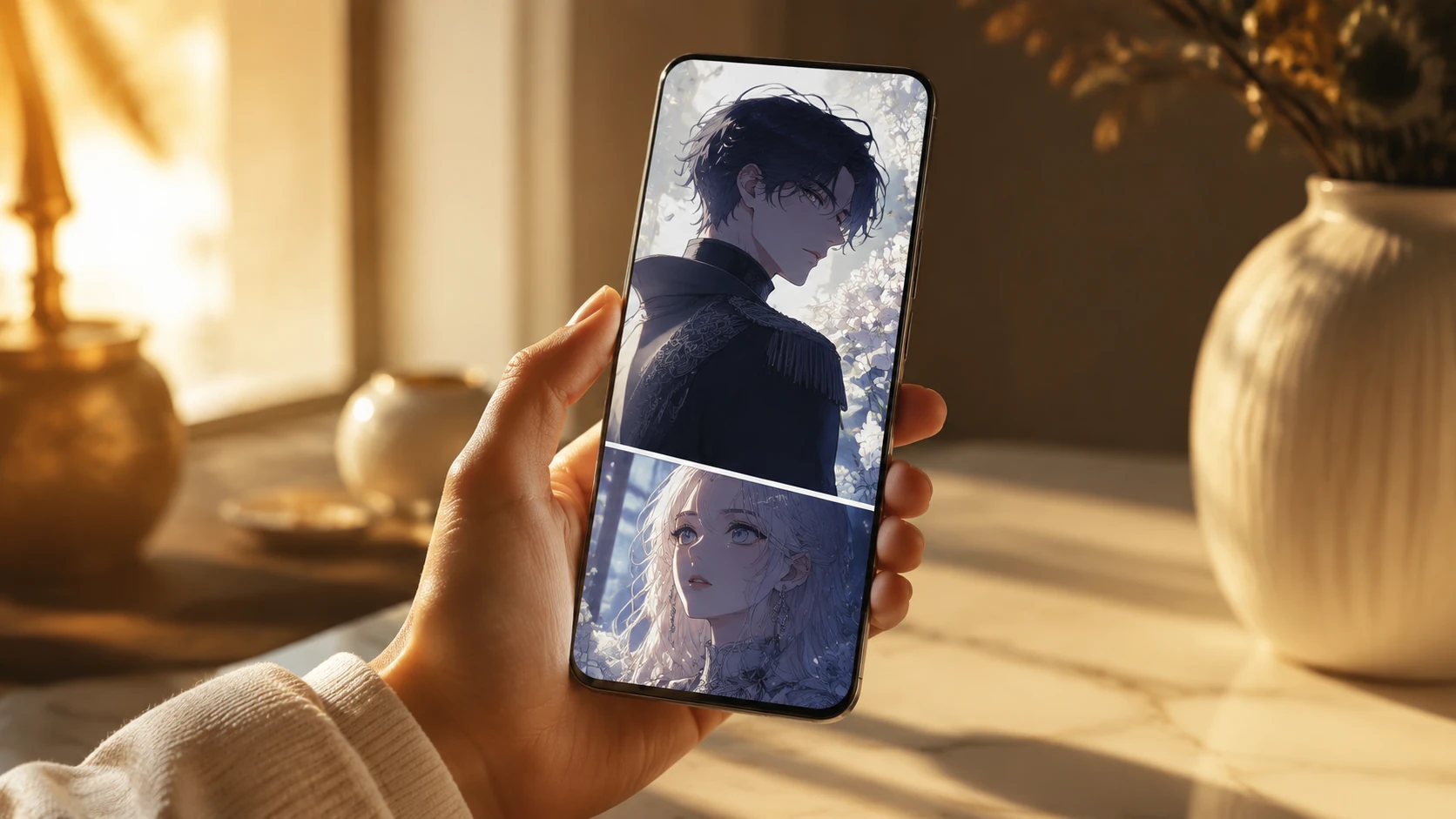
In 2026, the battle for reader retention is no longer fought with just art or plot; it is fought in the space between panels. As the 'Infinite Attention' market matures, the Vertical-Scroll Narrative Architecture (VSNA) has emerged as the definitive framework for engineering mobile-first stories. Unlike traditional page-based comics, which rely on the 'turn' to reset focus, vertical webtoons operate on a continuous, thumb-controlled velocity. VSNA provides a standardized methodology for creators to manipulate this velocity, ensuring that readers remain locked into the narrative flow despite the constant pull of mobile notifications and short-form video distractions. This article breaks down the technical pillars of VSNA and how to apply them to modern digital publishing.
The Three Pillars of VSNA: Velocity, Space, and Anchoring
The VSNA standard is built upon three core technical pillars that dictate how a reader experiences a story on a vertical axis. These are not just creative choices but structural requirements for high-retention IP in 2026. Understanding these pillars allows a studio to move from 'guessing' pacing to 'engineering' it.
1. Vertical Velocity Control
Vertical Velocity refers to the speed at which a reader’s thumb moves down the screen. In VSNA, creators use panel height and gutter length to dictate this speed. Longer gutters (the space between panels) act as 'brakes,' forcing the reader to scroll more to reach the next beat, which builds tension or signals a shift in tone. Conversely, tightly packed panels increase the velocity, creating a sense of urgency or rapid action. The 2026 standard suggests a 3:1 ratio of gutter-to-panel height for high-impact emotional beats.
2. The Negative Space Paradox
In the infinite scroll, 'nothing' is often 'something.' Negative space—white, black, or atmospheric gutters—is used to reset the reader's cognitive load. High-retention webtoons in 2026 utilize 'atmospheric gutters'—spaces filled with environmental gradients or floating debris—to maintain immersion while giving the reader's eyes a place to rest between dialogue-heavy sequences.
3. Focal Anchoring
Focal Anchoring is the practice of placing key narrative elements (characters, text bubbles, or objects) in a way that guides the eye in a zigzag or central-column path. VSNA mandates that focal anchors never remain static for more than three screen-lengths, as the human eye becomes 'blind' to repetitive positioning in a vertical scroll, leading to 'scroll-skimming' behavior.
The 'Scroll-Depth' Audit: Measuring Engagement
A key component of the VSNA standard is the ability to audit a chapter's performance through scroll-depth analytics. In 2026, major platforms provide heatmaps showing exactly where readers speed up or drop off. A 'flat' VSNA profile usually indicates a lack of dynamic pacing, where every panel is the same distance apart. To combat this, creators must implement 'pacing spikes'—sequences where the architecture radically changes to re-engage the reader's attention.
- Audit the 'First 5 Screens': Ensure the vertical velocity is high to hook the reader immediately.
- Identify 'Friction Gaps': Check for overly long gutters that might lead to boredom or drop-offs.
- Check 'Dialogue Density': Ensure text bubbles do not overlap focal anchors, obscuring the visual flow.
The Transition from 2D Pacing to Spatial Awareness
As we move further into 2026, VSNA is evolving to include spatial computing considerations. Modern vertical-scroll engines now allow for parallax layers and 'Z-axis' depth, where elements appear to move at different speeds during the scroll. This creates a 3D-like immersion within a 2D vertical format. Creators who master the 2D VSNA framework now will be best positioned to transition into the emerging AR-comic market, where 'pacing' becomes a physical movement through a 360-degree environment.
Common VSNA Implementation Mistakes
Even with a framework, many creators fall into the 'Uniformity Trap.' This occurs when a creator finds a comfortable spacing rhythm and applies it to the entire series. In 2026, uniformity is the enemy of retention. Readers subconsciously adapt to a rhythmic scroll and begin to tune out. Successful VSNA implementation requires 'architectural disruption'—breaking the established rhythm every 10-15 panels to force the brain to re-process the visual information.
FAQ
What is the ideal gutter length in VSNA?
There is no single 'ideal' length, but the 2026 standard suggests 1.5x to 2x the screen height for major tonal shifts, and 0.2x for rapid action sequences.
How does VSNA help with monetization?
By engineering higher retention and 'fast-scroll' anticipation, VSNA naturally drives readers toward cliffhangers, increasing the conversion rate for 'Fast Pass' or micro-transaction payments.
Can I use VSNA for traditional manga layouts?
VSNA is specifically designed for the vertical-scroll format. Applying it to traditional pages requires a 'PNR' (Print-Native Reconstruction) process to translate vertical flow back into static page grids.