The 2026 Vector-Native Shift: Why Resolution-Independent Architecture is Replacing Static
The industry is moving beyond static JPEG and PNG scrolls toward vector-native rendering. This shift allows for infinite resolution, responsive paneling for foldable devices, and dynamic asset management.
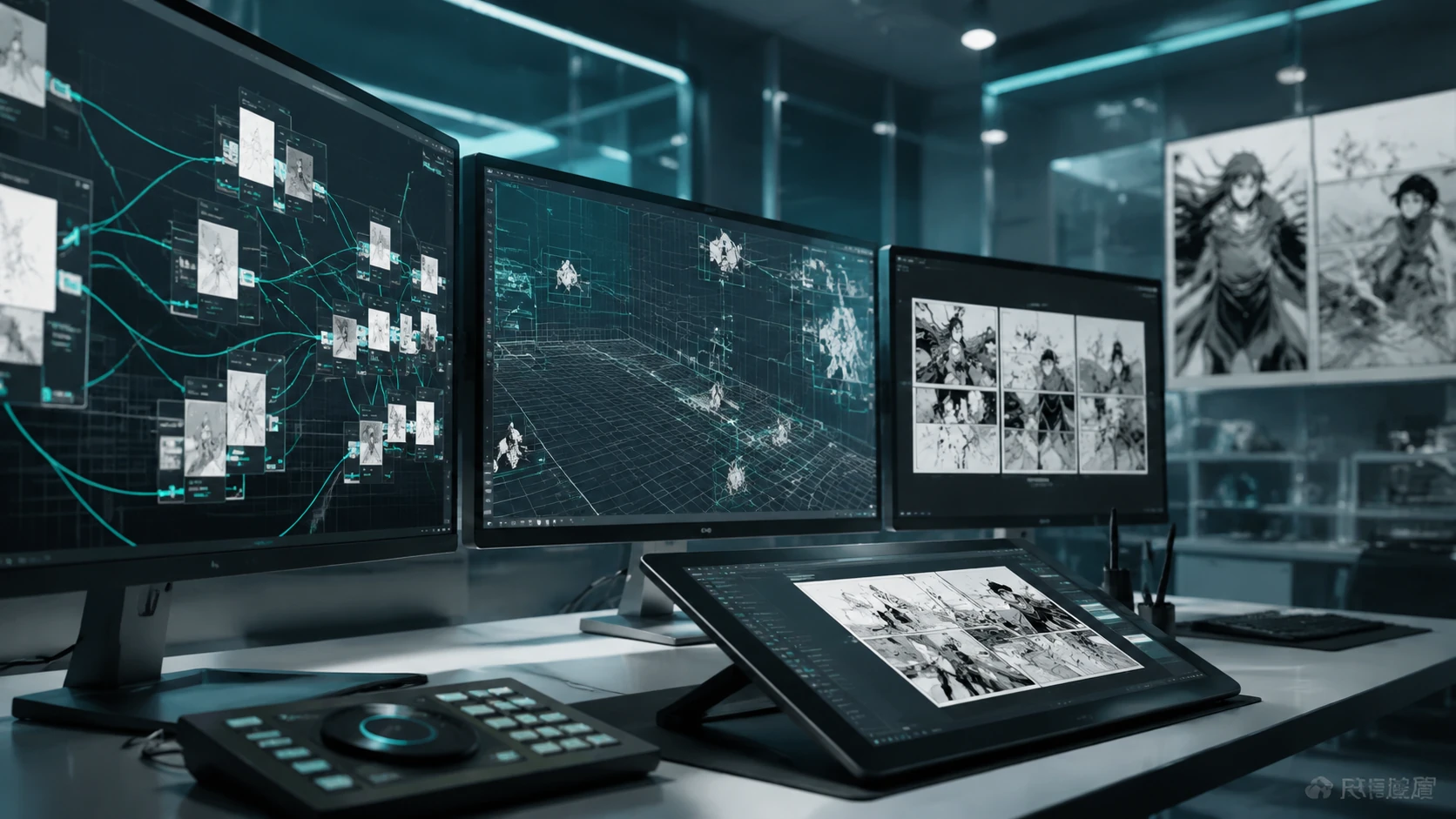
For over a decade, the digital comic industry has relied on the 'static scroll' model—long strips of JPEG or PNG files that are served to readers based on fixed widths. However, as we move through 2026, the industry is undergoing its most significant technical transition yet: the Vector-Native Shift. This evolution replaces traditional rasterized pixels with resolution-independent, object-oriented rendering engines. Driven by the proliferation of ultra-high-definition foldable devices and the need for more efficient global content delivery, vector-native architecture allows comic panels to behave more like modern web applications than static images. This shift isn't just about clarity; it is about future-proofing intellectual property for a landscape where the 'standard screen size' no longer exists.
The End of the Fixed Canvas: Responsive Storytelling
The primary driver for vector-native technology is the diversity of hardware in 2026. With the rise of tri-fold smartphones, AR-integrated glasses, and 8K desktop monitors, a static image optimized for a 1080p mobile screen often looks blurred or awkwardly cropped on other devices. Vector-native comics use SVG (Scalable Vector Graphics) and proprietary JSON-based coordinate systems to define shapes, lines, and textures. This means a single file can scale from a smartwatch face to a cinematic billboard without a single pixel of degradation. It enables 'responsive storytelling,' where the layout of the panels can subtly shift or re-stack based on the aspect ratio of the reader's device, ensuring the narrative flow remains intact regardless of the hardware.
Object-Oriented Assets and Dynamic Layering
In a vector-native workflow, a comic page is no longer a single flat file but a collection of discrete, addressable objects. Each character, background element, and speech bubble is a separate data layer. This modularity offers unprecedented flexibility for publishers and creators. For instance, updating a character's costume across 500 chapters can be done by modifying a single master vector asset rather than redrawing thousands of panels. Furthermore, this architecture facilitates 'live' localization. Instead of baking translated text into an image, the engine renders text dynamically over the artwork, allowing for real-time language switching, screen-reader accessibility for the visually impaired, and even search-engine indexing of the story's dialogue.
Key Benefits of the Vector-Native Engine
- Infinite Zoom: Readers can inspect fine details without seeing pixelation, essential for complex 'Easter egg' world-building.
- Reduced Bandwidth: Vector data is significantly smaller than high-resolution raster images, leading to faster load times and lower data costs for readers.
- Haptic and Audio Integration: Because the engine knows where 'objects' are located, it can trigger haptic vibrations or directional audio as the reader scrolls past specific visual triggers.
- Version Control: Studios can push updates, corrections, or 'remastered' colors to an entire series instantly without requiring the reader to re-download massive image caches.
The Production Hurdle: Rethinking the Creative Pipeline
The transition to vector-native isn't without challenges. Most professional comic artists are trained in raster-based software like Clip Studio Paint or Photoshop. Moving to a vector-first workflow requires a shift in how line weight, shading, and 'painterly' effects are handled. However, 2026-era AI tools are bridging this gap by automatically 'vectorizing' raster strokes in real-time while preserving the artist's unique texture and hand-drawn feel. Studios are now investing in 'Technical Artists' who act as the bridge between the creative team and the rendering engine, ensuring that the visual intent of the artist is translated perfectly into the code-driven canvas.
Implications for IP Longevity and Licensing
From a business perspective, vector-native comics represent a massive increase in IP valuation. In the past, a webtoon created in 2015 might look 'dated' by 2026 standards due to low resolution. Vector-native works are inherently future-proof. They are ready for the VR headsets of 2030 and the holographic displays of the future because they are not tied to the limitations of 2026 hardware. This longevity makes them highly attractive to licensing partners in gaming and animation, as the original comic assets can be imported directly into game engines like Unreal or Unity with minimal friction, maintaining visual consistency across platforms.
FAQ
Will vector-native comics replace traditional manga and webtoons?
They are replacing the file format (the 'how'), not the art style (the 'what'). You can still have a gritty, hand-drawn look in a vector-native file.
Do I need a special app to read vector-native comics?
Most major platforms in 2026 are updating their readers to support vector rendering, making the transition seamless for the end-user.
Is it harder for solo artists to create vector-native comics?
Initially, the learning curve is steeper, but modern AI-assisted tools are making vectorization automatic, allowing solo artists to reap the benefits of smaller file sizes and better resolution without changing their drawing style.