The 2026 ‘Value-Density’ Pivot: Ending Subscription Fatigue
In 2026, the 'Value-Density' (VD) pivot is helping studios recover from subscription fatigue by shifting from infinite-scroll models to high-value, finite series. This case study explores the transition from quantity to high-margin content units.
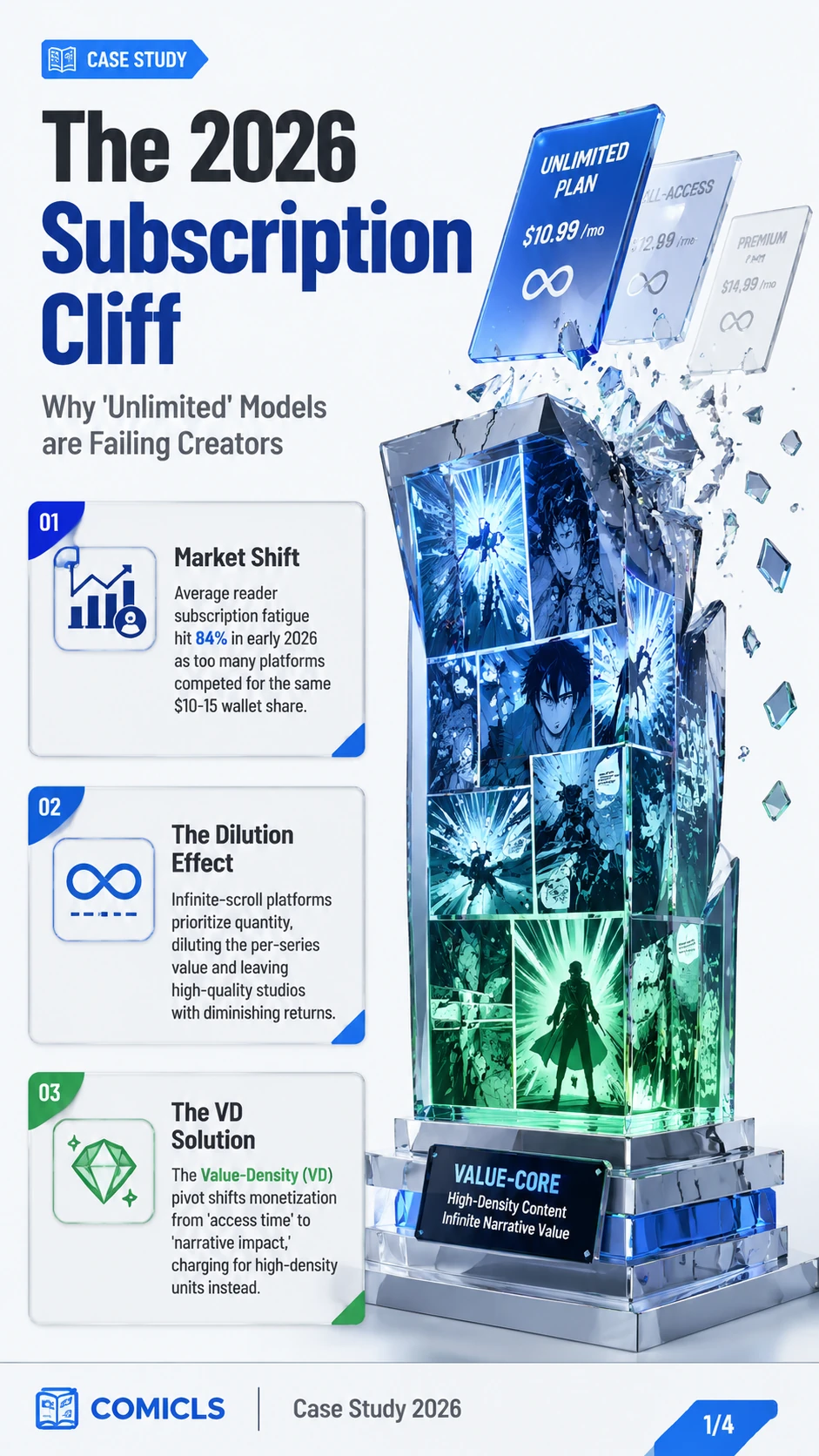
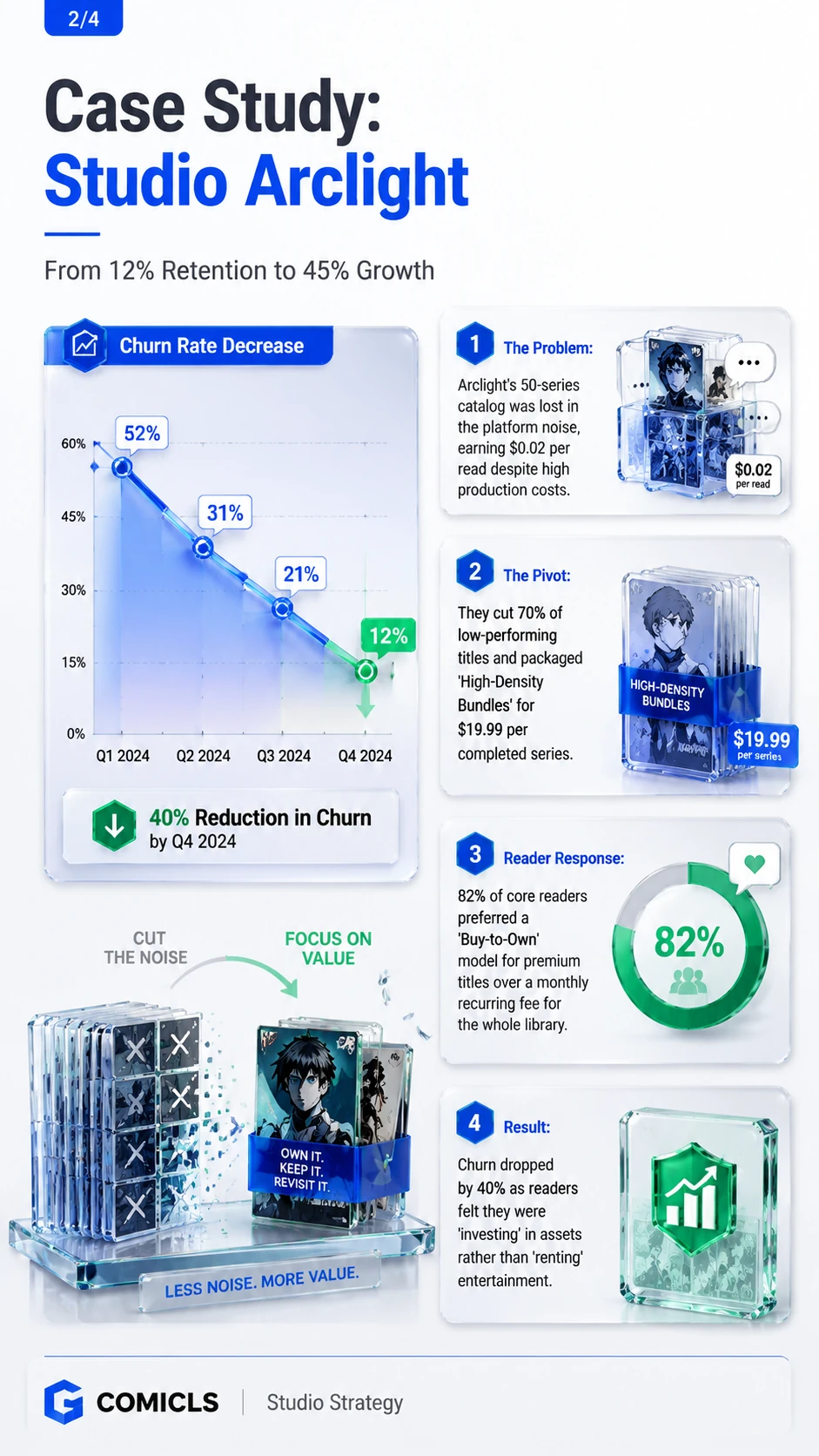
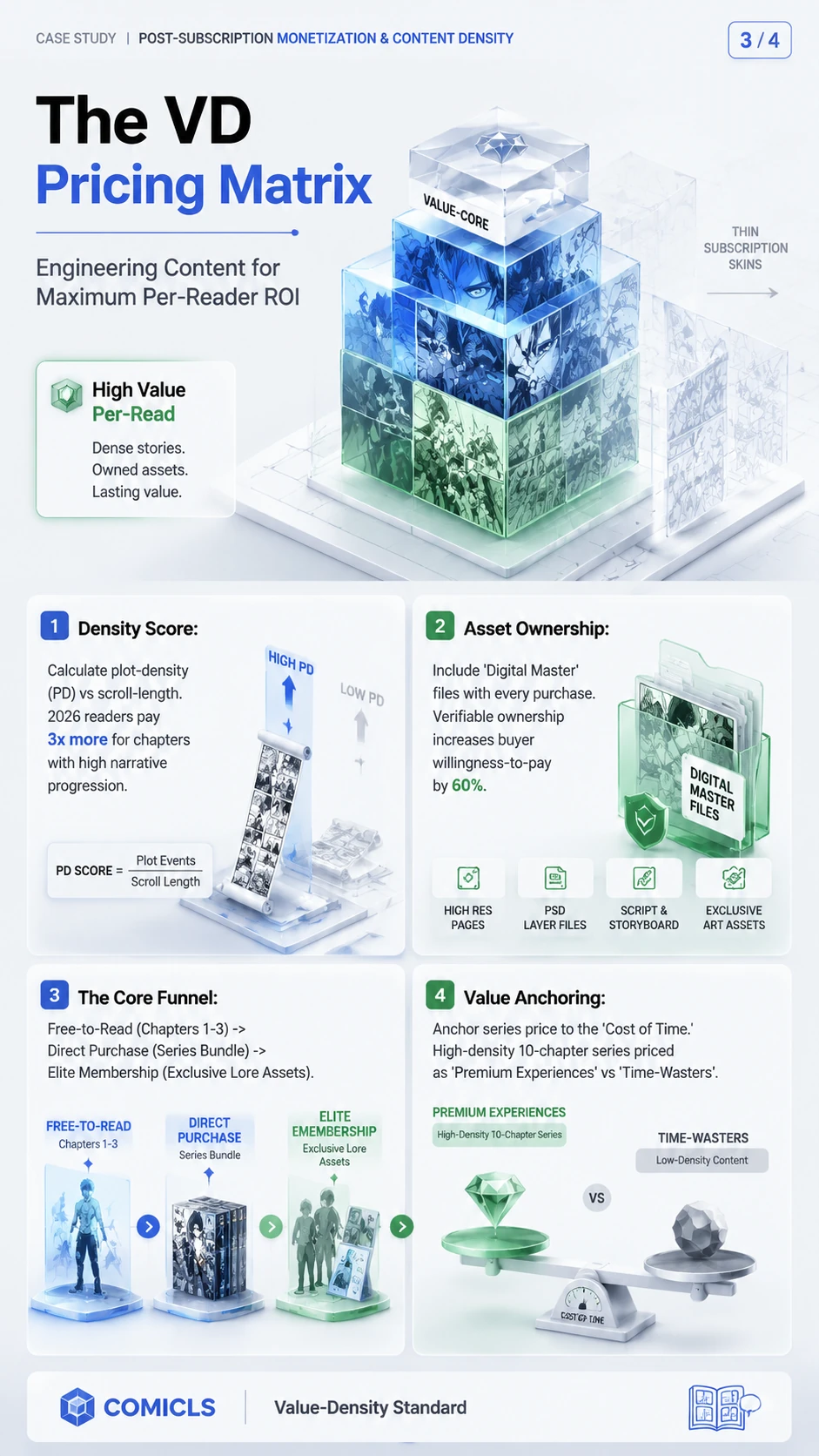
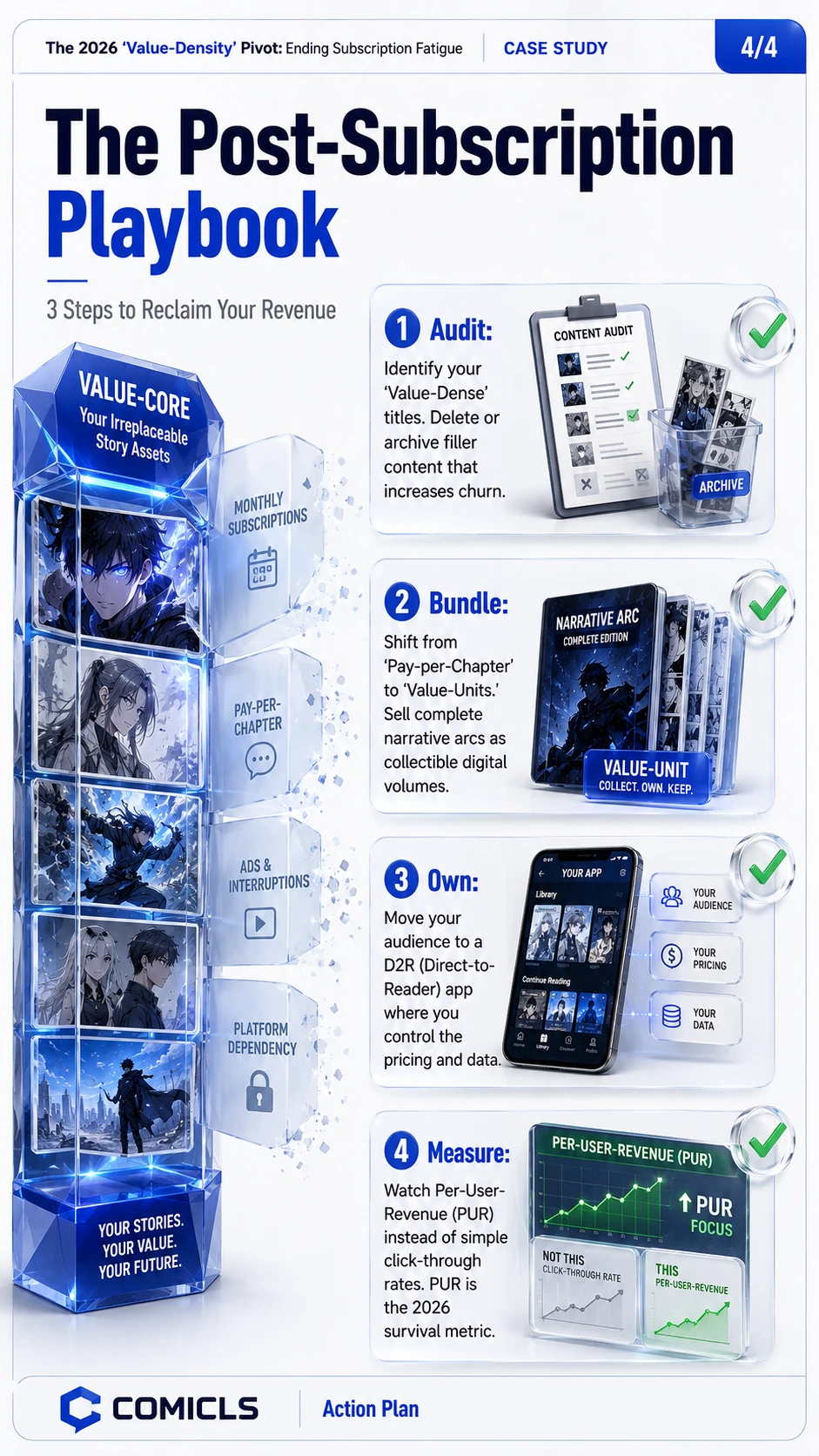
The subscription-only model for digital comics is reaching a breaking point in 2026. As platforms continue to prioritize quantity over quality, studios are finding it harder to sustain high-budget productions on fractional-penny payouts. This article examines the 'Value-Density' (VD) pivot—a strategic shift toward high-margin, direct-purchase models that treat webtoons and manga as premium assets rather than disposable content. By focusing on narrative density and verifiable reader ownership, studios can bypass platform fatigue and build a loyal, high-LTV audience.
- Why 2026 readers are abandoning 'unlimited' subscriptions for high-density series.
- How Studio Arclight recovered 40% of their churning audience using the VD model.
- A framework for pricing digital comic bundles based on narrative progression.
- Actionable steps for independent studios to transition to direct-to-reader revenue.
FAQ
What is the Value-Density (VD) model in 2026?
It is a monetization strategy that moves away from flat-rate subscriptions toward selling high-quality, dense narrative units as premium digital assets.
Is subscription fatigue really ending the webtoon boom?
No, the boom is evolving. Readers still want content, but they are increasingly unwilling to pay for multiple recurring subscriptions with low-quality filler.