The 2026 ‘Transcreation-First’ Workflow: A Guide to Engineering Cultural Nuance in Global
In 2026, simple translation is no longer enough to scale globally. This guide explores the 'Transcreation-First' workflow, a method for engineering deep cultural resonance in webtoon exports through hybrid AI-human systems.
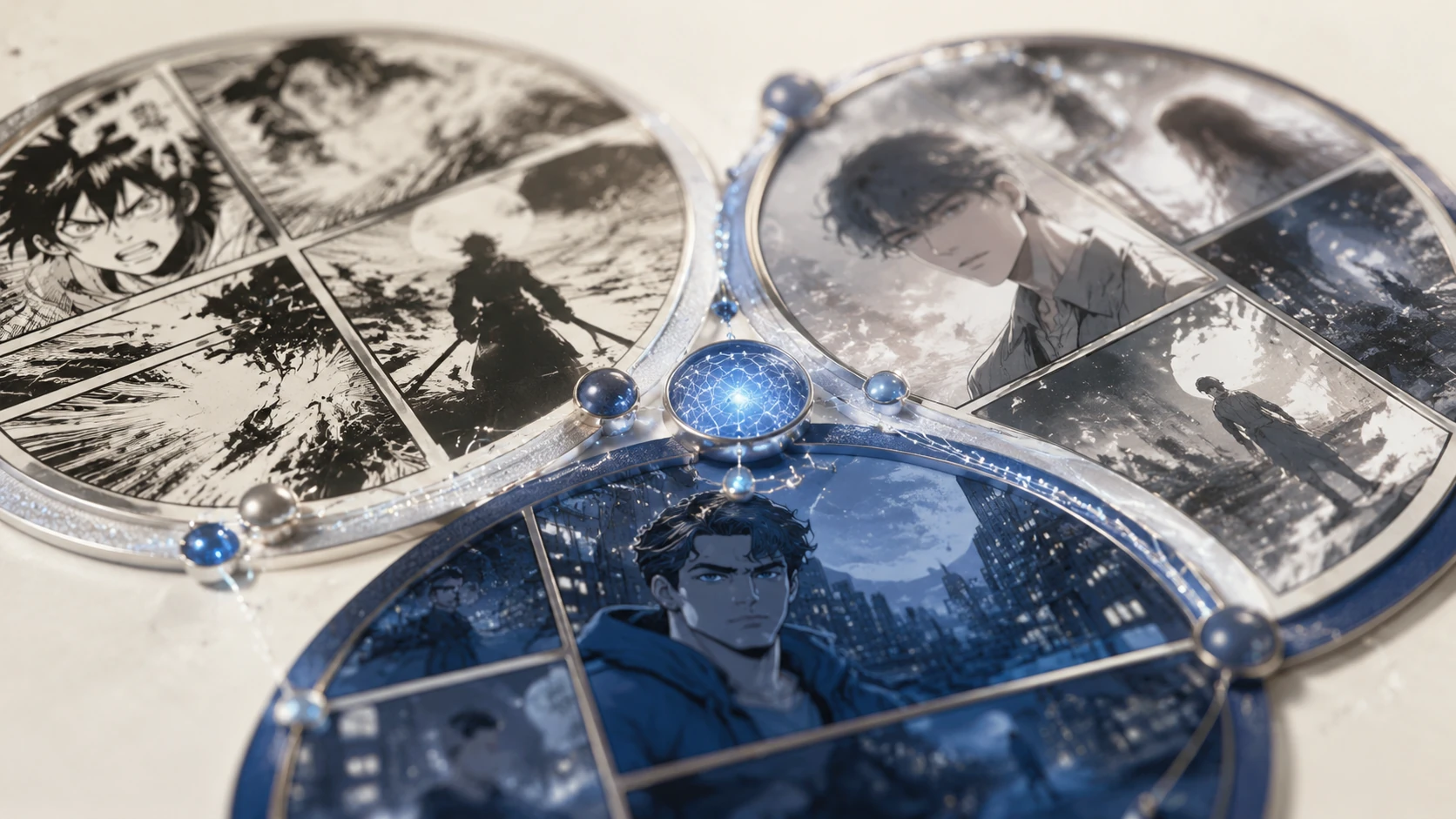
By 2026, the global webtoon market has moved past the era of 'raw translation.' As platforms become saturated with content, the only IP that manages to break through regional barriers is that which feels 'native' to every reader, regardless of their location. This shift has birthed the 'Transcreation-First' workflow. Unlike traditional translation, which focuses on linguistic equivalence, transcreation focuses on emotional and cultural equivalence. It involves re-engineering dialogue, visual symbolism, and even narrative pacing to ensure the story’s 'soul' survives the journey across borders. For creators and studios aiming for Tier-1 global success, mastering this workflow is no longer optional—it is the prerequisite for avoiding the 'foreign-content friction' that kills reader retention in the first three chapters.
The Shift from Translation to Narrative Engineering
In the 2026 landscape, search engines and platform algorithms prioritize 'cultural resonance.' If a reader in France encounters a webtoon with Korean-specific idioms that haven't been adapted, they experience a cognitive load that leads to churn. Transcreation solves this by mapping narrative intent to local cultural touchpoints. This process requires a 'Cultural Context Map' (CCM)—a document that identifies every localized entity within the comic, from food and honorifics to legal systems and social hierarchies. By identifying these 'friction points' during the pre-production of the export version, studios can maintain the integrity of the story while making it feel like it was written for the local audience from day one.
The Hybrid Intelligence Pipeline
The most successful transcreation workflows in 2026 utilize a hybrid model. Large Language Models (LLMs) are used to provide the initial 'semantic bridge,' but the 'nuance layer' is handled by human transcreators who specialize in specific demographics. This pipeline ensures that slang, humor, and emotional weight are not lost in the machine-translation process. The goal is to produce a script that flows naturally in the target language's unique cadence, often involving the complete rewriting of jokes or metaphors to fit local sensibilities without altering the plot's trajectory.
Step-by-Step: The Transcreation-First Workflow
Implementing a transcreation-first approach requires a systematic move through several layers of the IP. It is a collaborative effort between the original creators, localization experts, and technical editors.
- **Phase 1: Narrative Audit:** Deconstruct the original script to find culturally locked elements (e.g., specific school systems, historical references, or localized memes).
- **Phase 2: Entity Mapping:** Create a localized equivalent list. If a character is eating 'Tteokbokki,' should it stay as Tteokbokki to maintain 'K-Culture' appeal, or be adapted to a local comfort food to increase relatability? In 2026, the trend favors keeping cultural specifics but providing 'Lore-Gated' context for readers.
- **Phase 3: Visual Localization:** Identify Onomatopoeia (SFX) and background text that needs redrawing. High-end studios now use modular art layers to make this process frictionless.
- **Phase 4: Semantic Scripting:** The transcreator rewrites the dialogue into the target language, focusing on tone and character voice rather than word-for-word accuracy.
- **Phase 5: Quality Assurance (QA) Check:** A native-speaking 'Sensitivity Reader' reviews the chapter for unintentional cultural faux pas or pacing issues.
Visual Transcreation: Beyond the Speech Bubbles
A common mistake in early localization was ignoring the visual cues. In 2026, visual transcreation involves modifying subtle elements that can break immersion. This includes adapting hand gestures (which can have different meanings across cultures), modifying signage in the background, and even adjusting color palettes to match local aesthetic preferences. For example, horror webtoons exported to Southeast Asia often undergo 'Aesthetic Tuning' to emphasize specific supernatural tropes that resonate more strongly in those markets. By treating the art as a flexible asset rather than a static image, creators can significantly boost the 'native feel' of their work.
Avoiding the 'Uncanny Valley' of Localization
The 'Uncanny Valley' occurs when a story looks like it belongs to one culture but speaks like it belongs to another in a way that feels forced or artificial. To avoid this, creators must decide on a 'Localization Intensity' early on. Some series benefit from 'Hard Localization' (changing names and settings), while others thrive on 'Soft Localization' (keeping the original setting but polishing the dialogue). In 2026, the market has shifted toward 'Soft Localization' with high-context support, as global audiences are increasingly interested in authentic cultural experiences.
Common Pitfalls in Global Exporting
- **Over-Sanitization:** Removing too much of the original culture can make the story feel bland and generic, stripping away its unique selling point.
- **Ignoring Pacing Differences:** Different cultures consume content at different speeds. Some markets prefer fast-paced dialogue, while others enjoy more 'negative space' in the scroll.
- **Literal Translation of Humor:** Jokes are almost always culturally specific. A literal translation of a pun will fail 99% of the time. Always aim for a 'functional equivalent' joke.
- **Neglecting SEO Metadata:** If your title and tags aren't transcreated, your webtoon won't show up in local search results, regardless of how good the content is.
FAQ
What is the difference between translation and transcreation?
Translation focuses on converting words from one language to another, while transcreation focuses on recreating the emotional and cultural impact of the message for a new audience, often involving rewriting and art adjustments.
Should I change character names for global versions?
In 2026, the trend is to keep original names to maintain brand identity, unless the names are impossible to pronounce or carry unintended negative meanings in the target language.
How do I handle sound effects (SFX) in different languages?
The 2026 standard is to use modular art layers. This allows you to hide the original SFX layer and replace it with localized, hand-drawn typography that matches the art style of the comic.