The 2026 ‘Trans-Pacific’ Co-Production Standard: Engineering Global Mega-Hits through US-K
The era of regional silos is over. Learn how the 2026 Trans-Pacific Co-Production Standard (TPCS) is enabling creators and studios to build multi-billion dollar IP through cross-border collaboration.
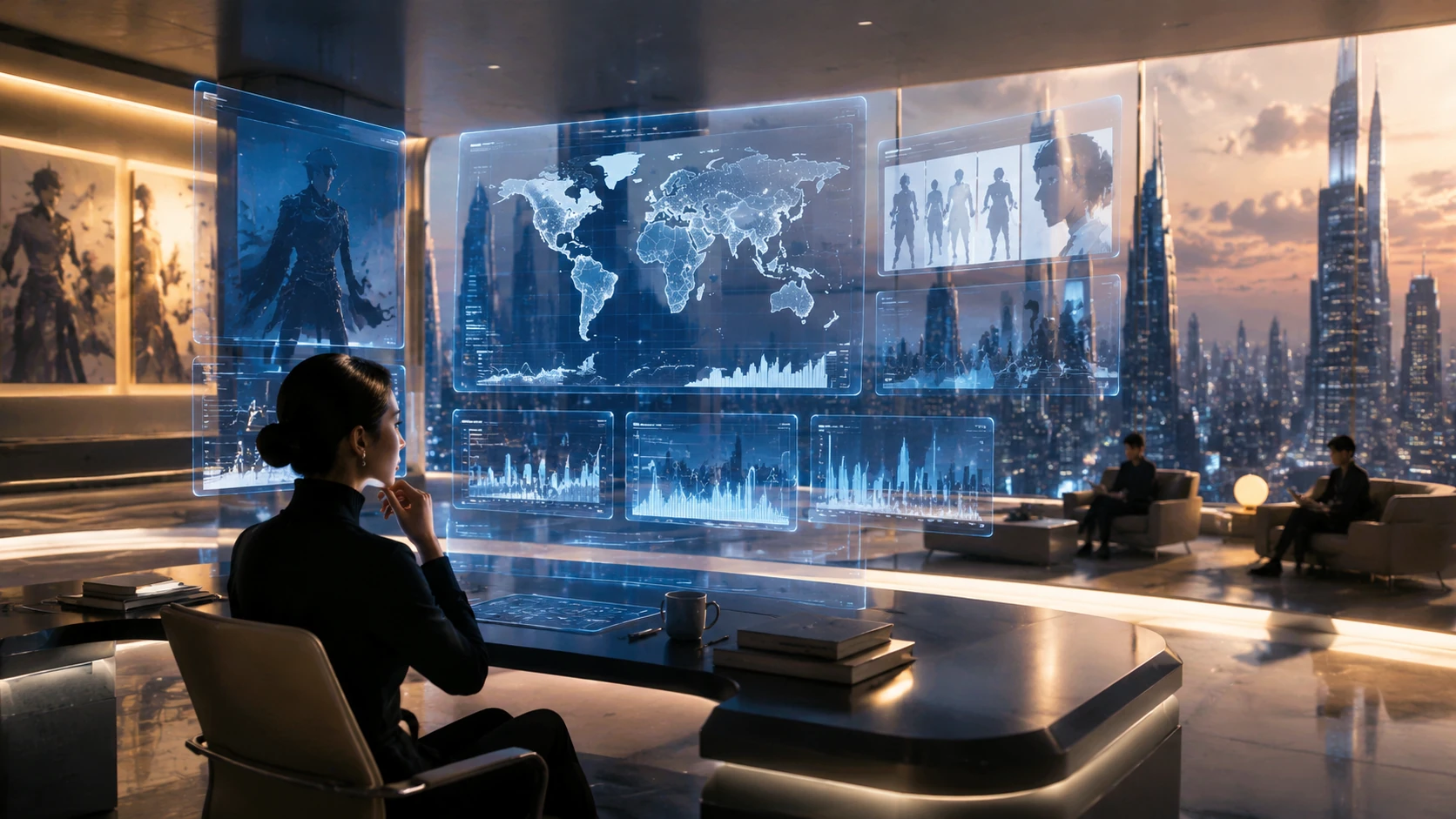
By mid-2026, the comic and webtoon industry has undergone a fundamental structural shift: the death of the regional silo. No longer are major titles developed in isolation within a single territory. Instead, the 'Trans-Pacific' Co-Production Standard (TPCS) has emerged as the dominant framework for engineering global mega-hits. This model, characterized by joint ventures between US narrative architects, Korean visual directors, and Japanese editorial consultants, is designed to bypass the traditional lag of localization. By building IP that is culturally 'fluid' from day one, studios are achieving day-and-date global saturation that was previously impossible. This isn't just about translation; it is about the strategic engineering of story assets to resonate across divergent psychological markets simultaneously.
The End of the Localization Lag
Historically, a webtoon would launch in Korea, gain popularity, and then be licensed for the US or Japanese markets months or years later. In 2026, this 'waterfall' model is considered obsolete and commercially risky. The Trans-Pacific Co-Production Standard replaces it with a 'Simultaneous Release Architecture.' Under this standard, a story's pacing, trope selection, and even character design are stress-tested against the algorithmic preferences of three major regions during the pre-production phase. This ensures that the 'hooks' of the story are universally effective, reducing the friction that often kills a title’s momentum when it crosses borders. Studios adopting this model have reported a 300% increase in first-month global retention compared to single-territory launches.
Key Components of the TPCS Framework
- Narrative Fluidity: Story arcs are designed with modular cultural markers that can be adjusted without changing the core plot.
- Joint IP Custodianship: Ownership is split across multi-national entities, ensuring each region has 'skin in the game' for marketing.
- Real-Time Sentiment Mirroring: Using 2026 AI analytics to track reader feedback across three time zones and adjusting the next chapter's 'micro-beats' accordingly.
- Unified Visual Asset Pipelines: High-fidelity assets are built to be easily adapted for vertical scroll, traditional manga volumes, and western graphic novel formats simultaneously.
Creative Arbitrage: The New Competitive Edge
The 2026 market is no longer just about who has the best artist; it’s about who can leverage 'Creative Arbitrage.' This involves sourcing the specific strengths of different creative hubs. For instance, a TPCS project might utilize US-based screenwriters for cinematic pacing and dialogue, Korean studios for high-velocity vertical production, and Japanese editors for deep character psychological profiling and lore consistency. This synthesis creates a product that feels both familiar and exotic to every reader, a 'global-local' hybrid that has proven to be the most effective way to capture the shrinking attention spans of the mobile-first generation.
The Impact on IP Valuation and Acquisition
Investors and streaming platforms in 2026 are increasingly prioritizing 'TPCS-Certified' IP. Because these titles are built for global scale from the first panel, they represent a lower risk for multi-million dollar film or gaming adaptations. The valuation of a co-produced title is often 2.5x higher than a single-market title because the 'Global Narrative Fit' is already proven. This has led to a surge in 'Narrative M&A,' where US media conglomerates are acquiring equity in mid-sized Korean and Japanese production houses specifically to secure a seat at the TPCS table. The result is a more integrated, financially stable, and professionalized industry that rewards systemic cooperation over individual isolation.
Checklist for Entering a Trans-Pacific Co-Production
- Verify rights portability across US, KR, and JP jurisdictions.
- Establish a 'Single Source of Truth' (SSOT) for narrative continuity and character sheets.
- Ensure the production pipeline supports multi-format exporting (Webtoon + Print).
- Define clear revenue-sharing tiers for secondary rights (merchandise, gaming, animation).
As we move into the latter half of the decade, the Trans-Pacific Co-Production Standard will likely evolve to include emerging markets in SEA and LATAM. However, the core principle remains the same: the most successful stories of the future are those that are built by the world, for the world. For the modern creator and studio executive, the message is clear: to dominate the market in 2026, you must think beyond your own borders before you even draw the first panel.
FAQ
What is the Trans-Pacific Co-Production Standard (TPCS)?
It is a 2026 industry framework for creating comic IP through joint ventures between US, Korean, and Japanese studios to ensure simultaneous global resonance and day-and-date release.
Why is regional production declining in 2026?
Regional silos suffer from localization delays and cultural friction, making them less competitive compared to co-produced titles that are engineered for global appeal from the start.
How does TPCS affect IP ownership?
It typically involves a shared ownership model where multiple international entities hold stakes, increasing the IP's valuation and making it more attractive for global adaptations.