The 2026 Subscription-Fatigue Pivot: Why Granular Micro-Bundling is Replacing the Walled G
In 2026, the 'Great Unbundling' has arrived as readers reject multiple monthly subscriptions. Learn how platforms are pivoting to granular micro-bundling and interoperable credit systems to maintain revenue.
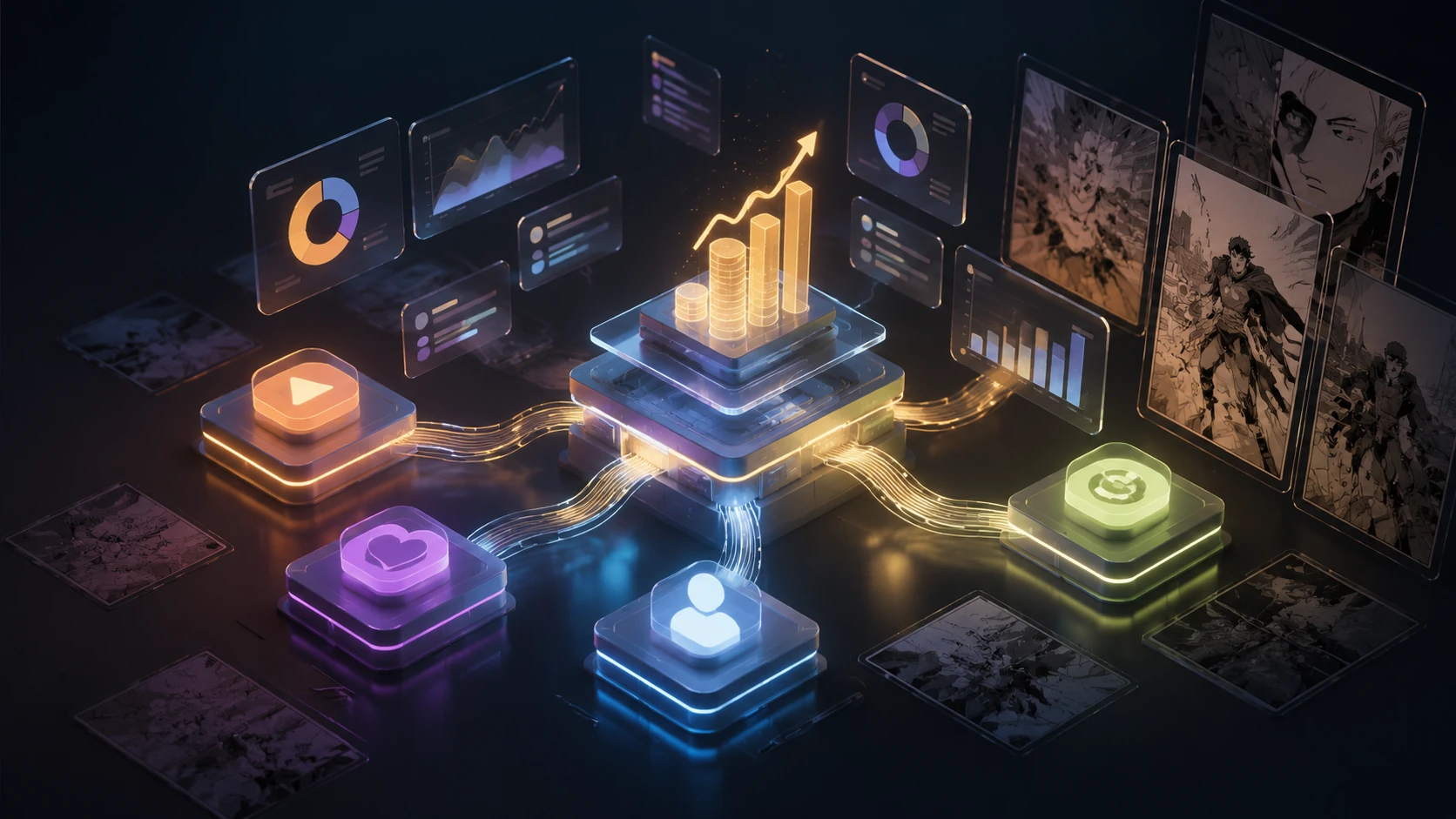
By mid-2026, the digital comic and webtoon industry has reached a critical tipping point: Subscription Fatigue. After years of platform proliferation where every studio launched its own proprietary app with a $9.99 monthly fee, the average reader's 'subscription stack' has collapsed. Data from the first quarter of 2026 indicates that the average consumer is now unwilling to maintain more than two concurrent comic subscriptions, leading to a massive churn rate for mid-tier platforms. This has forced a fundamental market pivot from 'Walled Gardens'—where content is locked behind a single recurring payment—to 'Granular Micro-Bundling.' This shift is not just a change in pricing; it is a total re-engineering of how value is exchanged between the reader, the platform, and the creator. Understanding this transition is essential for any studio or independent creator aiming to sustain growth in a post-subscription economy.
The Rise of the 'Pay-Per-Narrative' Economy
The 2026 market is moving away from the 'all-you-can-eat' buffet model toward a more surgical 'Pay-Per-Narrative' framework. Readers are increasingly demanding the ability to support specific IPs or creator collectives without being tethered to a platform’s entire library. This has given rise to a new standard of granular transactions where readers purchase 'Passes' for specific story arcs or 'Season Bundles' that offer permanent ownership of a series' run. This model reduces the psychological friction of a recurring bill while increasing the Average Revenue Per User (ARPU) for high-quality, high-engagement titles. Platforms that have resisted this shift are seeing their active user bases migrate to 'Aggregator Hubs'—services that do not host original content but instead provide a unified interface to manage micro-transactions across multiple disparate publishers.
The Interoperable Credit Standard (ICS)
- Universal Tokenization: Major platforms are adopting the 2026 ICS, allowing readers to buy credits on one app and spend them on another, provided the platforms are within the same 'Consortium Network.'
- Dynamic Pricing Scales: AI-driven pricing engines now adjust the cost of a chapter based on its 'Lore Density' and production value, ensuring creators of complex works are compensated fairly.
- Reduced Transaction Friction: One-tap micropayments through integrated digital wallets have replaced the cumbersome credit-purchase screens of 2024.
- Loyalty Portability: Readers can now carry their 'Super-Fan' status and associated perks across different apps when following a specific creator’s work.
Consumer Psychology in 2026: Why 'Access' is No Longer Enough
The psychological contract between readers and platforms has evolved. In the early 2020s, 'Access' was the primary product—the ability to read thousands of titles for one price. In 2026, 'Curation' and 'Ownership' have taken center stage. Readers are overwhelmed by the sheer volume of low-quality, AI-assisted content flooding the infinite-scroll markets. As a result, they are prioritizing 'High-Signal' content—stories with proven narrative depth and human-led artistry. Subscription models often feel like they are subsidizing content the reader doesn't want. Micro-bundling solves this by allowing the reader to vote with their wallet for specific quality signals. This has led to the 'Premiumization' of webtoons, where 'Collector Editions' and 'Early-Access Tiers' for specific series are outperforming general platform memberships by a factor of 3 to 1.
The Strategic Shift for Independent Studios
For studios, the death of the walled garden is actually an opportunity for higher margins. When a reader pays for a subscription, the platform takes a massive cut to cover overhead and the licensing of thousands of other titles. Under the micro-bundling model, the revenue share is more direct. In 2026, we are seeing 'Creator-Led Consortia'—groups of 5-10 independent studios—forming their own mini-hubs. These hubs offer a single 'Shared Credit' pool, allowing them to compete with the giants like WEBTOON or Kakao while retaining 85-90% of the revenue. This 'Sovereign Distribution' strategy is becoming the blueprint for mid-tier success, as it combines the discovery power of a network with the financial efficiency of a direct-to-consumer model.
Checklist for Transitioning to Micro-Bundling
- Audit your current churn rates: Identify if readers are leaving due to cost or a lack of interest in your broader catalog.
- Implement 'A-la-Carte' pricing: Test the performance of single-series bundles against your monthly subscription.
- Explore ICS Partnerships: Join a 2026-compliant credit exchange network to tap into larger reader pools without losing branding.
- Focus on 'Fan-Equity': Create digital assets (badges, lore-cards, or avatars) that readers own permanently when they buy a bundle.
Ultimately, the 2026 pivot is about respecting the reader's attention and budget. The era of the 'Passive Subscriber' is over; the era of the 'Active Patron' has begun. Platforms and creators who embrace the transparency and flexibility of micro-bundling will find a much more stable and loyal audience than those clinging to the crumbling walls of the 2024 subscription model.
FAQ
What is subscription fatigue in the 2026 comic market?
It is the consumer phenomenon where readers cancel multiple monthly recurring payments because they are overwhelmed by the number of different platforms and the cumulative cost.
How does micro-bundling differ from traditional pay-per-chapter?
Micro-bundling groups specific assets (like a 10-chapter arc or a character lore pack) into a one-time purchase that often includes permanent ownership, unlike simple per-chapter access.
Will major platforms stop offering monthly subscriptions entirely?
Not entirely, but they are transitioning to 'Hybrid Models' where a low-cost base subscription is supplemented by the ability to buy specific series-pass bundles for premium content.