The 2026 ‘Spatial-Depth’ (SD) Layout Standard: Engineering 3D Narrative Environments for the Post-Flat-Screen Webtoon Era
Discover how the 2026 Spatial-Depth (SD) Standard is revolutionizing webtoon production by moving narratives into 3D environments for AR/VR devices.
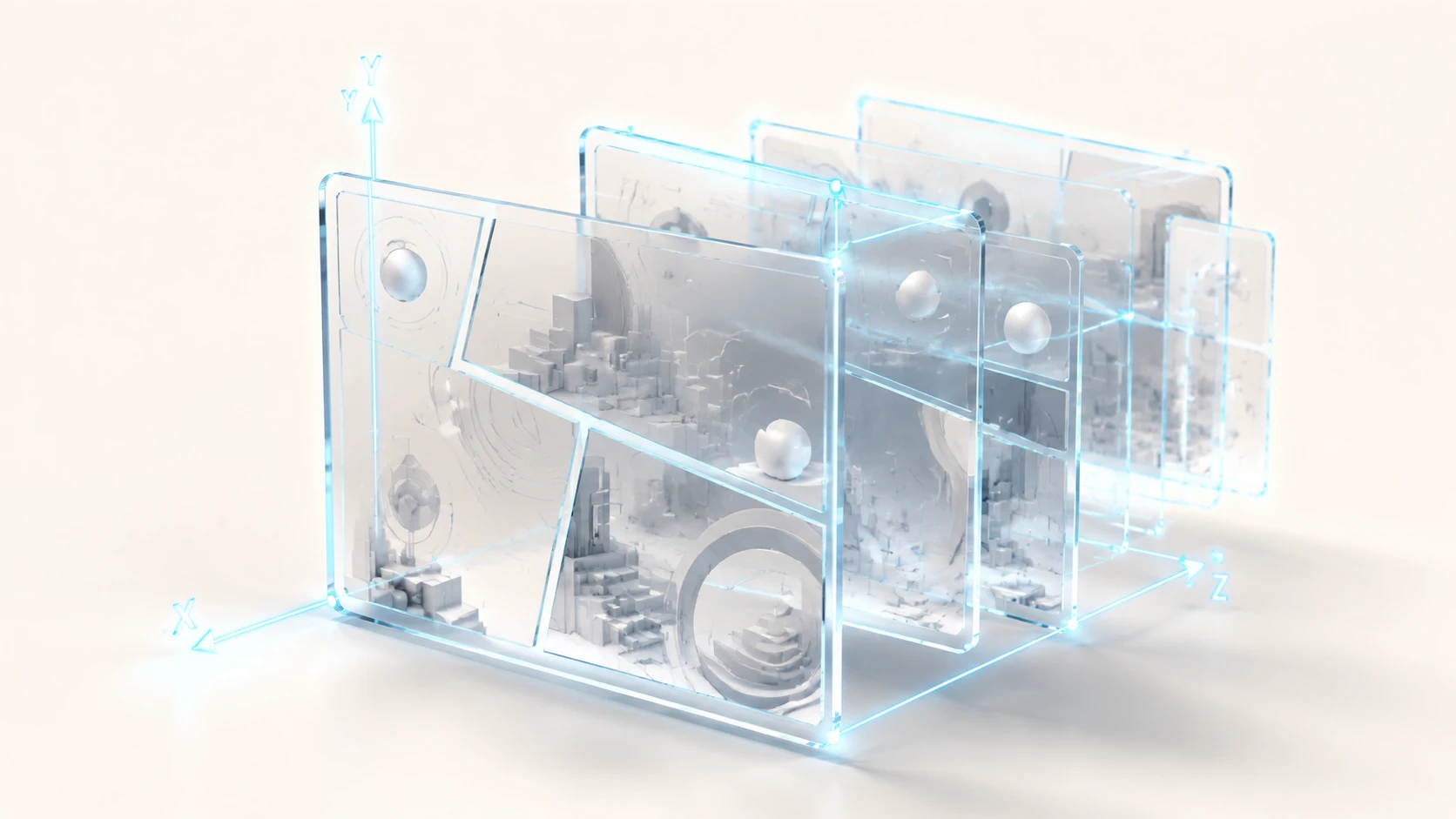
The year 2026 marks the definitive end of the 'flat-screen dominance' era for digital comics. As spatial computing devices like AR glasses and mixed-reality headsets reach mass-market adoption, the traditional vertical scroll is being replaced by the Spatial-Depth (SD) Layout Standard. This new framework moves beyond the X and Y coordinates of a screen, introducing the Z-axis as a primary narrative tool. For creators, this means the transition from drawing 'strips' to engineering 'volumes.' The SD Standard provides the technical blueprints for how panels should float, how text should anchor, and how pacing should be managed in a 3D environment. This shift is driven by a 42% surge in spatial device ownership and a growing reader demand for 'presence-based' storytelling that traditional mobile apps cannot provide. Understanding the SD Standard is no longer an optional skill; it is the baseline for high-intent, premium content production in the mid-2020s.
The Architecture of a Spatial Comic: Understanding Depth Planes
In the SD Standard, a comic is no longer a single flat image but a collection of 'Narrative Planes' organized in 3D space. These planes are categorized into four distinct layers: the Ambient Layer (background), the Action Layer (characters), the Narrative Layer (dialogue and SFX), and the Interface Layer (HUD and navigation). By separating these elements onto the Z-axis, creators can utilize parallax effects—where the background moves slower than the foreground as the reader shifts their head—to create a profound sense of physical scale. For instance, in a sci-fi manhwa, a massive starship can be anchored 10 meters away in the reader's 'virtual horizon,' while the cockpit controls float just inches from their hands. This separation reduces cognitive load by allowing the brain to process environmental context and narrative detail on different focal planes, mimicking how humans perceive the real world.
The Mechanics of Z-Axis Pacing
Pacing in 3D is fundamentally different from the scroll. In a vertical scroll, the reader controls the speed by swiping. In a spatial environment, pacing is often 'gaze-triggered' or 'proximity-based.' As the reader focuses their eyes on a specific panel, the SD-compliant engine detects the intent and brings the next narrative plane forward. This 'Elastic Pacing' ensures that the reader is never overwhelmed by too much information at once. If a reader leans in to look at a detail, the metadata within the SD file can trigger 'Hidden Lore'—small text boxes or audio cues that only appear when the reader is within a certain spatial threshold. This transforms the act of reading from a passive scroll into an active exploration of a 3D volume.
- Focal Depth Management: Keeping text within the 1.5m to 2.5m comfort zone.
- Parallax Ratio: Calculating the movement speed of background vs. foreground planes.
- Occlusion Handling: Ensuring floating panels don't block the reader's physical path or other critical story beats.
- Spatial Sound-Sync: Anchoring SFX to specific 3D coordinates in the narrative volume.
Technical Requirements for SD-Standard Production
To produce an SD-compliant webtoon, studios must move away from flat JPG/PNG exports toward 'Layer-Semantic' formats like LSFS or USDZ. These files store not just the visual data, but the spatial coordinates and 'physics' of each panel. A key requirement of the 2026 standard is 'Environmental Adaptability.' Since spatial comics are often viewed in 'Pass-through' mode (where the reader sees their real room), the comic must be able to 'anchor' itself to real-world surfaces. The SD Standard includes metadata for 'Surface Detection,' allowing a comic to automatically 'hang' itself on a real wall or 'sit' on a real coffee table. This ensures the narrative feels like a physical part of the reader's environment rather than a flickering projection.
Common Mistakes in Spatial Layout Design
The most common mistake for creators transitioning to 3D is 'Depth Overload'—placing too many layers at wildly different Z-depths. This forces the reader's eyes to constantly refocus (vergence-accommodation conflict), leading to rapid eye strain and headaches. Another frequent error is 'Head-Locking' the entire comic. If the comic moves perfectly with the reader's head, it feels 'stuck' to their face and can cause motion sickness. The SD Standard mandates 'World-Locking,' where the comic stays put in space while the reader moves around it. Creators must also avoid 'Visual Noise' in the background layers; because the reader's real-world room is already busy, the 3D comic backgrounds should be clean and clearly defined to maintain legibility.
Case Study: 'Neon Horizon' 3D Launch
In early 2026, the series 'Neon Horizon' became the first major hit to use the full SD Standard. By utilizing Z-axis layering, the creators achieved a 200% increase in 'Time-Spent-Reading' compared to their previous 2D series. Readers reported that the ability to 'step into' the cyberpunk city scenes made the world feel significantly more 'real.' The studio also leveraged 'Diegetic Monetization,' selling 3D virtual room decor based on the series' assets, which accounted for 35% of their total revenue within the first three months. This success proved that the SD Standard isn't just a gimmick—it's a powerful tool for IP expansion and audience retention.
FAQ
What is the Spatial-Depth (SD) Standard?
It is a 2026 technical framework for designing webtoons and comics in 3D environments, specifically for AR/VR devices, focusing on Z-axis layering and spatial anchoring.
Do I need to learn 3D modeling to use the SD Standard?
Not necessarily. The SD Standard primarily uses 2D layers (planes) arranged at different depths in 3D space, though 3D models can be integrated for higher immersion.
How does spatial reading affect monetization?
It allows for 'Diegetic Monetization,' where readers can purchase and own 3D assets seen in the story, and offers non-intrusive 3D product placement opportunities.
Can SD-compliant comics be read on normal phones?
Yes, they can be viewed through a 'gyroscope window' on smartphones, but the full experience is designed for spatial headsets and AR glasses.