The 2026 ‘Print-Native Reconstruction’ (PNR) Case Study: Engineering Physical Assets from
Discover how Studio Chroma leveraged the Print-Native Reconstruction (PNR) framework to transform a digital-only webtoon into a luxury hardcover series that outperformed its digital revenue by 140%.
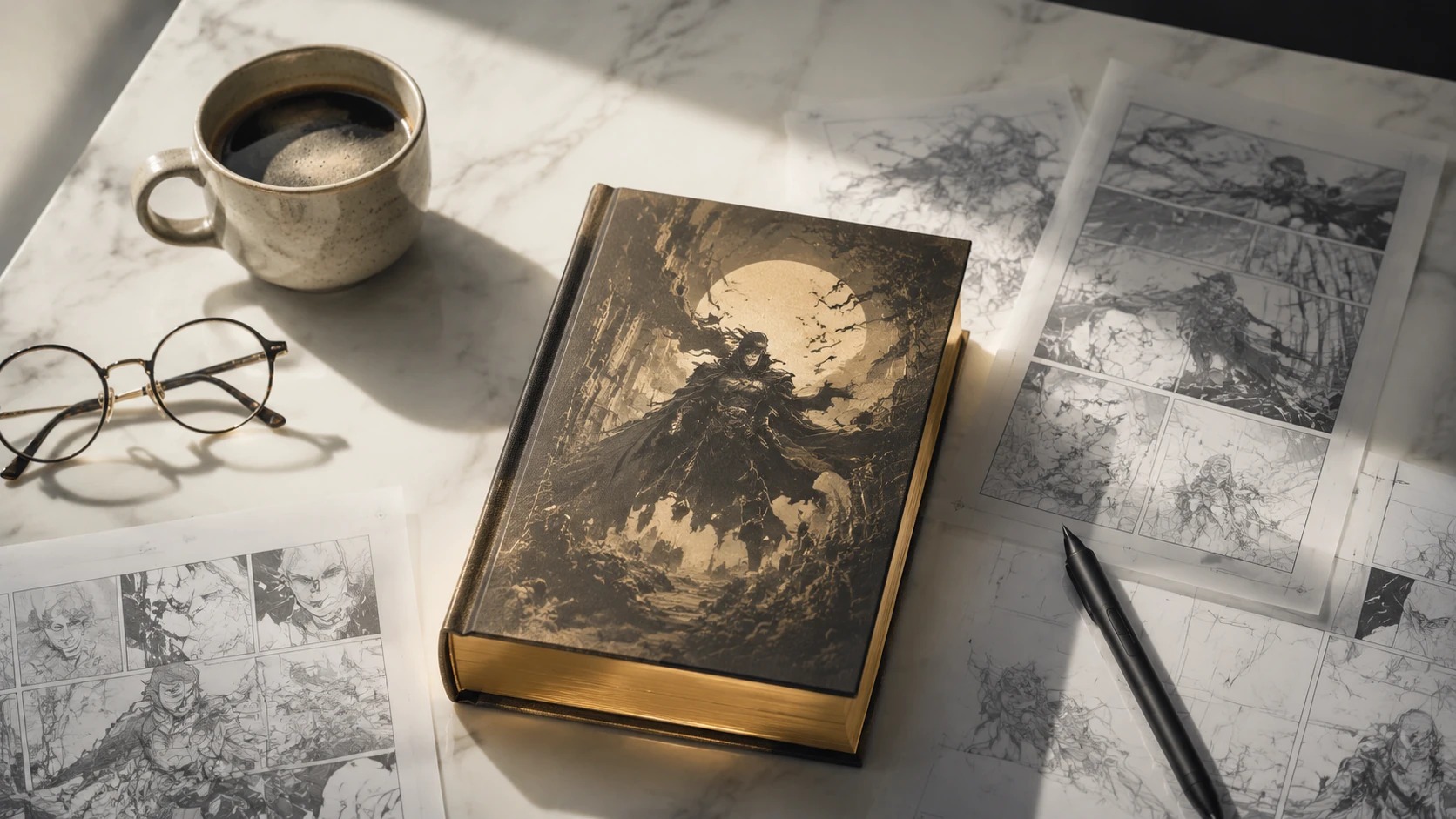
By early 2026, the comic industry reached a critical realization: while digital consumption provides the reach, physical ownership provides the margin. For years, webtoon-to-print adaptations were criticized for 'lazy cropping'—simply stacking vertical panels onto a page with excessive white space. This led to the emergence of the 'Print-Native Reconstruction' (PNR) framework. This case study examines how Studio Chroma utilized PNR to transform their digital-first hit, 'Aether Drift,' into a luxury physical series. Instead of merely copying panels, they re-engineered the narrative flow for a tactile, page-turning experience, resulting in a physical edition that outsold their digital subscription revenue within six months. This shift highlights a 2026 market trend where readers view digital as the 'utility' and physical as the 'trophy,' demanding a specific architecture for the latter.
The Scenario: Moving Beyond the Infinite Scroll
Studio Chroma’s 'Aether Drift' was a vertical-scroll powerhouse with 15 million reads. However, as platform fees increased and digital CPMs stabilized, the studio needed a high-LTV (Life-Time Value) product to anchor their IP. The challenge was that 'Aether Drift' relied heavily on vertical visual gags and long-drop transitions that are technically impossible to replicate on a static A4 or 6x9 page. Traditional 'stack-and-crop' methods would have destroyed the pacing and reduced the perceived value of the physical book. The studio decided to apply the PNR framework, a methodology that treats the book not as a mirror of the webtoon, but as a remix designed for the physical medium.
The PNR Re-Composition Strategy
- Panel Deconstruction: Every digital panel was separated from its original vertical gutter and re-evaluated for page-based impact.
- Gutter Logic Shift: In webtoons, white space represents time. In PNR, page turns represent scene shifts, and panel proximity represents simultaneous action.
- Full-Bleed Engineering: Using the extra resolution of 2026 vector-native assets to create double-page spreads that weren't possible in a narrow mobile view.
- Tactile Anchors: Integrating physical-only details, such as hidden UV-ink messages and textured paper for specific 'power-up' scenes.
The Execution: Re-Architecting the Narrative Flow
The reconstruction process took four months. The team worked with 'Layout Architects'—a new 2026 role specialized in translating digital pacing to physical geometry. They identified that the biggest risk was 'pacing compression.' In a webtoon, a reader can scroll past 20 panels in seconds; on a page, those same panels feel cluttered. Studio Chroma solved this by selectively expanding key moments into 'splash pages' and utilizing 'Swiss Grid' layouts to maintain high information density without overwhelming the reader. This created a 'Premium Edition' feel that justified a $45 price point, far exceeding the $0.10 micro-transaction cost per digital chapter.
The Results: Data-Led Success Metrics
The release of the 'Aether Drift: Volume 1' PNR edition yielded results that redefined the studio’s business model. Beyond the immediate revenue spike, the physical book acted as a marketing vehicle for the digital platform, creating a virtuous loop of engagement. The 2026 market data showed that 68% of physical buyers were existing digital readers who wanted to 'own the story,' while 22% were new readers who discovered the IP through high-end bookstores and lifestyle boutiques.
- 140% Revenue Growth: Physical sales exceeded digital chapter revenue for the same story arc within two quarters.
- 94% Collector Retention: Buyers of Volume 1 had a near-total conversion rate to Volume 2 pre-orders.
- Secondary Rights Valuation: The high-quality physical presence led to a 3-book licensing deal with a major European publisher.
- Brand Equity: The physical books were featured in 'Coffee Table Comic' trends, elevating the IP's status above standard mobile entertainment.
The PNR Playbook for Independent Creators
For creators looking to replicate Studio Chroma’s success, the 2026 PNR framework provides a clear path. It begins with 'Visual Decoupling'—ensuring your original art assets are high-resolution enough for print (minimum 350 DPI or vector). Creators must then master 'Z-Pattern' page flow, which guides the reader’s eye across a physical spread, a skill that many digital-native artists have lost. Finally, the playbook emphasizes 'Physical Exclusivity.' The PNR edition should include content, layouts, or visual perspectives that simply do not exist on the app, making the book an essential 'expansion pack' for the IP.
Common Pitfalls to Avoid
- Neglecting Gutter Margins: Forgetting that the spine 'eats' visual data, a common error in digital-to-print conversions.
- Over-pacing: Trying to fit 80 webtoon panels into a single 20-page chapter. Selectivity is the key to PNR.
- Ignoring Paper Stock: Using standard matte paper for high-contrast digital art, which can make colors look muddy and 'cheap.'
As we move further into 2026, the 'Print-Native Reconstruction' framework will become the standard for any webtoon studio seeking long-term IP resilience. By treating the physical book as a high-end engineering project rather than a simple export, creators can unlock significant revenue and ensure their stories survive beyond the ephemeral nature of the digital scroll.
FAQ
What is the main difference between a standard print and a PNR edition?
A standard print is a direct crop of the webtoon. A PNR (Print-Native Reconstruction) edition involves re-composing the artwork into a page-based layout, optimizing the pacing, gutters, and flow specifically for physical reading.
Can I use AI to automate the PNR process in 2026?
While AI can assist in upscaling resolution and initial panel segmentation, the narrative pacing and 'Z-pattern' flow require human editorial judgment to ensure the emotional beats land correctly on a physical page.
Is PNR worth it for small independent creators?
Yes, but usually through small-batch boutique printing. PNR allows indie creators to charge a premium price for a 'collector's object,' making it more profitable than competing on volume in crowded digital apps.