The 2026 ‘Phygital-Retail’ Blueprint: Engineering Premium Brand Presence for Independent W
In 2026, the bridge between digital scrolls and physical ownership has become the primary driver of creator wealth. This guide explores how to engineer a premium retail presence that transcends basic merchandising.
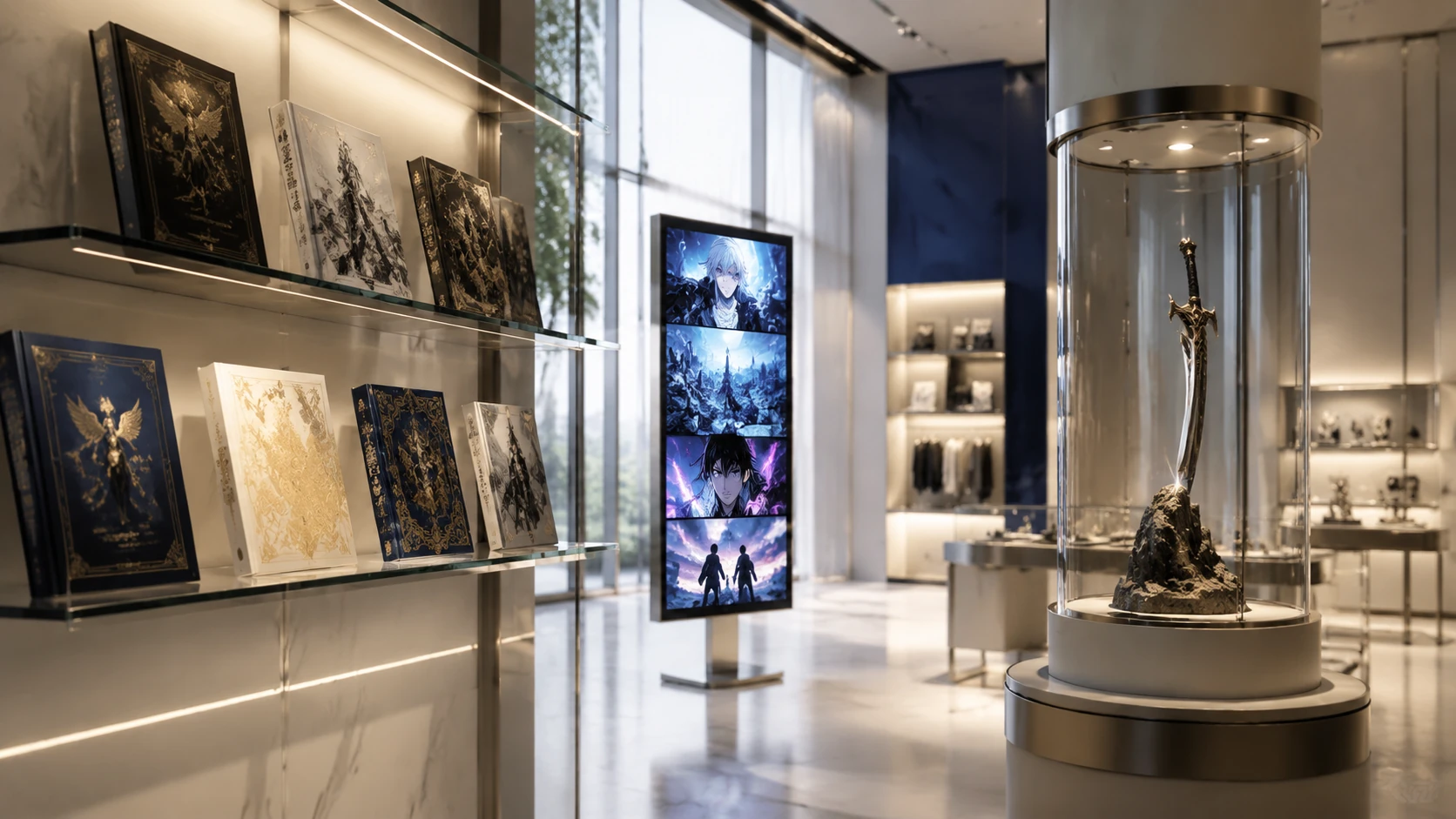
By 2026, the 'attention economy' has matured into the 'ownership economy.' While digital platforms remain the engine for audience discovery and high-frequency engagement, the most successful independent webtoon creators are diversifying into what the industry calls 'Phygital-Retail.' This strategy moves beyond the era of print-on-demand t-shirts and low-margin stickers. Instead, it focuses on engineering a premium physical presence that serves as a tangible extension of the digital narrative. In a market saturated with ephemeral synthetic content, physical objects—heavy paper, tactile textures, and limited-run artifacts—have become the ultimate trust signals and status symbols for fan communities. Creators who fail to bridge this gap risk leaving up to 60% of their potential lifetime value (LTV) on the table, as readers increasingly seek 'sacred' physical versions of their favorite digital journeys.
The 2026 Retail Paradox: Why Digital-First Needs Physical-Last
The 2026 market data suggests a paradoxical trend: as VR and AR reading experiences become more prevalent, the demand for high-quality physical books and curated retail experiences has reached an all-time high. This is driven by 'digital fatigue' and the desire for shelf-permanence. The Phygital-Retail Blueprint treats the physical book not as a primary reading device, but as a 'trophy asset.' This requires a complete re-engineering of the production pipeline. Creators are no longer just formatting panels for print; they are designing tactile experiences. This includes experimenting with specific paper weights (GSM), scent-infused ink, and 'digital-twin' NFC tags embedded in the covers that unlock exclusive AR commentary or soundtrack layers when scanned with a mobile device.
Engineering the ‘Lore-First’ Merchandise Strategy
The most profitable shift in 2026 is the transition from 'Logo Merch' to 'Lore Merch.' Traditional merchandising focuses on slapping a character's face on a mug. Lore-First engineering involves creating objects that exist *within* the story world. If a character wears a specific watch or carries a unique accessory, that item is produced as a high-quality replica. This strategy works because it facilitates 'stealth cosplay'—allowing fans to integrate their fandom into their daily lives with subtlety and premium aesthetics. From a market perspective, Lore-First items command a 400% higher price premium over standard logo-based merchandise because they offer narrative utility and exclusivity.
The Three Pillars of Narrative Utility
- In-Universe Authenticity: The item must look and feel like it was pulled directly from the comic's world.
- Quality Parity: The manufacturing quality must match the 'premium' status of the IP, avoiding cheap plastics.
- Scarcity Engineering: Using limited-run production cycles to maintain high secondary-market value and 'collectible' status.
The Micro-Boutique Model: Pop-ups vs. Permanent Spaces
In 2026, the retail landscape for comics has fragmented. Independent creators are bypassing traditional bookstores in favor of 'Micro-Boutiques' and 'Hyper-Local Pop-ups.' These are often collaborative spaces where 3-5 high-performing webtoon creators share the overhead of a premium retail footprint in high-traffic urban areas. These spaces are designed less like stores and more like immersive galleries. They utilize floor-to-ceiling digital screens to display the vertical scroll while the physical products are showcased in minimalist glass cases. This 'Showrooming' model allows creators to maintain low inventory levels while driving high-conversion digital sales through on-site QR codes, creating a seamless loop between the physical touchpoint and the digital checkout.
Tech-Enabled Curation: NFC and Digital Twins
Modern Phygital-Retail relies heavily on the 'Digital Twin' concept. Every physical book or high-end merch item sold in 2026 is linked to a unique identifier on the blockchain or a secure server. This provides the reader with proof of authenticity and allows the creator to 'airdrop' digital rewards to physical owners. For example, owning the physical Volume 1 might unlock a special badge on the reading platform or early access to the Season 2 premiere. This connectivity ensures that the physical purchase is not a dead-end transaction but a gateway to continued digital engagement, effectively merging the two revenue streams into a single, unified ecosystem.
Risk Management: Inventory Sourcing and Sustainability
The biggest risk in physical retail remains inventory bloat. In 2026, creators mitigate this through 'Just-in-Time' (JIT) manufacturing and pre-order crowdfunding models. By using the Narrative-Market Fit (NMF) data from their digital platforms, creators can accurately predict demand for specific regions, reducing shipping costs and carbon footprints. Sustainability is no longer optional; 2026 readers are highly sensitive to environmental impact. Using recycled materials, plastic-free packaging, and local fulfillment centers is not just an ethical choice—it is a critical brand-building requirement that influences search rankings and platform 'Helpful Content' scores.
FAQ
What is Phygital-Retail for webtoons?
It is the strategic integration of physical products (books, replicas) and digital content (webtoons, AR) into a unified brand experience where each drives value to the other.
How do I start a retail line without huge upfront costs?
Utilize the 2026 Micro-Boutique or Pop-up model, focusing on high-quality 'Lore-First' pre-orders to fund small-batch manufacturing.
Why is 'Lore-First' merch better than logo merch?
It offers higher perceived value and narrative utility, allowing fans to own a 'piece' of the story world, which commands a higher price and fosters deeper loyalty.