The 2026 Phygital Anchor Strategy: Hardening Digital IP Value Through Small-Batch Physical
Discover how the Phygital Anchor Strategy is transforming the independent creator economy by merging scarce physical artifacts with digital-first narratives. Learn to build long-term IP value through high-margin, small-batch collectibles that drive deep reader loyalty.
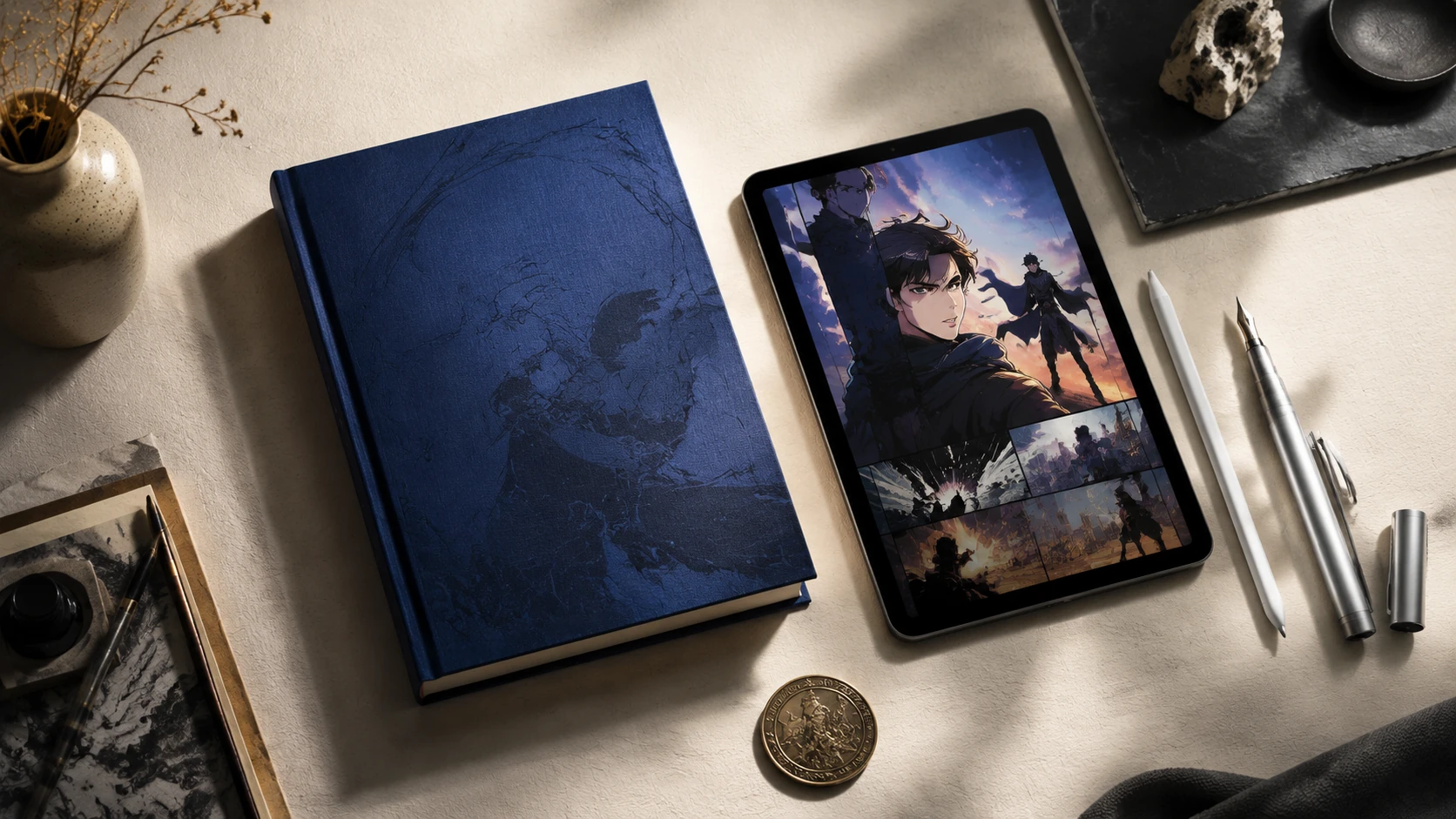
By 2026, the 'attention economy' has reached a saturation point where digital-only visibility is no longer a guarantee of long-term IP stability. Independent creators are increasingly facing 'digital decay'—a phenomenon where readers engage deeply with a webtoon or manga for a short burst but fail to form a lasting emotional or financial bond with the property. To combat this, the Phygital Anchor Strategy has emerged as the gold standard for sovereign creators. This approach involves the strategic release of high-margin, small-batch physical artifacts that serve as 'anchors' for digital narratives. Unlike traditional mass-market merchandise, these are artisan-grade goods designed to validate the reader's investment in the story, providing a tactile connection that algorithms cannot replicate. In this guide, we explore how to implement this strategy to harden your IP value and build a resilient revenue stream that bypasses the volatility of platform-only monetization.
The Psychology of Tangibility in a Digital-First Market
The core of the Phygital Anchor Strategy lies in the 'Endowment Effect.' When a reader owns a physical piece of a story—be it a limited-run print, a lore-accurate replica, or an NFC-enabled digital twin—their perceived value of the entire IP increases exponentially. In 2026, digital abundance has made physical scarcity more prestigious. Readers are no longer satisfied with just 'access' to content; they want 'ownership' of the experience. By creating physical anchors, you transition your audience from transient scrollers to invested collectors. This psychological shift is critical for retention. While a reader might forget to check a weekly update on a saturated platform, a high-quality physical book or artifact sitting on their shelf acts as a permanent visual cue, triggering narrative recall and driving them back to your digital ecosystem. This creates a closed-loop engagement cycle that stabilizes your monthly active user (MAU) metrics.
Defining the 'Anchor' Artifact: Beyond Cheap Merch
Successful phygital strategies in 2026 reject the 't-shirt and mug' model of the past. Today's anchors must be narrative-integrated. An anchor is a physical object that exists within the world of your comic or webtoon, brought into reality with high production values. This could be a 'Founder's Coin' mentioned in Chapter 1, a weathered map of your world, or a high-spec 'Artifact Card' that grants access to hidden digital chapters via an embedded chip. The goal is to create an object that feels like an extension of the story's soul. For indie creators, the focus should be on quality over quantity. Small batches of 50 to 500 units allow for premium materials—like heavy-stock paper, foil stamping, or recycled metals—which justify a higher price point. This 'Artisan Tier' of monetization ensures that even a small, dedicated fanbase can generate significant revenue, often outperforming the ad-revenue generated by millions of casual views.
Key Characteristics of a 2026 Phygital Anchor
- Narrative Authenticity: The item must be recognizable as an 'in-world' object to your core readers.
- Digital Interoperability: Embedded NFC or QR technology that unlocks exclusive digital lore or community status.
- Scarcity Documentation: Each item is numbered and tracked on a ledger to ensure long-term resale value for collectors.
- Tactile Excellence: Use of premium textures (linen, matte soft-touch, embossed metals) to differentiate from mass-produced goods.
The Workflow: From Panel to Physical Product
Implementing a phygital strategy requires a shift in your production workflow. It begins with 'Asset Architecture'—designing your in-story objects with physical manufacturing in mind. When you draw a key item in your manga, consider its dimensions and material properties in the real world. In 2026, creators use modular manufacturing partners that specialize in low-volume, high-spec production. The workflow typically involves a 'Pre-Order Pulse' where you gauge interest through digital prototypes before committing to a production run. This minimizes financial risk. Once produced, these items are often bundled with 'Digital Twins'—digital versions of the artifact that readers can display in their virtual galleries or social profiles. This dual-presence ensures that the anchor provides value in both the physical home and the digital social space, maximizing the utility and visibility of the IP.
Common Pitfalls: Logistics and Over-Expansion
The most frequent mistake independent creators make is underestimating the 'Logistics Load.' Shipping physical goods globally is a complex undertaking that can quickly erode profit margins if not handled correctly. In 2026, the most successful creators use 'Regional Hubbing' or 3PL (Third-Party Logistics) services tailored for the creator economy to manage fulfillment. Another pitfall is over-expansion—producing too many different types of items too quickly. This dilutes the 'anchor' effect. Your physical offerings should be rare events, not a constant catalogue. If everything is available all the time, nothing feels like a collector's item. Stick to a 'Drop' model: release one significant anchor per narrative arc. This maintains the prestige of the goods and ensures your focus remains on the primary product: the story itself.
The ROI of Phygital: Long-Term IP Valuation
While the immediate revenue from a phygital drop is beneficial, the true Return on Investment (ROI) is the increase in your IP's overall valuation. In the eyes of investors and licensing partners in 2026, a comic with a proven 'High-LTV' (Lifetime Value) audience that purchases physical anchors is far more valuable than one with high but passive traffic. It proves that your audience is deeply committed and willing to pay a premium for your specific narrative world. This 'Hardened IP' is easier to license for film, gaming, or larger publishing deals because the physical goods serve as tangible proof of market fit. By building a phygital foundation, you are not just selling merchandise; you are engineering a high-value brand that exists independently of any single platform's algorithm.
FAQ
What is a 'Digital Twin' in the context of comics?
A Digital Twin is a unique digital version of a physical collectible, often used as a social media asset or in virtual galleries to prove ownership of the physical item.
How many items should I produce for a small-batch run?
For most independent creators, a run of 100-250 units is the 'sweet spot' for maintaining scarcity while keeping unit costs manageable.
Do I need a large audience to start a phygital strategy?
No. The strategy is designed for '1,000 True Fans.' It prioritizes high-margin sales to a dedicated core rather than mass-market volume.